In the grand narrative of blockchain, privacy computing and RWA are undoubtedly the two most explosive directions in the next decade. However, when we focus on specific projects, we find that they have chosen different paths. Dusk Network, as a Layer 1 that has been deeply cultivating regulated financial infrastructure since 2018, presents a stark contrast to those generic privacy chains or application-oriented RWA protocols. To understand Dusk's long-term investment logic, we must place it within the coordinates of the global compliant financial landscape and conduct a thorough competitive analysis.
First, let's compare Dusk with those competitors in general privacy computing, such as Aleo and Manta Network. Aleo is dedicated to building an all-scenario privacy computing platform, aiming to enable developers to create any type of zero-knowledge application, with its tech stack leaning more towards general computation. Manta focuses on privacy L2, providing privacy protection for DeFi applications through ZK technology. They are both excellent, but their vertical positioning is entirely different from Dusk.
Dusk's core competitiveness lies in its verticalization: it focuses solely on regulated financial use cases. This focus brings two significant advantages: deep compliance and extreme optimization.
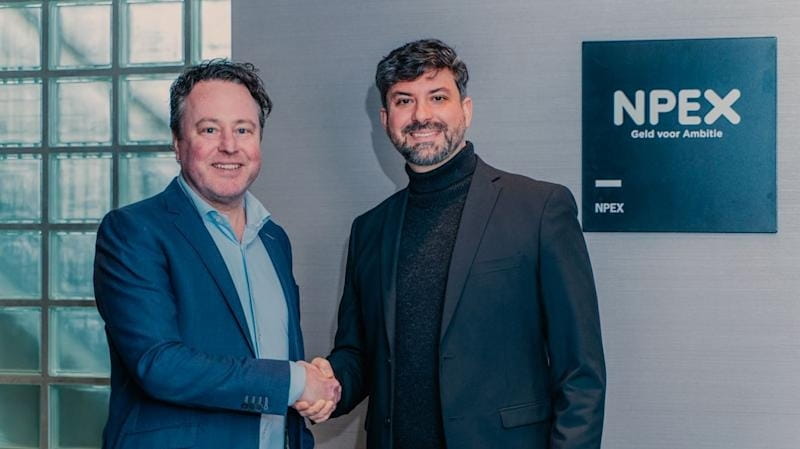
In terms of deep compliance, Dusk's tech stack is built from the ground up with compliance logic. Its token standard XSC (Confidential Security Contract) is specifically designed for the tokenization of securities, allowing asset issuers to enforce KYC/AML rules on-chain, such as restricting certain securities to only verified addresses for holding or trading. This native compliance capability is difficult for general platforms like Aleo or Manta to achieve through application layer patches. Dusk's collaboration with NPEX, as well as the MTF, brokerage, and ECSP licenses held by NPEX, is the best proof of this deep compliance. This license backing is the source of confidence for Dusk to bring 300 million euros worth of securities assets on-chain and is its unique moat in the RWA track.
In terms of extreme optimization, Dusk's Hedger engine is optimized specifically for financial transactions. It combines homomorphic encryption and ZKP to achieve auditable privacy. This hybrid model addresses the dual needs for privacy (preventing MEV, protecting trade secrets) and auditability (meeting regulatory requirements) in financial transactions. In contrast, general privacy chains need to balance the demands of various application scenarios, making it challenging to achieve such fine optimization in the vertical field of finance. For example, Hedger's native support for obfuscating order books directly addresses pain points in institutional trading, whereas this would require complex application layer design to barely achieve on general chains.
Next, let’s look at Dusk's competitors in the RWA application layer, such as Ondo Finance and Centrifuge. Both Ondo and Centrifuge are pioneers in the RWA track, but they are more like asset issuance and management platforms. Ondo focuses on tokenizing highly liquid public securities, while Centrifuge emphasizes private credit and trade financing. They both rely on existing public chains (such as Ethereum or Polygon) as the underlying layer.
What sets Dusk apart is that it provides the underlying infrastructure for RWA. It is not here to take Ondo or Centrifuge's business but to be their compliant foundation. Imagine if Ondo or Centrifuge wanted to push their RWA products into stricter European or global institutional markets; they might ultimately need an environment like Dusk, which provides securities-level compliance and trading privacy from Layer 1. The goal of DuskTrade is to become a compliant on-chain securities exchange, which goes further than simple asset tokenization; it involves the entire process of trading, clearing, and settlement.
From the perspective of product usage and discovered issues, the launch of DuskEVM is key to the explosion of its ecosystem. EVM compatibility has solved the developer ecosystem's problems, allowing Solidity developers to easily enter. However, a potential challenge lies in liquidity guidance. Although there is a backing of 300 million euros in assets, how to convert these assets into active on-chain transactions and DeFi activities requires a strong incentive mechanism and ecosystem incubation. Dusk must prove that its Layer 1 compliance advantages can attract enough institutions and retail investors to form a self-reinforcing network effect.
Moreover, the complexity of the tech stack is also a point to note. Although the Hedger engine is powerful, its HE+ZKP hybrid model poses higher requirements for cross-chain interoperability. Ensuring that compliant assets on Dusk can interact safely and compliantly with other EVM chains without leaking privacy is a challenge that the team needs to continuously tackle.
In summary, Dusk's long-term investment logic is very clear: it aims at the inevitable path of traditional finance migrating to Web3. It is not playing around with DeFi; it is engaging in dialogue with the global financial regulatory system. Through deep cooperation with NPEX, Dusk has already secured its ticket to enter this trillion-dollar market. The launch of DuskEVM has lowered the threshold for ecosystem construction. The Hedger engine provides a technical solution for compliant privacy. This strategy that integrates technology, compliance, and ecology gives Dusk irreplaceable strategic value in the vertical track of RWA and privacy computing. It is not a project chasing trends; it is an infrastructure builder laying the foundation for the next generation of financial systems. This profound and pragmatic effort is what we researchers should pay the most attention to.