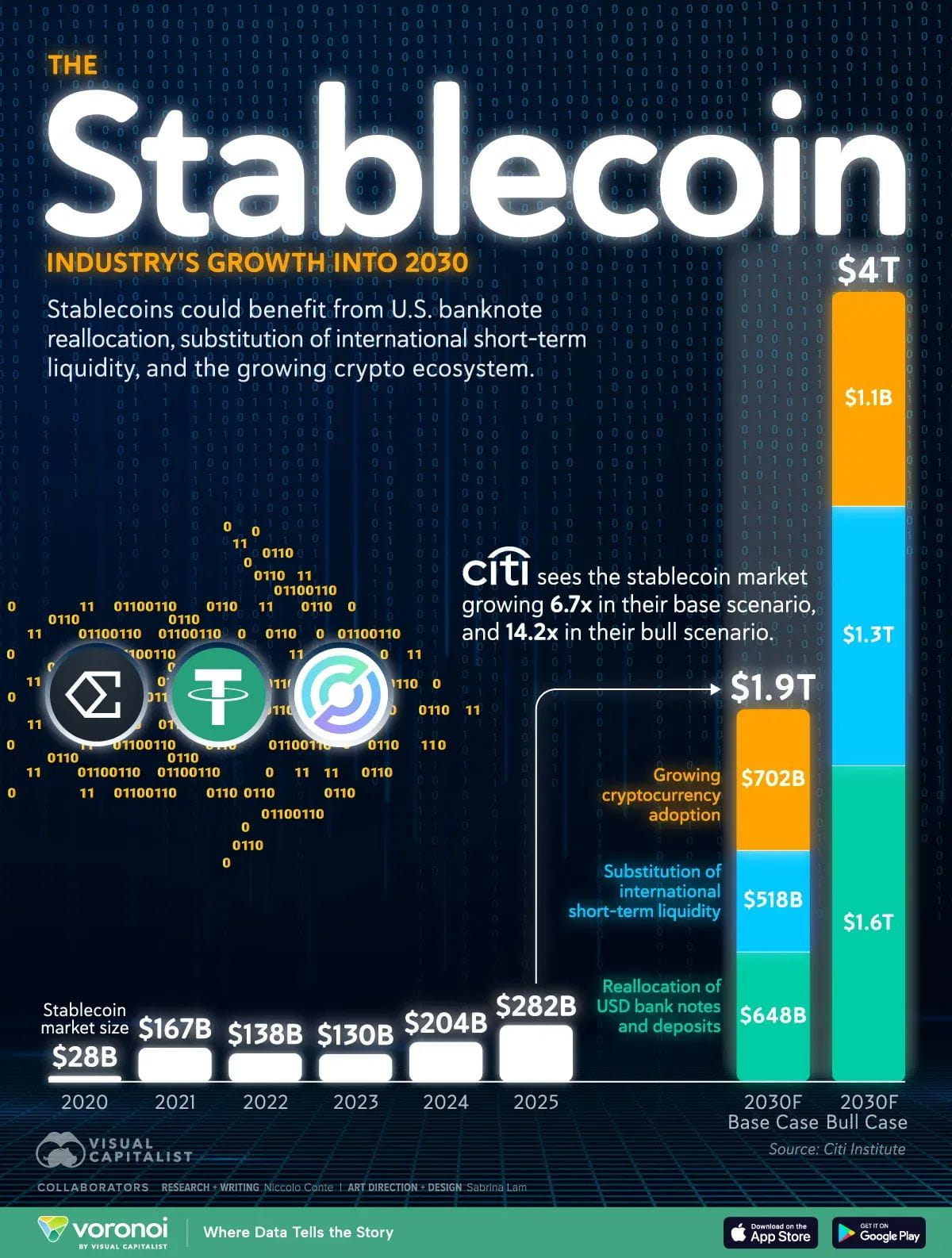
Recently researching the public chain track, I found a very interesting phenomenon: everyone is pursuing "omnipotence", eager to stuff all application scenarios into one L1 or L2. However, the Plasma project has chosen to "specialize" and positions itself as a stablecoin infrastructure. This vertical entry strategy appears exceptionally clear-headed in the crypto world, where grand narratives are rampant. Personally, I believe that what Plasma is trying to solve is the long-standing "impossible triangle" of stablecoins in the payment field: low cost, high speed, and decentralization.
Let's start with its core product logic. The most attractive aspect of Plasma is its native support for zero-fee transfers of USD₮, along with allowing custom Gas tokens. This sounds simple, but behind it lies a complete subversion of the traditional public chain model. On Ethereum or any general-purpose L1, transferring $100 worth of stablecoins might cost $5 in ETH as gas fees. This fee not only increases transaction costs but, more importantly, introduces volatility of the native tokens. For an asset that seeks stability for daily payments and settlements, such volatility is fatal. Plasma elevates stablecoins from 'ordinary assets' to the status of 'native fuel,' allowing the stablecoins themselves to drive the network. This design minimizes transaction costs while completely eliminating the interference of gas fee volatility on stablecoin user experience. This is true product thinking; it transforms users from 'crypto players' into 'ordinary payment users.'
The realization of this product experience relies on its underlying technological support—the PlasmaBFT consensus mechanism. This is not a simple variant of PoS; it is a pipelined Byzantine Fault Tolerance algorithm based on Fast HotStuff. Imagine traditional blockchains as a single line waiting to go through security, while PlasmaBFT operates multiple lines simultaneously, with clear checkpoints at each stage.
Specifically, PlasmaBFT breaks down the consensus process into several parallel and consecutive stages: proposal, pre-vote, vote, and commit. This refined division of labor significantly shortens block confirmation times, achieving sub-second finality. For stablecoin settlements, finality is more important than speed. You cannot accept a large payment being rolled back minutes later. The fast finality provided by PlasmaBFT gives it reliability comparable to traditional financial systems when handling high-frequency, large-value stablecoin transactions. This stands in stark contrast to public chains that only pursue high TPS but experience finality delays.
Let's delve a bit deeper and discuss the advantages of PlasmaBFT in high-frequency settlement scenarios. Traditional PoW chains, like Bitcoin, require hours or even longer for finality, which is completely unsuitable for payments. PoS chains are fast, but many BFT algorithms can experience a dramatic decline in performance during network congestion, potentially leading to liveness issues. The pipelined design of PlasmaBFT ensures that consensus continues to progress even when some nodes experience failures or malicious behavior, making it a cornerstone of reliability for infrastructure handling global payment traffic. It was designed with a balance of high throughput and low latency in mind, allowing it to maintain linear scalability when processing large amounts of stablecoin transfers.
Next, we must mention another technical highlight of Plasma: the Native Bitcoin Bridge. This bridging solution is not a simple wrapping of BTC into a centralized asset like WBTC; it promises a trust-minimized solution. Although the official documentation does not fully disclose all cryptographic details, its core idea is to leverage the security and consensus mechanisms of the Plasma validator network to co-manage and verify the cross-chain process of BTC. This is akin to bringing Bitcoin's liquidity into the EVM environment in a safer and more decentralized way.
Why is this important? Because the value of stablecoins ultimately hinges on liquidity and trusted assets. Bitcoin, as the 'digital gold' of the crypto world, is the ultimate embodiment of liquidity and value. Plasma, through native bridging, not only enriches its ecological assets but more importantly, provides a deeper liquidity pool and security backing for stablecoins. Developers can build DeFi applications on Plasma collateralized by BTC, which on other EVM-compatible chains either requires reliance on high-risk centralized custody or complex cross-chain protocols, whereas Plasma turns it into a native capability. This native integration avoids the security vulnerabilities and liquidity fragmentation risks that come with cross-chain bridges, which has become particularly important in the context of frequent attacks on cross-chain bridges in recent years.
Of course, any technical choice comes with trade-offs. Plasma's choice of EVM compatibility is undoubtedly wise. Developers can seamlessly migrate their familiar Solidity code, use tools like Hardhat or Foundry, and wallets like MetaMask. This greatly lowers the threshold for ecological construction. However, challenges arise: how does a highly specialized chain balance its generality and specialization? If a developer wants to deploy a complex NFT marketplace or game on Plasma, they might find that while technically feasible, the community and user base may not be as strong as those of general-purpose L1s. Plasma's challenge lies in proving that its stablecoin infrastructure has sufficient advantages to attract developers to forsake generality in favor of its specialization.
We might as well do a competitive analysis to explore the differentiated advantages of Plasma.
1. Comparing general-purpose L1s (like Solana, Avalanche): These L1s pursue extreme performance and broad application scenarios. Solana's Sealevel parallel processing architecture indeed brings high TPS, but its gas fees are still in SOL, affected by SOL price fluctuations. More importantly, general-purpose L1s must serve all types of transactions, including NFT minting, in-game transactions, DeFi lending, etc. When the network is congested, stablecoin payments, which have high requirements for timeliness and cost stability, are often squeezed out by high gas fees. Plasma ensures the priority and cost predictability of stablecoin transactions through its native gas mechanism, designed to avoid resource competition issues of general-purpose L1s.
2. Comparing L2 Rollups (like Arbitrum, Optimism): L2 solves Ethereum's scalability issue, but introduces liquidity fragmentation and cross-chain delays. Users transferring stablecoins between different L2s still need to wait for challenge periods or pay high cross-chain fees. For global payments, liquidity uniformity is a core requirement. Plasma, as an independent L1, maintains unified liquidity, avoiding the fragmentation issues between L2s. Furthermore, the security of L2 ultimately relies on L1, meaning L2 must pay L1's gas fees to submit data. Plasma has its own security budget and consensus mechanism, making it more advantageous in terms of sovereignty and economic independence than L2.
3. Comparing payment-oriented public chains (like Stellar, Ripple): These chains have some penetration in traditional finance but often lack the flexibility and composability of EVM. Stellar and Ripple are designed more for traditional interbank clearing, and their smart contract capabilities and the richness of the DeFi ecosystem are far inferior to EVM-compatible chains. Plasma is a combination of EVM and native stablecoins, offering the efficiency of traditional payment networks along with the programmability of DeFi. Developers can build complex financial derivatives, yield aggregators, and more on Plasma, rather than just simple transfers. This composability is the future of Web3 finance and is key to Plasma attracting more innovative applications.
4. Comparing stablecoin L1 competitors (like certain PoS chains focusing on stablecoins): Plasma's uniqueness lies in its Native Bitcoin Bridge and institutional-grade compliance integration. Many stablecoin L1s simply treat stablecoins as native assets but lack a deep binding with the core asset of the crypto world (BTC) and a seamless connection with the traditional financial world. Plasma effectively positions itself as a Web3 financial gateway by providing services like card issuance and global deposit and withdrawal channels, giving it a significant first-mover advantage in attracting institutional liquidity.
From my perspective as a graduate student, Plasma's technological roadmap is clear and ambitious. It is not distracted by the current hot topics but focuses on solving a real and significant market pain point: global stablecoin settlement. It guarantees speed and finality through PlasmaBFT, resolves cost and volatility through zero fees/custom Gas, and enhances liquidity and security through the Native BTC Bridge. This consistency from underlying technology to upper-level economic models is its greatest moat.
Of course, during project development, there will always be some minor flaws. For example, I found that their documentation lacks detailed descriptions of the specific implementation details of PlasmaBFT, especially concerning the dynamic management of the validator set and the penalty mechanisms. This might be for security reasons, but it leaves many questions for external researchers. Additionally, as a new L1, how to quickly establish a sufficiently decentralized validator network to avoid being monopolized by a few institutions in the early stages is also a significant challenge. After all, no matter how good the technology is, it ultimately relies on people to operate and maintain it.
In summary, the emergence of Plasma marks a new stage in the development of public chains: vertical competition. It is no longer the realm of general-purpose public chains, but specialized infrastructure for specific application scenarios is beginning to emerge. If you are concerned with how Web3 can truly move towards mainstream payment and financial settlement, then Plasma's technological exploration is definitely a model worth studying in depth. It elegantly and economically tells the world: the future of stablecoins needs a highway dedicated solely to them.
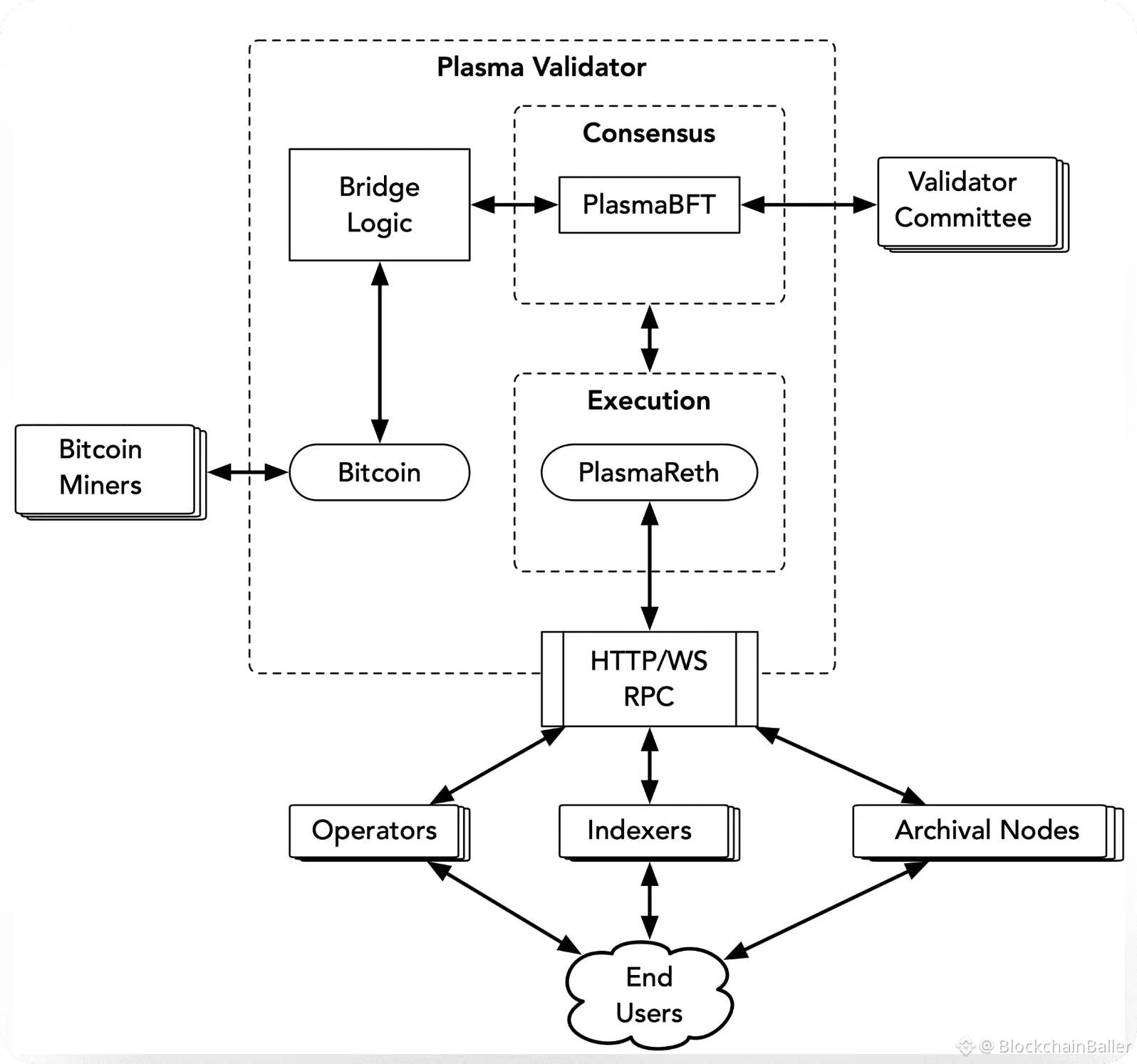
This focus, this relentless pursuit of the stablecoin payment experience, is Plasma's true killer feature. It does not aim to replace Ethereum but to become the infrastructure for stablecoin settlement layers.