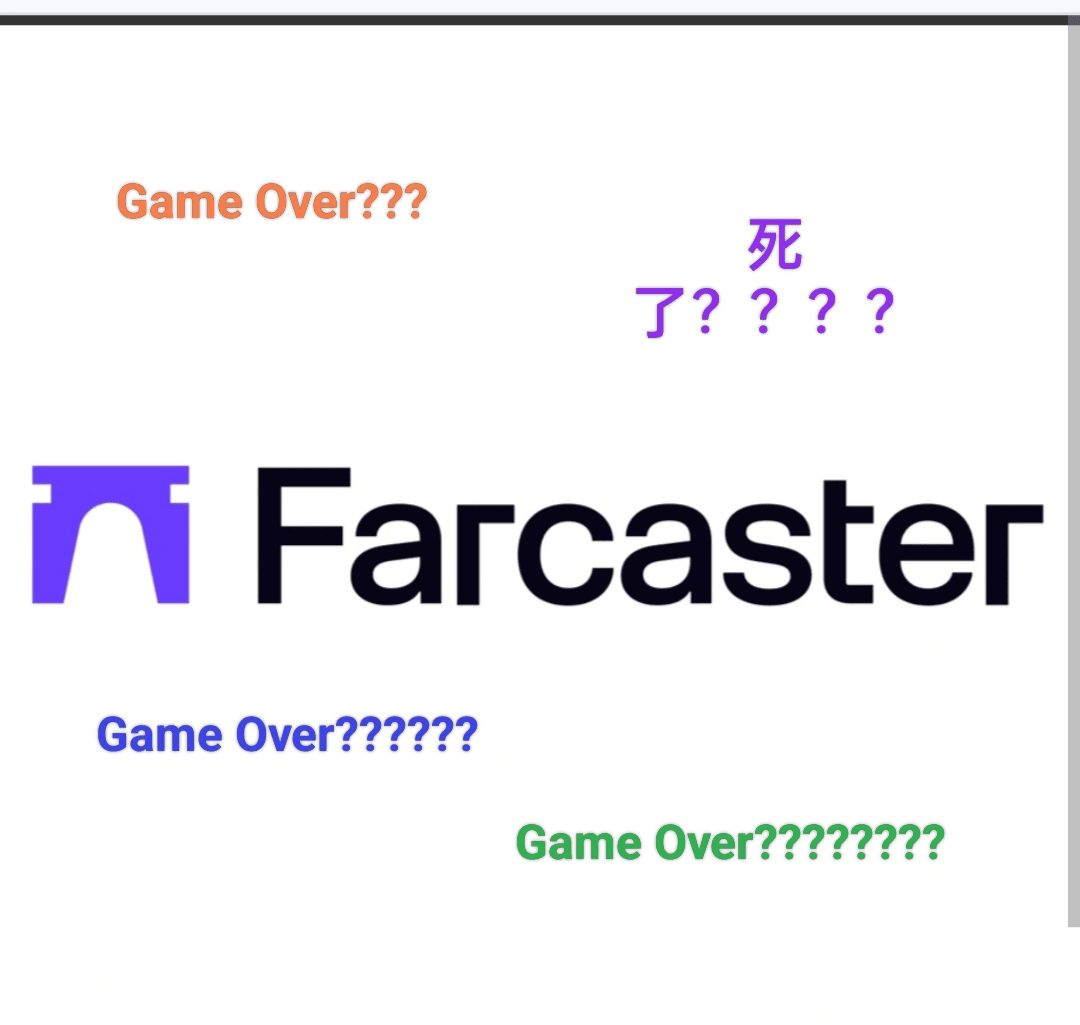
In the past week, the Web3 decentralized social track has almost been declared 'dead penalty'.
On January 20, Lens was acquired by Mask Network; on January 22, Neynar, the core infrastructure service provider of Farcaster, completed the acquisition directly.
Ironically, Farcaster only completed its Series A financing in May 2024, raising $150 million, with a valuation as high as $1 billion.
A lot of money has been spent, the ideals are grand, but the outcome is still the same.
The reason for the failure of decentralized social is actually not complicated:
First, decentralization ≠ user value.
Ordinary users do not care about whether 'the private key is in my hands'; what they care about is: is it easy to use, are there people, and can they gain attention and benefits? Web3 social has long been trapped in 'technical self-indulgence' without addressing real social needs.
Secondly, the network effect is the lifeline of social interaction.
Social products are winner-takes-all. The true active user base of Farcaster and Lens has never been able to break through the moat of Web2 platforms. Once growth stagnates, the so-called 'protocol value' immediately collapses.
Thirdly, decentralization and commercialization are inherently in conflict.
Truly sustainable social interaction requires centralized operations, recommendation algorithms, content governance, and commercial monetization. But once that is done, it deviates from the original intention of 'decentralization' and can ultimately only be reabsorbed by capital or infrastructure.
Fourth, Web3 social is more like a narrative than a product.
Tokens, NFTs, identity protocols are essentially just tools. Without content producers, without regular users, without retention, no matter how attractive the narrative is, it cannot support an ecosystem.
The acquisition of Lens and the 'infrastructure eating' of Farcaster is not a coincidence, but a concentrated explosion of the long-term structural failures of decentralized social.
The conclusion is harsh:
Web3 decentralized social protocols have not lost to Web2; rather, they overestimated the value of 'decentralization' itself from the very beginning.
The real question is not 'do we still need decentralized social',
but rather—who is truly willing to stick around for the long term?