

@Plasma #Plasma $XPL
In the early days of 2026, I had a rather funny moment to share with you all.
,I transferred USDT from this wallet to that wallet, still the familiar operation, but this time I hardly had to think about where the gas was, which chain was cheaper, or whether the bridge was safe.
Transactions complete in a few seconds, fees nearly zero.
At that moment, I realized Plasma is doing something that very few chains are serious about: turning stablecoins into a tool for daily use, not just a 'DeFi product'.
Plasma does not enter 2026 with fireworks.
No new narrative, no big slogans.
But if we look at the data from January 2026, Plasma's TVL has reached between 3.2 to 7 billion USD depending on the source.
This figure is important not because it is large, but because most comes from stablecoins being used, not just sitting idle to farm incentives.
In a market where everything is still shaking in line with BTC prices, the fact that billions of USD in USDT choose to 'stay' on Plasma is a pretty clear signal: this is not short-term speculative money.
January 2026 with Plasma is like a month for true infrastructure.
Not noisy, but pieces are placed in the right spots.
Integration with NEAR Intents is a prime example.
Instead of requiring users to understand routing, bridges, where liquidity is deep, Plasma chooses an 'intent-based' approach.
Users simply need to say they want to exchange USDT for what asset, on which chain, while the task of finding the optimal path is pushed down to the infrastructure layer.
The result is a swap experience across more than 25 blockchains, with over 125 assets, at execution prices very close to CEX.
For small transactions, it is about convenience.
For large transactions, it means reducing slippage, lowering stress, and most importantly, minimizing human error.
What I find interesting is that Plasma does not try to turn NEAR Intents into a marketing story.
It is simply a tool to solve a very 'real-world' problem: stablecoins are stuck in different silo chains.
When Plasma opens this door, it not only increases liquidity for XPL or USDT0, but also positions itself at the center of the multi-chain stablecoin flow.
Builders can integrate the 1Click Swap API, and naturally Plasma becomes the payment backend for many applications, even if end-users are not aware they are using Plasma.
Alongside this, Plasma One starts beta-testing as a true neobank.
Not in the style of 'DeFi app wrapped in UI', but rather an application centered around stablecoins for mainstream users.
Send USDT, receive over 10% yield without needing to lock, use a card for spending, and receive cashback in XPL.
More importantly, this entire flow is almost zero-fee internally.
I have been quite skeptical of zero-fee products, as most are just burning tokens to buy users.
Plasma One is heading in a different direction: Paymaster at the protocol level, gas subsidized from XPL staking.
If staking is large enough and utilization is high enough, this model could balance itself out, rather than becoming a long-term burden.
Looking at the on-chain metrics in January 2026, Plasma operates more like a serious financial system than a testing playground.
TPS over 1000, finality under one second, high utilization thanks to USDT0 and pBTC bridge.
Volume $XPL 24h at 50–75 million USD, not the type of sudden pump followed by a drop.
It reflects a steady influx and outflow of funds, tied to real activities.
The way Plasma was designed from the start says a lot about their priorities.
EVM-compatible to avoid isolating developers.
PlasmaBFT to achieve high speed and predictability.
State anchored to Bitcoin to increase security, even though the price to pay is higher complexity.
Gas abstraction so that users do not need to hold native tokens just to pay fees.
These are not sexy choices, but they are very 'financial'.
It's like how people build highways or interbank payment systems: few boast about it, but everyone uses it.
Compared to other chains in the stablecoin space, Plasma chooses a rather lonely path.
Tron is cheap and popular, but its high concentration makes many organizations still cautious.
Solana is very fast, but not optimized specifically for stablecoins and has had some hard-to-explain downtimes for businesses.
Ethereum and various L2s excel in ecosystem, but fees and UX remain barriers for daily payments.
Plasma does not try to win on all fronts, but focuses on one question: how to transfer stablecoins quickly, cheaply, and with minimal friction.
Of course, no infrastructure is without risks.
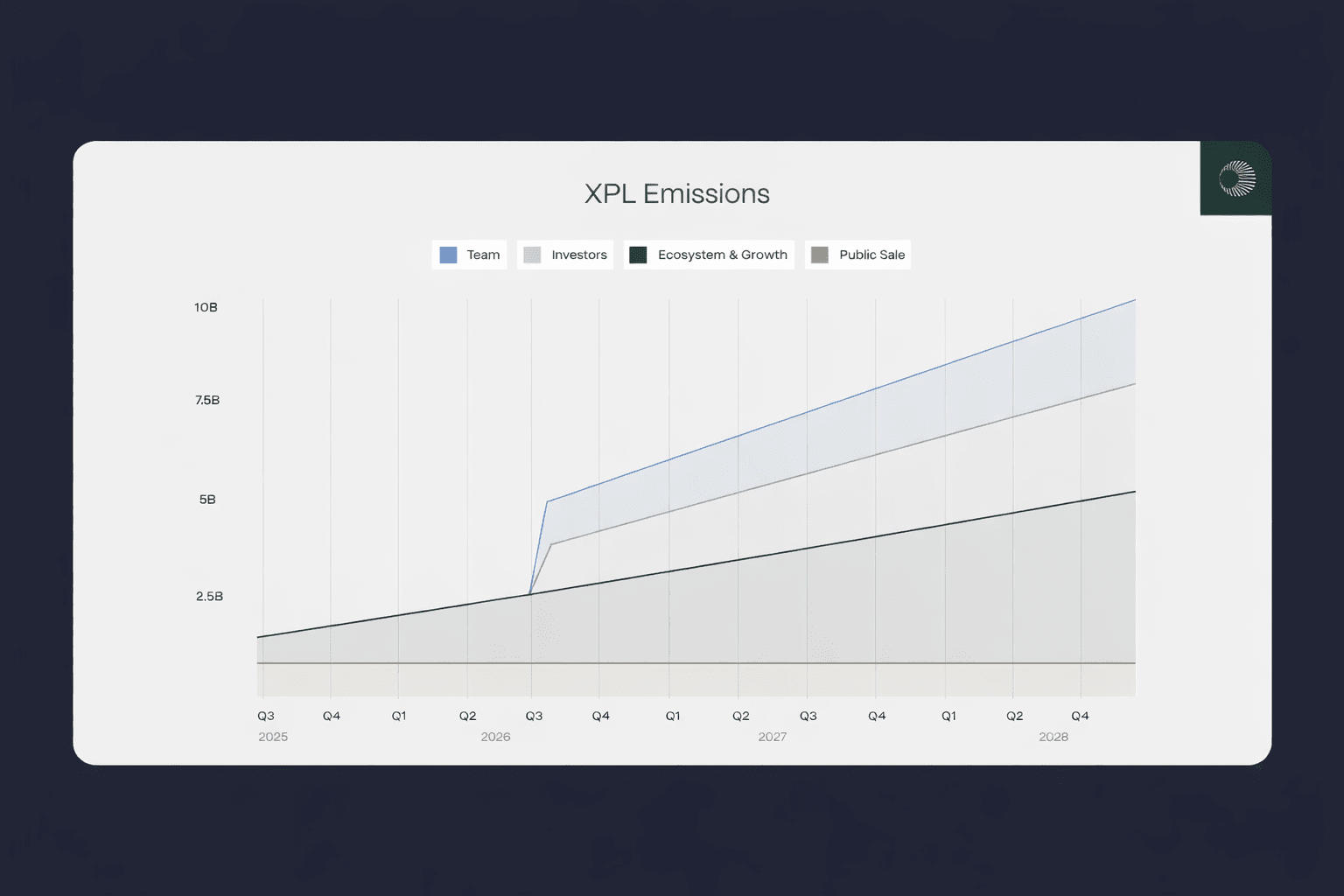
XPL still has a significant unlock schedule in 2026, and the selling pressure is undeniable.
Large liquidation events can cause short-term volatility.
Regulatory aspects for global stablecoin payments remain a mystery, especially as Plasma expands into real-life use cases.
And competition in the stablecoin space is becoming increasingly fierce, from new L2s to synthetic models or RWAs.
But if we set token prices aside and view Plasma as a system, I see a rather rare philosophy in crypto here: accepting 'boring'.
Plasma does not try to create FOMO, nor does it attempt to tell the story of getting rich quickly.
It bets on stablecoins being used more and more for remittance, payroll, settlement, and cross-border trade.
If that assumption is correct, then an efficient stablecoin processing infrastructure will be very valuable, even if no one calls it a 'moonshot'.
Perhaps the most interesting question is not how much XPL will rise, but whether users will gradually see Plasma as a default infrastructure layer for stablecoins.
When transferring USDT becomes so simple that you don't even think about it, when fees almost vanish from users' minds, that's when Plasma has fulfilled its role.
And if stablecoins truly become a new form of global money, chains like Plasma – quietly, slowly, but focused on execution – could be among the longest-lasting names, even if few people talk about them.


