
In the evolving world of blockchain technology, the core challenges of scalability, cost, and real-world usability remain persistent bottlenecks. Traditional layer-1 networks like Bitcoin and Ethereum — despite their groundbreaking innovations — struggle with high transaction fees, limited throughput, and inefficient cross-border payments. This is where Plasma and its native token, XPL, step in as transformative solutions, redefining how blockchain can support global financial activity at scale.
Blockchain Problems: What Needs Solving?
Before diving into Plasma’s innovations, it’s important to grasp the core pain points:
High Fees and Slow Settlement: Networks like Ethereum often become congested, leading to costly gas fees and slower transaction confirmation times.
Poor Stablecoin Performance: Despite stablecoins like USDT dominating the $250+ billion market, their everyday utility is limited by inefficient execution on general-purpose chains. �
CoinMarketCap
Complex Developer Experience: Many blockchains require developers to learn new languages or make significant changes to deploy decentralized applications (dApps).
These issues have held back mainstream adoption, especially for use cases such as micropayments, remittances, payrolls, and retail payments — where speed and low cost are crucial.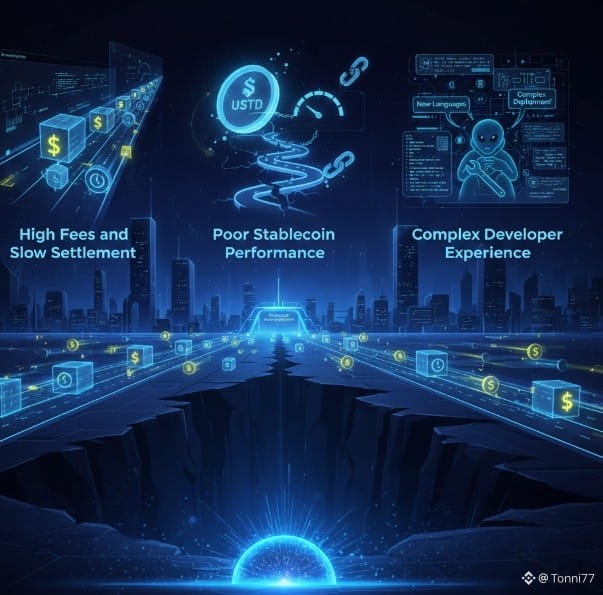
Plasma’s Purpose-Built Architecture
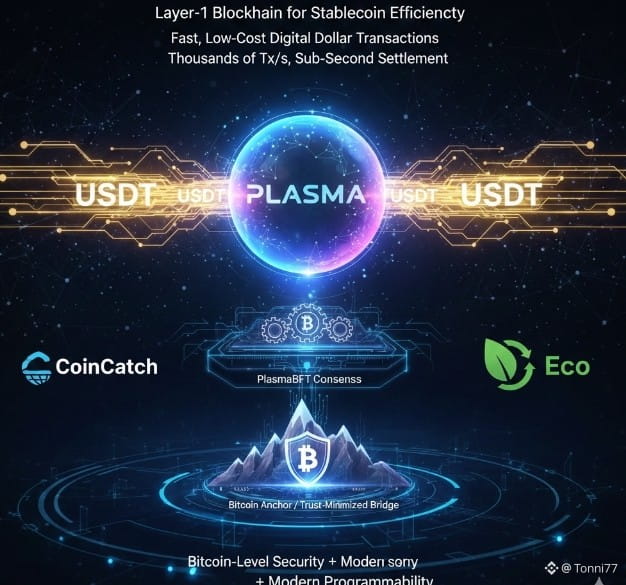
Plasma is a Layer-1 blockchain purpose-built for stablecoin efficiency. Rather than being a jack-of-all-trades, Plasma is engineered to excel at fast, low-cost digital dollar transactions — particularly USDT — by restructuring the fundamentals of blockchain execution. �
CoinCatch
At the heart of Plasma’s architecture is the PlasmaBFT consensus mechanism. This variant of Byzantine Fault Tolerant consensus optimizes for high throughput and fast finality, enabling the network to process thousands of transactions per second with sub-second settlement times. By pipelining the phases of block proposal, voting, and commitment, PlasmaBFT dramatically increases performance without sacrificing security.
Moreover, Plasma anchors its state to the Bitcoin network through a trust-minimized bridge, allowing blockchain security to inherit Bitcoin’s robust decentralization. This hybrid model improves resistance to tampering while enabling efficient execution — essentially combining Bitcoin-level security with modern programmability.
Zero-Fee Stablecoin Transfers
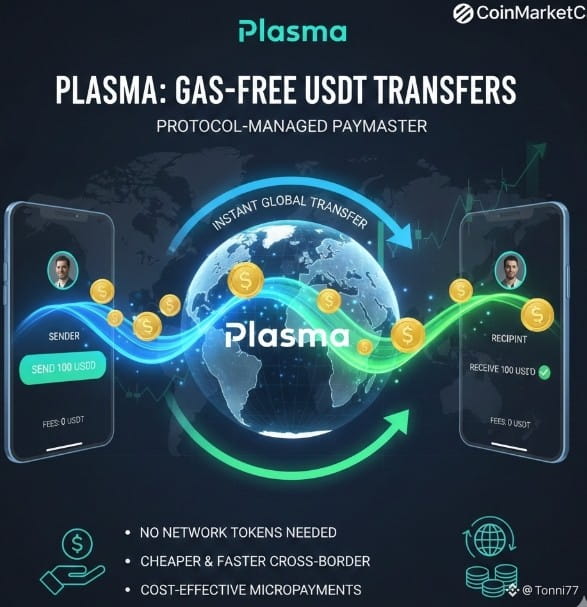
One of Plasma’s most disruptive features is its gas-free USDT transfers. Through a mechanism known as a protocol-managed paymaster, basic stablecoin transactions incur zero fees for users, eliminating a major barrier to global adoption. This is a huge leap forward for real-world financial usability, making transactions as accessible as email or instant messaging. �
CoinMarketCap
In practical terms:
End users can send USDT without ever needing to hold network tokens.
Cross-border transfers become cheaper and faster than traditional banking.
Micropayments — once impractical due to gas overhead — become viable and cost-effective.
This approach directly tackles one of blockchain’s most persistent user-friction points: complex fee mechanics and high transaction costs.
EVM Compatibility and Developer Adoption
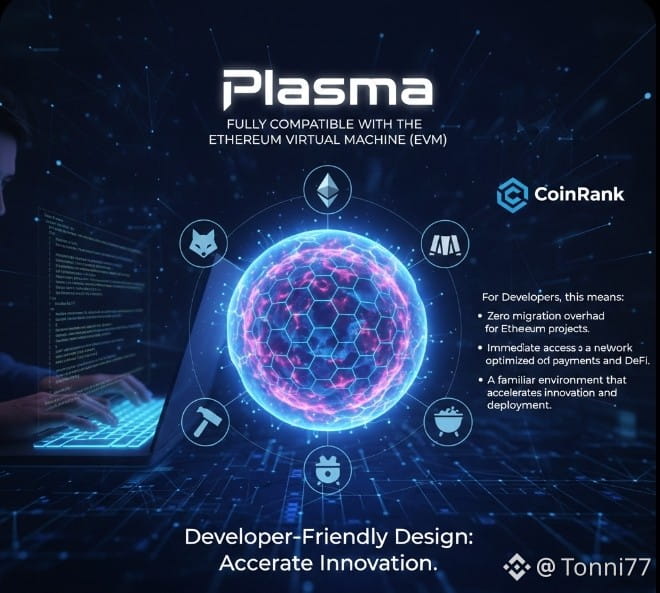
Plasma is fully compatible with the Ethereum Virtual Machine (EVM), leveraging a high-performance execution client built in Rust. This compatibility allows existing Solidity smart contracts and dev tools — such as MetaMask, Hardhat, and Foundry — to function seamlessly on Plasma. �
CoinRank
For developers, this means:
Zero migration overhead for Ethereum projects.
Immediate access to a network optimized for payments and DeFi.
A familiar environment that accelerates innovation and deployment.
This developer-friendly design reduces technical barriers and fosters ecosystem growth without reinventing the wheel
The Role of XPL in Solving Blockchain Challenges
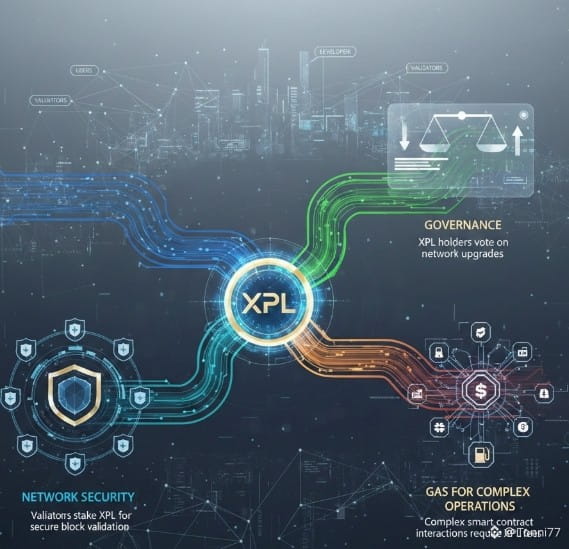
The native token XPL is integral to how Plasma maintains performance, security, and ecosystem incentives. It plays several crucial roles:
Network Security: Validators stake XPL to participate in consensus, ensuring decentralized and secure block validation.
Governance: XPL holders will eventually gain voting rights in network upgrades and policy decisions.
Gas for Complex Operations: While simple USDT transfers can be fee-free, more complex smart contract interactions still require XPL — anchoring economic activity back to the token. �
CoinMarketCap
Through these utilities, XPL not only secures the network, but also aligns stakeholder interests across users, developers, and validators.
Broader Implications for Blockchain Adoption
By focusing on stablecoins — the most widely used crypto asset class for payments — Plasma addresses a fundamental real-world use case that has eluded most blockchains: efficient, global, low-cost money movement. The combination of its consensus model, Bitcoin-anchored security, and EVM compatibility positions Plasma as a solution built for the next phase of blockchain adoption — from everyday payments to embedded financial systems.
In a space crowded with generalized smart contract networks, Plasma’s targeted approach could be the missing puzzle piece that finally bridges the gap between blockchain promise and financial reality.