
I think there are three types of people who are not suitable for trading:
(1) People who lack persistent intrinsic motivation (2) People who do not have deep learning abilities (3) People who like to question and confront
What are the manifestations of lacking intrinsic motivation? Three minutes of enthusiasm, unable to stick to anything. The initiative is also very poor, and it is very difficult to start some new attempts, unwilling to jump out of the comfort zone, indefinitely procrastinating on the actions of change until forgotten.
For example, reviewing this issue, it can be said that reviewing is the best training method for novice traders, because only in review software can you speed up the flow of time, increase the frequency of signals, and repeatedly execute patterns.
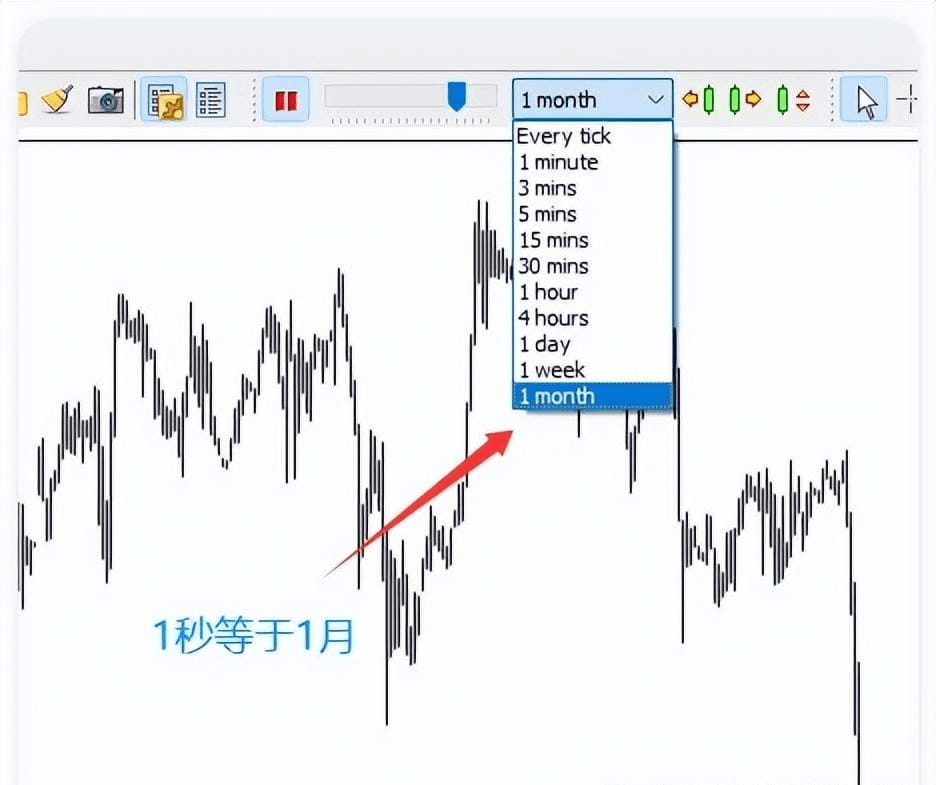 In other words, high-intensity repetition is needed until habits are formed. Sufficient training opportunities in a short time are required to perceive the contours of systematic trading.
At this time, without the pressure of profit and loss, you can execute strategies without being disturbed by emotional pressures, which makes the resulting data samples meaningful for research.
But in real trading, how often do signals appear? The frequency is too low.
Will there be execution errors caused by entering the market early or late? It can't be repeated.
Will pressure lead to withdrawing stop losses or holding positions, or taking on a large number of additional positions, causing the model to collapse? Pressure and emotional interference.
These are all very easy errors to occur. You must realize what ideal operations look like, what actual operations look like, what factors interfere, and how such interferences manifest so that you can adjust and improve your system.
But for most people, this is a question that has never been deeply explored in trading. They simply lie in their old experience circle, repeating past habits, waiting for a day when a sudden 'enlightenment' will lead to unexpected success.
I have seen too many examples of people continuing to lose, rationally they should stop and assess the problems, and return only when their abilities are sufficient.
But many people engage in subjective trading and continue to lose. They rationally know they should solve the problem, but they just can't stop, can't change their intuitive trading habits, yet still expect that one day they can turn things around by luck. Is that reasonable? Clearly, this is illogical.
Just like a student who said at the beginning of the month that he planned to take time to review over the weekend and asked me if sending messages on weekends would be a disturbance. I said, 'No problem, feel free to send them.'
In the middle of the month, I said that I planned to review the month at the beginning as I was delayed by something. I said that everything is difficult at the beginning because all you see at the start are challenges. However, once you truly engage in something, you will gradually find a sense of achievement and enjoyment. Once you enter a positive feedback loop, persistence becomes very simple.
When the month comes to an end, I said that no matter what, I will definitely take time to review at the end of the month. The previous two times, I was afraid there were too many problems, and I bothered you with messages on weekends... Well, the responsibility suddenly fell back on me.
In fact, I also came from being a beginner and have faced this issue of procrastination. Now I deeply understand that if you procrastinate at the beginning, the resistance you face later will become greater, because you are not only fighting inertia but also the comfort zone created by recent habits.
 Many people are unwilling to learn, unwilling to review, not for any other reason, but because they fear exposing the reality that they cannot profit during the review.
There is a beautiful expectation for trading and freedom. Once that expectation is shattered, you will find that trading requires immense mental and physical effort to stabilize, which is hard to accept.
But for 95% of people, from the moment they open the software, their trading career enters 'countdown mode,' and their state and net worth may become worse, making subsequent operations increasingly difficult.
In the beginning, there is a lot of confidence and a strong desire to explore and learn. In the middle stage, losses occur, causing a conflict between ideals and reality, leading people to start doubting and rejecting the market. In the final stage, significant losses become irretrievable, conventional methods become ineffective, leading to extreme pessimism and a reluctance to change.
 The intrinsic motivation for self-learning in trading is related to inner conflicts. The fewer inner contradictions there are at the beginning, the better the learning state. When you have more inner conflicts, it takes a lot of energy to calm your feelings and digest those contradictions. How can you have the energy to learn?
The sense of continuous improvement can turn traders into geniuses, while the anxiety of continuous losses can drive one to become a gambler.
Speaking of 'things without deep learning ability,' a friend suggested some time ago that it’s best to keep the word count under a thousand, and to simplify by highlighting a few key points.
I was stunned by it all; it seems troublesome to write, but why is reading perceived as troublesome? Since this is the case, why not open various AI for questions and directly ask 'how to achieve stable profits in trading, provide the five most effective points'? Isn't that easier?
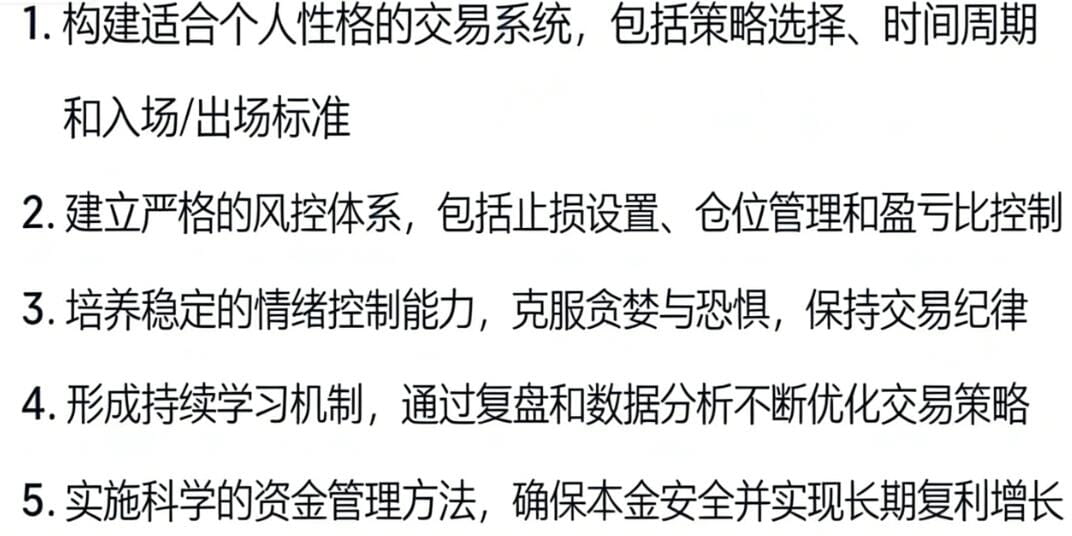 There is only a framework without details, as details require you to practice.
We are now in an era where attention is kidnapped. Various apps use algorithms to attract attention with more straightforward and stimulating content, competing for and dividing our attention.
Just like, ten years ago, being interested in a book meant reading it thoroughly. Three years ago, some people turned to watching ten-minute short video summaries, and this year, some friends don't even read and just throw it to models to extract the key points and glance at them.
Unfortunately, trading is never about how much theory you learn to make profits, but rather how much you can prove and practice those theories to profit.
Just like I often say, 'In a trend, you must anchor your position.' Knowing is one thing, but truly being able to utilize techniques to achieve this is another.
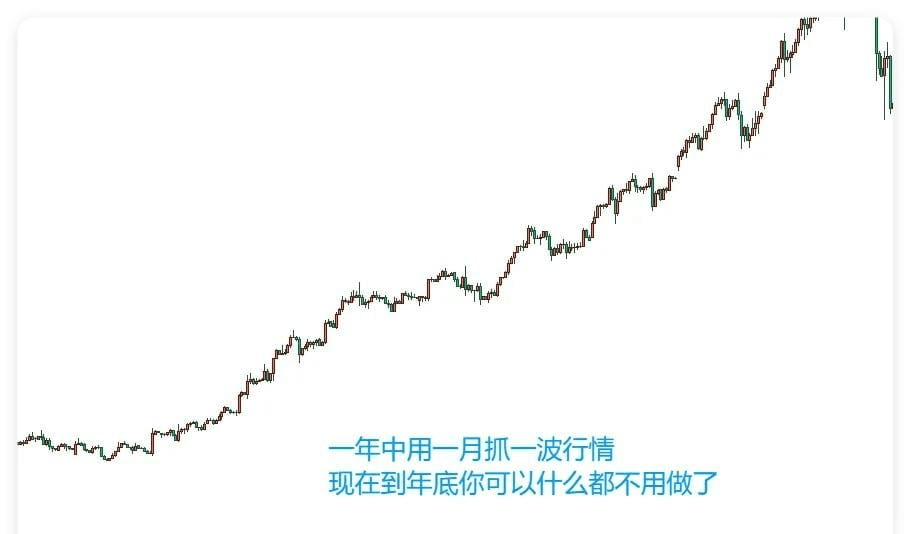 Why is it that most people find it difficult to achieve the extremely simple 'anchoring trend position'? It's not a lack of skills, but a lack of understanding.
Without experiencing the passive growth dividends from trends or the pain of losing orders in a major trend, the ability to resolve such contradictions is the true trading skill.
In the not-so-distant future, I believe valuable content online will become increasingly scarce. On one hand, it's the demise of attention; no one is willing to engage in deep thinking anymore, and they are burdened by various forms of content theft.
On the other hand, increasingly shallow and straightforward content will become part of the corpus for various models, being repeated endlessly until it becomes something that is 'universally accepted as correct.' You say trading is complex, but everyone says it should be simple, so the voices of the many naturally prevail...
The dissemination of in-depth content is bound to be more difficult than superficial content; this is another form of 'bad money drives out good money.'
Speaking of 'liking to question and confront,' human cognition always has limitations. Occasionally changing perspectives can eliminate the problem. For instance, someone asked recently why his trend-following strategy performed poorly, losing money with every trade.
In reality, the focus is on finding volatile varieties to chase breakthroughs or even gamble on breakthroughs in advance. Objectively, high volatility varieties are avoided, while low volatility varieties are chased; can the win rate not be poor?
You can't escape cognitive limitations and doubt the methodology. But once you step out of the current level, you will find that the strategy is not the problem; the real issue lies in the lack of target varieties and hopping back and forth. Different perspectives lead to different solutions.
In other words, the issue of a low win rate does not lie in the strategy, but rather in the selection of varieties and the choice of trading time frames.
From a communication perspective, I have met two friends who left a deep impression on me. One read one of my articles somewhere, added me as a friend, and asked how to address me before immediately wanting to buy a course.
I said you should first look at previous articles and see if the ideas resonate before we proceed. He said, 'No need to look. I believe that someone who can write hundreds of articles must be very impressive.'
A round of praise left me stunned; something felt off, but upon reflection, I felt that this person made quite a bit of sense...
And another friend said he came after reading a certain article. He then shifted the topic and asked, 'Why do you spend time writing articles? Why do you do things that are so laborious and thankless? Can you introduce your trading methods?'
I see how to answer these three questions. Yes, but I don't want to waste time explaining. It's not like the article helped you; it feels more like the article is coming back to collect debts after you finish reading it.
Imagine, would the support these two friends receive in the market be the same? The answer is obvious. It's not that this industry is destined to be out of sync, but some people are too self-serving.
 The mindset has changed; the heart is full of conflict. You want to make changes but are plagued by procrastination, lacking the determination to break out of the comfort zone. Gradually, you will rationalize this 'drowning' behavior, typically thinking that your experience represents everything. He loses money, so the market is definitely a scam, and no one can make a profit.
I feel that what past experiences tell us are all general principles. The things others talk about are things that no one can actually achieve. Everyone has to struggle like him and ultimately weave themselves into a cocoon...
But in reality, there are always smarter people in the market and more ingenious methods to solve problems. Some people are trapped by inner conflicts, while others know how to resolve such conflicts.
Therefore, I often remind myself to be humble and never let my cognitive limitations bind me. Just like the recent question of 'why write articles,' the reason is quite simple.
In trading, the market is changing, the times are changing, and your experience and understanding are also changing. Why cling to the old ways without striving for improvement? If you don’t change your cognitive structure, it will slowly solidify and shape you, rather than you shaping it; this is how stubbornness arises.
Moreover, people become lazy and dull in a comfortable life. After a while, you tend to rely on intuition and recent experiences, but thinking can help you adjust back to a rational state, just like rowing upstream; if you don't advance, you'll retreat.
It’s not that you can always maintain the best market perception and trading state; rather, it will inevitably fade and be forgotten. If you do not regularly refine your trading framework and reflect on your operations, your responsiveness will decline. Even when signals occur, your confidence in execution starts to weaken.
Therefore, for those who like to question, I feel they have begun to despair internally, turning pessimism about trading into a hostile attitude to label others, effectively bringing others down to their level, asserting that 'the market is a scam' to maintain the status quo.
But this isn't good; it is precisely when one needs to break cognitive limitations and the shackles of bad habits that they choose to resist and close off, leading only to continued avoidance and rationalization of their mistakes, straying further down the wrong path.
Whether it's learning or communication, it's to resolve inner conflicts, not to project those conflicts outward as hostility in relationships with others. This distinction is crucial and needs to be especially noted in both trading and life.
I am Little Egg Tart, a professional analyst and teacher, your mentor and friend on your investment journey! As an analyst, the most basic thing is to help everyone make money. I will resolve your confusion and positions, speaking with strength. When you are lost and don't know what to do, follow Little Egg Tart, who will point you in the right direction #美联储降息 $BTC
