
The short-term Sharpe ratio for $BTC has dropped to a level that historically preceded price minima. This was noted by CryptoQuant analyst Ignacio Moreno de Vicente.
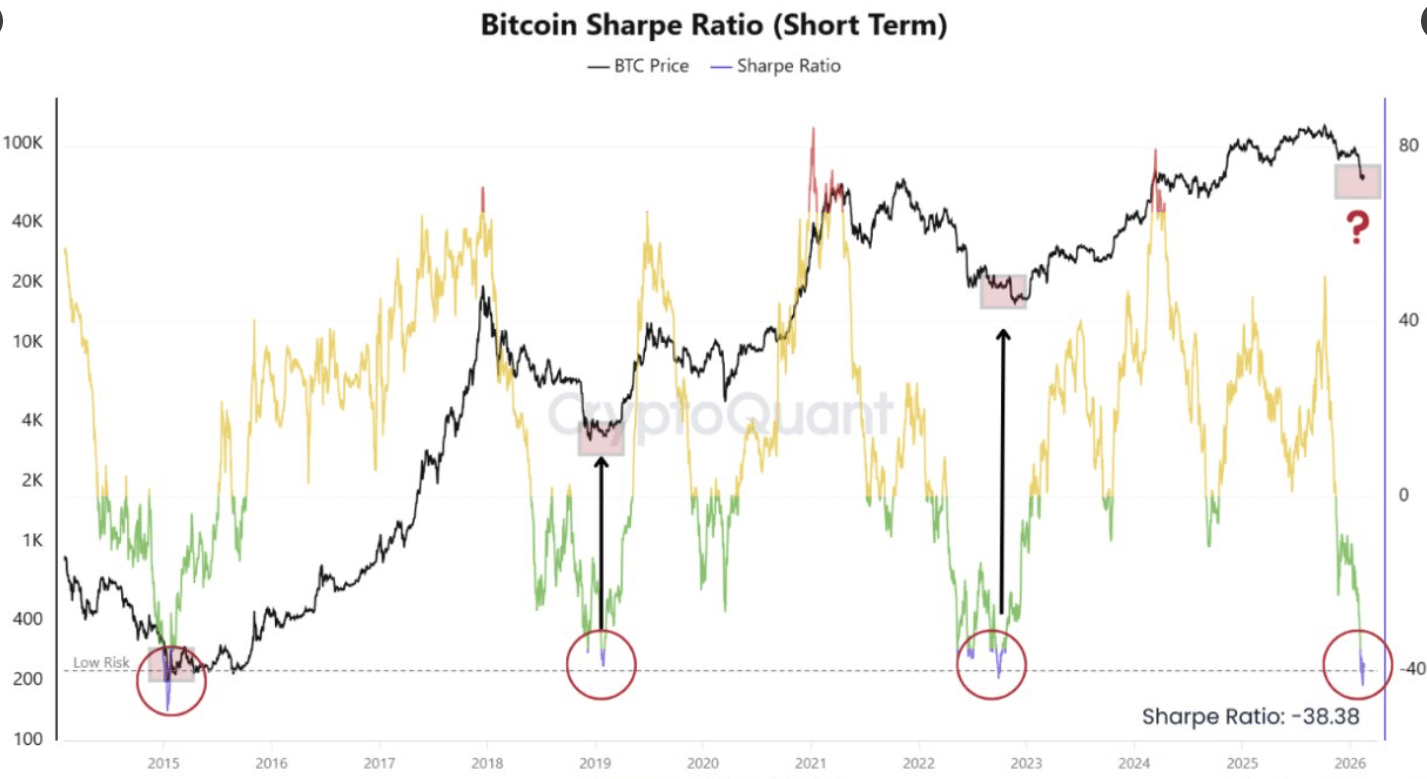
The indicator reached -38.38. Previously, such values were recorded before market reversals in 2015, 2019, and late 2022.
The Sharpe ratio measures return adjusted for risk. A deeply negative value of the short-term indicator means not just low profitability but maximum loss per unit of volatility — that is, a sharp and deep decline. For many participants, this is the point of capitulation.
‘The deepest drawdowns of the indicator were not the beginning of prolonged bear markets. They noted the exhaustion of selling pressure. The arrows on the chart clearly demonstrate this: after each extreme negative indicator, there was a rapid recovery to new highs,’ explained the expert.
According to him, from a probabilistic standpoint, the risk-reward ratio for medium- and long-term positions looks 'asymmetrically favorable.' The risk of further decline is already largely priced into the momentum indicators.
The main threat, according to Moreno de Vicente, is the macroeconomic liquidity shock that could prolong the bottom formation process.
Another signal of reaching the bottom
The stress level of short-term Bitcoin holders (STH) has dropped to levels recorded at the bottom of the bear market in 2018.
Bollinger Bands for STH indicate record oversold conditions for the asset in eight years. The metric measures the gap between the current cryptocurrency price and the average purchase price of those who have held coins for less than 155 days.
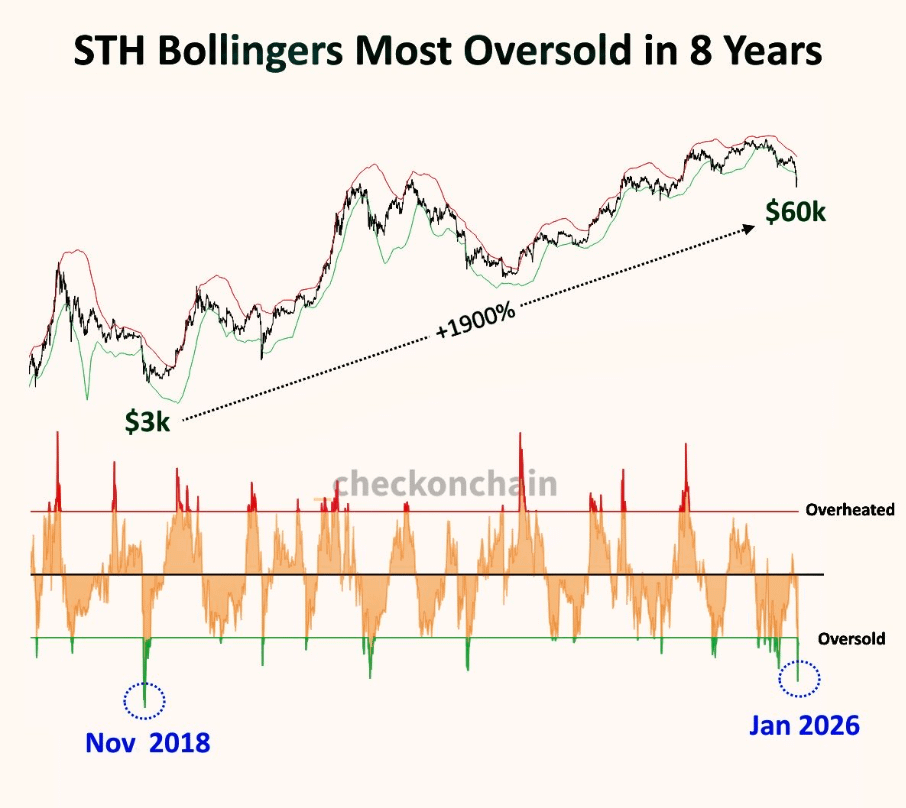
The breakout of the lower boundary of the band indicates that Bitcoin has gone significantly below the entry price of recent buyers, moving beyond the typical historical volatility.
Historically, this signal has coincided each time with the formation of a global bottom. At the end of 2018, a similar oversold condition preceded a 150% increase over 12 months and a 1900% increase over three years.
The same signal appeared before the lows of November 2022. This was followed by a rally of 700% — to a new historical maximum of around $126,000.
Earlier, analysts from Matrixport pointed to the formation of a 'sustainable bottom' and the exhaustion of selling pressure. However, specialists from CryptoQuant doubted the completion of the correction of the first cryptocurrency.
Return to accumulation
Major investors have changed their tactics: after six months of distribution, they have returned to accumulation. This was indicated by CryptoQuant analyst Burak Kesmetchi.
According to him, the turning point came after January 12, when the price of Bitcoin fell into the range between $62,000 and $68,000. Data from the beginning of the year confirms this: the accumulation volume from long-term holders (LTH) rose to 115,000 BTC, and selling pressure has almost disappeared.
‘The most patient investors in the market are back in the game,’ noted the expert.
However, Kesmetchi doubts that such a pace of buying will be enough to reverse the trend. Despite the return of LTH, no expressed momentum is currently observed.
The analyst believes that the dynamics of purchases in the coming weeks will be a decisive factor.
‘Historically, such a picture often precedes a lull before a major movement. At the very least, one can say this: the selling pressure from long-term holders has ended. At least for now,’ he summarized.