

A brief discussion on this week's macro events!
Mainstream fluctuation, no technical analysis provided, just sharing some macroeconomic events worth paying attention to this week, as we are about to enter the Federal Reserve's interest rate decision period (just sharing the events to watch, no analysis, no evaluation, no speculation).
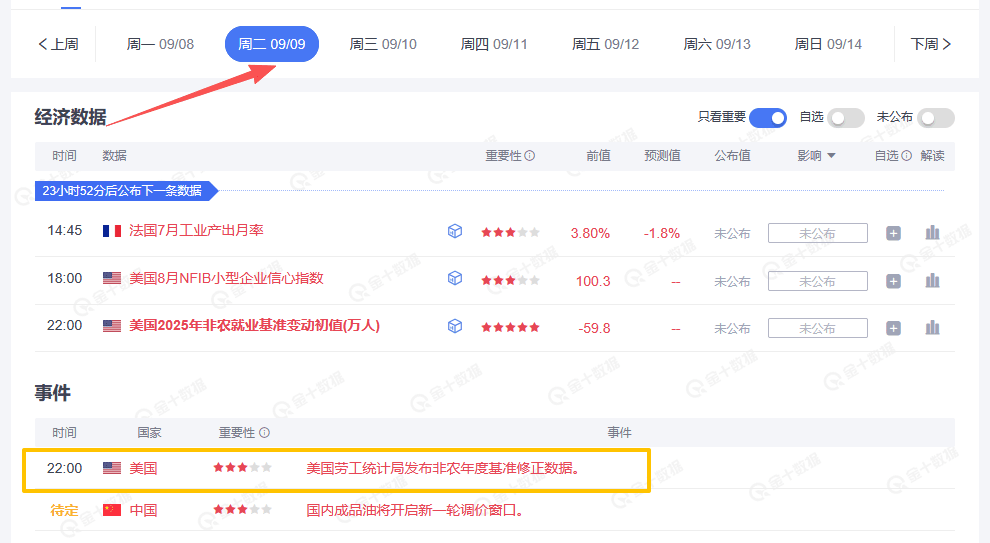
9/9: At 10:00 PM, the U.S. Bureau of Labor Statistics will release the non-farm annual benchmark revision data!
Data that reveals the true state of the U.S. labor market, which may overturn previously published non-farm employment data.
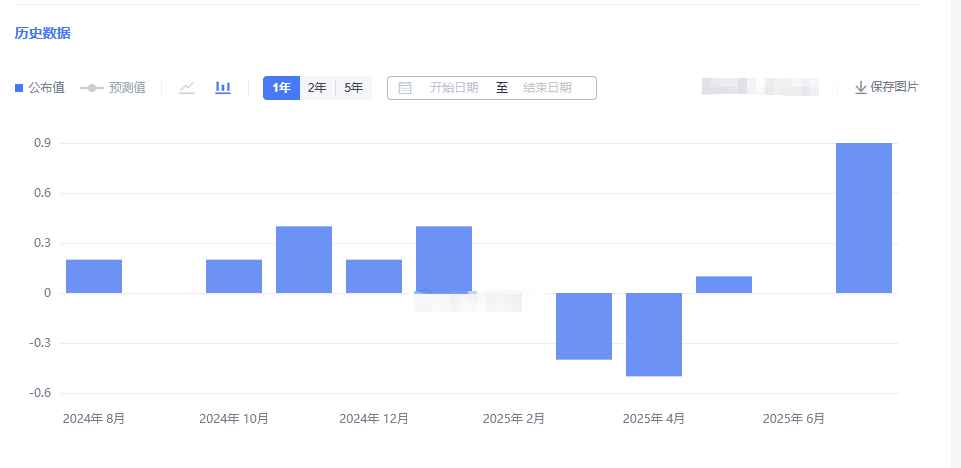
The annual benchmark revision from the same period last year revised down 818,000 jobs, quite shocking!
Powell, the Federal Reserve has always been very concerned about the job market, so we should pay attention too, regardless of whether we understand it or not, we just need to pay attention 😊
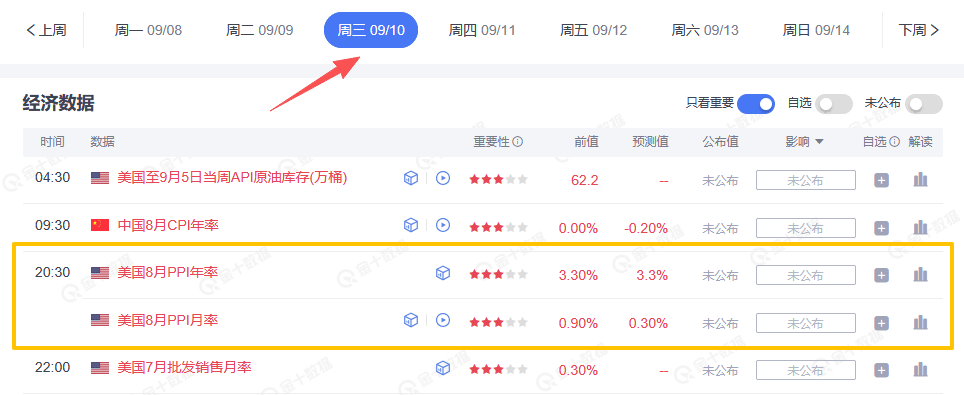
September 10: At 20:30, the US August PPI annual rate and monthly rate will be released!
What is this? It's called the Producer Price Index, mainly used to measure price changes of various goods at different production stages. Like the Consumer Price Index (CPI), it is usually used as an important indicator for observing the level of inflation. It serves as a leading indicator for consumer inflation; when producers charge higher for products and services, the higher cost inflation will be passed on to consumers.
Well, this has a transmission effect on CPI, and the specific logic is:
PPI is the 'purchase price' for factories/wholesalers, while CPI is the 'final price' you see in supermarkets/restaurants. Generally, PPI rises or falls first, and may gradually be transmitted to CPI after 3-6 months, but there is no guarantee of synchronization because companies will first bear it themselves or digest inventory before deciding whether to pass the costs on to you.
Transmission chain
Raw material / intermediate goods price increase → PPI reacts first
Companies hold on for a while → profit / inventory adjustment
Ultimately passed on to goods / services → CPI follows up (average lag of about 3-6 months)
Why sometimes it is 'not in sync'
Statistical caliber differences: CPI includes rent and other services, while PPI has a different caliber, so trends may diverge.
Corporate strategy: First reduce profit or clear inventory, delay price increases, and extend transmission time.
Tariffs and promotions: Tariff costs will be transmitted with a delay, and short-term promotions will temporarily mask price increase pressure.
For example
PPI is like the 'price increase of ingredients' in the kitchen, while CPI is the 'price of dishes served on the table.' The chef will first see if they can earn less or use more inventory, and only when they can't hold on any longer will they raise the dish prices, so you won't feel the price increase immediately; usually, it takes a while to notice 'why has it increased again.'
September 11, Thursday: This day is quite significant; after the PPI mentioned above that has transmission effects, Thursday is the CPI, one of the inflation indicators the Federal Reserve values most.
The English abbreviation for the Consumer Price Index is CPI, which is a price change indicator based on the price statistics of products and services related to residents' lives, and is usually an important indicator for observing the level of inflation.
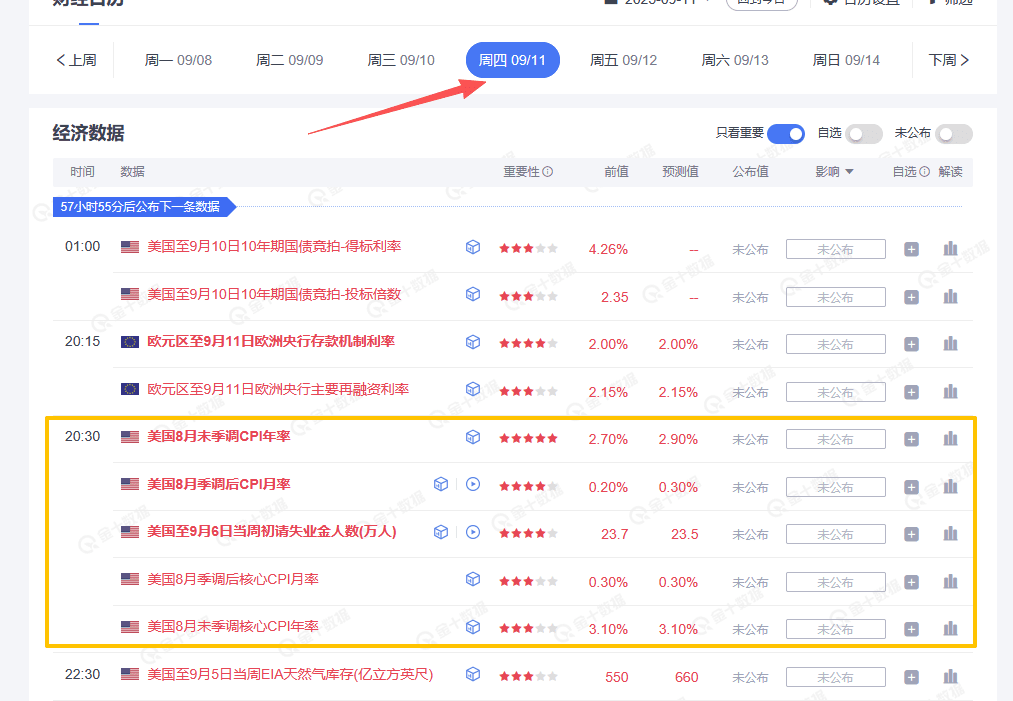
Will the expected values of this annual rate and monthly rate + the expected value of PPI above be favorable?
At 20:15 on Thursday night, the central bank will announce the interest rate decision; Thursday will basically go like this, and then let's see what Lagarde has to say!
September 12, Friday: There are two small data points on Friday.
The initial value of the US September one-year inflation rate expectation
The initial value of the US September Michigan Consumer Sentiment Index
To be announced at 22:00 on Friday night, there will be no data for this week.
Let me briefly talk about my own opinion:
Before the Federal Reserve's interest rate meeting, this data is particularly important, and in the absence of these data releases, let alone us retail investors, even Wall Street is in the dark!
So from a macro perspective, before the data is released, it is basically volatile. Don't talk about how left-side trading works; that is baseless gambling. (Note: What I mean is from a macro perspective. If you are doing short-term trading, then feel free; you don’t need to look at the long term so freely.)
Let me express my own opinion. If the announced values align with the expected values for PPI and CPI,
Then the Federal Reserve's upcoming interest rate cut will definitely be a hard cut, especially a cut of 50 basis points. The consequence of a hard cut is a high probability of stagflation! After a short pulse of demand, supply constraints and cost push will cause inflation stickiness to rise, and insufficient growth momentum will form 'high inflation + low growth.'
Well, after all, Trump has already subtly begun to influence Federal Reserve policy, and with this king who has been urging rate cuts, a hard cut is also normal.
Not much to say anymore, the mainstream is right-side trading; operational advice is to wait for more!
Left side is random
Short-term control of leverage and position; for spot trading, just look at your position ratio to enter the market.
If you find it useful, please give a thumbs up. Thank you for everyone's support!!!
Wishing everyone prosperity~~~~🤑
