
Recently, the prediction market Polymarket has gained tremendous popularity, with Ethereum founder Vitalik Buterin, tech investor Peter Thiel, and Donald Trump Jr. personally investing or joining the advisory board. Many people are eager to jump in, thinking it could be the 'next wealth code'.
But before you throw your money in, it's advisable to consider the following points:
1️⃣ Information barriers & cognitive bias
Most people think that predicting the market is about 'who sees the news first', but in fact, it's about the quality of information + interpretive ability.
For foreign elections, you may not even be familiar with the candidates' names, let alone understand the electoral system and public opinion trends. Even if you see the news, you may make incorrect judgments due to a lack of understanding of the background and being swayed by emotions. This leads to: ordinary people find it difficult to consistently outperform market prices because the market itself is a culmination of information.
2️⃣ Arbitrage is hard to achieve 'no risk + high return'
In theory, if you can buy YES when the probability of event A is 30%, and buy NO when the probability of event B is 40%, you can achieve risk-free arbitrage—regardless of which happens, you can profit.
But the problem is:
Ideal prices are hard to transact;
There are also slippage, transaction delays, gas fees, and other hidden costs.
Reality is often: you discover an arbitrage opportunity → the price has already changed/profitability has become very low.
3️⃣ Bots have advantages that crush retail investors
Polymarket has long been a paradise for high-frequency robots:
Fast robots can seize arbitrage opportunities before events happen and prices react;
Slightly slower robots will also monitor full-time and place orders in seconds.
Ordinary people? Not only do they lack speed, but they also can't watch the market around the clock.
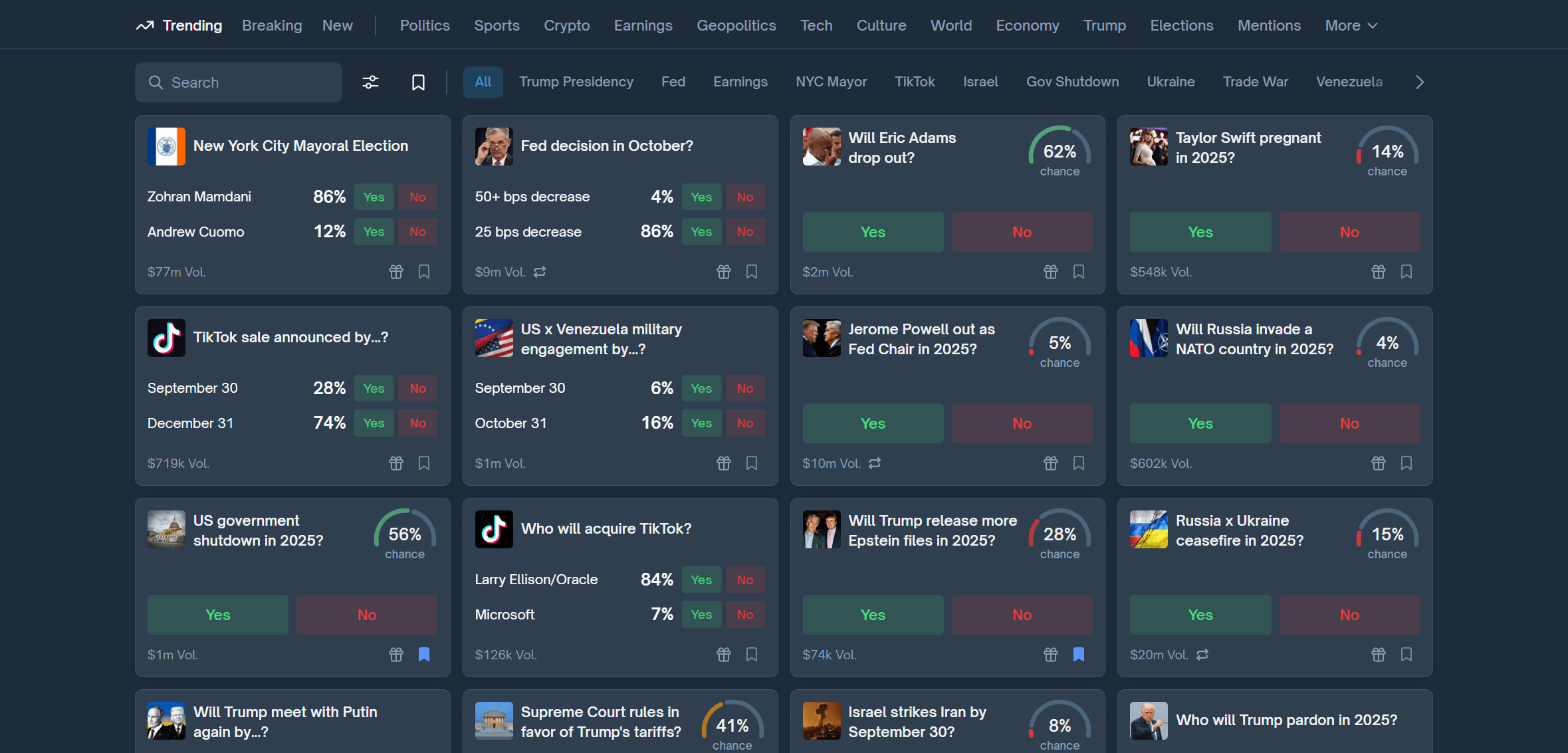
So where are the opportunities for ordinary people?
Don't be discouraged, ordinary people are not completely without a chance, but the approach needs to change:
A. Explore 'long-tail' events
Look for markets with poor liquidity and not very popular—big money is too lazy to participate, and your information judgment may have an advantage.
B. Treat it as a hedging tool
Worried that a certain regulatory news will crash the market?
You can buy 'YES' on Polymarket, and after the event occurs, use the profits to offset losses, essentially buying insurance for your position.
C. Information advantage (or 'insider')
If you happen to know a certain outcome earlier than others (for example, if you happen to know news about a celebrity that the public is generally unaware of), that is your Alpha moment.
Of course, such opportunities are rare and can't be sought after, don't expect them to happen every day.
Final summary
Polymarket is not suitable as the 'only way to make money', it's more like an information arena + risk hedging tool.
Keep a calm mindset, and you'll find that this is more lasting and interesting than pursuing overnight wealth.