🫵Pi Network has not yet been officially listed on major exchanges like Binance, Coinbase mainly for the following reasons:
1. Mainnet is not fully open
Pi Network is currently in the closed Mainnet phase (Enclosed Mainnet), meaning that transactions are limited within the Pi ecosystem and among users who have completed KYC, and do not allow free withdrawals/deposits to exchanges.
Major exchanges often require the blockchain to be completely public, liquid, and capable of transparent trading before listing.
2. No actual liquidity yet
The current price of Pi that you see on small exchanges (IOU – futures trading) is just a predicted/bet price and does not reflect actual value.
Binance and top-tier exchanges do not list coins/tokens when there is no real supply-demand and circulation capability.
3. Requirements for transparency and legality
Pi Network is still controversial regarding its level of transparency: the project has not clearly published complete tokenomics, distribution roadmap, or independent audit mechanisms.
Major exchanges are very strict about compliance issues, especially after several collapses of crypto projects.
4. Community risks and reputation
Pi has a very large community (tens of millions of users), but at the same time it is controversial: many see it as a "phone mining project" that is not clear.
Binance must consider reputation: if it lists when Pi is not "truly complete", the risk for both the exchange and users will be high.
---
In summary:
Pi Network can only be listed on Binance when Mainnet is fully opened, allowing free transactions, and the project meets the transparency – legality – security standards of top-tier exchanges. Before that, all Pi transactions on "underground exchanges" are only IOUs (virtual versions), not reflecting actual value.
👉👉Expected timeline for Pi Network to open Mainnet and the chance to list on Binance:
⚡Official roadmap of Pi Network
Phase 1 (2019–2021): Building the community, mining through the app.
Phase 2 (2021–2022): Launch of Enclosed Mainnet (operational chain but transactions only within the Pi ecosystem).
Phase 3 (not achieved): Open Mainnet – fully open blockchain, allowing free transactions, connecting to exchanges and DeFi.
Currently (9/2025), Pi is still stuck in the Enclosed Mainnet phase.
⚡Conditions for opening Open Mainnet
Based on the announcement from the Pi Core Team, Pi will only open Mainnet when:
High KYC rate: most users have successfully completed KYC (expected >80%).
Applications in the ecosystem are strong enough: there are many Pi apps in the Pi Browser for users to actually consume Pi, not just for speculation.
AML & legal mechanisms: compliance with anti-money laundering regulations, identity management.
⚡Expected timeline
Pi Core Team has hinted that Open Mainnet could take place from 2024–2025 but has been delayed multiple times. With the current pace, many experts predict:
Late 2025 – 2026: The possibility that Pi will officially open Open Mainnet.
After that, top-tier exchanges (Binance, Coinbase) will consider listing.
⚡When can we list on Binance?😛
Binance will only list Pi after Open Mainnet is fully opened.
Reasonable prediction: 2026 will be the milestone when Pi has a real opportunity to list on Binance, if the project is transparent and has actual liquidity.
⚡Risks & notes for investors
If you are holding Pi: currently there is no official price, only IOU transactions.
Risk: if Pi is delayed or does not open Open Mainnet, the chance of listing on Binance will be far away.
Opportunity: if Pi succeeds, a large community will create very strong demand when listed.
👉 In summary:
2025: unlikely for Binance listing because Pi has not opened Mainnet.
From 2026 onwards: if all conditions are met → the opportunity for listing on Binance becomes clearer.
👉👉👉Information about the founders of Pi Network, especially Dr. Nicolas Kokkalis and associates, along with their achievements — as well as the points that remain controversial.
Pi Network was established on March 14, 2019 (Pi Day) by three people:
Dr. Nicolas Kokkalis — Head of Technology
Dr. Chengdiao Fan — Head of Product
Vincent McPhillip — Formerly Head of Community, left the project in February 2021
-------------
🎃Dr. Nicolas Kokkalis — Biography & achievements
🙊Education & expertise
He holds a PhD from Stanford University, specializing in computer science / distributed systems, human-computer interaction.
Before joining Pi, he was a postdoctoral scholar at Stanford.
🙊Experience & role
At Stanford, he taught the first class on decentralized applications, CS359B in 2018.
He previously participated in technology projects, for example Gameyola (online gaming platform) and StartX (a startup accelerator affiliated with Stanford)
The current main role is to lead technology in Pi Network — designing the blockchain system, identity verification mechanisms (KYC), distributed processing, fraud prevention, etc.
🙊Significant achievements
Some potential achievements that can be considered outstanding:
Achievements Details
Teaching & academia CS359B class at Stanford, specializing in decentralized apps.
Building a large user community for Pi Network The Pi project has attracted tens of millions of users (Pioneers), with a large number of people completing KYC.
Product development – technology User education, designing mining systems on mobile — creating a difference compared to blockchains that require strong hardware.
🫵Points still under discussion / questions
Transparency and public appearance: Nicolas Kokkalis often appears less publicly; social media accounts like X/Twitter have very few posts.
There are people questioning the profile on LinkedIn, the signs of "lack of clarity" in the past — for example, larger projects are mentioned, but sometimes he refers to Pi less in public profiles.
Some users and observers remain skeptical about whether Pi has truly opened the full Open Network yet, and whether the commitments regarding open source, smart contracts, actual liquidity, etc., are being adequately addressed. Nicolas Kokkalis has also acknowledged that Pi Network has not fully opened the network and wants to do it "the right way" (protecting identities, preventing fraud) first.
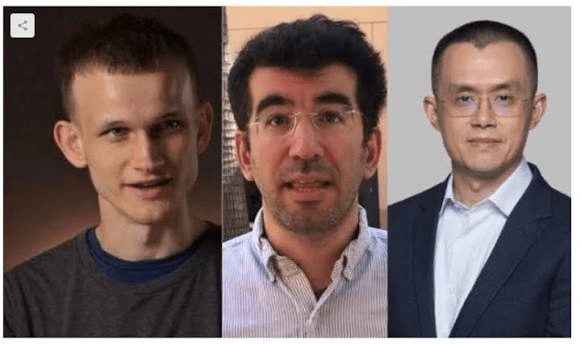
🙊The information "Nicolas Kokkalis is the teacher of Vitalik Buterin", the founder of Ethereum is a false rumor, often appearing in the Pi community to elevate the project, but there is no academic evidence or official documents confirming it. The founder of Pi Network is Dr. Nicolas Kokkalis (along with Dr. Chengdiao Fan). He taught at Stanford University about distributed systems and blockchain applications. Meanwhile, Vitalik Buterin – the founder of Ethereum – studied at the University of Waterloo (Canada), but dropped out midway to focus on developing Ethereum (2013–2014). Vitalik has never studied at Stanford and is not a student of Nicolas Kokkalis.
👉 Therefore, the information "Nicolas Kokkalis is the teacher of Vitalik Buterin" is false rumor, often appearing in the Pi community to elevate the project./