
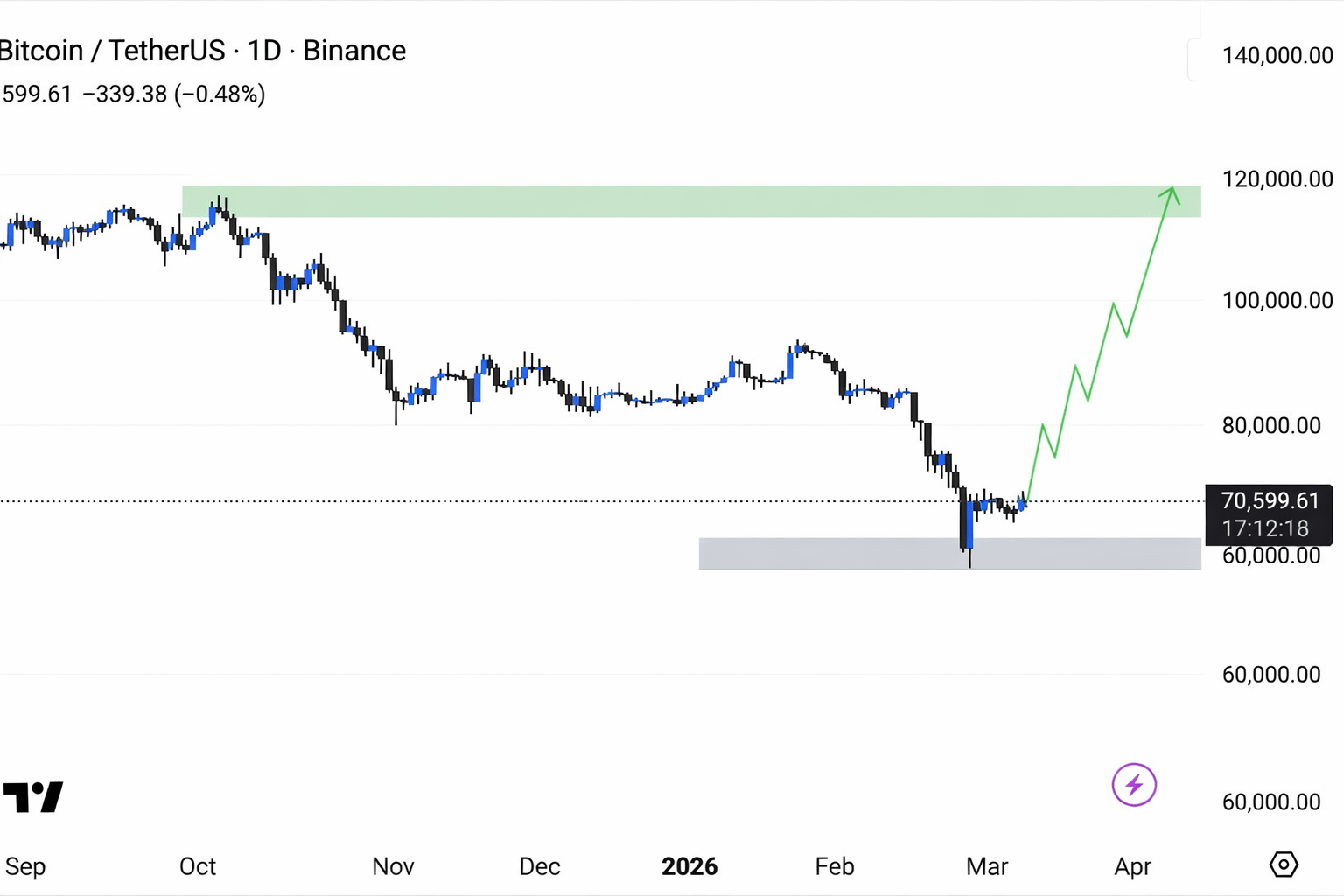
A familiar cycle of Bitcoin is gradually emerging
There is a characteristic in Bitcoin's history that I find quite interesting, but not everyone pays close attention to: the cycles of $BTC often repeat with a fairly regular rhythm.
Looking back at the major phases of the market, one can see that the period from the old peak to the new peak, as well as from the old bottom to the new bottom, often falls within about 47 to 48 months. In other words, Bitcoin has often moved in a rhythm of nearly 4 years.
If we apply that logic to the current cycle, it is highly likely that the next bottom for BTC could appear around the end of 2026, specifically in the period from November to December. This is not an absolute certainty, but if the market continues to repeat the old structure, then this is a scenario worth serious monitoring.
The reason this cycle often revolves around the 4-year mark largely comes from the halving mechanism. Every approximately 4 years, the reward for miners is cut in half, tightening the new supply entering the market.
From there, Bitcoin typically goes through familiar phases: accumulation, strong increases, distribution, and then deep declines to form a new bottom before starting another cycle.
It is important to note that the cycle is not a fixed formula. However, understanding how Bitcoin has moved in the past will help investors have a better long-term perspective, reducing the tendency to be swept up by short-term fluctuations and maintaining clarity during the most chaotic market moments.
#BTC