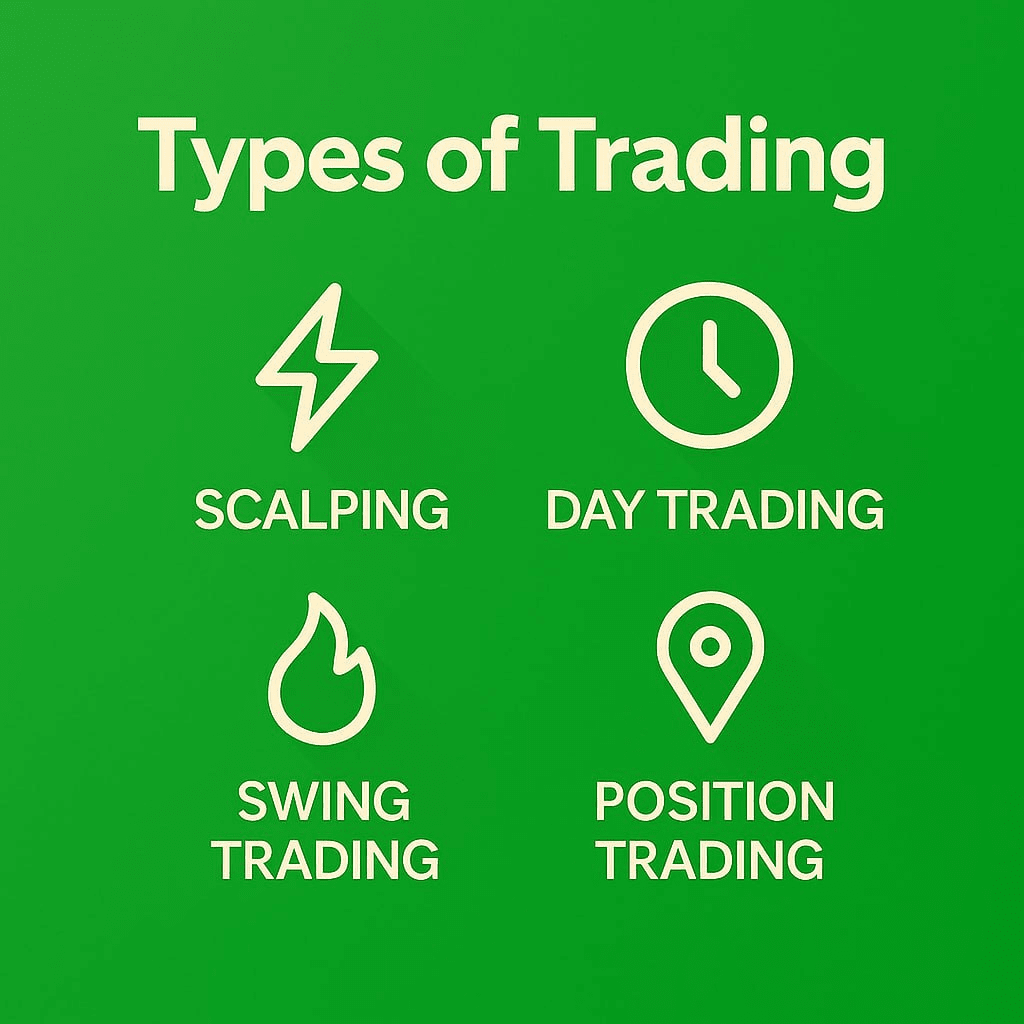
📎 Each trading pattern defines how you interact with the market - speed, risk, and mindset, all change with the timeframe you plan for.
⚡️ Quick speculation
🟡 Very short trades ranging from seconds to minutes.
🟡 Focuses on immediate fluctuations, liquidity sweeps, and partial structure.
🟡 Minute stop orders, small but steady gains, and instant decision-making.
❗️ Requires precise execution and emotional control - hesitation destroys the edge.
💡 Suitable for: High volatility environments, news spikes, and liquidity traps.
🕓 Day trading
🔴 Trades are opened and closed on the same day - no overnight risk.
🔴 Uses a daily trading structure (M15–H1) with a daily directional bias.
🔴 Tight stop loss orders and moderate targets; pulse trading structure.
❗️ Requires focus and adaptability to session volatility shifts.
💡 Preferred: Structured setups and continuity of short-term trends.
🔥 Swing trading
🟣 Holding positions for days or weeks, focusing on daily (D1) and weekly (W1) trading areas.
🟣 Aims to capitalize on large market fluctuations driven by macro bias.
🟣 Wider stop loss orders, higher risk ratio, and tolerance for pullbacks.
❗️ Requires conviction and a calm mindset - minor noise doesn't matter.
💡 Preferred: Continuity of trend, institutional flow, and medium-term growth.
🗓 Position trading
⚫️ Exposed for several weeks or months with minimal trading frequency.
⚫️ Based on fundamental trends and broad technical zones.
⚫️ Wide stop loss orders and limited management - patience is the core skill.
❗️ Requires a deep understanding of the market and psychological resilience.
💡 Best for: Monitoring complete market cycles and reversals of overall trends.
🖼️ Define your position type - and your strategy will eventually align with your mindset.

#MarketPullback #BNBBreaksATH #BinanceHODLerENSO #BinanceHODLerZBT #Ripple1BXRPReserve