
❓How @Lorenzo Protocol Turns DAO into Real Fund Managers and Changes the Game Forever!
🗳From Votes in DAO to Financial Strategies
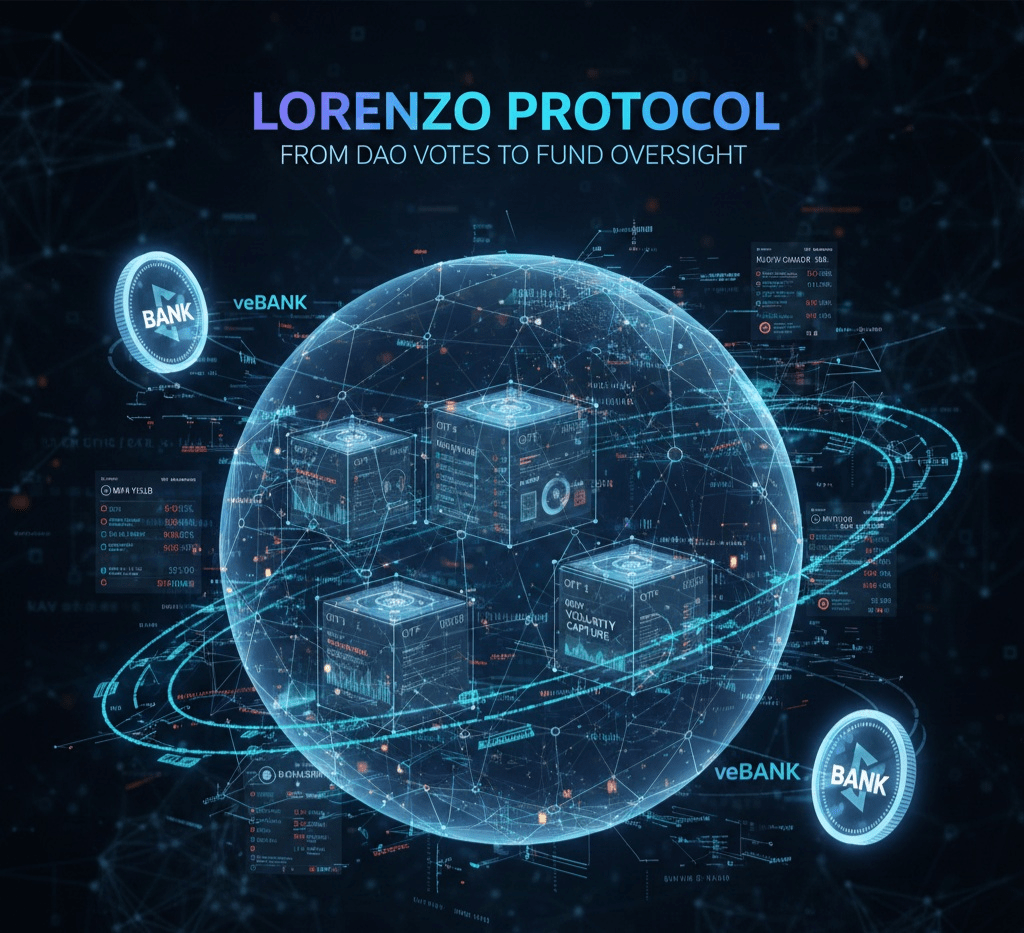
Imagine this: instead of just voting for upgrades or incentives, BANK holders in the Lorenzo Protocol now review balances, assess fund performance, and make decisions that carry real financial weight! This is not just voting, this is governance! In most DAOs, "governance" still only means clicking buttons, but in Lorenzo something more serious is happening. Proposals are now filled with numbers, charts, and analyses, instead of emotional stories. The conversation shifts from "What should we build?" to "How do we allocate capital?". This is an evolution that will make you think about the future of DeFi! If you are an investor, this could be the signal you've been waiting for, it's time to get involved before it's too late. Consider this: how many times have you seen a DAO fail due to lack of real accountability? Lorenzo solves this with transparent blockchain data. Each OTF (On-Chain Traded Fund) acts like a small autonomous fund with assets, a mission, and a traceable history. When reports come in, the community doesn't just react – it analyzes, questions, and even intervenes. This is like a board of directors, not a crowd! If the results are weak or risks are increasing, someone notices immediately. And everything is on the blockchain – data speaks louder than opinions. Accountability is no longer a theory, but a visible reality. This changes everything in DeFi, from speculative games to professional management. Are you ready for this change? Share in the comments!
💼 Behind the Scenes of Decentralized Asset Management
Working on OTF is not just "set and forget." Every fund must balance liquidity, exposure to yield, and compliance with regulations. This means daily activity: updating prices, adjusting allocations, verifying attestations from custodians. Contributors to Lorenzo do this quietly, without fanfare. You see spikes in activity before reporting periods, tables, audits, threads filled with notes and warnings. It is not glamorous, but it is precisely what turns a DAO from concept into an organization that actually manages assets. In DeFi, we often see projects that shine at first but crumble. Lorenzo is different, focused on long-term sustainability. Imagine what it would be like if all DAOs operated like this: transparently, disciplined, with real processes. This is not just about profits; it is about creating a stable ecosystem. If you are a developer or investor, consider how you can integrate this into your strategies. Share your experiences; perhaps you have seen similar changes in other protocols?
📈 $BANK As Responsibility, Not Reward
Holding BANK is no longer like owning a lottery ticket. Now it is like having a management certificate! When you vote for a fund adjustment, your signature stands next to the change in balance, a visible record of your judgment. This changes how people participate. You see it in the conversations: members discuss fund metrics, portfolio ratios, and compliance limits as if they are professional traders. It is not speculation; it is stewardship. The culture is shifting from hype to homework. In DeFi, emotion often dominates, but here the data leads. This is a revolution in thinking, from quick profits to long-term responsibility. If you are new to crypto, this is the perfect time to learn: Lorenzo shows how DeFi can be serious. Share: what do you think of this change? Will it make you invest differently?
🕒 Responsibility in Real-Time
In traditional finance, oversight is quarterly. In Lorenzo, it is continuous! Every OTF publishes live metrics: mix of allocations, deltas of performance, health of collateral. If a risk threshold is crossed, a public alarm is triggered long before a crisis. This rhythm of constant monitoring gives the protocol a strange calmness. Crises are rare because reactions are early. Instead of panic, correction. Instead of secrecy, visibility. It is not the typical DeFi mood: no drama, no denial, just data. This is the future we want, stable, predictable. If you have experienced crashes in crypto, you know how important this is. Lorenzo builds something that withstands rather than explodes. Share your stories from past cycles!
🏆 The Long-Term Game: Institutional Trust
What Lorenzo is building does not look explosive, and that is the goal! Institutions will not trust DeFi for its speed, but for its predictability. Every OTF that maintains its ratios, every clean quarter adds trust that no whitepaper can buy. If the system continues like this, Lorenzo's funds could become reference points, on-chain portfolios that prove that transparent governance can also be responsible. Lorenzo is not chasing attention; it is chasing resilience. In DeFi, that is the rarest goal! This is the vision: from speculative games to institutional standards. And do you believe that DeFi can become serious? Share your thoughts!
🌐 LorenzoProtocol: The First On-Chain System Where the Logic of Funds Becomes a Programmable Financial Primitive
This is the moment in the evolution of on-chain finance where the protocol not only launches a product – it introduces a new way of thinking! Lorenzo is right there. Instead of treating asset management as a service or a yield product, it makes it a primitive. Something that can be coded, combined, automated, reused, integrated, and improved like any other fundamental element in blockchain ecosystems. This shift – moving the logic of funds from opaque institutions to transparent, programmable smart contracts – could become one of the defining breakthroughs in digital finance over the next decade. For more than half a century, traditional asset management has been based on one truth: the strategy is behind closed doors. Investors provide capital, managers manage, and results are reported late, summarized, and filtered. Lorenzo completely rejects this! It believes that the logic of the portfolio – how assets are allocated, how risk is managed, how yield is generated – should exist as code, not as a secret. And once as code, it becomes transformative: a programmable financial primitive that every user, developer, or institution can interact with directly on-chain. This is the revolution we have been waiting for! Share: do you know of other protocols that do something similar?
🛠 OTFs: Tokenized Containers of Strategies
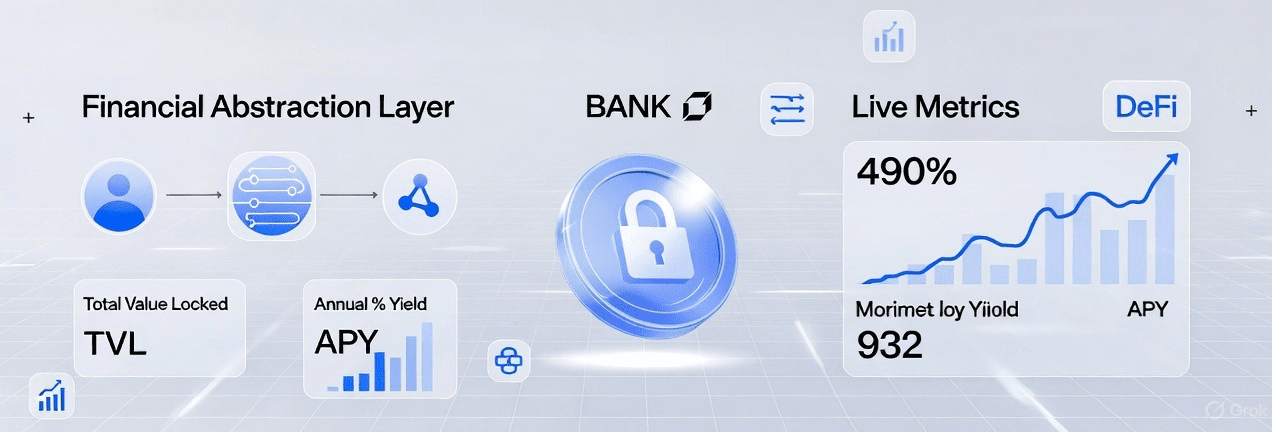
Here enter the OTFs of Lorenzo. Unlike traditional funds, they do not reside in custodians or legal structures – they exist in smart contracts! Each OTF is a tokenized container of a strategy: an automated, rules-based system that attracts capital, allocates it into structured approaches, tracks performance, and transparently updates the value of assets on-chain. It is not a repackaged vault, not a wrapped staking derivative, not a simple farming pool. This is structured finance, reconstructed for blockchains, with fund mechanics embedded as deterministic, programmable rules. To make this possible, Lorenzo built a Financial Abstraction Layer – an architectural foundation that allows the behavior of funds to operate as software modules, rather than traditional products. Instead of forcing users to understand the complexity behind yield engines, arbitrage models, systematic trading, or RWA exposure, the abstraction layer connects them behind the scenes and harmonizes them into a unified on-chain lifecycle. Deposits mint fund tokens. Strategy execution happens through modular pipelines. NAV updates settle transparently. And most importantly – everything is designed to be composable! This is the future: funds as components, not endpoints. Share what you think!
🔄 Composability: From Funds to Components
In traditional finance, funds are endpoints: you invest, wait, withdraw. In on-chain finance, Lorenzo turns them into components! The fund token can be collateral, liquidity, yield infrastructure, a building block for an index, an asset in treasury, or even part of a multi-strategy meta-portfolio. Since the logic is programmable and assets are interoperable, OTF becomes a tool that anyone can integrate into their financial structures. Suddenly strategies that previously required entire teams can be plugged into a DeFi application with just a few lines of code. This is the power – from closed institutions to open ecosystems. If you are a developer, this is a golden opportunity!
📊 BANK: The Coordination Layer
BANK is not just a token – it is the coordination layer that keeps the ecosystem economically organized! BANK holders influence which strategies are approved, how funds evolve, how fees are structured, and which integrations are prioritized. The vote-escrow model turns long-term holders into active stewards, not passive beneficiaries. This creates a governance equivalent to a professional investment committee – but entirely on-chain and open to anyone engaged in the long-term structure of the protocol. This is brilliant – a balance between decentralization and professionalism.
🤫 Evolution in Silence
The ecosystem of Lorenzo evolves in silence. The real logic of funds, unlike hype-driven DeFi mechanics, requires discipline. NAV must be accurate. Strategies – predictable. Risk – controlled. Liquidity – stable even in stressed markets. Lorenzo's design philosophy stands out: it prioritizes resilience over spectacle. Many protocols launch with aggressive incentives and crumble under pressure. Lorenzo builds products for years, not for cycles. The success of USD1+ – the first flagship OTF – gives a glimpse into the direction. It combines RWA yield, systematic trading, and DeFi strategies into a single on-chain product that behaves like a digitally native money market fund. Users deposit stablecoins; the token they receive grows with profit settlements. No rebasing. No complexity. No manual yield rotation. The fund behaves like a disciplined financial instrument, not a farming experiment. And since it is tokenized, users can utilize it across the entire DeFi ecosystem – borrowing against it, pooling or integrating into treasury systems. This is real utility! 🚀
🔮 The Future: Programmable Strategy
The most exciting aspect of Lorenzo's trajectory is what lies ahead. The team is preparing for a future where not only yield is tokenized – the strategy itself becomes programmable! A future with BTC-native OTFs, volatility-structured OTFs, cross-chain OTFs, and automated multi-strategy portfolios as simple, composable assets. A future where institutions deposit capital into a fund that settles on-chain without customized infrastructure. A future where developers build sophisticated financial systems with OTFs in the same way they do with ERC-20 tokens or liquidity pools today. Of course, this is not easy. Executing strategies off-chain carries counterparty risk. Regulators will increase pressure on tokenized funds. Managing liquidity around NAV cycles is always a challenge. And smart contracts need constant monitoring. But the protocols that will define the next decade will not be those that avoid complexity – but those that manage it directly. Lorenzo's strength is that it does not reinvent finance in isolation. It translates the intelligence of institutional asset management into a transparent, programmable format that blockchains understand. It does not fight against TradFi – it extracts its discipline, reorganizes it, and releases it onto a global, open, composable infrastructure. In the coming years, as tokenization becomes a dominant force in finance, funds will not remain in PDFs, custodians, or spreadsheets. They will live in contracts. They will be programmable. Interoperable. And globally accessible. When this era fully arrives, Lorenzo Protocol will not just be a yield platform or a DeFi product – it will be remembered as one of the first systems to turn the logic of funds into the native language of blockchain. It does not just bring institutional management on-chain – it restructures the very concept of asset management for a programmable world. Share: are you ready for this future?
📉 #LorenzoProtocol is The Slow, Necessary Shift from Speculation to Structured Exposure in DeFi
There are moments in every industry when the tone changes quietly, almost imperceptibly, before the world realizes that something fundamental has shifted. DeFi seems to be entering such a phase now. The fantasies of high yields from past cycles no longer excite people as they once did. The novelty of wrapped derivatives, recursive yield stacks, and complex vault gymnastics has faded. Users are tired. Builders are being more cautious. And there is a slow sense of collective desire for something more grounded – not necessarily safer, but more real. This is the context in which Lorenzo Protocol makes sense. The first time I encountered it, I did not feel it was a breakthrough. I felt it was an answer. Not to the questions from bull runs, but to those we ask after the noise has settled. Questions about structure, clarity, resilience. Lorenzo seems to recognize that the next stage of DeFi will not be built by thrill-seeking architecture, but by disciplined product frameworks. 😤
🧩 OTFs: The Embodiment of Change
Lorenzo's OTFs elegantly embody this change. They are not theoretical. They are not abstract composable experiments. They do not try to turn users into quants. Instead, they package strategies into simple, understandable tokens that behave like the structured exposures they represent. A quantitative OTF mirrors a quantitative model. A volatility OTF – capturing volatility. A structured yield OTF behaves like a structured income product. This is not reinvention – this is normalization. Traditional finance learned decades ago that people trust structured exposure more than clever engineering. Crypto forgot this lesson along the way. Lorenzo brings it back, but with a twist: the transparency and permissionless infrastructure of blockchain make these products more open, more auditable, and more interoperable than their off-chain counterparts. This mix – familiar strategy, new environment – is the quiet strength of the protocol.
🏗 Vault Architecture: Simplicity and Composition
You see the same philosophy in Lorenzo's vault architecture. The system is built around simple vaults and composed vaults, but the important part is not the structure itself – but the intention behind it. Simple vaults execute single strategies cleanly, without distractions or hidden side effects. They feel like the on-chain equivalent of a single instrument – focused, transparent, predictable. Composed vaults build on this, combining strategies to create balanced exposure products that behave less like speculative experiments and more like carefully assembled portfolios. In a world where DeFi often glamorizes complexity for its own sake, Lorenzo does something contrary: it uses composability for simplification. Composed vaults do not create chaos – they create clarity. You can trace every behavior back to the components. You understand what you hold. You are not guessing. And this clarity can prove to be far more important than the industry currently realizes. 🌈
🗳 Governance: Limited and Serious
This clarity also shapes how Lorenzo approaches one of the most dangerous design areas in DeFi: governance. The BANK token and the vote-escrow mechanism veBANK are intentionally limited. BANK does not govern strategies. It does not modify execution logic. It does not give token holders the illusion of control over systems they are not experts in managing. Instead, BANK governs the protocol itself – incentive alignment, distribution, long-term direction, and ecosystem priorities. veBANK encourages long-term commitment without mutating financial behavior. This boundary – governance over the protocol, but not over the strategy – is one of the most important and underappreciated choices of Lorenzo. Historically, DeFi blurred the line between governance and product, often allowing token politics to interfere with risk, performance, and design integrity. Lorenzo refuses to repeat this mistake. It treats financial strategies as disciplines, not democratic experiments – a sign of seriousness that the industry has not always shown.
💪 The Real Test: Market Readiness
But perhaps the real test for Lorenzo will come not from its architecture, but from the market's readiness to adjust expectations. Users have been conditioned for years to expect unrealistically smooth returns. They want yield without volatility. Upside without risk. Growth without patience. OTFs break this illusion in a productive way. Strategies will fluctuate. Quant models will have losing months. Volatility harvesting will struggle in quiet markets. Managed futures will outperform in trending environments and stall in choppy ones. And structured yield will tighten under macro pressure. Lorenzo does not hide these realities – it puts them front and center. The challenge then is not whether the protocol works. But whether the market is ready to embrace financial products that behave like real financial products, not engineering simulations. And judging by the increasing number of users seeking structured exposure instead of speculative loops, the answer may quietly shift towards "yes."
📈 Early Signals of Success.
Early adoption patterns reinforce this possibility. Some of the best signals in a maturing market are not loud or viral – they are subtle. Like builders of strategies that connect to deploy products without creating their own token economies. Like traders moving from manual position management to OTF-based exposure. Like risk-aware users beginning to treat on-chain portfolios the way traditional investors treat allocation strategies. These behaviors do not spike on charts. They do not trend on social feeds. But they are the foundation of sustainable financial ecosystems. And perhaps the most compelling indicator is that Lorenzo's growth is not driven by narratives – but by fatigue. Fatigue from complexity. Fatigue from opaque yields. Fatigue from systems that break as soon as incentives weaken. People do not always choose better systems because they are visionaries. Sometimes they choose them because they are tired of the alternatives. And Lorenzo offers a real alternative.
🤝 Not Replacement, but Translation
In many ways, Lorenzo does not see itself as a replacement for traditional finance – and that is exactly why its model works. It does not try to outshine ETFs or structured products. It translates their logic into a more transparent, programmable environment. It does not try to outperform asset managers – it offers a distribution layer where strategies can live without the overhead of legacy infrastructure. And it does not try to imitate the speculative tradition of early DeFi – it builds a product layer that can survive through cycles, downturns, and market changes. The protocol seems to understand something key: the future of on-chain finance will not win by being louder. It will win by being clearer. And clarity is exactly what Lorenzo optimizes – repeatedly, consistently, almost relentlessly.
🏅 Success: Earned Trust
If Lorenzo Protocol succeeds, it will not be because it captured the imagination of a bull market. It will be because it earned the trust of a maturing one. It will be because it created products that users can understand, strategies that developers can deploy without distortion, and governance structures that respect the boundaries of financial engineering. It will be because it aligned with a long-term change in DeFi, away from improvisation toward intention, away from spectacle toward structure. Not as a revolution, not as a reinvention, but as a necessary evolution. The kind of evolution that does not happen with a bang, but with a slow, steady realization: this is how on-chain finance should have been built from the very beginning.
⚠️ This is not financial advice. The information is for analytical and educational purposes.

