

The profit-taking chips of long-term holders (LTH) and the locked-in chips of short-term holders (STH) are currently the main sources of selling pressure. The latter is influenced by panic emotions, fearing that the price will continue to decline and bring unbearable losses; while the former executes operations according to the trading plan when the traditional four-year cycle theory has not been disproven.
Therefore, for STH, once the panic emotions are released, as long as the price stabilizes or shifts from a sharp decline to a gradual decline, the selling pressure will gradually decrease. After all, who would really want to sell BTC at a loss? For LTH, when taking profits, there is profit, but as long as their realized profit-loss ratio declines (Figure 1), it will inevitably reduce the motivation to sell.
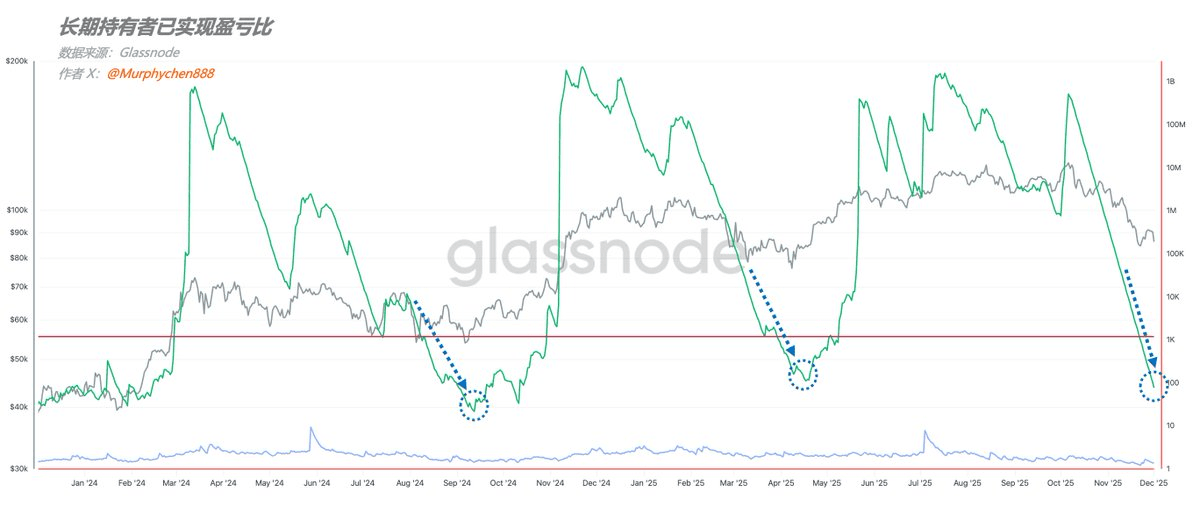
The logic mentioned above has been referred to multiple times in my recent tweets, but when the BTC price drops sharply, people often overlook rational analysis. Now, it is just necessary to verify whether the reasoning at that time was correct and whether the data performance is evolving in the expected direction.
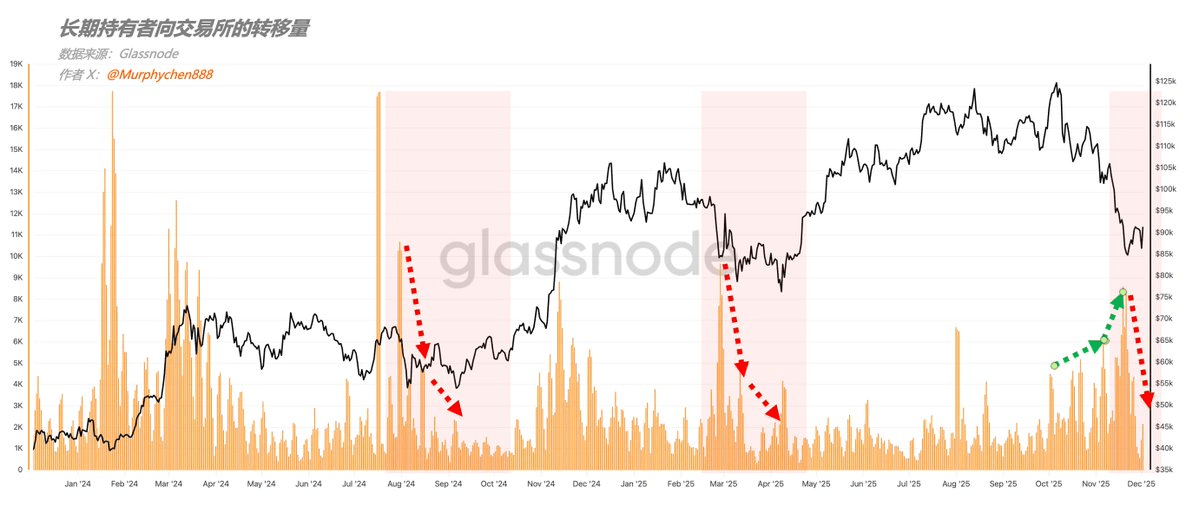
As we can see in Figure 2, as the LTH has continued to decrease the realized profit-loss ratio, the amount of BTC they are transferring to the exchange has shifted from a gradual increase in the early stages to a continuous decline now. Whether this is a positive phenomenon, I don't think I need to say, my friends have their own judgments in their hearts.
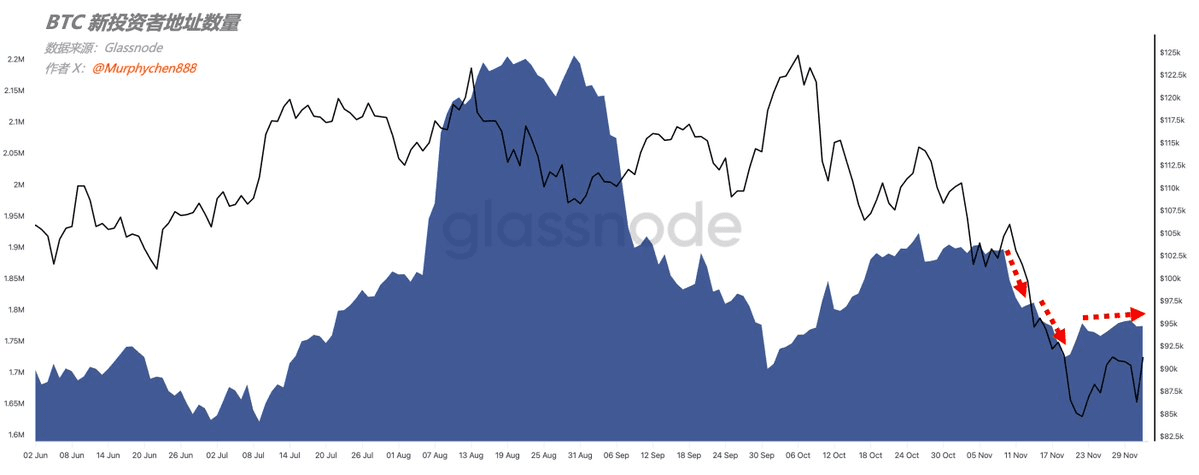
Supply-side data is gradually improving, but the demand side remains unsatisfactory. From Figures 3 and 4, we can see that new BTC investors, whether in terms of 'number of addresses' or 'holding amount', cannot be described as 'good'. The number of new addresses has stabilized temporarily after a decline, but the amount of BTC held by new investors has been continuously dropping.
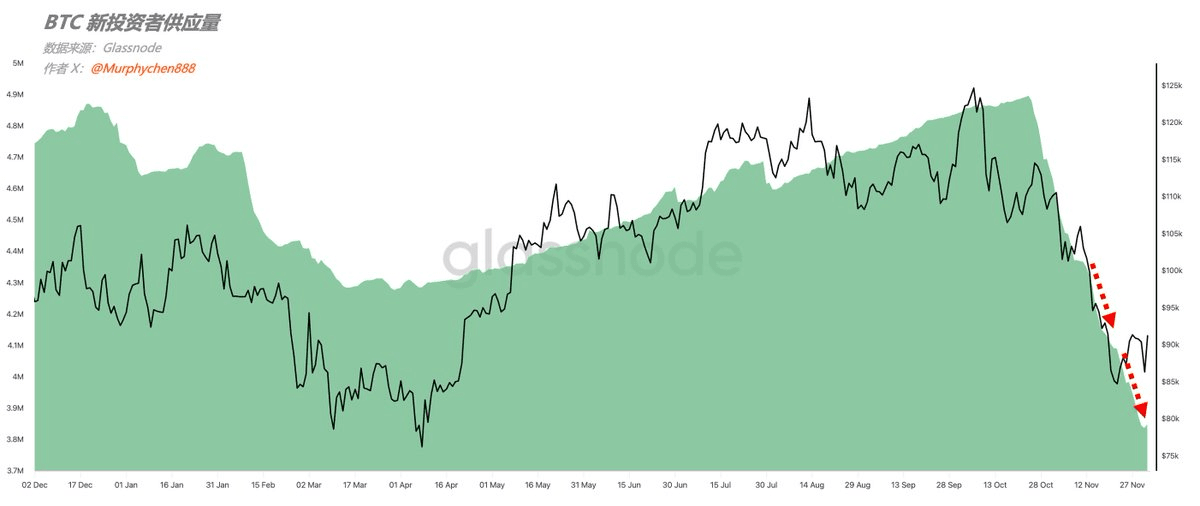
This indicates that the overall risk appetite of BTC investors has not improved significantly, leading to a lack of new demand. It's like two faucets; one faucet is slowly being turned off, which can at most slow down the decline of water levels; while the other faucet for inflow is not turned on, unable to help the water level rise.
Therefore, before we see a clear recovery on the demand side, I personally believe that a reasonable expectation for BTC in December should not be an immediate reversal, but rather not to continue the sharp decline and deep drop, and that there will be a corresponding rebound after the overselling.
One bite at a time for the meal, one step at a time for the road. Only when there is a breakthrough in key resistance levels on the technical front and a more positive trend is presented in the data can we later shout 'bull return' without it being too late.
