
Using the concept of "Follow the big trend and Against the small trend" to answer is, in my opinion, the most suitable.
"Follow the big trend" is the foundation of trading, while "Against the small trend" is the optimization for entry. Never violate the principle of "Follow the big trend" because of "Against the small trend."
An introduction to trend formation
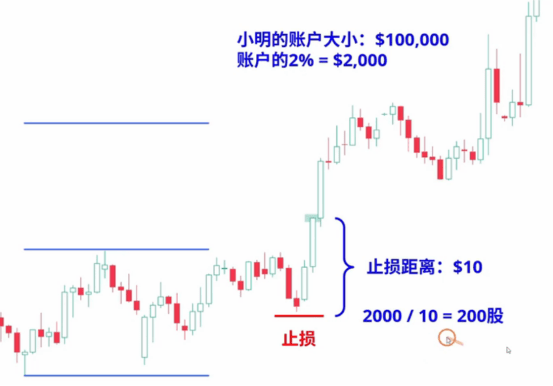 The opening conditions also need to be based on the trading period you choose
For example, if you trade the hourly trend, look for entry points on the minute chart; if you trade the daily trend, look for entry points by combining the hourly and minute charts.
My opening conditions are based on daily candles to observe trends, and I optimize entry conditions using minute charts.
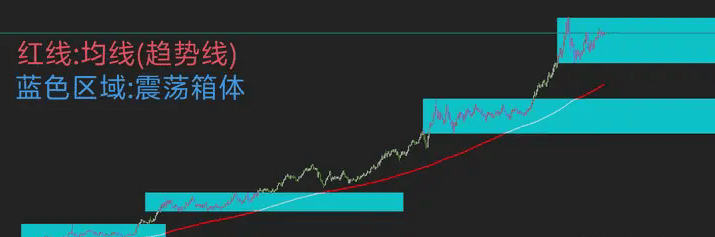 As shown in the figure
Step 1: Use moving averages as the dividing line between long and short positions. When the price crosses above the moving average and receives effective support, it is determined to be a bullish signal, indicating a high probability that the market will continue to rise and become the starting point of a trend.
Step 2: When the daily candlestick chart effectively breaks through the oscillation range, switch to a smaller timeframe and wait for a signal that aligns with the larger direction to enter.
Step 3: Risk control, regardless of any entry, always set a stop loss. After all, I cannot determine if the trend is valid at the beginning of the trend. The daily candlestick has a high possibility of crossing the moving average (daily candlestick oscillation). One should not choose to go against the trend in a smaller timeframe based on the direction of a larger timeframe. Once the market enters a deep correction or reversal, the losses faced can be significant.
Thank you for watching, I am Xiao Fei, very happy to meet everyone. Xiao Fei focuses on Ethereum contract spot ambush. The team still has positions available, jump in quickly to become a big player and also become a winner. #特朗普取消农产品关税 $BTC$ETH


