

A dramatic appreciation can reshape market sentiment in a single cycle. XRP's explosive performance this year has reignited discussions about regulation, institutional readiness, and how far markets can go without favorable legal structures. The debate now focuses on the intersection of public policy, price behavior, and long-term adoption.
Zach Rector, the analyst behind the widely discussed publication, argues that the massive appreciation of XRP demonstrates what the market is capable of even without total regulatory certainty. His perspective highlights a deeper issue.
Retail investors may face risks if they wait for legislation before entering the market. Their warning is clear. Market cycles are fast, and clarity often comes after the big opportunities have already passed.
Volatile Market Structure of XRP in 2025
The movements of XRP in 2025 were intense. Sudden spikes in liquidity triggered a rapid appreciation, followed by strong corrections. The 650% appreciation from the cycle lows reflects the strength of concentrated buying.
The accumulation of long positions by large investors was the main factor behind the initial momentum. Foreign exchange reserves confirmed a more restrictive supply pattern. Retail demand joined the movement later as market confidence improved.
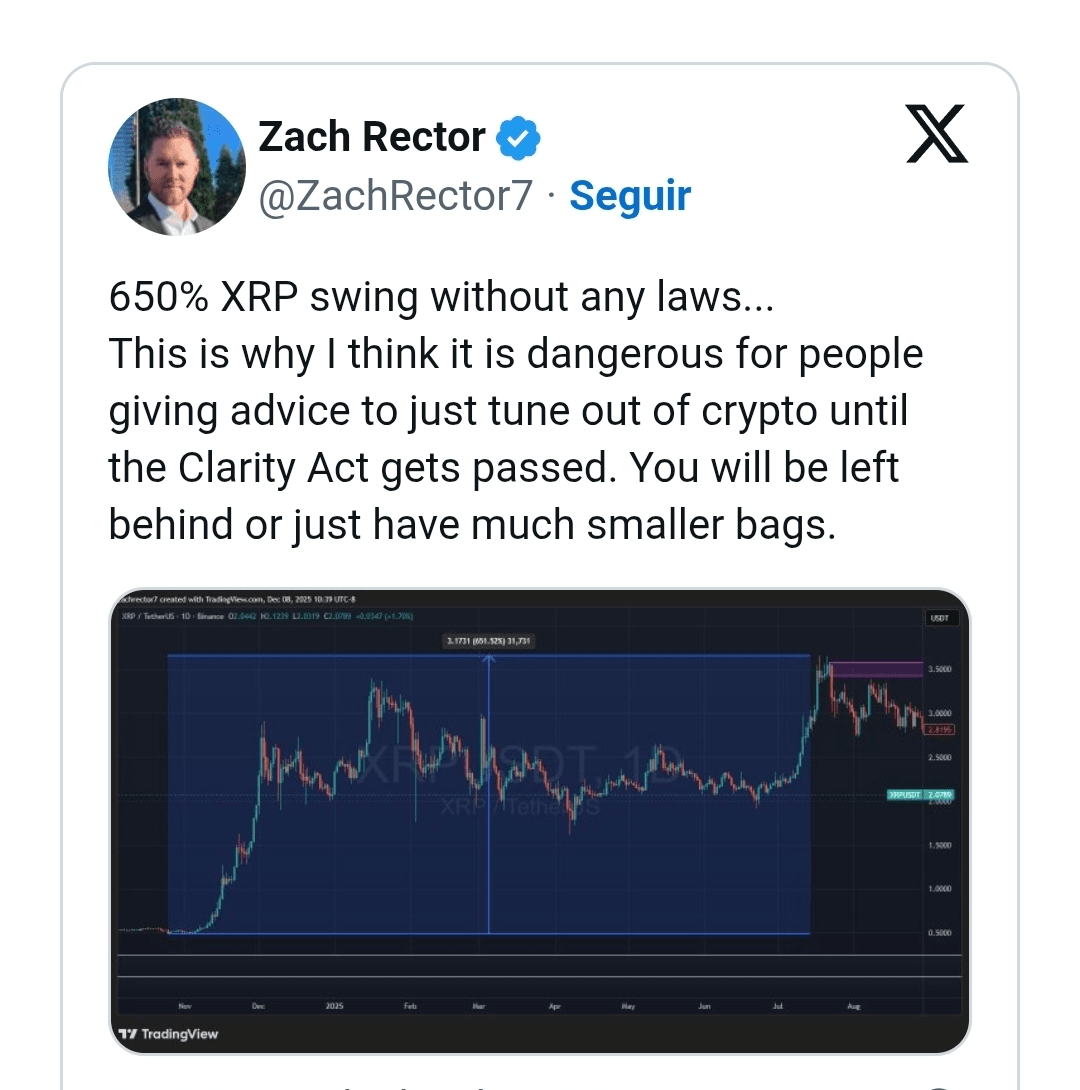
The appreciation was not merely the result of speculation. Overall market liquidity improved, driven by increased inflows into ETFs and greater activity with derivatives. Large market makers also expanded their XRP order books during the second quarter. These factors sustained the strong bullish momentum.
Why the CLARITY Act is important for XRP
The United States still lacks a unified regulatory framework for digital assets. The Digital Asset Market Structure and Investor Protection Act, often referred to as the CLARITY Act, aims to define digital assets with clear classifications.
The bill proposes guidelines that separate securities, commodities, and payment tokens. It also defines transparent pathways for the registration of projects and exchanges.
Rector highlights that this law could transform market participation. Institutional participants remain cautious because compliance requirements are still undefined. Banks cannot fully expand tokenized products without legal certainty. Asset managers also limit their exposure until the rules stabilize. Regulatory clarity would allow for broader market access and greater capital flows.
How policies and prices mutually influence each other
Regulation does not create prices. It reduces structural barriers. When risks decrease, the size of institutional positions can increase. Stricter custody rules and standardized disclosures attract traditional capital.
XRP has great utility in international payments and settlements. Clarity would allow regulated financial entities to use the asset on a large scale. This is the link between policy and price that Rector highlights.
The recent performance of XRP demonstrates how quickly the price can fluctuate without legislation. The next wave could be even stronger if regulation finally aligns with market infrastructure.
What comes next for XRP holders?
Investors must track various developments. The legislative progress of the CLARITY Act continues to be important. Announcements of adoption by banks and payment companies will signal institutional readiness. On-chain liquidity trends will show whether accumulation continues. Exchange reserves also indicate the level of supply pressure.
The main conclusion is simple. Major market cycles generally begin before there is regulatory certainty. The 650% fluctuation of XRP reinforces this reality. When clarity finally arrives, participation could multiply. Those waiting on the sidelines may eventually enter the market after the strongest movements have passed.
Remember folks, that none of what is said here represents a recommendation to buy, sell, or hold assets.
Thank you all!


