

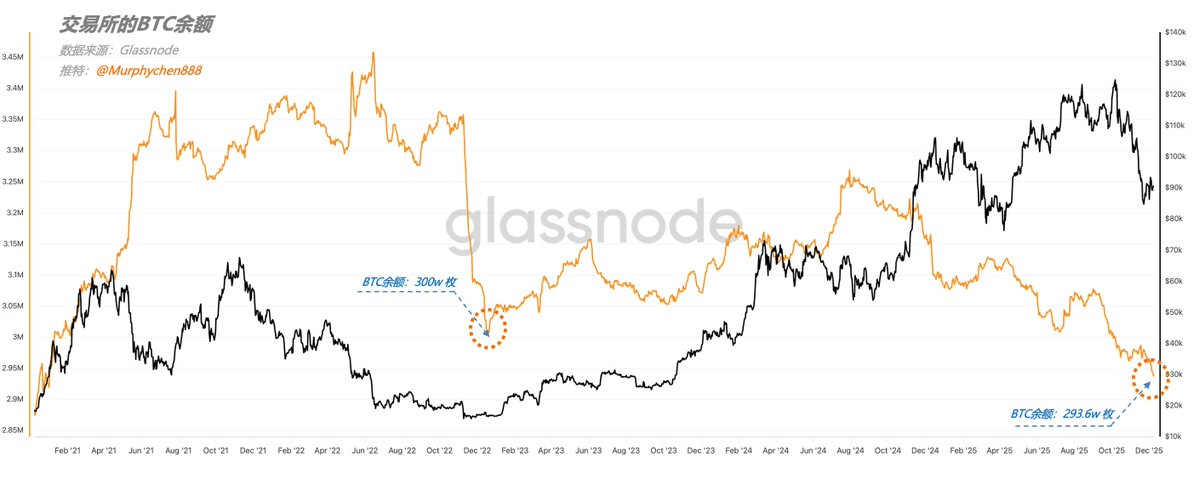
The new low in this cycle also means that more BTC is being withdrawn to on-chain reserves, rather than being deposited into exchanges for selling. The last time the balance was at such a low level was after the FTX collapse on December 17, 2022, when a lack of trust in centralized exchanges led to a concentrated withdrawal action, resulting in a drastic drop in exchange balances.
The BTC balance on Binance has a significant impact on short-term prices. From the beginning of 2024 to now, there have been four noticeable rapid increases, all corresponding to a weakening of BTC prices at the same time.
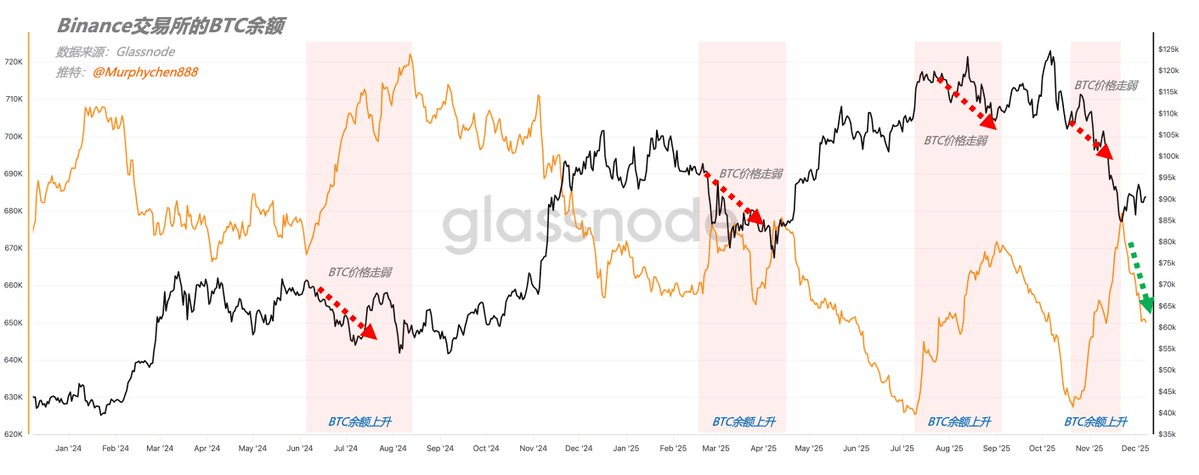
The changes in Binance's BTC balance are closely related to the strength of off-chain selling pressure. An increase in the value often puts pressure on short-term prices. However, the balance has been declining recently, which provides the prerequisite conditions for a rebound.
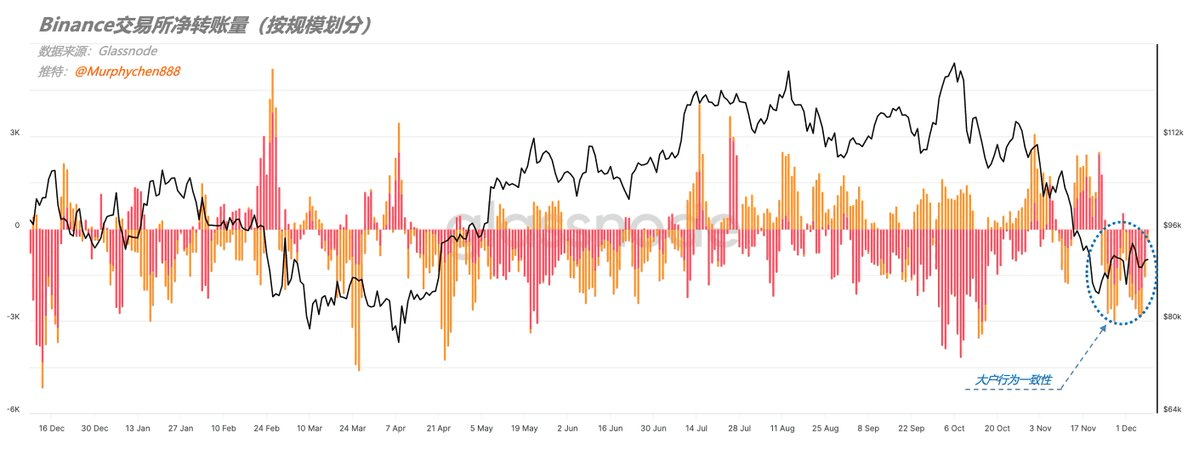
In particular, I noticed that the behavior of large holders on Binance (single transactions greater than 1 million and 10 million USD) is consistent, primarily focusing on withdrawing coins on-chain, while retail investors (less than 100,000 USD) are depositing coins. This aligns with the data we mentioned a few days ago about on-chain whale entities starting to accumulate chips.
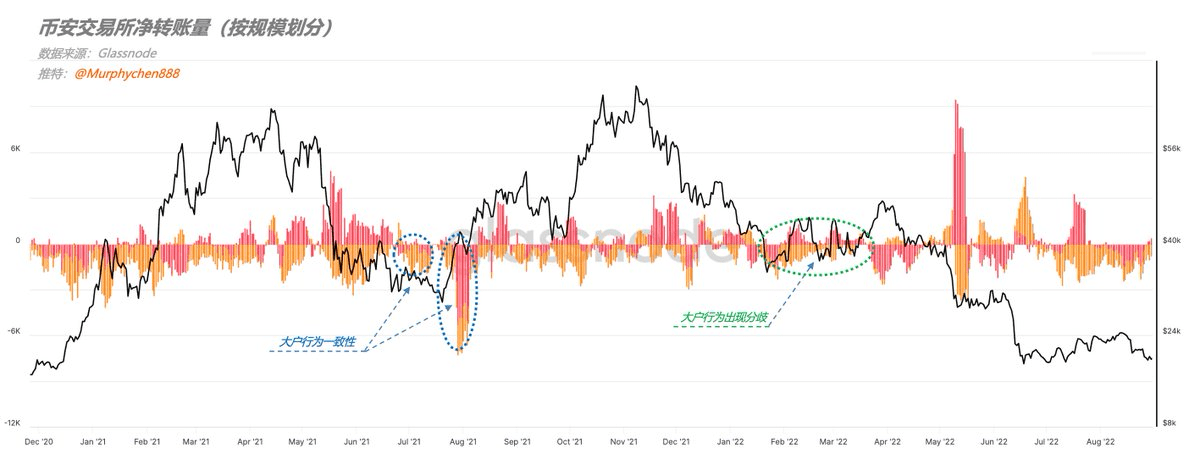
If we want to compare, this is quite similar to the period from July to August 2021, where the behavior of large holders was also consistent in withdrawing coins. However, during the period from January to March 2022, the behavior of large holders showed divergence, with withdrawals greater than 1 million USD and deposits greater than 10 million USD.
As the selling pressure on-chain and off-chain weakens simultaneously, the speed of demand decline is slowing down, creating conditions for a rebound. Therefore, I personally believe that the rebound of BTC after hitting 80,000 has not yet ended. However, whether it can continue to release momentum depends on the subsequent changes in investor sentiment and risk preferences.
