


When Pineapple Financial announced the transfer of a $10 billion mortgage portfolio to @Injective , the common reaction I saw in the community was 'another tokenization deal.'
But if viewed from the perspective of someone who has directly implemented RWA, this is not a PR deal; it is a change in operational architecture. Mortgages are the type of asset that engineering teams often hesitate to touch, because their complexity is much higher than that of bonds or treasuries. Therefore, the decision of a company like Pineapple to choose blockchain is not a simple one.
The biggest issue with mortgages is data. A loan might sound simple, but it is actually a multi-layered structure: fixed repayment history, credit risk, off-chain servicing, collateral status, cash flow ownership.
In a previous project, my team had to handle thousands of cash flow records each month for a small portfolio, and just a 0.1% error in reconciliation was enough to misalign the on-chain state.
From that experience, I understand that the difficulty lies not in tokenization, but in keeping the state on-chain and off-chain synchronized over a long period. Therefore, if Pineapple chooses a blockchain just to “put assets up,” I wouldn’t believe it.
But their announcement to continue creating new mortgage products directly on Injective $INJ shows that they want to operate assets under a new model, not just mimic the old model.
Injective is much more suitable for this than many people think. I once tried to implement cash flow updates on an L2 EVM and always encountered issues with transaction fees spiking during peak hours.
With mortgages, the cash flow updates must be absolutely stable; you cannot let random fee increases cause an update to be delayed one day.
When testing a modular chain with faster finality, costs decreased and stability increased significantly.
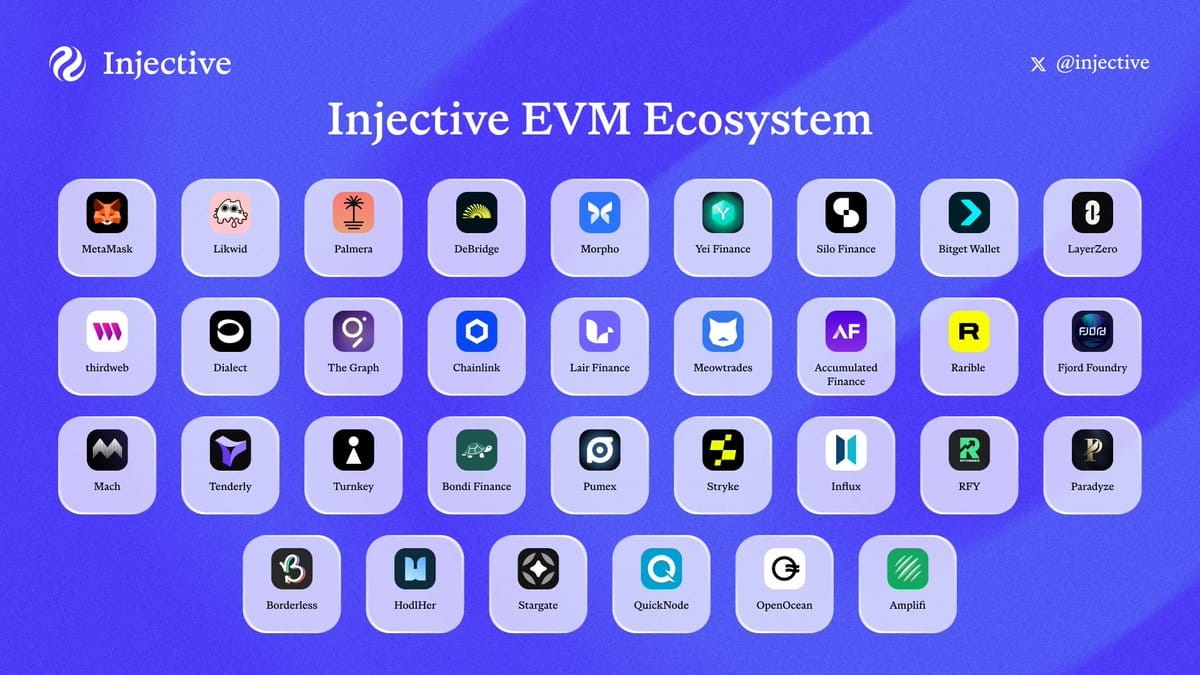
Injective is among the chains with suitable technical characteristics: customizable modules, the ability to design financial logic without forcing it into a common smart contract, and especially on-chain orderbook – something very few chains have natively.
A common misconception I see from the community is that tokenization of mortgages will “unlock liquidity immediately.”
But in the real model, liquidity only appears if the trading infrastructure accurately reflects the risks of the assets. AMM cannot do that; the price curve does not fit assets with long-term cash flows.
In an internal experiment when my team simulated short-term bond transactions on AMM, just a slight decrease in liquidity caused prices to deviate significantly from real yield. Orderbook is a more suitable structure and Injective has this advantage.
Pineapple understands this issue — and they choose an environment that supports secondary liquidity according to capital market standards, not short-term DeFi liquidity.
Another impact that few see is operational load. When an organization worth billions puts assets on the chain, they bring along a supporting ecosystem: more stable oracles, more standardized metadata, clearer compliance requirements. These requirements force the chain to mature.
In working with smaller financial institutions, I learned that they are not interested in “which blockchain is faster”; they only care about which environment helps them predict costs and risks.
Injective has this advantage because it is not congested by public traffic like many EVM chains. This makes mortgages – which need stability – operate better.
Of course, challenges still exist. Mortgages are assets with real credit risk, not simulated assets.
If the servicing data is incorrect, the on-chain token has no value. Blockchain does not solve this part; the issuing organization must do it. But what blockchain does well is reduce friction in transactions, clarify states, and open up automation possibilities that traditional systems lack.
When building an RWA pipeline not long ago, what impressed me was not the on-chain logic, but the ability to reduce nearly 40% of reconciliation operations thanks to standardized state. Pineapple may well be targeting this kind of efficiency, and a scale of 10 billion USD helps them save a huge amount of operational costs if the model succeeds.
If this deal operates smoothly, the long-term impact could be greater than people realize. Mortgages are just the first step.
Periodic income assets – auto-loan, commercial loan, rental income – can all follow suit. And at that point, DeFi will enter a phase with real yield, modeled, instead of yield based on leverage cycles.
A final personal observation: when talking to several builders working on RWA, I noticed a common point – they no longer ask “which asset can be put on chain?” Instead, they ask “which chain is specialized enough to carry real assets?”. Pineapple's choice of Injective for a 10 billion USD mortgage is a pretty clear answer.
And if this trend continues, future chains will not compete on TPS or TVL, but will compete on the ability to become real financial infrastructure.
