


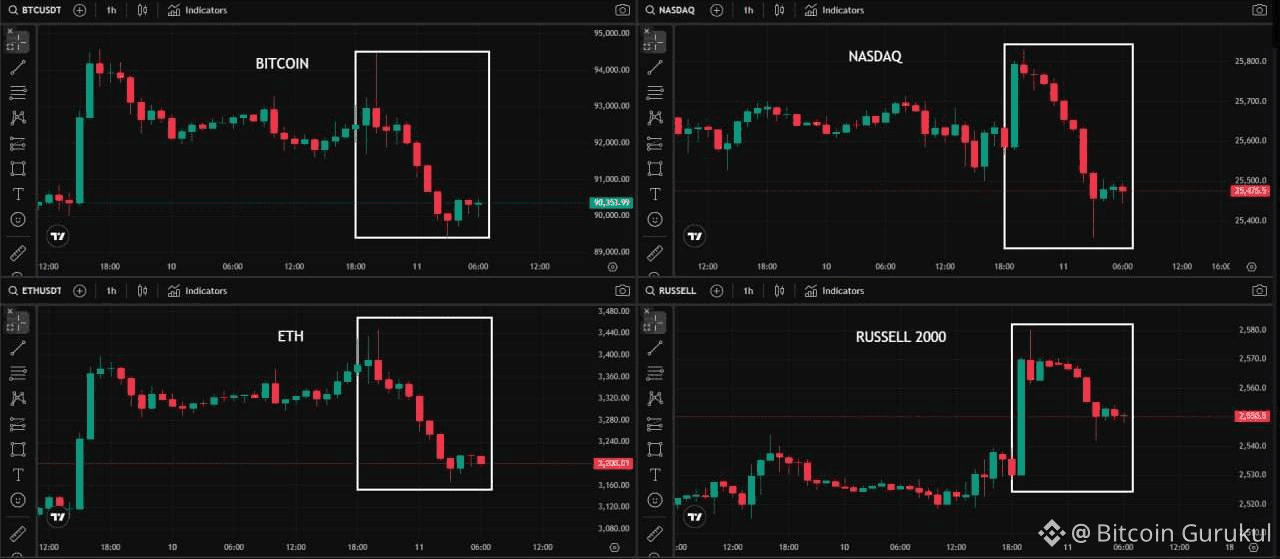
You know that sinking feeling when you check your portfolio and everything's red? Yeah, I had that too yesterday morning.
Bitcoin tanked, stocks crashed, and my group chat absolutely exploded with panic messages. But here's the thing – after digging deep into what actually went down, the reality is way different from what most people think.
Let me walk you through exactly what happened and why this might not be the disaster everyone's making it out to be.
The Setup: Everyone Was Way Too Excited
So here's where things get interesting. Bitcoin completely wiped out its gains from the previous 12 hours right after the Fed meeting. Sounds terrible, right? But when you understand the mechanics behind it, this move actually makes perfect sense.
The Federal Reserve just cut interest rates – which should technically be amazing news for markets. Lower rates usually mean assets go up. So why did everything tank instead?
Three major factors collided at once, and honestly, most traders didn't see it coming.
Factor One: The Smart Money Already Left the Building
This is probably the most important piece of the puzzle that nobody's talking about.
The rate cut wasn't some shocking surprise. Market probability trackers were showing a 95% chance this would happen. Everyone knew it was coming. The big players on Wall Street? They knew it weeks ago.
What happened next is classic Wall Street behavior. Large institutional traders started buying early last week. They positioned themselves before the announcement, drove prices up, and created this huge rally leading into the Fed meeting.
Then when Chairman Powell actually made the official announcement and mentioned the Fed would purchase treasury bills worth billions every month, these same traders immediately hit the sell button. They locked in their profits and walked away.
This wasn't panic selling. This was calculated profit-taking from people who planned this move from the start. That created the first wave of selling pressure that caught everyone else off guard.
Factor Two: Powell's Words Created Doubt
Now, the rate cut itself was positive. No question about that. But Jerome Powell's press conference afterward? That's where things got complicated.
Powell painted this picture of an economy that's stuck between two problems. On one side, the job market is showing weakness. On the other side, inflation is still running hotter than the Fed wants.
But here's the kicker – the Fed's own projections suggested they might only cut rates one more time in 2026. Just one cut. After all this easing, they're basically pumping the brakes already.
The market interpreted this as the Fed saying: "We're helping you now, but don't expect much more support going forward." That created uncertainty. And markets absolutely hate uncertainty.
By the time the US stock market closed, the narrative had shifted from optimism to doubt. That's when the real selling accelerated.
Factor Three: The Tech Earnings Bomb Nobody Expected
Just when you thought things couldn't get worse, Oracle dropped their quarterly earnings report after market hours.
The numbers were disappointing. They missed revenue expectations, and their infrastructure spending estimates jumped higher than analysts predicted. Oracle's stock immediately plummeted over 11% in after-hours trading.
Now you might be thinking – "Why does one company's earnings matter that much?"
Here's why this mattered: Oracle is deeply connected to the artificial intelligence boom. When a major AI-related company misses earnings and cuts guidance, it sends a chilling message to the entire market. Traders started questioning whether we've reached the peak of the AI investment cycle.
That fear spread incredibly fast. First to other tech stocks, then to the broader market, and finally into cryptocurrencies. Everything sold off together.
Why This Perfect Storm Created Maximum Damage
When you combine all three factors, you get a recipe for a sharp correction:
The rate cut was already priced into asset values. Smart money had already front-run the trade and was ready to exit. Powell didn't provide strong signals that more aggressive easing was coming. Oracle's disappointing results triggered concerns about the sustainability of tech valuations. Profit-taking accelerated once uncertainty entered the picture.
This wasn't a dump because fundamentals suddenly turned negative. This was a dump because market expectations had run way ahead of reality, and everyone got squeezed at once.
But Here's What Most People Are Missing
While everyone's focused on the short-term pain, let me share the bigger picture that actually matters for the months ahead.
The Federal Reserve has now cut interest rates three consecutive times in three meetings. That's a clear easing trend. They just committed to purchasing treasury bills monthly for the next 30 days at minimum, potentially continuing for months. Powell explicitly stated that rate hikes aren't even being considered right now. The Fed's own projections show they expect solid economic growth next year. Recent data revealed job gains were overstated, meaning the labor market has more slack than previously thought. A softer labor market gives the Fed more room to cut rates again if economic conditions worsen.
The Reality Check We All Need
Markets crashed yesterday not because the outlook turned bearish, but because expectations got ahead of reality. That's a crucial distinction.
Think about it this way: The Fed is still easing. Liquidity is still increasing. The economic backdrop hasn't fundamentally changed. What changed is sentiment – and sentiment recovers.
Looking forward, the environment heading into next year remains far more supportive of asset prices than what we experienced throughout this year. The market just hasn't fully absorbed that reality yet because it's caught up in the short-term volatility.
What This Actually Means for Your Portfolio
I'm not going to sugarcoat this – corrections hurt, especially when they happen fast. But understanding the mechanics behind the move helps separate noise from signal.
The fundamentals haven't broken. The Fed remains accommodative. Liquidity conditions are improving, not worsening. The panic you're seeing is largely technical and sentiment-driven.
Does this mean we can't go lower in the short term? Absolutely not. Markets can stay irrational longer than many of us can stay solvent. But the framework for a recovery remains intact.
The traders who understand this distinction are the ones who'll position themselves properly for what comes next. While everyone else panics about yesterday's move, the smart money is already looking three to six months ahead.
The Bottom Line
Yesterday's market action was violent and painful, but it wasn't driven by deteriorating fundamentals. It was driven by positioning, profit-taking, and a shift in short-term sentiment triggered by Oracle's earnings miss.
The Fed is still cutting rates. Liquidity is still expanding. The economic growth outlook remains positive. These are the factors that matter for medium to long-term performance.
Short-term volatility is the price we pay for long-term gains. The question isn't whether markets will recover – history shows they always do. The question is whether you have the conviction and understanding to stay focused on what actually matters.
Keep your head clear, focus on fundamentals over fear, and remember that the best opportunities often emerge when everyone else is panicking.

