
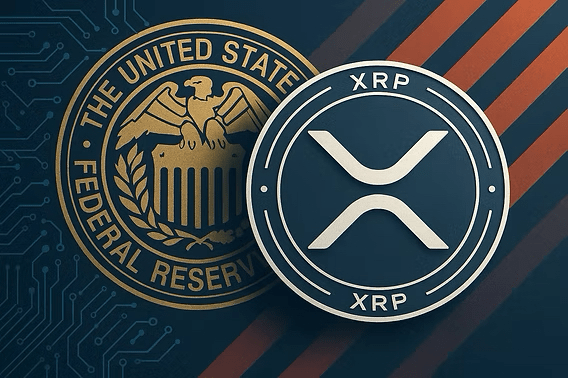

Ripple sought to obtain a master account with the Federal Reserve for RLUSD.
Ripple acquired Hidden Road and launched Ripple Prime service.
Riksbank moved urgently to regulate stablecoins.
U.S. digital asset policy accelerated in 2025.
Ripple positioned itself to dominate the global financial infrastructure.
This was one of the points highlighted by Ledarsidorna.se, noting that Ripple quietly yet firmly sought to obtain a master account with the Federal Reserve. This step would enable Ripple Labs to issue and hold its stablecoin RLUSD. This shift made Ripple part of the core of the payment system in the United States. Many observers did not expect this, as traditional financial media did not cover this news. Ripple was working throughout 2025 to expand its regulatory presence within the United States. This move was seen as an indicator of a fundamental change, as stablecoin issuers rarely succeed in dealing directly with the Federal Reserve.
Ripple has strengthened its position by building RLUSD according to banking compliance standards. Having a master account may allow it to execute settlements without intermediaries, making the process faster and reducing systemic costs in cross-border payment markets. This advancement reflects Ripple's long-term plan to become a global pillar for settlements, not just a limited crypto project. The news sparked strong reactions within the financial sector, as its impacts were far beyond the price volatility of XRP.
Ripple Prime's expansion through a major acquisition $XRP
In 2025, Ripple acquired Hidden Road in a deal worth $1.25 billion and renamed it Ripple Prime. This acquisition made Ripple a global multi-asset primary broker. The company entered markets that handle trading volumes comparable to the GDP of entire countries. The new growth enabled Ripple Prime to offer equities, forex, commodities, and digital assets to institutions through a single infrastructure.
This merger created a new competitive dynamic, putting traditional intermediaries under pressure to modernize at a faster pace. The acquisition demonstrated how Ripple plans to penetrate institutional finance by integrating blockchain pathways with existing market structures.
The company used this expansion to enhance the development of RLUSD and push it towards greater presence within regulated financial markets. This came as part of a broader goal to integrate stablecoins within traditional settlement systems. The digital assets sector viewed the acquisition as one of the most important steps in changing institutional liquidity pathways. Ripple has proven that companies active in the crypto world are capable of acquiring traditional financial institutions and rehabilitating them in a short period. This development has propelled the company to a pivotal position in global systemic settlements.
Changes at central banks in the United States and Europe $XRP
The analysis linked these developments to the Swedish central bank, "Riksbank." In late 2025, the bank changed its stance from skepticism to urgency regarding the regulation of stablecoins. This shift occurred after the United States integrated digital assets into the national security framework and economic architecture in early 2025. This change placed pressure on European institutions like Riksbank and the European Central Bank, as they realized that American stablecoin systems are advancing at a pace that exceeds their ability to keep up.
The publication urged for leadership reforms, as delays in response could put European financial systems in a disadvantaged position. Ripple's rapid growth showed that the race for international infrastructure is no longer limited to cryptocurrency stories but has moved to issues related to transaction engineering, settlement efficiency, and securities modernization. The analysis indicated that Ripple has become a key player in this transformation. This change has forced global regulators to adopt higher flexibility. The momentum gained by RLUSD and Ripple Prime has led to long-term structural effects on payment networks worldwide.
Global finance is preparing for a structural alignment $XRP
The publication clarified that many institutions have not yet absorbed this wide-ranging transformation. Ripple has entered organized international markets, dominating payment pathways, liquidity systems, and banking principles. Through the acquisition and master account, it has established a strong base for future dominance. These developments have shown that the infrastructure for cryptocurrencies has become an element that cannot be ignored in the global finance system.
Investors, regulators, and policymakers have begun to reassess their strategies. Ripple's steps indicate a restructuring that could define the contours of global financial engineering in 2026 and beyond.
#Xrp🔥🔥 #BinanceSquareFamily #BinanceExplorers #BinanceSquare #NewsAboutCrypto