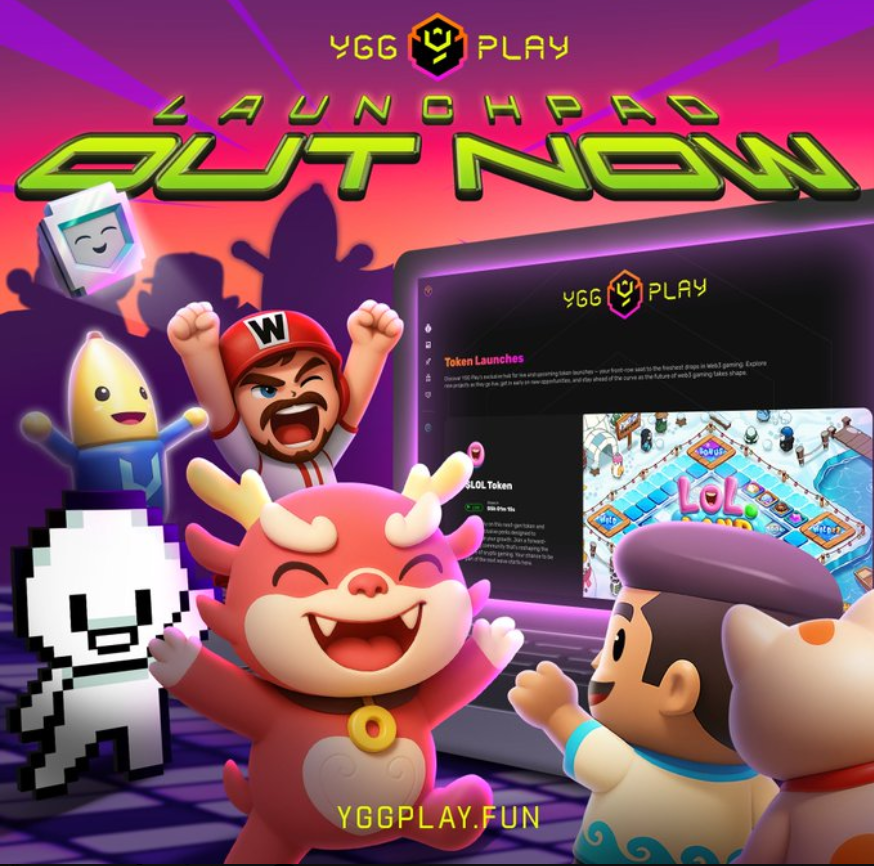
@Yield Guild Games #YGGPlay $YGG

Do you remember three years ago, that sweltering summer? You were scrolling through your phone and saw a news article: a group of unemployed young people in the Philippines were making more money by raising virtual pets than local white-collar workers. You laughed it off, thinking it was just another unreliable 'internet myth.' You continued to focus on your current job, calculating next month's mortgage.
However, time has provided a cruel comparison. While many people are still struggling for a promotion and raise, that once-dismissed 'joke' of a gaming guild in the Philippines—Yield Guild Games (YGG)—has completed a silent transfer of power. It is no longer just a philanthropist 'raising pets,' but has transformed into a precise, ruthless, and highly capitalized Web3 income machine. It has evolved from a 'lifeline' solving the problem of eating into an 'empire builder' attempting to define the future rules of the game.
This is not just a story about wealth. It is a cold fable about insight, survival, transformation, and how to forge ambition from despair in the cracks of the times.
Act One: The Birth of the 'Scholarship' in Despair - It is both redemption and shackles (2020-2021)
In 2020, under the heavy blow of the pandemic, the unemployment rate in the Philippines soared to 40%. Jobs were lost, and the future looked bleak. At this moment, a game called (Axie Infinity), shining with the light of 'Play-to-Earn', illuminated reality. The game logic is simple: by breeding, battling, and trading pet-like NFTs (Axies), players can earn real tokens. Income can reach two to three times the local minimum wage, which is a ray of hope for countless families.
But a cold high wall stands there: starting requires purchasing at least three Axies, costing hundreds or even thousands of dollars. This was a pipe dream for many who could barely afford to eat at that time.
Thus, YGG's founder Gabby Dizon and his partners provided a plan destined to be written into history: the 'scholarship' model. The guild invests in purchasing these expensive NFT assets and then 'loans' them to players (called 'scholars'). After players earn profits, they share them proportionally: players take 70%, community managers 20%, and the YGG treasury 10%.
At this moment, magic and capital both took effect.
For scholars: This is pure redemption. A Venezuelan mother named Johana uses this income to support her two children and save for the future. A Filipino scholar named Maria uses it to pay for cancer treatment. At peak times, YGG 'employed' tens of thousands of such scholars, who averaged nearly 3000 game tokens per month.
For YGG: This is genius capital expansion. They have no intention of being philanthropists but are building a scalable, profit-driven system. They transform dormant NFT assets into 'production tools' that continuously generate cash flow, and the scholars are the labor force driving these tools. This is not a guild, but more like a multinational company with thousands of 'employees' operating on the blockchain.
YGG and (Axie Infinity) complemented each other, igniting a global GameFi craze. YGG's token price soared, and capital (like a16z and Pantera Capital) flooded in. A small team from the Philippines, rising from the quagmire of unemployment, suddenly stood in the spotlight of the Web3 world, being dubbed the 'Godfather of GameFi'.
But all the gifts of fate have a price marked in the dark. Prosperity built on a single game economic model is like a castle of sand.
Act Two: The Empire's Cold Winter and Ruthless Transformation - Killing the Innocent Self (2022-2023)
In 2022, the crypto winter struck suddenly. The economic model of (Axie Infinity) showed cracks, and token prices collapsed. Once priceless digital pets became worthless. YGG's finances were on the brink of collapse, and the value of managed assets plummeted from its peak. Tens of thousands of 'scholars' realized that hard 'work' could no longer support their families and left one after another.
Behind the shattered dreams, a sharp truth emerges: the vast majority of people are not here for fun, but purely for profit. When profits disappear, the crowd evaporates instantly.
However, the YGG team demonstrated remarkable resilience and a cold determination to evolve. They did not sacrifice themselves to old dreams but decisively implemented a strategic transformation of 'three-legged walking':
Decentralized global expansion (sub-DAOs): They no longer put all their eggs in one basket but hatched 'sub-DAOs' spread across the globe, such as YGG SEA (Southeast Asia), YGG Japan, YGG India, etc. These sub-DAOs operate like franchises, adapting to local conditions, flexibly capturing local opportunities, and returning value to the center.
Diversified asset investment portfolio: YGG has completely transformed from a gaming guild into a blockchain game investment fund. They cast a wide net, investing in NFT assets from over 55 game projects, from (The Sandbox) land to (Star Atlas) spaceships, covering everything. They have no emotional loyalty to any single game, only to return on investment (ROI).
Deeper ecological leverage: YGG began to leverage its vast player community and capital for deep binding with game development studios. They bring users, liquidity, and heat to early games in exchange for early token allocations, exclusive airdrops, and revenue sharing. They transitioned from participants in the game to design partners and co-builders of the game economy.
This near 'life-or-death' experience stripped away YGG's warm exterior, revealing its core - a highly rational, calculating capital machine governed solely by growth and survival.
Act Three: Building the 'Game World Xiaomi Mall' - From Landlord to Rule Maker (2024-Present)
Having survived the cold winter, YGG's ambitions are no longer on the same level. It is no longer satisfied with playing the role of 'NFT landlord' or scattered investors. Its latest form is a super platform aimed at aggregating, distributing, and dominating the entire Web3 game traffic: YGG Play.
You can understand it as the 'Xiaomi Mall of the Web3 game world' or the 'blockchain version of Steam', but its business model is more aggressive:
One-stop gaming center: Dozens of chain games are integrated here, allowing players to play with a click without frequently switching wallets and websites.
"Launchpad" premiere platform: This is the exclusive launch ground for popular new games. The 'early token airdrop' and 'low-price quota' that ordinary players dream of are integrated into standardized tasks by YGG.
Points and loyalty system: Players accumulate points through games and tasks, which can be exchanged for token rewards from future new games. Users who hold and stake YGG tokens can enjoy VIP-level accelerated benefits.
What does this mean? It means YGG is establishing its own traffic moat and value distribution rights.
In the past, players had to mingle in countless communities, fill out cumbersome forms, and stay up late guarding Twitter to fight for a slim chance of an airdrop, all filled with information asymmetry and fraud risks.
Now, YGG tries to tell you: 'Come on, come to my territory, follow my rules, and I will distribute opportunities to you fairly.' It transforms scarce early resources into a predictable, quantifiable points game.
This marks the ultimate evolution of YGG's business model: it has transitioned from asset owner (holding NFTs) to asset operator (leasing NFTs), ultimately becoming the tax collector and rule maker of the ecosystem (platform commissions and traffic distribution).
Epilogue: The Empire Apocalypse - Feast, Machines, and the Future
Looking back at YGG's past and present, what it leaves us is not a warm inspirational story, but a cold and clear survival guide to Web3.
From 'charitable shell' to 'capital core': Its starting point stems from real social suffering, which endows it with powerful moral appeal and community cohesion. But it quickly transformed this emotional capital into replicable, cold financial models. Redemption is its starting point, but it is by no means its endpoint.
Ruthless Darwinism: YGG has no faith in games, only in sustainable economic models. It is like a shark with a keen sense of smell, swimming in the ocean of game economics, pouncing wherever there is profit. Once a game economy collapses, it quickly retreats without nostalgia. This extreme pragmatism is key to its survival through multiple cycles.
The quiet concentration of power: Despite wearing the guise of a decentralized autonomous organization (DAO), core decision-making and asset distribution rights remain highly concentrated in the hands of the founding team and core capital. The 'governance' of ordinary token holders often remains superficial. Essentially, it is using decentralized tools to construct a more efficient and sturdy centralized power structure.
Today, the territory of the YGG empire spans virtual lands, game assets, player communities, and distribution platforms. What it 'enclosed' early in (Axie Infinity) was not just digital pets, but a verified set of cruel algorithms about humanity, capital, and power.
After reading this story, when you look back at your own work, do you feel a chill? The 'digital pet' game you once mocked is quietly reconstructing the boundaries of 'work', 'entertainment', and 'assets'.
The story of YGG raises an ultimate question: In the future digital world, are we participating in an open game, or unknowingly becoming a 'scholar' that can be replaced at any time in a giant financial machine?
The blueprint for the empire has already unfolded, while most people remain oblivious. This time, will you choose to continue observing, or attempt to understand its rules? Time has once again begun to count down.