

Expectations that the Bank of Japan (BoJ) is shifting away from ultra-loose monetary policy have become a short-term headwind for Bitcoin. As Japanese government bond yields move toward multi-decade highs, markets are increasingly focused on liquidity conditions and global capital flows.
In the near term, a more hawkish BoJ stance tends to support the yen. Yen strength can lead to partial unwinding of yen-funded carry trades, putting pressure on risk assets such as cryptocurrencies. During these periods, Bitcoin often faces temporary downside pressure as leverage is reduced and risk appetite weakens.
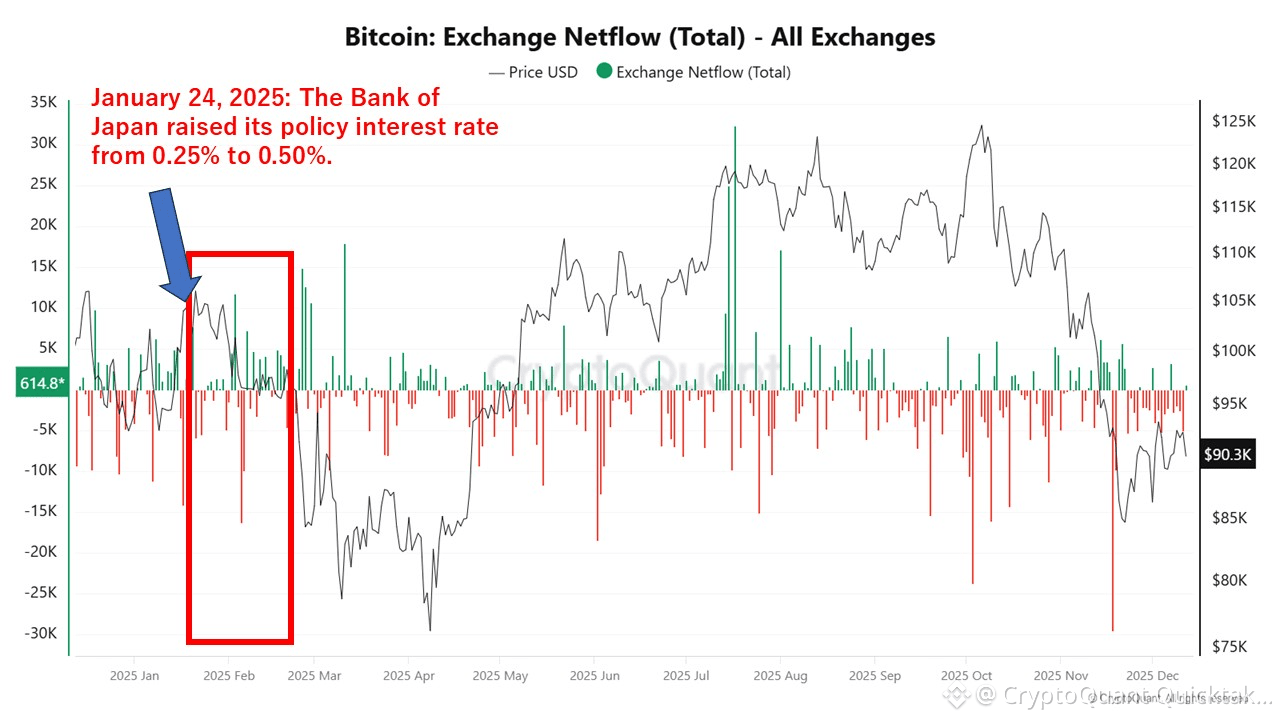
On January 24, 2025, the BoJ raised its policy interest rate from 0.25% to 0.50%. Around this event, on-chain data showed a rise in Bitcoin exchange netflows, suggesting that investors moved BTC to exchanges to prepare for selling or position adjustments. This reflects heightened caution around macro events.
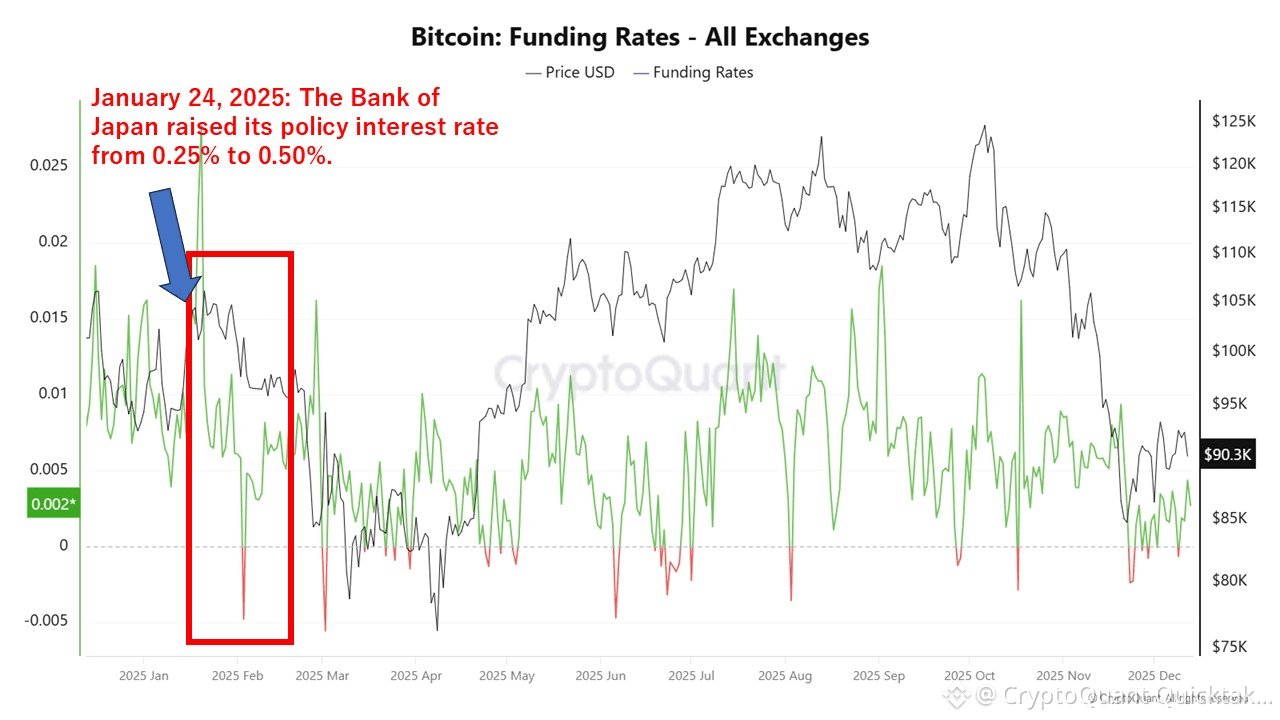
At the same time, funding rates in the derivatives market declined and briefly approached negative territory, indicating that short positions became dominant and sentiment turned risk-off. This reaction illustrates how quickly liquidity-tightening signals are priced into futures markets.
However, this move did not signal a long-term bearish shift. The rate hike was largely priced in, and interest rate differentials between Japan and the U.S. remain wide. As a result, the key factor for Bitcoin was not the exchange rate itself, but changes in liquidity and positioning.
Conclusion
To evaluate Bitcoin’s short-term reaction to BoJ policy shifts, two on-chain indicators are crucial: exchange netflows, which show potential selling pressure, and funding rates, which reveal sentiment and positioning imbalances. Together, they help determine whether market weakness is a temporary adjustment or the start of a broader risk-off phase.
Written by XWIN Research Japan
