


The world’s largest asset management company, BlackRock, has recently filed with the Securities and Exchange Commission (SEC) for an Ethereum staking ETF.
BlackRock first gained notoriety in the crypto space when it launched its Bitcoin ETF in 2024. It went on to become a big success, exceeding the yearly revenue of all other traditional BlackRock ETFs, some of which have been around for over two decades.
Given the success of the Bitcoin ETF, it’s a bullish sign for Ethereum as it could drive more traditional focused investors into Ethereum.
What is Ethereum Staking?
Staking is when you essentially “lock up” your crypto in a network in order to help that network approve transactions. In return, you are paid staking rewards in the form of the same crypto, effectively a yield, similar to the way that stocks pay dividends. The yield on Ethereum staking is usually in the 3-4% APY range.
Staking is part of what’s called a Proof-of-Stake (PoS) consensus, which basically means that this system is used to decide who gets to create the next block on the blockchain.
Ethereum originally started on the Proof-of-Work (PoW) consensus, which is what Bitcoin uses, which is where computers solve problems (mining) in order to decide who gets to create the next block. However, Ethereum moved to PoS in 2022, mainly to remove the mining aspect.
BlackRock and Grayscale Ethereum Staking ETFs
BlackRock already holds its own Ethereum ETF however the current one isn’t an Ethereum staking ETF. BlackRock wanted to incorporate staking however it wasn’t approved in time before the official launch.
Rather than modify the existing ETF, which would take time, BlackRock has filed for a separate Ethereum staking ETF. So when approved, investors will have the choice between an ETF with simple Ethereum price exposure or an ETF which generates a yield. Given most investors’ appetite for a yield, it’s pretty clear which one will be chosen.
Grayscale was actually the first asset management company to offer an Ethereum staking ETF in October 2025. We reported that this would open the floodgates to other companies and that is now starting to happen.
ETFs vs Self-Custody
There are some major differences between holding funds in an ETF versus holding crypto directly in a self-custodial wallet.
The main difference is in the name, with self-custody you have full ownership of your cryptocurrency whereas the opposite is true with ETFs, they hold your crypto on your behalf.
This means that when it comes to selling your crypto, or moving it, you would have to wait for normal market trading hours. Whereas holding crypto directly means it can be moved, swapped or sold at any time.
ETFs will also charge annual fees whereas self-custody wallets do not. The only costs you would face are any Ethereum transaction fees.
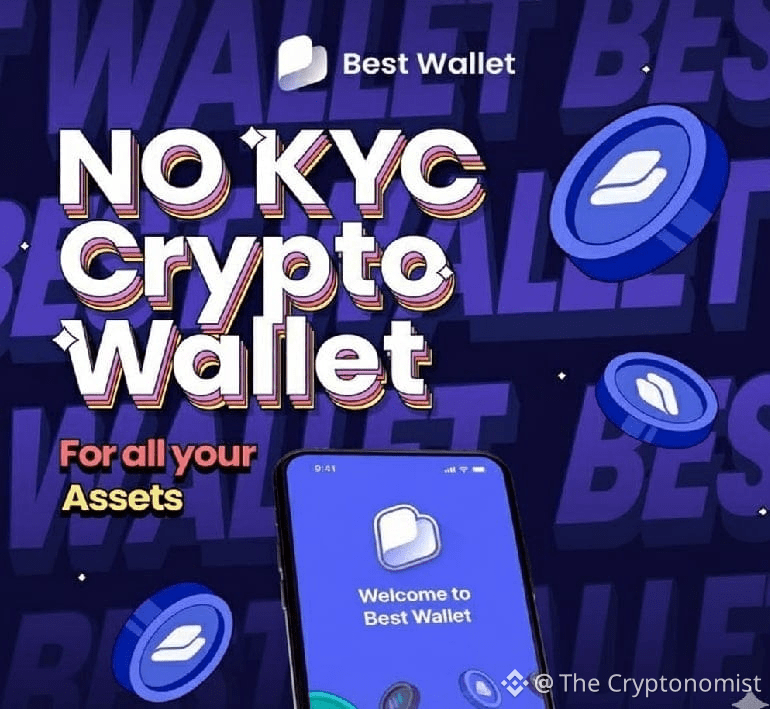
That’s why many investors prefer to take control and place their crypto in a self-custody wallet. One option which also has its own native token with a staking yield higher than Ethereum is Best Wallet.
A no-KYC, multichain wallet, Best Wallet ticks all the right boxes to help investors maximize the opportunities in the market. First, through the wallet, users can buy and swap cryptos for one another, meaning that there is no need to take their crypto out and move them to and from exchanges, allowing them to save money on transfer fees.
More so, being a multichain wallet that lists cryptocurrencies from a variety of blockchains, Best Wallet empowers users to build diverse portfolios and swap cryptos for one another inside the app.
The wallet is also very secure, thanks to its integration with Fireblocks, a leading name in crypto protection. At the same time, it doesn’t require KYC, giving it an edge over centralized exchanges.
That said, the staking perks available are not limited to what is provided through its native token. Multiple cryptos listed on the platform are also available for staking, offering high yields ranging from 5% to 20%. Also, it lets users invest in new cryptocurrencies that are still in the early-stage token sale through its native launchpad.
Prominent names in the industry, including ClayBro have already reviewed the platform, highlighting its usability and standout features.
Download Best Wallet
This article has been provided by one of our commercial partners and does not reflect Cryptonomist’s opinion. Please be aware our commercial partners may use affiliate programs to generate revenues through the links on this article.

