
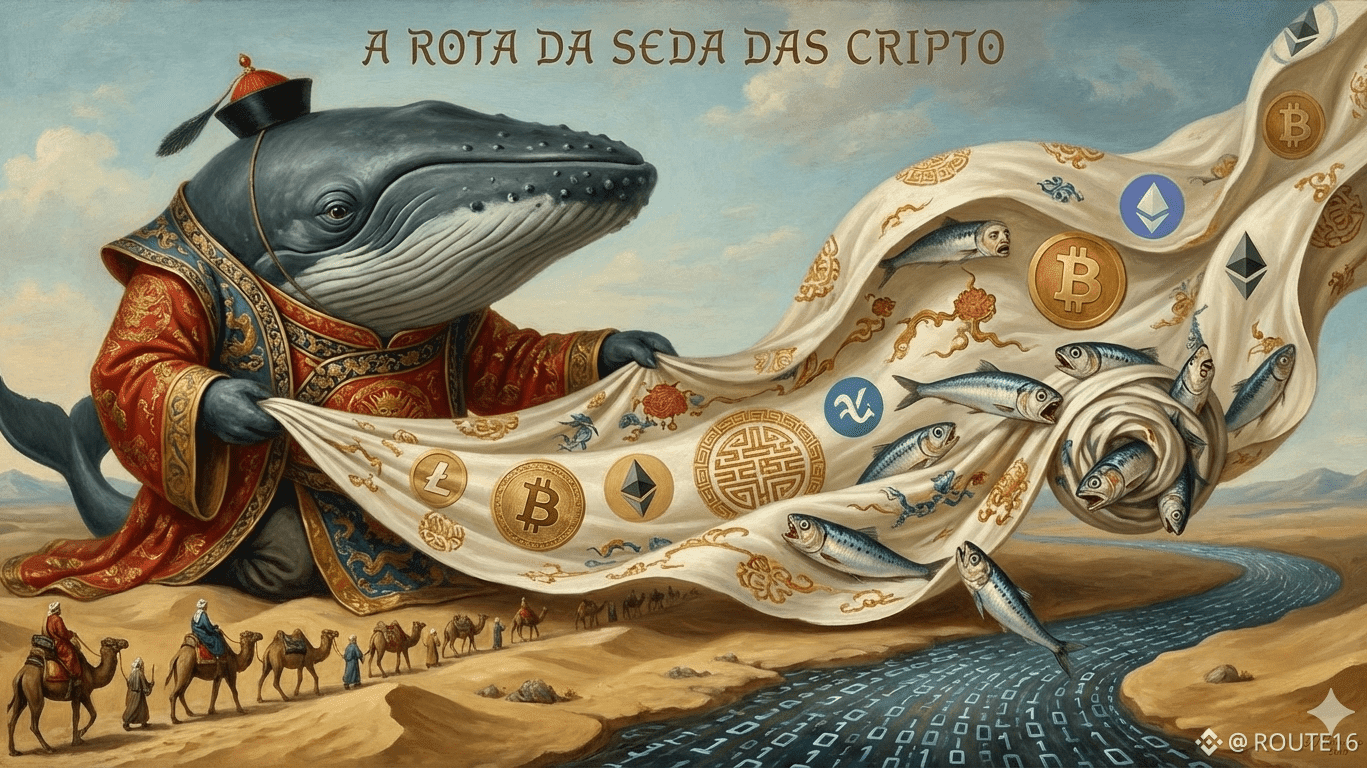
The "whales" of Bitcoin, who are investors or entities that hold a very large amount of the currency (usually 1,000 BTC or more), have the power to significantly influence the market due to the volume of their transactions.
They can use various tactics to manipulate or at least influence the price and market sentiment:
🐋 Manipulation and Influence Tactics
* Large Scale Sales (Dump):
* A whale can sell a massive amount of Bitcoin at once, which suddenly increases the supply in the order book of an exchange.
* This can lead to a sharp drop in price, causing panic or 'fear, uncertainty, and doubt' (FUD) among retail investors (the 'sardines'), who may also start to sell, worsening the decline. The whale can then try to repurchase at a lower price.
* Large Scale Purchases (Accumulation):
* Similarly, a large buy order can inflate demand and quickly raise the price.
* This can generate FOMO (Fear of Missing Out) in other investors, who enter the market out of fear of missing the rise, further driving up the price, at which point the whale may decide to sell part of their holdings for profit.
* Fake Orders (Spoofing):
* Placing large buy or sell orders at a price level (on the order book) with the intention of canceling them before they are executed.
* This creates an illusion of high demand or supply at a certain level, manipulating the sentiment of other traders to buy or sell in that direction.
* Hidden Orders (Iceberg Orders):
* It consists of splitting a large order into several smaller orders and hiding them, so that only a small part is visible on the order book of an exchange.
* This allows the whale to buy or sell large volumes without causing an immediate and noticeable impact on the price, avoiding drawing attention.
* Influence in Media/Social Networks:
* Whales, or people associated with them, can use their influence and presence on social networks or in crypto communities to shape narratives.
* For example, they can spread news or opinions that favor their positions, whether to encourage purchases (before selling) or to create FUD (before buying at low prices).
📝 Important Note
It is crucial to note that many of the movements of whales are carried out in over-the-counter (OTC) desks, outside of public exchanges. This happens to avoid large trading volumes causing the immediate and undesirable impact on prices that would occur if executed on open exchanges.
Although whales have short-term influence, the price of Bitcoin in the long term is determined by macroeconomic factors, institutional adoption, and the fundamental dynamics of the network.
We cannot forget that there has always been market manipulation in history.
See an example on the ANCIENT SILK ROAD
🤔 Market Manipulation on the Ancient Silk Road
The Silk Road was not a single road, but rather a vast network of land and sea routes that connected the East (primarily China) to the West, spanning thousands of years.
The concept of 'market manipulation' at that time was different from modern practices (like insider trading or state dumping), but there were indeed mechanisms that strongly influenced the price and flow of goods.
The main factors leading to manipulation or the setting of high prices on the Silk Road included:
1. Monopolies and Supply Control
* Silk Monopoly: For centuries, China held the monopoly on silk production, one of the most valuable goods on the route. The exclusive control of the source ensured that the Chinese could keep prices high, especially for Western markets, like the Roman Empire, which yearned for the product.
* Route Control: Empires and groups of merchants at strategic points along the route (like Sogdian in Central Asia or Byzantines at key ports) could control access and transit of goods. By dominating certain stretches, they became indispensable intermediaries, raising prices at each 'stage' of the journey.
2. High Profit Margins through Reselling
* The Silk Road mostly did not involve direct trade between the final producer (in China, for example) and the final consumer (in Rome).
* Multiple Intermediaries: Goods passed through the hands of numerous resellers over the 7,000 km. Each added their profit margin, making luxury goods — like silk, spices, and precious stones — extremely expensive for the consumer at the end of the route. This is described as luxurious goods being traded from one reseller to another, resulting in high prices for the goods.
3. Risk and Cost Factors
Although it is not direct manipulation, these factors created conditions of scarcity and justified high prices:
* The Risk of Travel: The route was long and dangerous (robberies, extreme weather conditions, diseases). The risk of loss of goods was high, requiring a much higher profit margin to compensate traders.
* Taxes and Tolls: Empires and local leaders along the way often imposed high taxes and tolls on caravans, significantly increasing costs and, consequently, final prices.
* Limited Information: The slowness of communication and the lack of a transparent global market meant that traders could take advantage of the lack of information about supply and demand in distant regions, charging higher prices where scarcity was perceived.
In summary, 'market manipulation' on the Silk Road was based more on geographic control, production monopolies (like silk), and high-risk resale structures than on the complex financial regulations we know today.
Good luck to everyone!
Follow me so we can become not just informants, but something like friends, and together, unite to make manipulation less effective.
GOODBYE...!!!🐳