
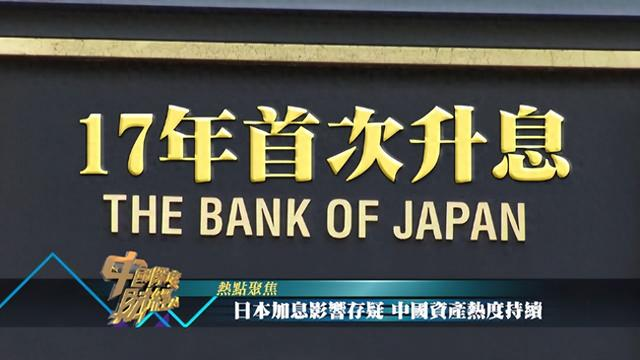
The yield on Japan's 2-year government bonds has breached 1% for the first time in 17 years, and the 10-year yield has reached its highest point since 2008. This 'butterfly' is flapping its wings, triggering a chain reaction in the global financial markets.

Global bond markets are shaking in unison
Japanese government bond yields are soaring rapidly. The yield on the U.S. 10-year Treasury rose by 3 basis points to 4.04%, with bond yields in Europe, New Zealand, and other countries rising in tandem. As one of the largest cross-border bond investment countries, if Japanese institutions withdraw overseas funds due to rising domestic rates, U.S. Treasuries and other assets will face greater selling pressure.
The market has raised the probability of a rate hike in Japan on December 19 from 25% to 80%. Analysts point out that Japan's ultra-low interest rates have long been at the core of global arbitrage trading, and a rate hike could lead to a rapid unwinding of arbitrage trades, further pushing up global bond yields.
The arbitrage trading chain is tightening.
The scale of yen arbitrage trading reaches $3-4 trillion, serving as a hidden liquidity pillar globally. Investors previously borrowed yen at low costs to invest in high-yield assets. Now, with rising expectations for interest rate hikes in Japan, the market fears rapid liquidation of arbitrage trades.
US stocks, gold, Bitcoin, and other assets that previously benefited from cheap yen are now facing the risk of liquidity withdrawal. Domestic funds in Japan are beginning to flow back, and life insurance, banks, and pension funds will reduce overseas asset allocations, showing a trend of global capital withdrawing from risky assets.
Emerging markets are in distress.
The yen appreciation channel has opened, and the USD/JPY exchange rate is rapidly declining. The Indian rupee hits a record low, while countries like South Korea and Vietnam face simultaneous 'sovereign bond and currency collapse.' Depreciation of the local currency raises import costs, potentially triggering imported inflation.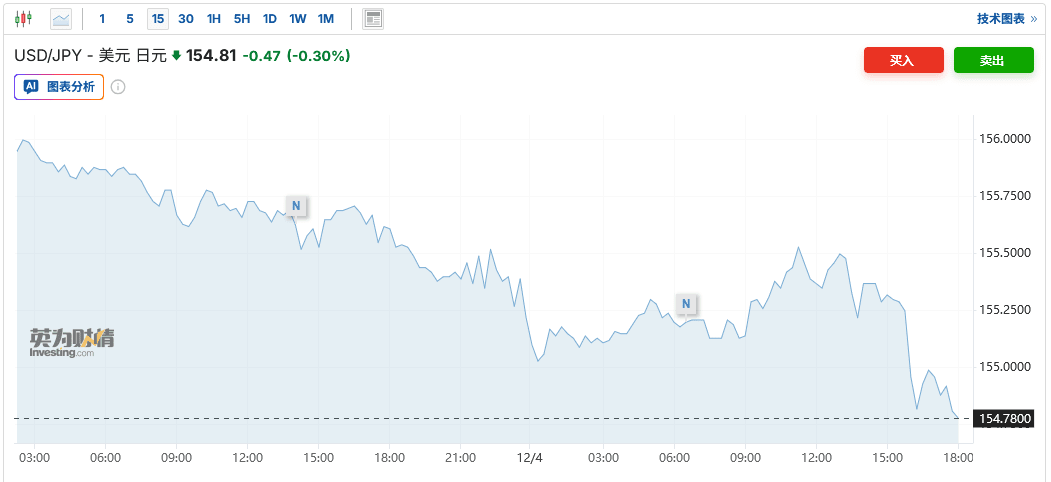
This fluctuation forces emerging market central banks to passively raise interest rates, falling into a vicious cycle of 'devaluation - interest rate hike - economic slowdown.' Economies reliant on foreign capital, such as Turkey and Argentina, have already experienced a double blow to their stocks and currencies, and A-shares have faced pressure due to the short-term withdrawal of foreign capital, risking the Shanghai Composite Index losing key support levels.
Cost transmission in the industrial chain.
Japan holds a monopolistic position in semiconductor materials and high-end machine tools, with 30% of global semiconductor materials relying on imports from Japan. Interest rate hikes will increase corporate financing costs, and prices of semiconductor materials may rise by 3%-8%.
Companies like Toyota are facing dual pressures from raw material costs and yen appreciation, while automakers in China and South Korea that rely on Japanese components may also be forced to raise prices. This cost pressure will be widely transmitted downstream, adding further burden to an already stressed global semiconductor manufacturing industry.
This interest rate change that began in Tokyo is permeating every corner of the global financial system through the bond market, capital flows, arbitrage trading, and the industrial chain. As Japan ends its 15-year era of ultra-low interest rates, global markets must readjust to a new world without 'free yen.'
