

The Federal Reserve's announcement of purchasing $40 billion in short-term Treasury bonds, a routine operation, has been interpreted by market analysts as a precursor to a significant change brewing, with the Treasury's tentacles seemingly crossing a regulatory red line that has stood for nearly a century.
TS Lombard's chief U.S. economist Stephen Blitz raised a startling point in a report: the balance sheets of the U.S. Treasury and the Federal Reserve are moving towards a substantive 'merger'.
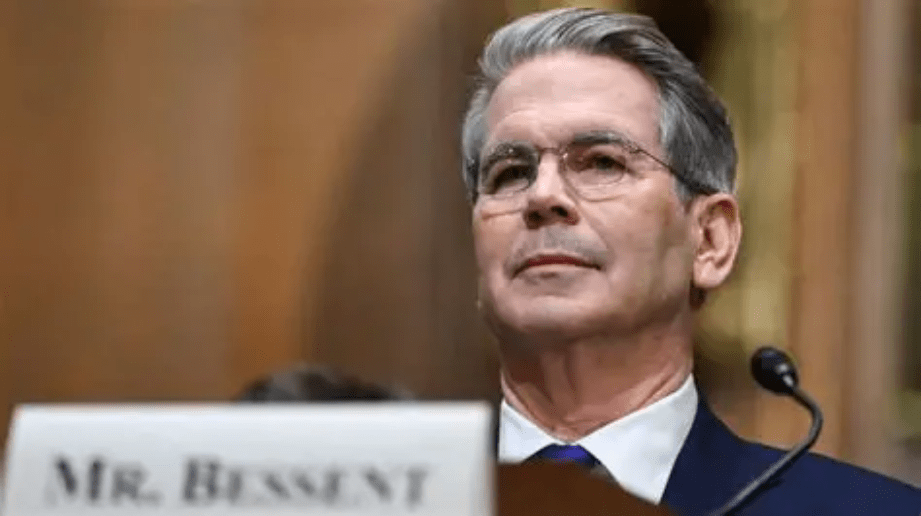
The symbolic mark of this change is that Treasury Secretary Tom Bessen may become the de facto 'shadow Fed chair' by arranging for loyalists to enter the upper echelons of the Federal Reserve, establishing a direct reporting line to the White House.
 I. Policy Shift
● On December 11, the Federal Reserve announced an operation to begin purchasing $40 billion in Treasury bills this month and prepare to gradually reduce the scale of purchases at some point next year. On the surface, this is a technical operation to manage the inflation of the Treasury's general account and the money market rate.
● Blitz's analysis points to deeper intentions: the Federal Reserve is essentially providing financing support for the Treasury's spending plans, ensuring that government financing is not hindered by interest rate fluctuations.
According to this logic, the traditional function of the bond market to warn the government of "excessive spending" through interest rate changes is becoming ineffective.
II. Structural Reshaping
● Behind this policy shift is a new power structure that is taking shape. Analysts point out that once potential candidates like Trump's former economic advisor Kevin Hassett enter the Federal Reserve, Bessenet will become their actual "boss." Blitz describes a "single presidential authority theory" becoming a reality, with daily policy coordination being conducted directly by Bessenet.
● In July, U.S. media reported a list of potential Federal Reserve chair candidates under the Trump administration, with Hassett seen as the top choice, and Bessenet himself mentioned. Bessenet previously publicly suggested establishing a "shadow chair" to balance the current chair Powell.
● Under this framework, the core goal of the Treasury is clear and direct: to acquire low-cost financing. The specific strategy is to inject liquidity into the short-term market while limiting long-term bond issuance to lower the government's borrowing costs.
III. Historical Red Line
● The Federal Reserve's independence is not inherently solid, but has undergone nearly a century of institutional construction and political struggle. In the 1970s, then-Federal Reserve Chair Arthur Burns was pressured by the Nixon administration to significantly lower rates, which was viewed as one of the important reasons for America's Great Inflation.
● Now, signs of political intervention are more apparent. Trump has publicly called for lowering the federal funds rate to below 1%, claiming it could save the government trillions in debt costs.
● This tendency to instrumentalize central bank policy has already raised concerns on Wall Street. Jamie Dimon, CEO of JPMorgan Chase, warned that interfering with the Federal Reserve's independence would have negative consequences.
IV. Internal Disputes
● There are significant differences within the Federal Reserve regarding this trend. Dallas Fed President Lorie Logan and Fed Governor Michelle Bowman strongly oppose the viewpoint of merging balance sheets from a "philosophical perspective."
● They advocate restoring volatility in the short-term market to allow market signals to function again. Blitz believes this philosophical stance may ultimately yield to "political realities and practical operations."
● It is worth noting the changes in the Federal Reserve's official predictions for future interest rates. Blitz pointed out that compared to September, the number of FOMC members expecting the federal funds rate to be below 3.5% in 12 months has jumped from 11 to 16.
● The economic forecast summary released by the Federal Reserve in December indicates that the median core PCE inflation expectation for the end of 2026 is 2.5%, lower than the September forecast of 2.6%, showing a slow downward trend.
V. Inflation Alarm
● Blitz's sternest warning in the report points to future inflation. He predicts that strategies aimed at providing the government with cheap funds will lead to higher inflation levels in 2026. Despite the Federal Reserve currently lowering its expectations for core inflation, with the combination of fiscal policy stimulus and monetary policy, "the inflation narrative will reassert itself in the next year or two."
● The report presents a two-phase scenario: in the short term, the economy may show weakness, which could lead the Federal Reserve to cut rates; but in the long term, "the overall trend is inflationary."
● Blitz summarized that unless the economy performs weaker than expected in early 2025, inflation will "re-emerge later in 2026 or 2027."
VI. Market Pricing
● The gold market has already reacted to potential changes in monetary policy. In December, the Federal Reserve lowered the policy interest rate to the range of 3.50%-3.75%, reducing the opportunity cost of holding gold. At the same time, the Federal Reserve announced the purchase of about $40 billion in short-term Treasury bills to ease market liquidity pressure, also supporting gold prices.
● Market analysts point out that in the context of a confirmed rate-cutting cycle and loose market liquidity, gold's medium-term "pricing anchor" is more aligned with declining real interest rates and rising safe-haven demand. The ongoing purchase of gold by global central banks further reinforces the pattern of "high volatility and upward price movement" in the gold market.
VII. Future Games
● The leadership of the Federal Reserve is about to change. The current chair Powell's term will end in May 2025, at which point new management will take over. Blitz believes Powell's speeches about the new policy framework "have become meaningless" because the power transition will bring a new policy direction.
● The Trump administration's economic team is seeking a "more compliant" Federal Reserve chair in order to achieve significant rate cuts before the midterm elections to stimulate the economy. If this trend of politically dominated monetary policy becomes a reality, it may repeat the mistakes of the 1970s "Great Inflation."
Economic Indicators
Federal Reserve December 2024 Forecast (Median)
Market Focus
Core PCE Inflation in 2025
2.5%
Fiscal and Monetary Policy Synergy
Core PCE Inflation in 2026
2.5%
The lagging effects of low-cost financing strategies
Federal Funds Rate at the End of 2025
3.9%
Rate of Rate Cuts Under Political Pressure
Long-Term Federal Funds Rate
3.0%
The ultimate neutral level of monetary policy

Blitz describes those predictions based on conventional fiscal and monetary policy norms as "precarious."
Gold prices have reached historical highs, and the market has cast its vote with capital to express uncertainty over future currency values. When Federal Reserve Chair Powell's speeches are analyzed by analysts as "having become meaningless," and when the Treasury Secretary may become the real "shadow chair," the fundamental rules of the financial market are quietly transforming under the pressure of tectonic shifts.
The outcome of this transformation will determine the direction of global capital for the next decade.
Join our community to discuss and grow stronger together!
Official Telegram community: https://t.me/aicoincn
AiCoin Chinese Twitter: https://x.com/AiCoinzh
OKX Benefit Group: https://aicoin.com/link/chat?cid=l61eM4owQ
Binance Benefit Group: https://aicoin.com/link/chat?cid=ynr7d1P6Z
