
Crypto traders are frustrated again. Price action has turned shaky, and confidence is fading fast. Bitcoin dropped to around $85,000 during the latest sell-off, while Ethereum slid more than 6% and is now trading below the $3,000 level. The broader market followed, with most altcoins posting sharp intraday losses.
This move did not come out of nowhere. Several pressure points hit the market at the same time, turning a fragile setup into a fast sell-off.
Leverage Unwind Sparks the First Wave of Selling
The first trigger came from derivatives markets. Crypto derivatives volume jumped 166% to $316.97 trillion, showing just how crowded positioning had become. At the same time, funding rates for Bitcoin perpetual futures dropped by 55%. That shift points to traders rushing to close leveraged long positions.
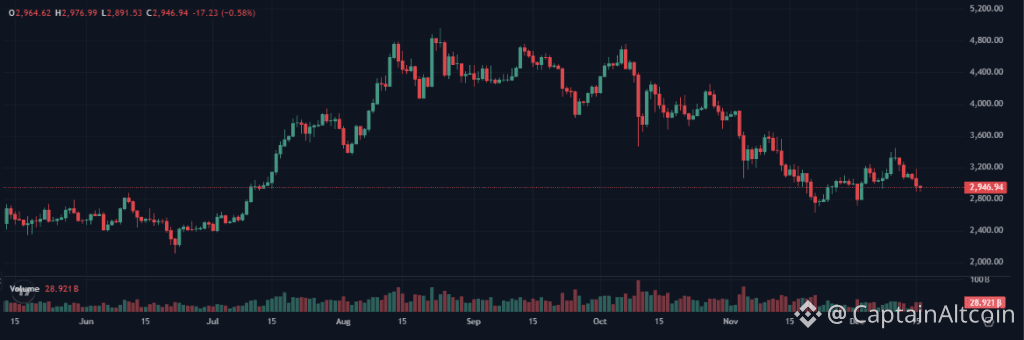 Source: CoinMarketCap/Ethereum
Bitcoin alone saw $164.6 million in long liquidations, the highest level recorded since early December. Once those liquidations started, price pressure accelerated. Thin weekend liquidity made things worse, allowing relatively small sell orders to push prices lower than usual.
This was not panic selling from spot holders. It was forced selling from overleveraged traders. When too many traders sit on the same side of the trade, the exit door gets narrow very quickly.
Regulatory Uncertainty Weighs on Altcoins
Regulatory concerns added another layer of pressure. The UK’s Financial Conduct Authority launched a major crypto regulation consultation, marking one of the most serious steps toward stricter oversight in the region.
In the long run, clearer rules could help bring institutional capital into the market. In the short term, the timing unsettled traders. Exchanges, DeFi platforms, and altcoin projects face higher compliance risks, and that uncertainty pushed investors toward risk-off behavior.
Bitcoin held up better than most altcoins during the drop, which fits the pattern seen during regulatory stress. Capital tends to leave smaller, higher-risk tokens first.
Read also: The Case for Solana as Crypto’s Most Complete Chain After the “Bitcoin 3.0” Claim
Crypto Moves in Lockstep With Tech Stocks
The sell-off also reflected broader market weakness. Over the past 24 hours, crypto showed a 0.89 correlation with the Nasdaq-100. That level of correlation means digital assets moved almost in sync with tech stocks.
This matters because equity markets were already under pressure. Fears around global interest rates, especially in Japan, pushed investors to reduce exposure to risk assets. Data shows that around 67% of Bitcoin’s recent price move aligned with movements in the S&P 500 ETF.
Crypto has not decoupled from macro forces. When stocks fall, crypto still feels it.
Japan’s Rate Policy Remains a Key Risk Factor
As reported earlier, there was no single breaking headline behind this drop. Macro pressure has been building quietly in the background.
Bull Theory once again highlighted Japan’s monetary policy as a major risk. The Bank of Japan has already raised rates several times, and another hike is expected around the December 18–19 meeting.
Japan kept rates near zero for years. That allowed investors to borrow cheap yen and move that capital into stocks, crypto, and other risk assets. This setup is known as the yen carry trade.
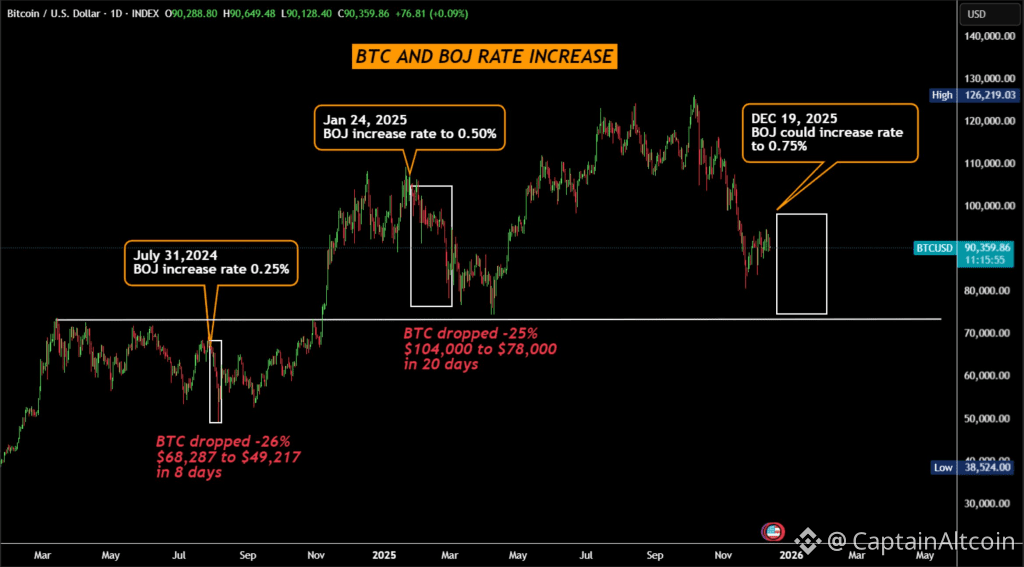 Source: X/@BullTheoryio
Now that borrowing costs in Japan are rising, those trades are being unwound. Investors need to repay loans, and that often means selling assets quickly.
History shows a clear pattern. When Japan raised rates in July 2024, Bitcoin dropped around 26% in a single week. After another hike in January 2025, Bitcoin fell about 25% over the following weeks. Each time, global markets reacted soon after.
If Japan raises rates again, a similar reaction could follow. That includes sharp stock declines, fast crypto sell-offs, high volatility, and forced liquidations.
Read also: Analyst Warns XRP Holders: Selling Now Could Be the Biggest Mistake of This Cycle
Why This May Still Be a Reset, Not the End
Despite the short-term damage, the bigger picture is more balanced. Japan’s economy remains weak. The latest GDP reading came in at -0.6%, worse than expected. Because of that, aggressive tightening cannot last long.
Japan has also announced a ¥17 trillion stimulus package aimed at supporting growth and stabilizing markets. Bond buying adds liquidity and helps reduce financial stress.
After panic-driven sell-offs, markets often stabilize. Weak positions are flushed out, selling pressure eases, and price bases start to form.
Globally, the US, China, and Canada are already moving toward easier policy. Over time, that adds liquidity back into the system.
A Japan rate hike can cause short-term pain. After that reset, conditions can improve. If liquidity continues to return, 2026 can still shape up as a strong year for crypto markets.
Subscribe to our YouTube channel for daily crypto updates, market insights, and expert analysis.
The post Here’s Exactly Why the Crypto Market Is Crashing as Bitcoin Faces an $80K Dip appeared first on CaptainAltcoin.


