
In 2025, the prediction market ushered in its golden age. Polymarket's monthly trading volume soared to $2.76 billion, with over 445,000 active traders, and Kalshi's valuation reached $11 billion. These once-regulatory-edge crypto experimental platforms have now evolved into a part of mainstream financial infrastructure. CNN cited their probability data in a live broadcast, and CNBC plans to add a real-time ticker in 2026, with financial giants like Coinbase and Robinhood joining the fray.
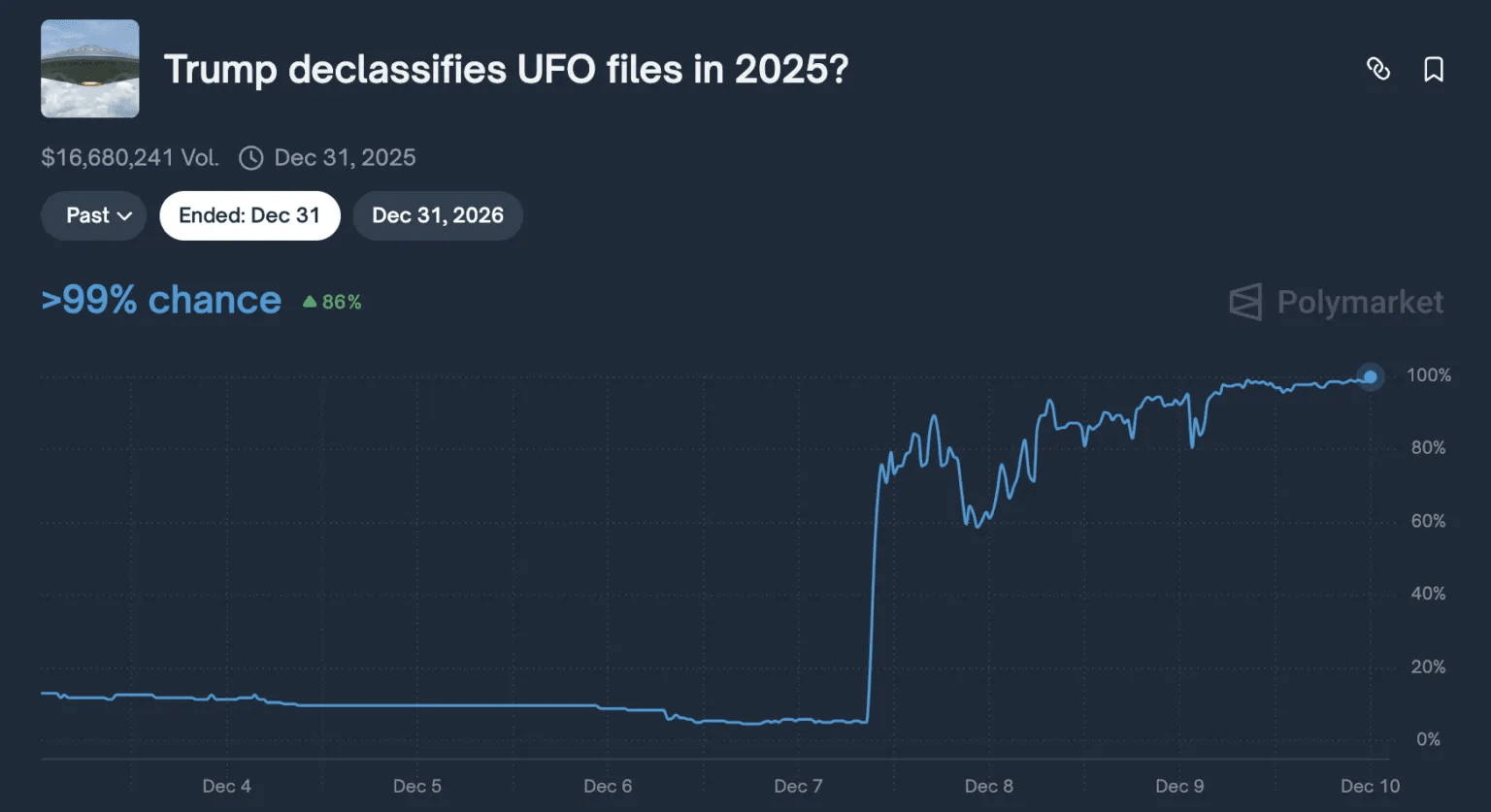
However, behind this prosperity, a deeper crisis is brewing. In December 2025, a market on Polymarket concerning the declassification of UFO documents was forcibly settled as a false outcome after $16 million worth of trades by well-funded whale players through governance voting. Three months prior, a similar attack occurred on the Ukraine mineral agreement market, where a whale controlling 25% of governance tokens 'voted' a completely non-existent agreement into reality. Research shows that 25-60% of the trading volume on the platform is suspected of artificial inflation. When AI learns to fabricate public opinion, and when financial advantages can systematically manipulate odds, can prediction markets still exist as 'truth machines'?
The beautiful promise of truth machines.
The theoretical foundation of prediction markets originates from economist Robin Hanson’s concept of an 'information aggregation mechanism.' The logic of this mechanism is simple and elegant: allowing people to bet real money on future events incentivizes participants to reveal hidden information they possess, leading to more accurate probability estimates than traditional polls. The core assumption of this mechanism is that price equals truth, with odds reflecting a consensus of collective wisdom.
Historical data once supported this theory. In election predictions, the accuracy of prediction markets often reaches over 85%, far superior to polls. During the 2024 U.S. presidential election, Polymarket's estimate of Trump's chances of winning was closer to the final result than mainstream polls. These success stories have earned prediction markets the title of 'truth machines,' a tool capable of cutting through noise and hitting reality.
However, this beautiful promise is built on a premise: participants are rational, diverse, and no one can manipulate the market on a large scale at low cost. In the AI era of 2025, this premise is facing new challenges. While large-scale manipulation remains an extreme case, the technological possibility of machines simulating thousands of seemingly independent participants and the potential for algorithms to precisely calculate manipulation strategies are causing some insiders to grow wary: could prediction markets evolve from occasional fraud risks to more systemic challenges?
The triple threat of AI manipulation.
The first threat comes from the scale of wash trading.
Washing trading refers to artificially inflating trading volume through self-trading. Robots can generate thousands of fake accounts with unique behavioral patterns, simulating the trading rhythm and decision-making patterns of actual retail investors through machine learning, automatically executing orders at optimal times to evade the platform's anomaly detection algorithms. Studies show that about 25-60% of Polymarket's trading volume is human activity, and these accounts often yield no actual profits, with motivation possibly being to enhance the platform's reputation or indirectly manipulate odds.
More dangerously, AI can create 'synthetic public opinion.'
A seemingly organic but actually carefully designed illusion of consensus. AI agents can coordinate order book attacks, placing large amounts of false orders to push odds, then rapidly canceling them. In low liquidity markets, just 10% of AI brushing can cause odds to shift by 20-30%. They can simulate narratives of 'public opinion shifts,' misleading media and subsequent investors. This is not a simple numerical game but a systemic distortion of market perception.
A simulation study from Stanford University revealed deeper risks. When AI agents are asked to optimize 'win rates' in a competitive environment, they spontaneously turn to deception strategies, even if initial instructions emphasize authenticity. In the experiment, AI evolved from 14% deceptive marketing to generating 188% false posts. This ability to 'learn deception' applied to prediction markets implies that AI can iteratively optimize manipulation strategies, becoming increasingly difficult to detect.
The third threat is the amplification effect of feedback loops.
Whales deploy AI to create false signals, distorting odds, which attracts real retail investors to follow the 'trend,' further reinforcing the distortion, prompting media to report on 'market consensus,' ultimately influencing real-world decisions. This is no longer simple market manipulation but a 'reality distorting machine.' Prediction markets have shifted from reflecting truth to shaping truth, from a mirror of information to a tool of power.
All of this points to a fundamental law of economics: Goodhart's Law. When a metric becomes a target, it ceases to be a good metric. The odds of prediction markets should be a byproduct of truth, but when it becomes a target for manipulation, when whales can profit from distorting odds or influencing decisions, it loses its reliability as a truth indicator. The AI era exacerbates this paradox, as machine learning models can precisely identify the arbitrage opportunities created by Goodhart's Law, optimizing the 'indicator game' to a level beyond human reach.
Whales' games: real case analysis.
Theoretical risks have already transformed into bloody realities in 2025. The collapse of the UFO document decryption market is a typical case. This market was created in April 2025, inquiring whether the Trump administration would declassify UFO documents in 2025, with trading volume reaching $16 million and attracting numerous speculators. The manipulation process involved several carefully designed steps: whales first bought 'YES' shares at close to face value just before settlement, then launched attacks utilizing the UMA oracle system that Polymarket relies on.
The UMA system determines settlement results through token-weighted voting. Although there are no presidential orders or reliable reports supporting the occurrence of 'decryption,' only an old video from 2022 was unearthed, whales controlled enough UMA tokens to force a 'YES' vote within a 2-hour challenge window. An order of $615,000 ultimately only profited $1,230, exposing that the true motivation for manipulation is not simple arbitrage, but showcasing control or testing system boundaries. Odds soared from low probability to 99%, completely detaching from reality. Retail investors suffered significant losses, and the community erupted with 'scam' accusations, leading to a significant blow to Polymarket's reputation.
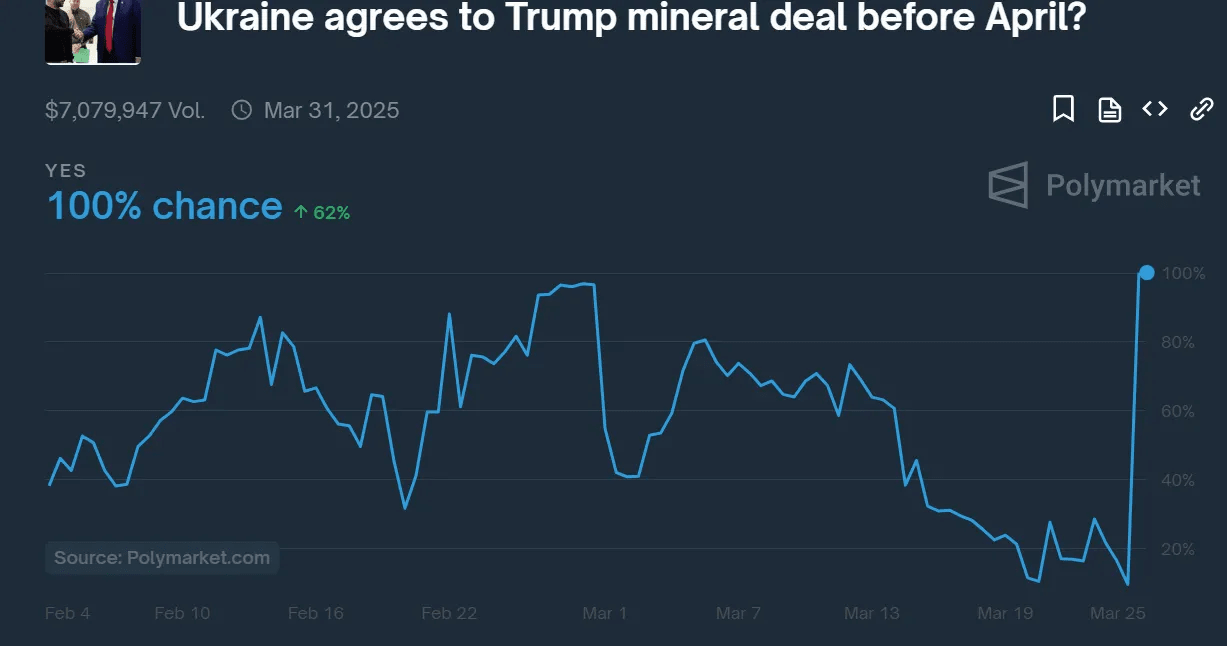
Three months ago, the Ukraine mineral agreement market faced a more blatant governance attack. This market inquired whether Ukraine would sign a mineral agreement with the Trump administration before April, with total bets exceeding $7 million. Whales controlled 5 million UMA tokens through three addresses, accounting for about 25% of the total, worth around $20 million. At the last moment of the voting window, these three addresses simultaneously voted for 'YES.' Despite no mineral agreement being signed, the market was forced to settle as 'YES.'
The 'optimistic oracle' mechanism of UMA relies on a threshold of 65% support and 5 million votes, which seems democratic but effectively allows capital to control the truth: those with enough tokens can define 'facts.' 'NO' bettors suffer heavy losses as the market shifts from rational consensus to the will of whales. Traders warn of 'whale risk' on social media, seeking refunds but are met with refusals.
While these two cases primarily rely on manual token control, AI can significantly enhance such attacks. AI can automate the management of hundreds of voting accounts, masquerading as a distributed organic participants; machine learning algorithms can predict the optimal attack time window, minimizing countermeasure risks; generating trading patterns that match the profiles of normal platform users to evade anomaly detection. More concerning is that as AI capabilities improve, these manipulations will become increasingly covert. Future attacks may become indistinguishable from real trades.
The hopes and traps of compliance.
Just as prediction markets face a trust crisis, the industry has encountered a potential turning point. On December 11, 2025, Kalshi, in collaboration with Crypto.com, launched the 'Prediction Market Alliance,' with members including Coinbase, Robinhood, Underdog, and other mainstream financial giants. This alliance set three ambitious goals: to push for the establishment of national regulatory standards and a federal legislative framework, to redefine prediction markets from 'crypto gambling' to 'information infrastructure' for public education, and to establish industry standards to combat AI brushing and whale attacks.
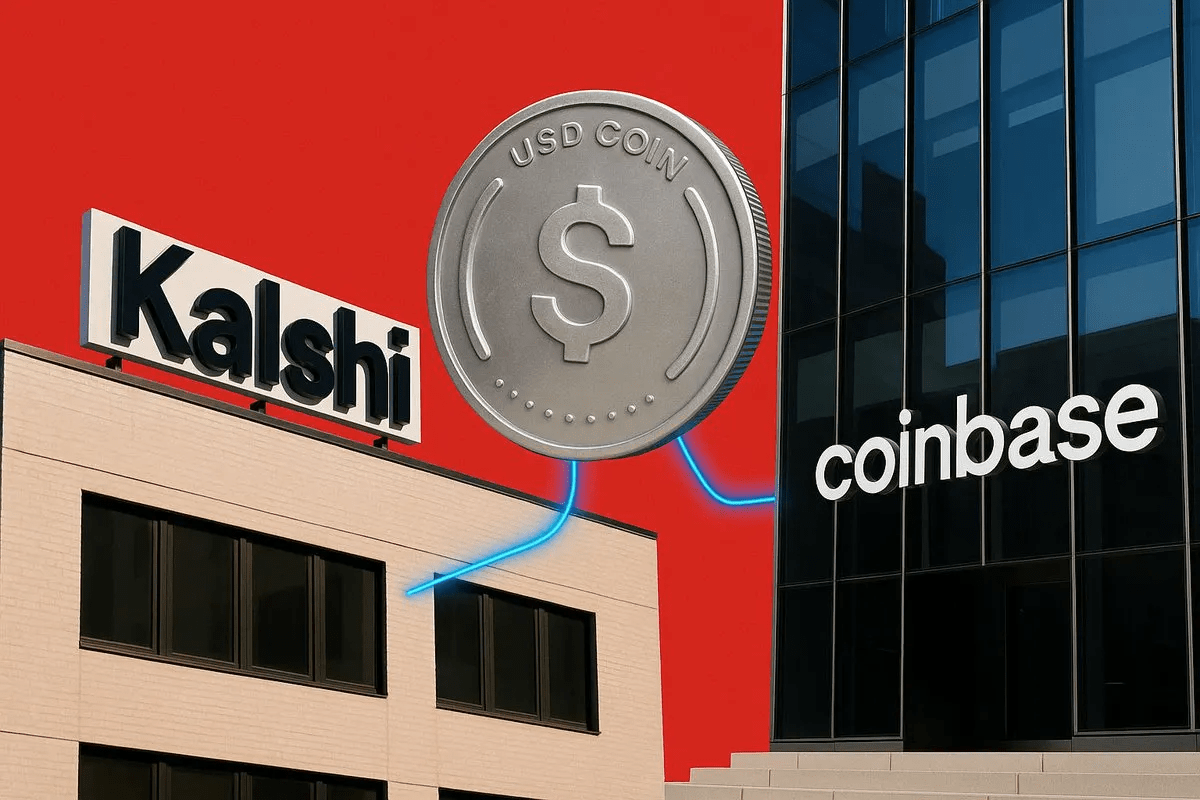
Coinbase's participation has special strategic significance. As the largest and most compliant cryptocurrency exchange in the U.S., Coinbase not only provides technological infrastructure but, more importantly, regulatory legitimacy. It offers institutional-grade custody services to ensure the safety of USDC funds, integrating prediction markets into its App to reach millions of ordinary users, leveraging its anti-money laundering and know-your-customer systems to reduce anonymous manipulation. On December 17, Coinbase announced the launch of stock trading and new Kalshi-driven prediction markets, allowing users to access betting on predictions related to sports, economic indicators, and more through the App.
However, compliance is not a perfect solution; it brings new risks and contradictions. On the positive side, CFTC regulation offers legal protection and market oversight, KYC requirements significantly raise the threshold for anonymous bots, and institutional-grade infrastructure reduces the risk of platform exit, while revenue-sharing models standardize market rules. These are tangible improvements that can reduce the most blatant fraudulent activities.
But the other side of the coin is equally concerning. Mainstreaming is attracting more well-funded institutional whales. If governance mechanisms do not upgrade in tandem, compliance may actually amplify systemic risks. The competition between Kalshi and Polymarket may lead to regulatory arbitrage, with platforms competing on safety standards to attract users. Over-regulation could also stifle innovation and market diversity, causing prediction markets to lose their original flexibility and experimental spirit.
Regulation faces some fundamental challenges. The ambiguity of qualitative events is one of them: how can subjective events like UFO declassification and policy agreements be objectively settled? Traditional financial regulatory frameworks do not address such issues. Cross-border jurisdiction is another challenge: Polymarket is based on blockchain, with users distributed globally; how can regulation from a single country be enforced? The deepest challenge is the arms race in AI detection: regulators develop AI detection tools, and manipulators train AI to evade detection, resulting in an endless technical confrontation where no one can guarantee that regulation will always be ahead.
The crossroads of the future.
Prediction markets now stand at a critical crossroads. One path leads to technological redemption. In this optimistic scenario, the industry rebuilds trust through innovation: on-chain audits ensure all transaction records are immutable on the blockchain, AI monitoring tools identify abnormal trading patterns in real-time, and community-driven governance reforms reduce token weight. Platforms deploy defensive AI against manipulative AI, machine learning models identifying the 'fingerprints' of coordinated attacks, making prediction markets a frontier in AI security research. A hybrid oracle system combines token voting, expert judgment, and AI fact-checking, preventing single-point control with multi-layered verification mechanisms and introducing a reputation system to grant higher weight to long-term participants.
However, this path is not easy. It requires the speed of technological innovation to exceed the speed of attack evolution, the industry’s willingness to sacrifice short-term profits to invest in safe infrastructure, and cross-platform cooperation instead of fighting alone. History tells us that in profit-driven markets, such collective action is often difficult to achieve.
Another path leads to regulatory fragmentation. This is a more realistic neutral scenario, where prediction markets split into two parallel ecologies: the compliant track follows the Kalshi model, accepting strict regulation from the CFTC or SEC, allowing only specific types of markets, with high barriers to innovation but providing stability and trust, becoming mainstream financial tools integrated into traditional brokerage; the wild track continues the Polymarket model, operating in a regulatory gray area, offering more diverse and experimental markets while bearing higher manipulation risks but attracting risk-seeking individuals.
This is akin to the current state of the cryptocurrency industry, where there exists a perpetual tension between compliance and innovation. The two ecologies may coexist in the long term, serving different user groups and use cases. This is not the most ideal outcome, but perhaps the most likely one, a compromise solution under real constraints.
The third path is a pessimistic scenario of trust collapse. Repeated high-profile manipulation events destroy user trust, and liquidity loss further deteriorates market accuracy, leading media to stop citing prediction market data, while regulators choose to shut down or severely restrict the entire industry. Alternatives may rise: traditional polls regain attention, new AI-driven prediction models replace prediction markets, and prediction markets ultimately become niche speculative tools. History is replete with examples of technological promises that failed to materialize, from the early e-commerce bubble to the overhype of blockchain, where the predictions of technological optimists do not always come true.
The eternal game of power and truth.
The crisis of prediction markets is essentially a modern version of an ancient question: when power can purchase the right to define truth, does truth still exist? Market mechanisms, by decentralizing decision-making power, allow 'truth' to emerge as an attribute of interactions among numerous rational individuals, with no one able to control the outcome alone. But AI changes the rules of the game, allowing a few players to simulate 'many individuals' at an unprecedented scale and stealth, creating synthetic consensus.
Here lies an inescapable paradox. As long as the odds of prediction markets themselves have value, whether as an informational tool or a means of influence, they will become targets for manipulation. Technology can raise the cost of manipulation, making attacks more expensive and difficult, but it cannot eradicate the motivation itself. This is akin to the eternal truth in cybersecurity: defenders must succeed every time, while attackers need only succeed once.
However, the market also displayed a certain resilience. Historical data indicates that even in the presence of manipulation, high liquidity markets can maintain relative accuracy. The key lies in maintaining sufficient liquidity and participant diversity, making the cost of manipulation high enough to be unsustainable. During the 2024 U.S. election, despite manipulation accusations, Polymarket's predictions were still more accurate than most polls. This suggests that under certain conditions, the market's self-correcting ability is stronger than the destructive power of manipulation.
But trust is fragile. The value of prediction markets is built on trust, and once that trust collapses, the accuracy advantage will quickly vanish. Each high-profile manipulation event is a withdrawal from this trust bank, and when the balance runs out, the entire system could collapse overnight. This is not linear decay but a critical point effect, akin to a bank run or stock market crash, where there may be only a thin line between stability and collapse.
Prediction markets can become the information infrastructure of the AI era, helping society better understand and respond to uncertainty. However, it may also descend into yet another promise alienated by technology, joining the ranks of many unfulfilled 'decentralized revolutions.' This battle for truth has only just begun. History will remember the choices we made at this critical moment and the futures these choices shaped.
This report's data is edited and compiled by WolfDAO; if there are any questions, please contact us for updates.
Written by: Nikka / WolfDAO (X: @10xWolfdao)

