

BitcoinWorld 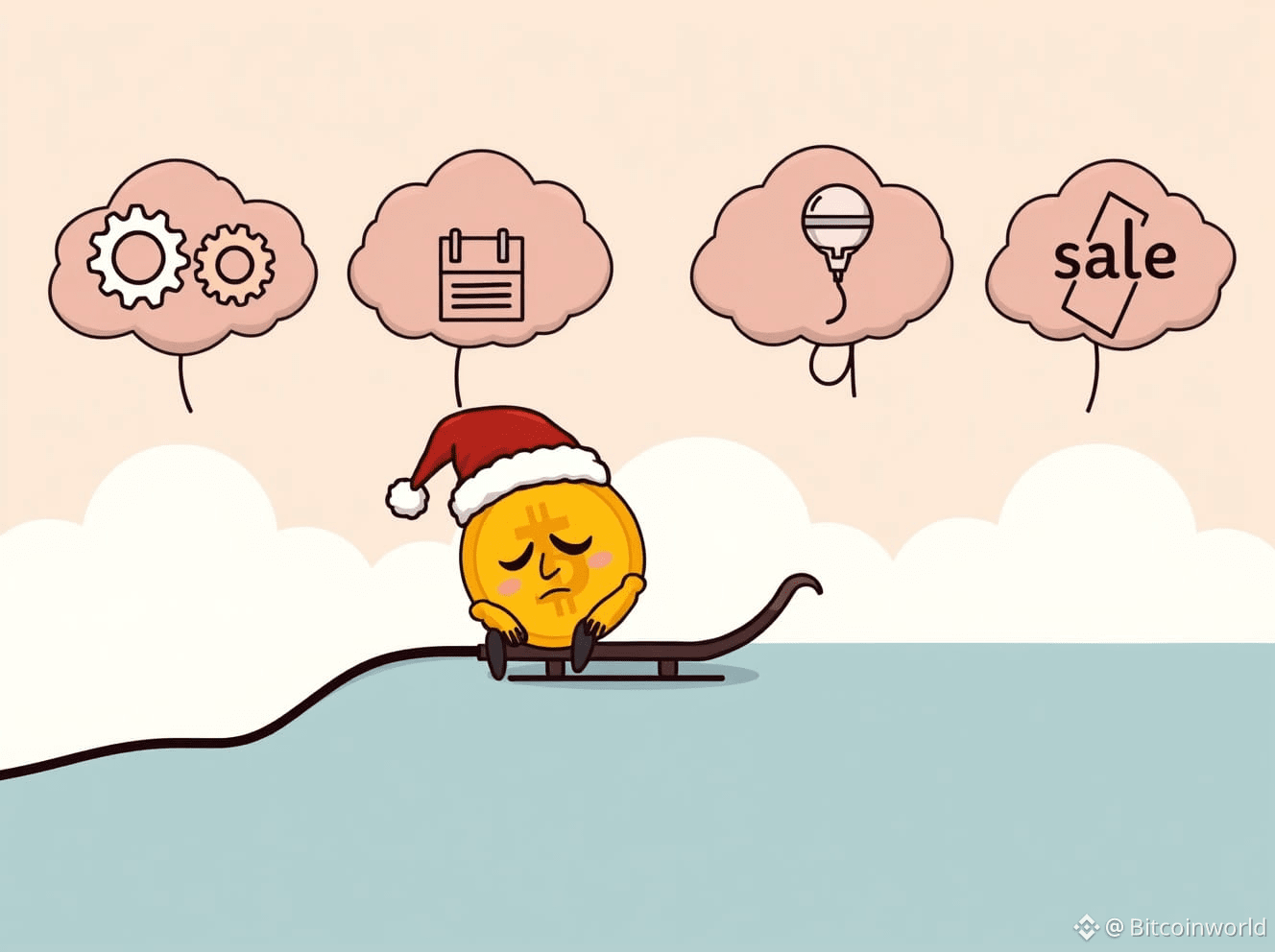 Bitcoin’s Sluggish Performance: 4 Key Reasons the Santa Rally Fizzled
As the holiday season approaches, many Bitcoin investors anticipated a classic ‘Santa rally’ to cap off the year. Instead, the market is witnessing a surprisingly sluggish performance. What’s causing this unexpected downturn? A recent analysis by DL News points to four critical factors putting the brakes on Bitcoin’s momentum as we head into the new year.
Why is Bitcoin’s Performance So Sluggish Right Now?
This sluggish performance isn’t random. It results from a perfect storm of market mechanics and shifting sentiment. Understanding these forces is crucial for any investor navigating the current crypto landscape. Let’s break down the four primary reasons identified by experts.
1. The Pressure from Long-Term Holders
One major factor is mechanical selling from long-term holders. These are investors who have held their Bitcoin for over 155 days. When prices reach certain levels, these holders often take profits, creating consistent downward pressure on the market. This selling is a natural part of the cycle but contributes significantly to the current sluggish performance.
2. The Four-Year Halving Cycle Effect
Bitcoin’s ecosystem operates on a predictable four-year halving cycle, which cuts the mining reward in half. In the periods leading up to and following a halving, historical selling patterns often emerge. Investors who bought in anticipation of the last event may now be redistributing their assets, further dampening price action and extending the sluggish performance.
3. Investor Sentiment Shifts to AI
Broader market sentiment plays a huge role. Currently, excitement and capital are flowing heavily into the artificial intelligence (AI) sector. Some analysts express concern about a potential bubble in AI stocks. This fear, whether valid or not, can pull investment away from cryptocurrencies like Bitcoin. When big money gets cautious or distracted, it leads to the kind of sluggish performance we’re seeing.
4. The October Liquidation Fallout
Markets have a long memory. The largest-ever forced liquidation event, which occurred in October, created a massive shockwave. Such events erode confidence and increase risk aversion among traders and institutions. The aftermath includes:
Reduced leverage: Traders are using less borrowed money to speculate.
Heightened caution: Everyone is watching for the next domino to fall.
Slower capital inflow: New money is hesitant to enter a recently volatile market.
This environment naturally suppresses volatility and growth, cementing the sluggish performance.
What Does This Mean for Bitcoin’s Future?
While the current Bitcoin sluggish performance is disappointing for bulls, it’s not necessarily a long-term bear signal. Historically, Bitcoin has weathered similar periods of consolidation. These phases often shake out weak hands and build a stronger foundation for the next rally. The key for investors is to look beyond short-term noise and focus on Bitcoin’s fundamental adoption trajectory.
Conclusion: Patience in a Sluggish Market
Bitcoin’s year-end sluggish performance is a complex puzzle with clear pieces: profit-taking by veterans, cyclical patterns, competing asset hype, and past market trauma. For the savvy investor, this period represents a moment for research and strategic planning, not panic. Markets are cyclical, and today’s stagnation often sets the stage for tomorrow’s acceleration.
Frequently Asked Questions (FAQs)
Q: Is Bitcoin’s sluggish performance a sign it’s going to crash? A: Not necessarily. This could be a healthy consolidation phase after previous gains. Markets often move in cycles, and periods of low volatility or slight decline are common.
Q: Should I sell my Bitcoin because of this sluggish performance? A: Investment decisions should be based on your long-term strategy and risk tolerance, not short-term price action. Many investors view periods of lower prices as accumulation opportunities.
Q: How long might this sluggish performance last? A> It’s impossible to predict precisely. It could last weeks or months, depending on broader economic conditions, regulatory news, and shifts in institutional investor sentiment.
Q: Does the missing ‘Santa rally’ predict a bad year for crypto? A> Historical year-end performance is not a reliable indicator for the following year. Bitcoin has had strong years after weak Decembers and vice versa.
Q: Are the factors causing this slump unique to Bitcoin? A> The specific halving cycle is unique to Bitcoin. However, the themes of profit-taking, shifting sector sentiment, and fallout from liquidations affect the broader cryptocurrency and asset markets.
Q: What should I watch to see if the sluggish performance is ending? A> Key indicators include a sustained increase in trading volume, positive net inflows into Bitcoin ETFs (if applicable), and breaking key resistance levels on price charts with conviction.
Found this analysis of Bitcoin’s sluggish performance helpful? Share this article on your social media to help other investors understand the current market dynamics. Knowledge is power, especially in a complex crypto landscape.
To learn more about the latest Bitcoin trends, explore our article on key developments shaping Bitcoin price action and institutional adoption.
This post Bitcoin’s Sluggish Performance: 4 Key Reasons the Santa Rally Fizzled first appeared on BitcoinWorld.


