
Key facts & current snapshot (late Dec 2025)
• USD/JPY ≈ 156.4–156.6 (JPY has been weak vs USD around year-end 2025).
• Bitcoin ≈ $88k (BTC trading around $88,000 on Dec 31, 2025). Ethereum ≈ $2.9k. Market ended 2025 in a consolidation mode.
• Bank of Japan policy: BOJ tightened policy during December 2025 (rate moves and market repricing). Several market pieces link the Dec 2025 BOJ moves to yen volatility and consequent flows into/out of crypto.
⸻
Mechanisms — how yen moves affect crypto
1. Carry trades → funding for risk assets
• When yen is cheap to borrow (low Japanese rates) and USD/JPY is rising, investors borrow in yen and deploy proceeds into higher-yield/risk assets (stocks, crypto). Analysts reported that after BOJ moves in Dec 2025, yen weakness helped sustain carry trades, which supported BTC near $87–$90k ranges. This is a primary transmission channel. 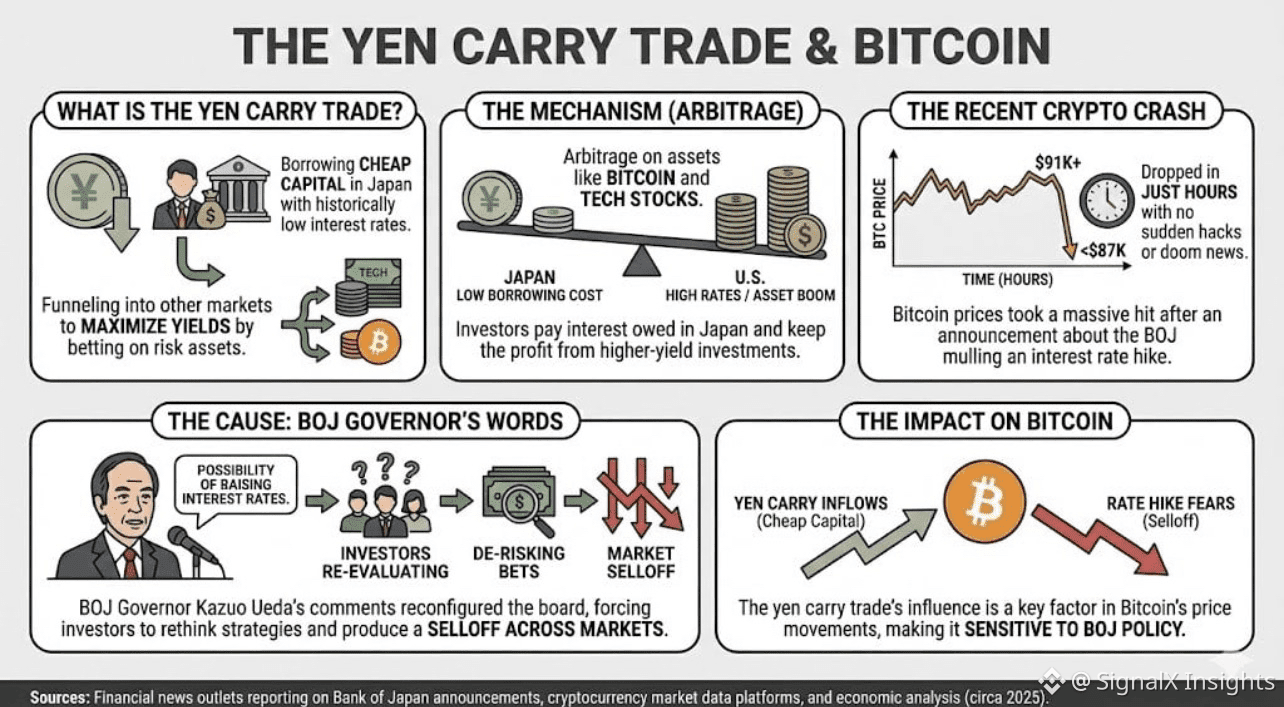
2. FX translation & local demand
• A weaker yen increases USD value of Japan-based crypto holdings when converted to local currency, boosting local investor wealth/psychology and sometimes trading volumes. Conversely, sudden yen strength forces yen-based investors to repatriate USD proceeds, putting selling pressure on crypto.
3. Global liquidity / interest-rate signalling
• BOJ hikes or credible tightening can strengthen the yen; stronger yen often coincides with global risk-off episodes that reduce crypto risk appetite. Example: some studies and market episodes (e.g., Aug 2024 and other BOJ-tied episodes) showed Bitcoin declines of double digits coincident with yen appreciation events. (Case studies summarized in market commentary; results are episode-specific.)
4. Institutional flows & derivatives
• Japanese and Asia-Pacific institutional desks use yen funding for cross-asset strategies. Changes in funding costs shift leverage and margin requirements — this can amplify crypto moves, especially in derivatives markets (liquidation cascades). Analysts warned that re-pricing of yen funding in Dec 2025 had the potential to trigger short-term crypto volatility.
⸻
Empirical evidence & example episodes
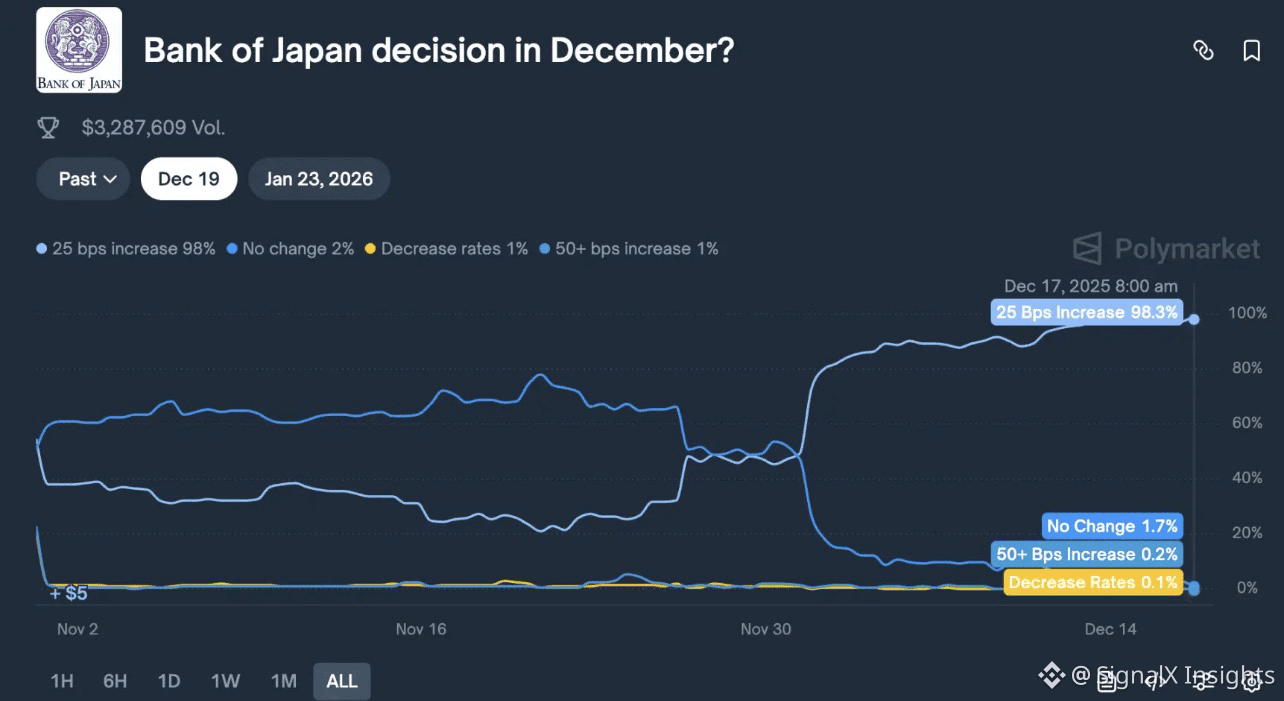
• Dec 18–19, 2025: BOJ rate repricing / announcements coincided with yen volatility and a brief BTC bounce to the high-$80k range; reporting linked the moves to carry trade adjustments and flows. BTC moved a few percent intraday around these announcements.
• August 2024 (example cited in market commentary): a ~10% yen appreciation episode was associated in some commentary with a ~15% Bitcoin decline in that short window — showing the relationship can be strong in episodes of rapid yen moves (but this is an illustrative historical case, not a universal law).
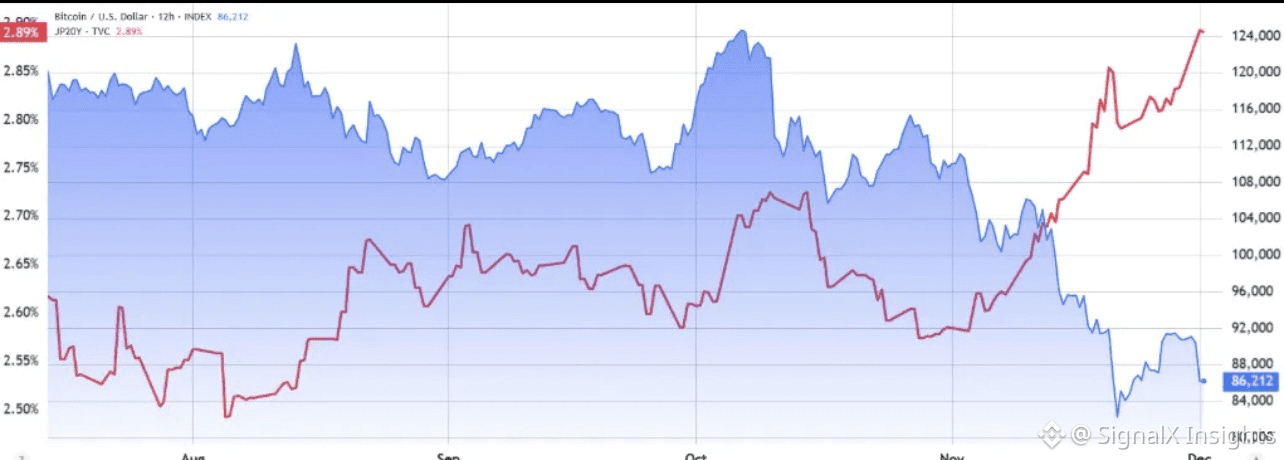
Takeaway: the yen–crypto relationship shows episodic high correlation (during BOJ surprises / sudden funding changes) and weaker correlation at other times. Time-varying correlations and differing drivers (macro vs. pure speculative flows) make the link noisy.
⸻
Quant table 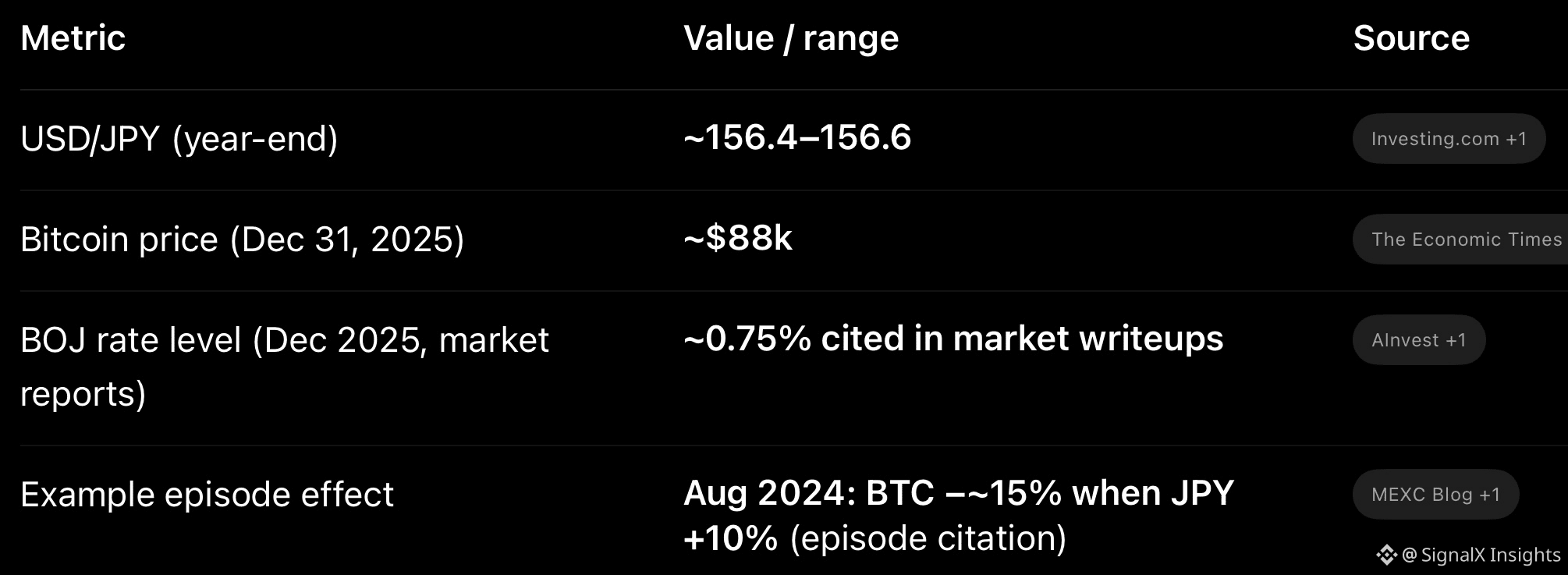
Practical implications for traders / portfolio managers
1. Monitor USD/JPY + BOJ communications — sudden yen strength can be an early warning for risk-off flows that may hit crypto. Use FX alerts around BOJ meetings.
2. Watch cross-market funding rates (JPY funding, cross-currency swaps). Rising Japanese short rates or tighter yen funding can force deleveraging in crypto derivatives.
3. Use size limits & hedges — during periods of potential BOJ policy change or large USD/JPY moves, reduce leverage or hedge with options / inverse products.
4. Event trading caution: BOJ surprises are high-impact events — short windows often involve outsized moves even if the longer-term trend is mixed.
⸻
Limitations & what to watch next
• Correlation is time-dependent. Studies show the BTC–FX links fluctuate and are not stable like classic asset correlations; episode analysis is more informative than long-run averages.

