

Standing at the node of January 2026, as a financial practitioner who has long observed the cryptocurrency market, my deepest feeling is: the era of the one-sided, wildly bullish market where one could simply 'HODL' and win is gradually fading away.
The first quarter of each year is the 'opening red' period where major exchanges (such as Binance and OKX) scramble for liquidity. Various financial product interest coupons and new coin mining (Launchpool) emerge in abundance. For those in the know, this is the golden period for allocating digital assets; but for the vast majority of ordinary people, I feel a deep anxiety - the old wealth comfort zone is collapsing.
One, the new normal in the market: Bitcoin is shifting from a 'high-profit asset' to a 'productive asset.'
If you still expect Bitcoin to multiply dozens of times like in the early days, that may be unrealistic.
Institutional holdings 'large reorganization': According to Bitwise's latest report, by the end of 2026, the global institutional holdings of Bitcoin are expected to exceed 4.2 million coins. With the popularization of spot ETFs and the entry of sovereign nations, BTC has become a highly liquid macro asset.
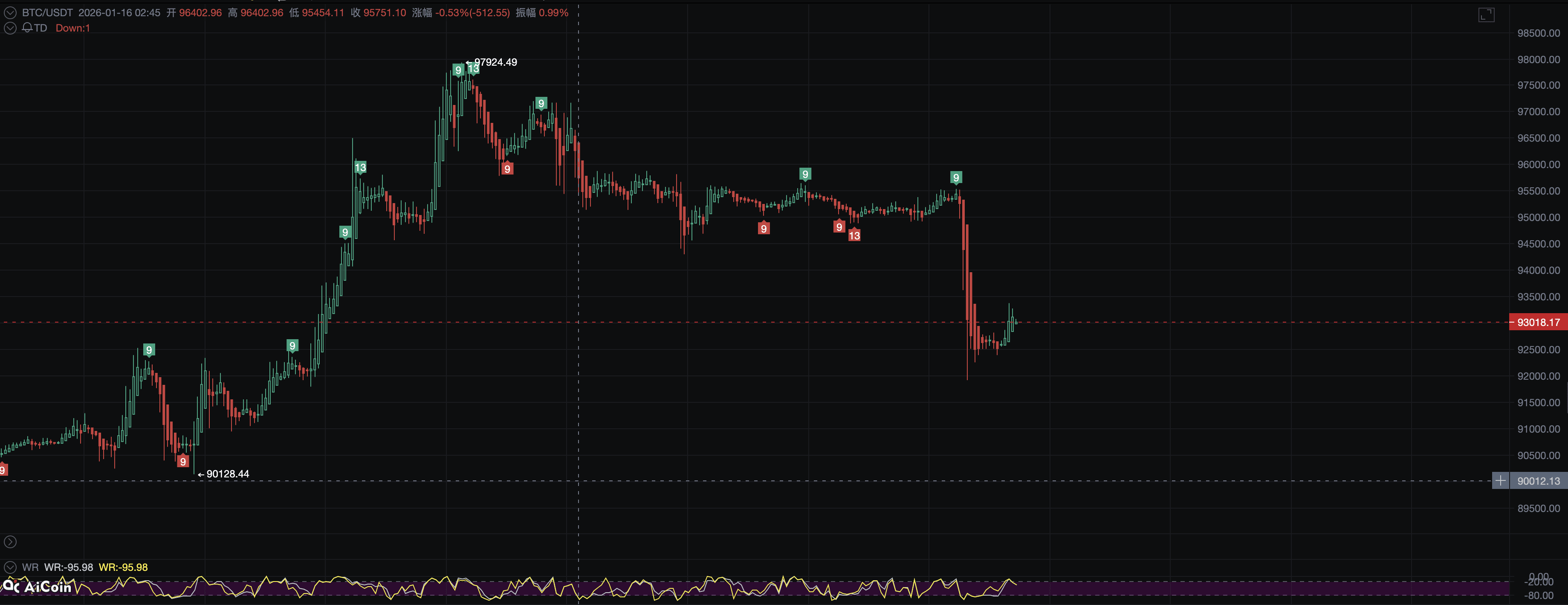
Downward pressure on yields: Ten years ago, we were talking about hundredfold coins. Now, as BTC approaches the $100,000 threshold (currently about $93,000) and moves towards the first-quarter target price of $185,000 (according to the latest valuation by Tiger Research), its volatility is structurally decreasing. This means that the 'opportunity cost' of simply holding coins is becoming increasingly high.
In simple terms, by 2026, if your coins are just sitting in your wallet collecting dust, you will be left far behind by those who utilize 'productive tools' to create wealth.
Two, looking for new trends: Understand the asset allocation logic of 'big players.'
I have been following the wealth management models of various exchanges and found that from 2025 to 2026, everyone's approach has fully upgraded from 'spot faith' to 'crypto fixed income +.'
What is the 'fixed income +' in the crypto circle?
Bottom warehouse (defensive): Most of the assets are placed in mainstream cryptocurrency wealth management (Earn) to earn a basic annual return.
Enhancement (offensive): Take a small portion of the interest to participate in structured options products (Shark Fin), dual currency winning, or new coin mining.
From the inclusive financial reports of various exchanges in 2025, products like Binance's 'earn coin' and OKX's 'structured wealth management' have become the top choice for smart money.
Yield comparison: Traditional fixed income wealth management has an annualized return of about 3-5%, while the 'alternative deposits' in the crypto market—mainstream cryptocurrency wealth management—averaged an annualized return of 4-6% in 2025, exceeding traditional returns by about 1-2 times.
Risk control advantages: The 'fixed income + structured' products mentioned in the article, such as those linked to Bitcoin's volatility like 'shark fin', remain safe even if the direction is judged incorrectly. However, if the range is guessed correctly, the annualized return can soar to over 20-30%.
Three, reshaping perceptions: Do not be a 'slave to emotions.'
I know many people get scared when they hear 'contracts' or 'wealth management.' But as a practitioner, I want to say that Web3 in 2026 is no longer the makeshift band it used to be.
1. Compliance wave: With the promotion of policies such as the (CLARITY Act), large banks are entering the market. The past model of profiting from information asymmetry is waning, and the discipline of asset allocation is becoming more important than ever.
2. Weaknesses of retail investors: Look at 2025, how many people lost everything chasing Memecoins? How many people were liquidated due to repeatedly shorting at pressure points? Chasing highs and selling lows, emotional trading, these are still the root causes of ordinary people losing money.
The essence of the 'fixed income +' strategy is to hire the quantitative team of the exchange to help you with disciplined hedging. It allows you to earn interest during sideways markets, share dividends during significant rises, and have a cushion during steep declines.
Four, pitfall guide: Build your crypto asset 'pyramid.'
Wealth management is a gradual process. For the high-frequency, medium-volatility market in 2026, it is recommended to build the following pyramid:
1. Tower base (small change and defense):
Exchange flexible management/mainstream coin earning: Withdraw anytime, with an average annualized return of about 4-6% last year. This serves as your 'crypto cash flow.'
2. Tower body (steady appreciation):
ETH staking/regular wealth management: Stably obtain network rewards + node dividends, with an annualized return of about 2-3%.
3. Tower tip (excess returns):
Structured wealth management (such as dual currency, shark fin): Use the interest from spot to seek BTC volatility dividends.
Conclusion: Let wealth quietly grow in the compounding of time.
In the volatile and opportunity-laden year of 2026, ordinary people should not go to extremes: keeping everything in the bank is too costly, while using full leverage contracts is too risky.
Recommendation for the first step: Start with the exchange's flexible wealth management to let your crypto assets outpace fiat inflation.
Recommendation for the second step: After adapting to the rhythm of the crypto market, try to allocate 'structured products' to share the dividends of Bitcoin's institutional era.
Every token deserves serious consideration. Find the right tools for yourself, and let your assets grow in compound interest; this is the most reliable way for ordinary people to survive in Web3.
The above information is organized based on online sources and does not represent the views of AiCoin platform, nor does it constitute any investment advice. Readers should discern and manage financial risks on their own.