

The crypto world is evolving at an unprecedented pace, its boundaries are expanding from simple asset trading to reshaping the core of global financial infrastructure. The wave of institutionalization has arrived, and new competitive landscapes and business models are emerging. The following is an in-depth analysis of key trends in the crypto market for 2026 based on cutting-edge industry insights.
 1. The Rise of AI Agent Economy: Autonomous Trading Becomes a Reality
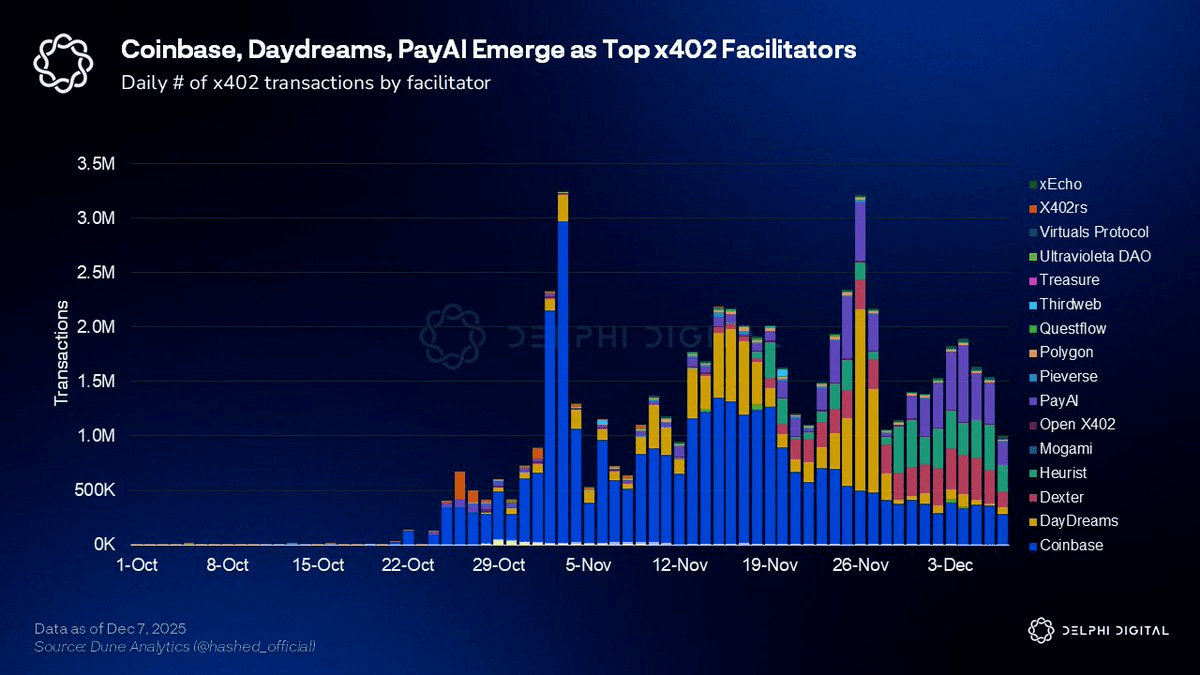
● The integration of technologies is giving birth to an entirely new autonomous agent economy. The core lies in two innovative protocols: the x402 protocol allows any API to access instantly through encrypted payments, eliminating traditional subscription and payment barriers; the ERC-8004 protocol establishes an on-chain reputation system for agents with performance history and collateral.
● This means that smart agents will be able to autonomously exchange value and collaborate in the on-chain world like humans. Imagine a scenario: a user commissions a travel plan, and their AI agent autonomously calls professional agency services such as flight searches and hotel bookings, instantaneously paying data fees through the x402 protocol, and ultimately completing all bookings and payments on-chain without human intervention.
● In the financial field, AI agents will be able to independently execute complex trades and asset management based on real-time data and preset strategies, becoming an automated force that cannot be ignored in the market.
 2. Perpetual Contract DEX: Integrating Traditional Finance's New Wall Street
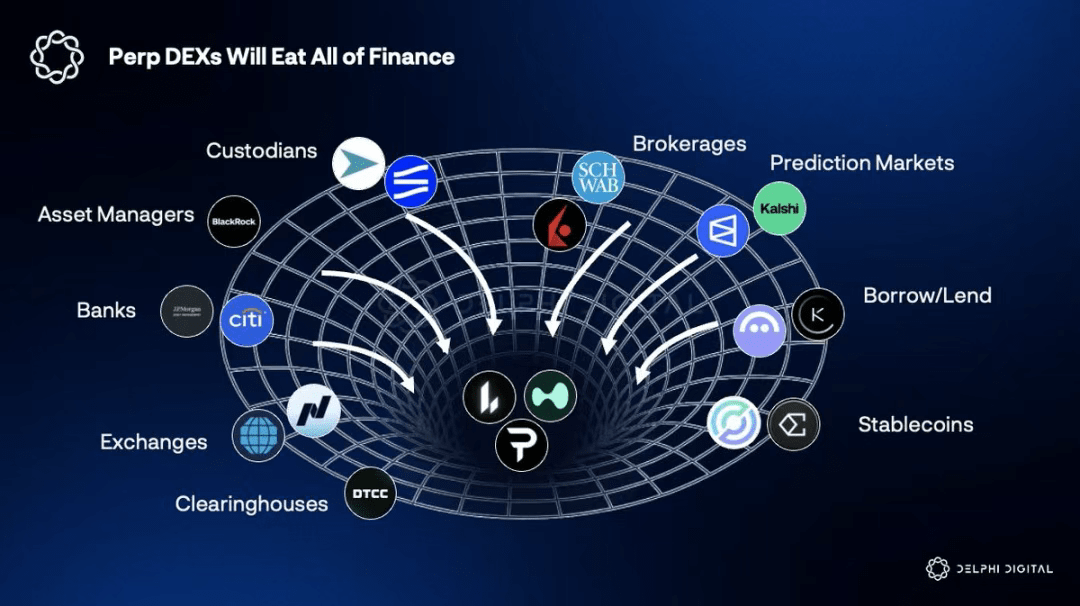
The traditional financial system is highly fragmented, with different institutions sharing functions such as trading, clearing, settlement, and custody, leading to inefficiencies and high costs. Blockchain technology, especially smart contracts, is integrating all of this into a single, programmable layer.
● Decentralized perpetual contract exchanges (Perp DEX), represented by Hyperliquid, are leading this transformation. They are no longer just trading venues but are also building native lending, custody, and other functions, while playing multiple roles as brokers, exchanges, clearinghouses, and banks.
● This 'one-stop' financial supermarket model significantly lowers user barriers and overall costs. With projects like Aster Protocol, Lighter, and Paradex accelerating their pursuit, a more efficient, transparent, and composable 'New Wall Street' is forming on-chain.
 3. Prediction Markets: Upgraded to Mainstream Financial Infrastructure
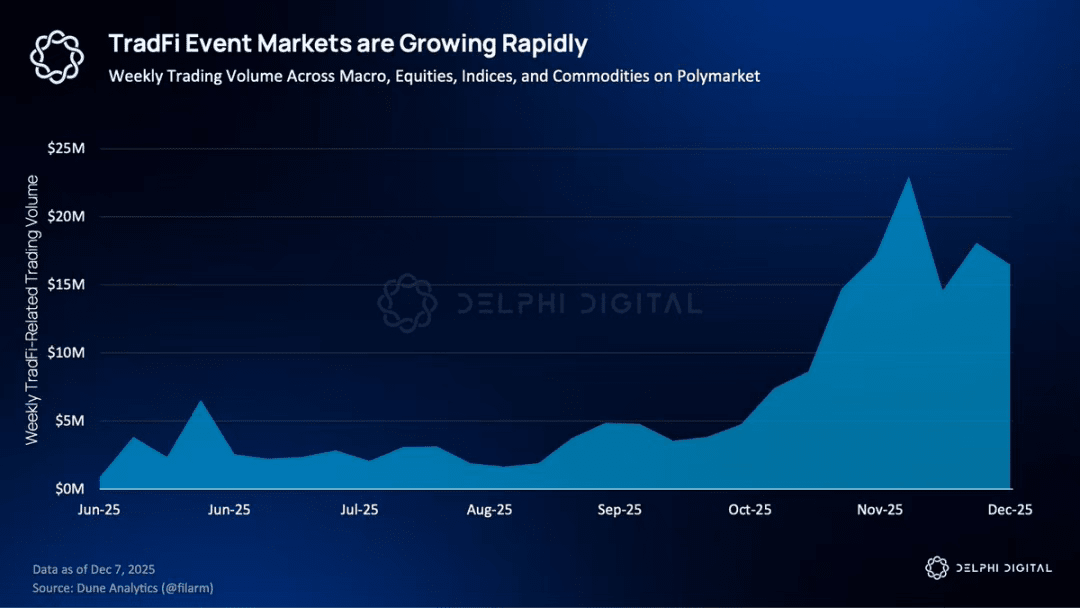
Prediction markets are transforming from marginalized gambling scenarios to serving traditional finance with real-time information and risk management layers. This transformation has drawn the attention of traditional financial giants; for instance, the chairman of Interactive Brokers views it as a valuable information source for portfolios.
● In 2026, the application categories of prediction markets will significantly broaden: from weather contracts relied upon by energy and agricultural insurance, to earnings forecasts of publicly listed companies, the release of macroeconomic indicators (like CPI, Federal Reserve decisions), and even comparative analysis of relative values between different assets.
● For example, an investor holding tokenized Apple stocks (AAPL) can hedge risks by purchasing a simple 'Apple quarterly earnings not meeting expectations' binary prediction contract, which is more convenient than operating traditional options. Therefore, prediction markets are expected to become primary derivative tools, providing hedging and price discovery functions for a wider range of financial activities.
 4. The Battle for Stablecoin Yields: Ecosystem Platforms Turn the Tables
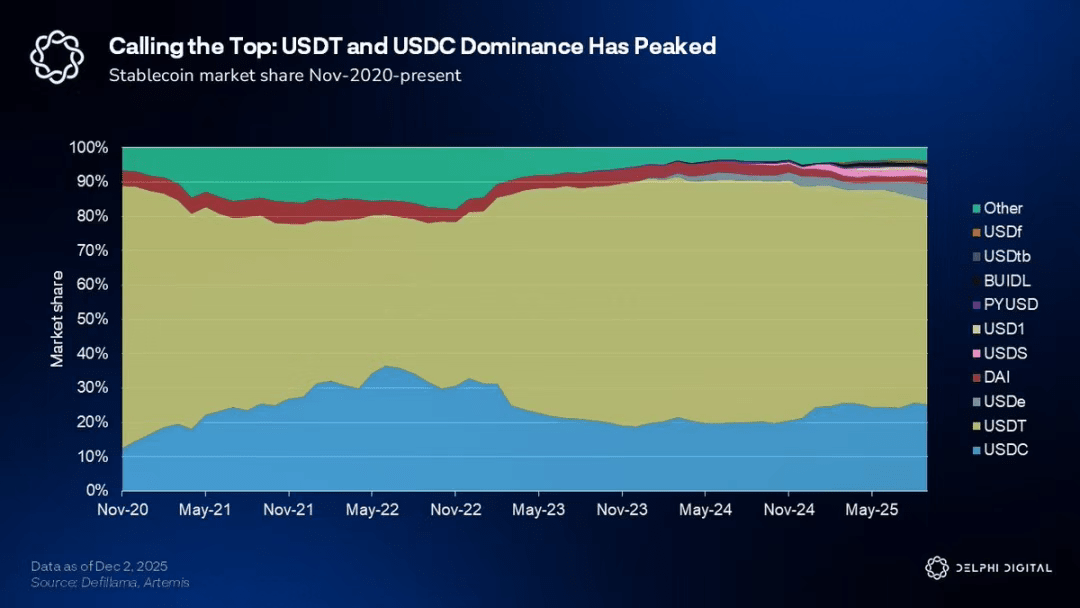
Currently, stablecoin issuers (such as Circle, Tether) capture the vast majority of the earnings from their stablecoin reserve assets, while public chains and platforms that drive the widespread use of these stablecoins, despite creating enormous demand, often receive nothing in return. For example, the annual fee income of major public chains like Solana is far less than the interest income that issuers receive from the stock of these on-chain stablecoins.
● This unreasonable flow of value is being reversed. Hyperliquid captures and allocates part of the reserve income to its ecosystem through its stablecoin USDH mechanism.
● More notably, the 'stablecoin as a service' model launched by Ethena Labs has been adopted by projects such as Sui, MegaETH, and Jupiter, allowing these platforms to issue and manage yield-bearing stablecoins themselves, thereby keeping the yields within the ecosystem.
● Platforms are transitioning from being passive pipes to being active participants in value capture.
 5. DeFi Conquers the Holy Grail: Unsecured Credit Becomes Possible
For a long time, over-collateralization has been the cornerstone of DeFi lending protocols, severely limiting capital efficiency and practicality. The maturity of zero-knowledge proof technology (zkTLS) is opening the door to unsecured lending. This technology allows users to prove their creditworthiness to lenders without exposing all sensitive financial data (such as bank account details), for example, by demonstrating that their asset balance exceeds a certain threshold.
● Based on this, protocols like JANE have begun to offer instant unsecured credit lines based on verified Web2 financial data (like bank statements).
● Its algorithm can monitor borrower risk in real time and dynamically adjust interest rates. This framework is also applicable to AI agents, where the on-chain performance history of the agent can serve as its 'credit score' to obtain loans. Maple Finance, Centrifuge, and others are also advancing unsecured or partially secured loans in the fields of corporate credit and real-world assets (RWA).
● In 2026, on-chain credit will move from concept to widespread infrastructure.
6. On-chain Foreign Exchange: Finding Breakthroughs in Emerging Markets
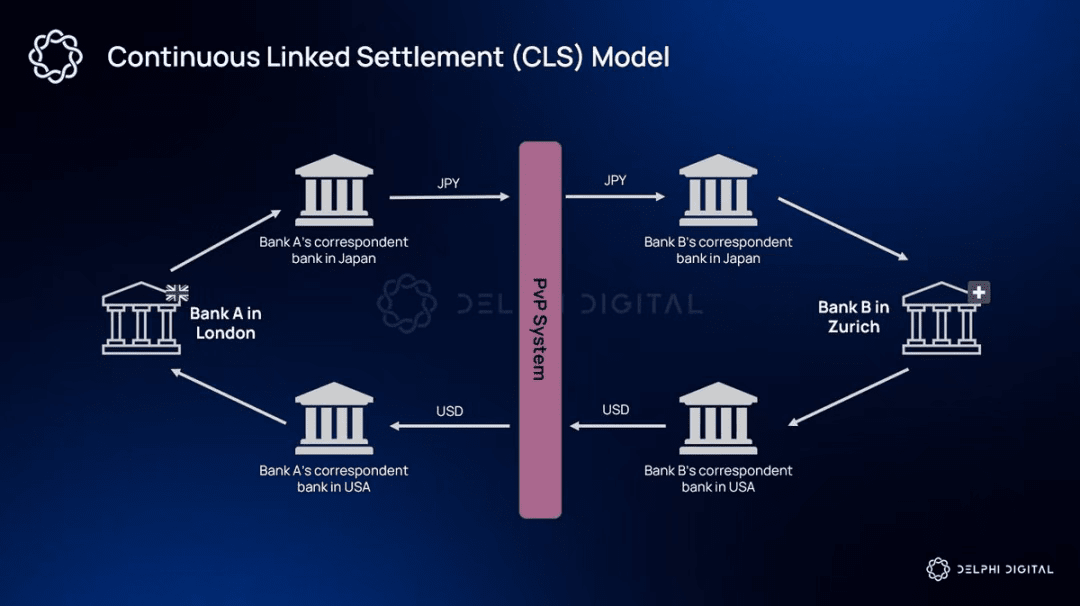
● Currently, the crypto market is almost monopolized by US dollar stablecoins, but the global foreign exchange market is a vast market worth trillions of dollars, which is inefficient due to numerous intermediaries. On-chain foreign exchange, by tokenizing various fiat currencies and placing them on the same settlement layer, is expected to significantly reduce costs and improve speed.
● Its initial product-market fit is likely to emerge in emerging market currency pairs where traditional financial services are insufficient and remittance and exchange costs are extremely high, such as currencies from certain Southeast Asian, African, or Latin American regions trading against the US dollar or euro.
● For users in these regions, the fast, low-cost, and traditional bank account-free exchange services provided by on-chain foreign exchange have a very clear value proposition. This will become another key battleground for cryptocurrency penetration into global finance.
 7. Gold and Bitcoin: The Dance of Currency Depreciation Trades
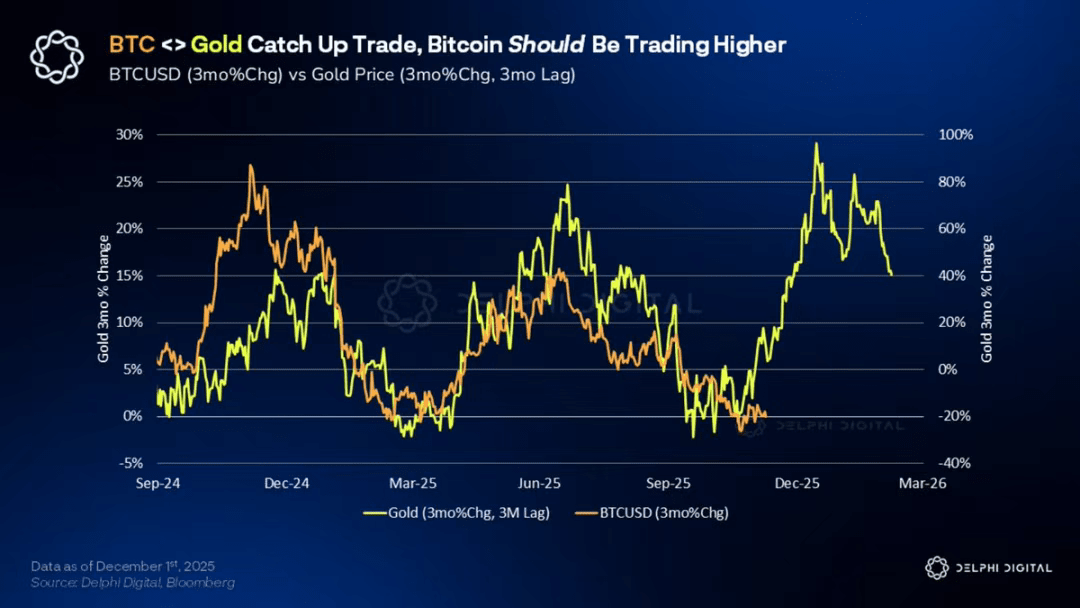
In the context of the global macroeconomic landscape, long-term value concerns regarding fiat currencies are driving funds toward hard assets. Gold prices continue to strengthen against the backdrop of central banks' ongoing purchases of gold (especially in China), the growth of global money supply, and expanding fiscal deficits, reaching historical highs.
● Historical data shows that gold price increases often lead Bitcoin by several months. Together, they form a 'narrative alliance' against currency depreciation.
● As major global economies enter a rate-cutting cycle, the end of the Federal Reserve's quantitative tightening (QT), and monetary issues heat up before the 2026 multi-country elections, it is expected that more funds seeking safe havens and value storage will flow into both the gold and Bitcoin markets, strengthening their asset properties.
 8. The Evolution of Exchanges: The Super Application Battle Intensifies
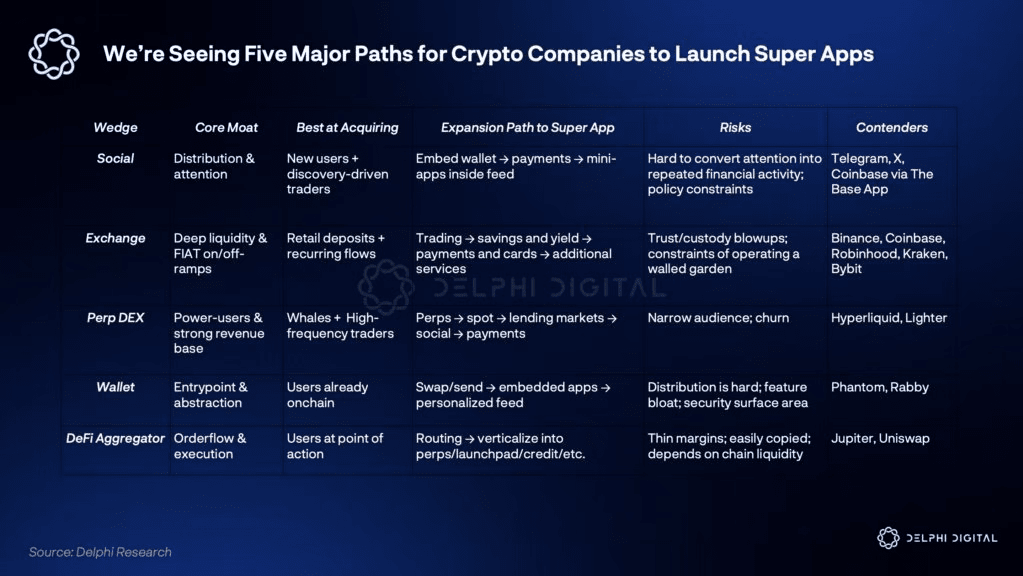
Leading centralized exchanges (CEX) have already surpassed the simple trading platform positioning and are evolving into comprehensive 'financial super applications'.
● Coinbase has built a complete ecosystem from the underlying operating system (Base L2), front-end interface (Base App), stablecoin yields (USDC) to derivatives (through the acquisition of Deribit). Robinhood has achieved high user stickiness and income diversification through its Gold membership subscription service.
● Binance already possesses a huge user base and payment scale for super applications. The core of competition lies in who can acquire and retain users at the lowest cost while providing the most comprehensive services. In 2026, the leader in this all-in-one application race may further widen the gap with the followers.
 9. Privacy Infrastructure: A Necessary Prerequisite for Widespread Adoption
The global regulatory environment's squeeze on financial privacy is becoming increasingly evident, as seen in the EU's (chat control bill), restrictions on cash transactions, and the design of central bank digital currencies (CBDCs), all reflecting a tendency to enhance monitoring. Without effective privacy protection, the widespread adoption of stablecoins and other crypto assets will undoubtedly face bottlenecks.
● Fortunately, privacy-enhancing technologies are developing rapidly.
○ PayLink offers privacy-protected crypto payment cards;
○ Seismic provides protocol-level encryption services for fintech companies;
○ Keeta Network supports on-chain KYC without exposing personal data;
○ Canton Network provides interoperable privacy blockchain solutions for traditional financial institutions;
● The improvement of these infrastructures is key to whether cryptographic technology can truly become a global financial freedom and secure underlying layer.
 10. The Differentiation of Altcoins: Value Reversion to Fundamentals
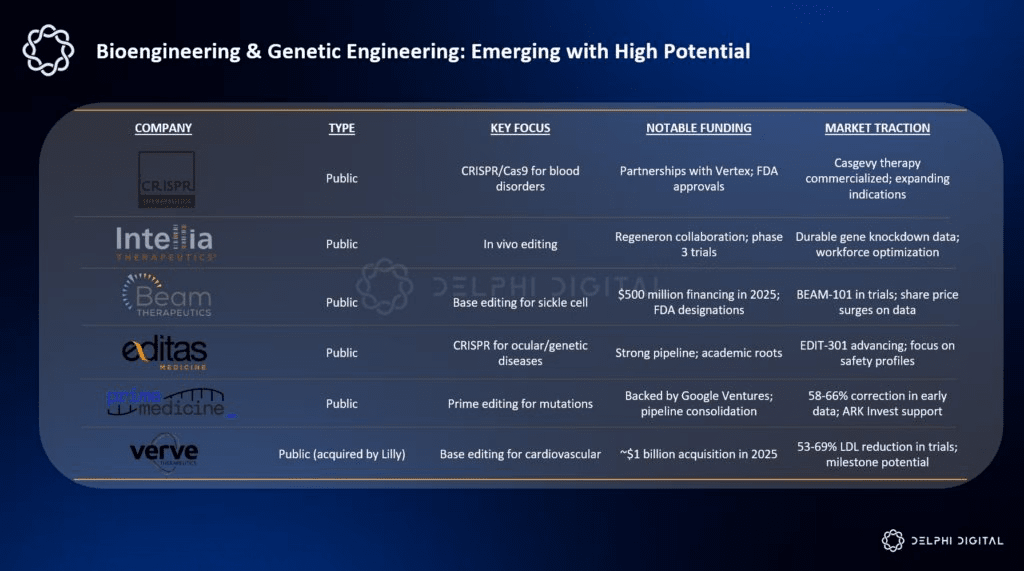
The era of market-wide rallies, where every dog has its day, is over. In the future, the massive unlocking of tokens, competition for capital from other technology fields (such as AI and biotechnology), and the reality that ETF funds are primarily concentrated in Bitcoin and a few large-cap coins will force capital to make harsher choices.
Funds will increasingly gather around structural advantages: assets with clear ETF capital inflow paths; tokens that can generate real protocol revenue and conduct value buybacks (such as burning, dividends); and projects that have built solid moats in areas with real demand and application scenarios, such as AI agents, prediction markets, and on-chain foreign exchange. Success will belong to those teams that can prove their economic models are sustainable and can deeply participate in real-world economic activities.
The cryptocurrency industry is undergoing a profound paradigm shift. It is no longer just about speculation and marginal innovation, but about building the next generation of global financial settlement layers, information layers, and collaboration layers.
Prediction markets, on-chain credit, autonomous agency economy, and stablecoins as programmable public utilities are vivid manifestations of this transformation. Those who understand and participate as builders in these foundational changes will have the greatest potential to define the financial landscape of the next decade.