

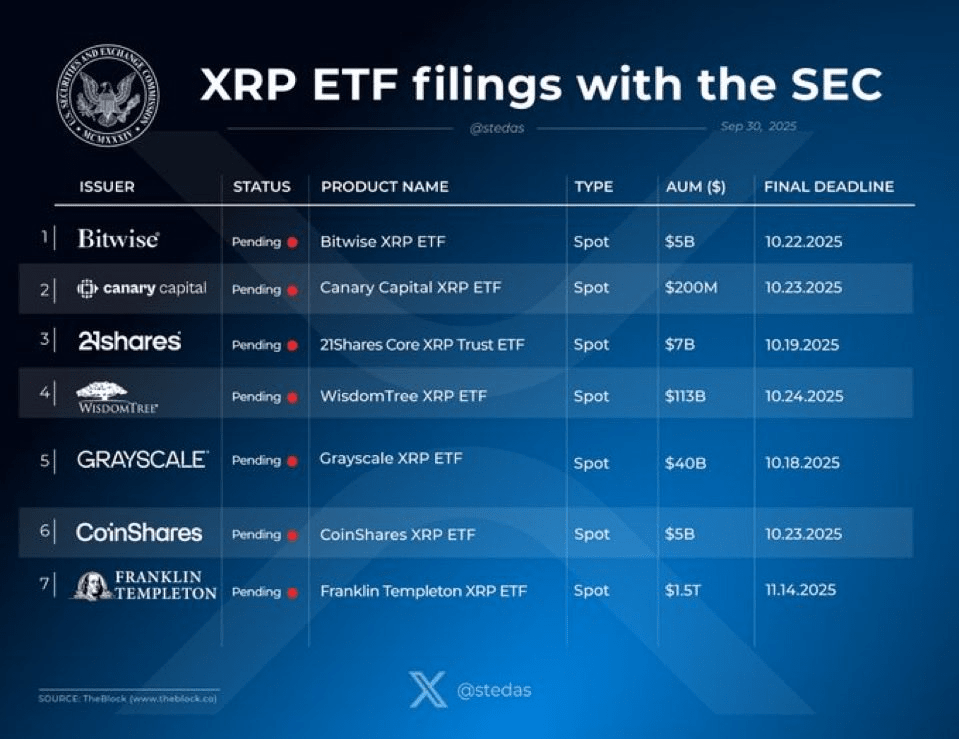
The global crypto market is entering a new phase as we approach the end of 2025. After Bitcoin and Ethereum received the green light for spot ETFs, the spotlight now shifts to XRP, one of the oldest and most controversial digital assets in the crypto industry. Rumors about the potential approval of an XRP ETF in November 2025 are beginning to shake the market, especially after several large asset managers in the United States—including Grayscale and VanEck—reportedly submitted XRP-based ETF proposals to the U.S. Securities and Exchange Commission (SEC).
However, behind this optimism, there is a significant risk looming: the potential U.S. government shutdown in the fourth quarter, which could delay the ETF approval process and shake global investor confidence.
For crypto investors in Indonesia, this issue is more than just global news. The approval of the XRP ETF could open a new chapter in cross-border digital asset adoption, expand access for institutional investors, and potentially change the dynamics of the altcoin market in Southeast Asia. Let’s discuss further.
XRP and Ripple: From Payment Innovation to ETF Candidate
To understand the impact of the XRP ETF, we need to go back to the roots of this project. XRP is the native token of the RippleNet network, developed by Ripple Labs in 2012. Its main mission is simple yet ambitious: to change the way money moves around the world — from slow and expensive banking systems to nearly instant cross-border transfers with very low costs.
RippleNet has now partnered with more than 300 global financial institutions, including Bank of America, Santander, and SBI Holdings in Japan. Their technology enables real-time cross-currency transactions, without needing intermediary systems like SWIFT.
With transaction speeds of 3–5 seconds and very low transfer costs (less than $0.01), XRP has long been seen as a real solution for the digitization of global payment systems.
However, XRP's journey hasn't always been smooth. Since 2020, Ripple has faced a major lawsuit from the SEC, which alleges that the sale of XRP constitutes an illegal securities offering. This case has held XRP's price back for more than two years. Finally, in mid-2023, the court ruled that XRP is not a security, giving Ripple a historic legal victory and reopening opportunities for the company to expand its operations globally.

Why Could the XRP ETF Be a “Game Changer”?
ETFs or Exchange-Traded Funds allow investors to buy digital assets like XRP without having to hold them directly. With ETFs, investors can gain exposure to XRP's price through products that are regulated and traded on stock exchanges.
The approval of the XRP ETF would be a significant step in the institutional legitimacy of this asset, in line with previously approved Bitcoin and Ethereum ETFs. The impacts include:

Inflow of institutional capital
Large investors such as pension funds and asset management companies will have easy access to invest in XRP without the operational risks of direct cryptocurrency ownership.Increased liquidity
With increasing trading volumes, the price movements of XRP will become more stable, reducing the extreme volatility that has long been a challenge in the altcoin market.Cross-country adoption
Ripple already has a strong footprint in Asia, particularly in Japan and Singapore. The ETF will accelerate that expansion and could attract the attention of regulators in Southeast Asia, including the Financial Services Authority (OJK) in Indonesia, to more seriously consider the potential integration of digital assets into the financial system.
Threat of Delay: U.S. Shutdown and Regulatory Uncertainty
Despite high expectations for the approval of the XRP ETF in November 2025, there is one major hurdle: the threat of a U.S. government shutdown.
If Congress fails to approve the federal budget on time, non-essential government activities, including agencies like the SEC, may be temporarily halted. This means the review and approval process for ETFs will be delayed — not just for XRP, but also for other digital asset products.
Moreover, the SEC remains cautious about non-Bitcoin assets, especially those with direct ties to issuing companies like Ripple. Although Ripple has won most of its legal cases, the SEC can still slow down the ETF approval process under the guise of investor protection.
Some analysts estimate that if the ETF is not approved in November, it is likely to shift to Q1 2026, depending on the political stability in the U.S. and the outcomes of government budget negotiations.
Binance Listing: https://www.bmwweb.biz/join?ref=K7RNV5MZ
How It Affects Crypto Investors in Indonesia
For investors in Indonesia, the potential approval of the XRP ETF opens up new opportunities as well as risks.
Portfolio Diversification Opportunities
XRP ETFs can serve as a means for Indonesian investors who want exposure to large-cap cryptocurrencies without being exposed to direct storage risks. Similar products in the future could be adopted by local platforms such as Reku, Indodax, or Tokocrypto if regulations allow.Potential Price Increase of XRP
History shows that ETF approvals often trigger price spikes in underlying assets. When the Bitcoin ETF was approved, BTC rose more than 40% in a month. If this pattern repeats, XRP could break through the level $2 to $2.5, especially if institutional inflow surges.Volatility and Speculation Risks
However, investors should be wary of the “buy the rumor, sell the news” effect. The price of XRP has already risen about 35% since the ETF rumors surfaced, and a short-term correction could occur if approval is delayed or hype begins to fade.Local Regulatory Developments
The Indonesian government through Bappebti and OJK is strengthening oversight of cryptocurrencies ahead of the implementation of the digital asset law in 2026. Crypto ETFs like XRP could be considered for the launch of similar investment products in the future.
Outlook: A Long Road to XRP ETF
Despite the short-term uncertainties, the long-term trend of XRP remains attractive. Ripple is now focusing on expanding Ripple Payments services and CBDC partnerships with several central banks in Asia and the Middle East.
If the XRP ETF is truly approved in November or early 2026, it could mark a significant milestone in the institutional adoption of altcoins outside of Bitcoin and Ethereum. However, investors must remain realistic: the market is currently in a consolidation phase, and any price movements will be heavily influenced by macro factors — ranging from U.S. interest rate policies, geopolitical tensions, to global liquidity.
Conclusion
The approval of the XRP ETF could be the second most important moment in Ripple's history after its legal victory in 2023. For Indonesian investors, this is not just about the potential price gains, but also about the validation that digital assets like XRP are moving towards full recognition in the global financial system.
However, as is often the case in the crypto world — hope and risk go hand in hand. With the potential U.S. shutdown, rapid price movements, and global uncertainties, wise investors should carefully manage their exposure and continue to conduct thorough research (DYOR) before making decisions.
Disclaimer:
This article is for informational purposes and is not intended as investment advice. Trading digital assets involves high risks, including the potential loss of entire capital. Investors are advised to do their own research and consult with financial advisors before investing in cryptocurrencies.