
On the morning of December 1, the cryptocurrency market experienced another sharp decline, with Bitcoin briefly falling below $87,000, and the intraday decline exceeding 5%; Ethereum also saw an intraday drop of over 5%, falling below $2,900. According to Coinglass, over $500 million worth of cryptocurrency contracts were liquidated within 24 hours, affecting 177,200 people.
Cryptocurrency concept stocks fell in early trading. As of the time of reporting, OK Group (01499) dropped 12.5%, trading at HKD 0.189; Yunfeng Financial (00376) fell 9.74%, trading at HKD 3.43; OSL Group (00863) declined 3.89%, trading at HKD 16.05.
Meanwhile, influenced by the hawkish comments from the Bank of Japan, expectations for interest rate hikes in Japan have increased, causing the Nasdaq futures index to decline almost in sync with the drop in the cryptocurrency market.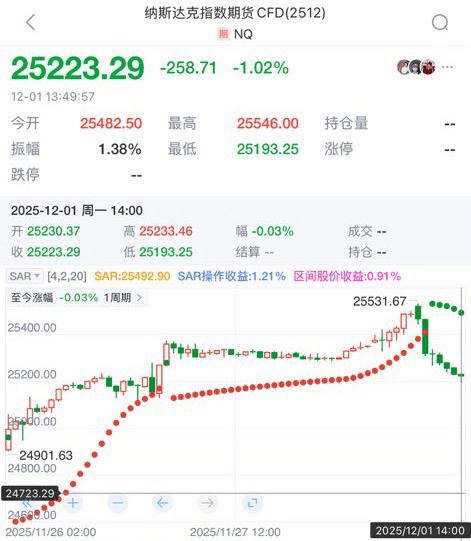
Bank of Japan Governor Kazuo Ueda stated that if economic activity and price forecasts are realized as expected, the Bank of Japan will continue to raise policy interest rates based on improvements in the economy and prices. This statement triggered a broad decline in the Asia-Pacific stock markets in early trading.
Japan's 10-year bond yield has reached the highest point in 17 years, the last time being as high as in 2008. Although Japan has not nominally raised interest rates yet, the market has already treated it as a 'real interest rate hike.'
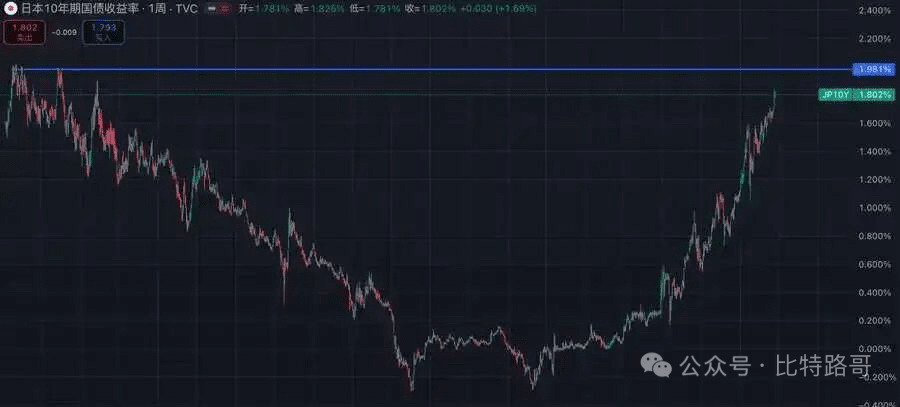
With expectations of interest rate hikes reigniting, Japanese government bond prices have plummeted: the 2-year Japanese government bond yield has surpassed 1% for the first time since 2008, and the Nikkei index also fell sharply.
As the yen continues to depreciate and Japan's long-term government bond auctions frequently encounter cool responses, the possibility of an interest rate hike in Japan is rapidly increasing. Today's comments from Bank of Japan Governor Kazuo Ueda, 'by examining domestic and international economic conditions, inflation, and financial market situations, weighing the pros and cons of raising policy interest rates and making timely decisions,' and 'even if interest rates are raised, we will maintain accommodative policies,' undoubtedly confirm for the market that 'the decision has been made' — Japan's interest rate hike has shifted from a possibility to a matter of time. Over the past decade, Japan has long implemented yield curve control (YCC), keeping interest rates at extremely low levels, turning the yen into a 'zero-cost financing currency' for global capital. Once Japan starts raising interest rates, this 'global ATM' will gradually close, and all high-risk assets relying on cheap yen funding — whether U.S. stocks, the AI sector, or Bitcoin — may immediately feel the pressure of 'tightening liquidity.'
The Bank of Japan's interest rate hike is not just a Japanese issue; there are at least $1 to $2 trillion in 'yen carry trades' globally. It will trigger a systemic short covering of yen shorts, suppressing U.S. stocks and Bitcoin in the short term (1–4 weeks), but in the medium to long term (3–12 months), it will be beneficial for Bitcoin.
Due to the length of the text and policy restrictions, it is not suitable to elaborate here. If anyone has misunderstandings about the market, feel free to chat with Lu Ge.
BTC Trend Analysis
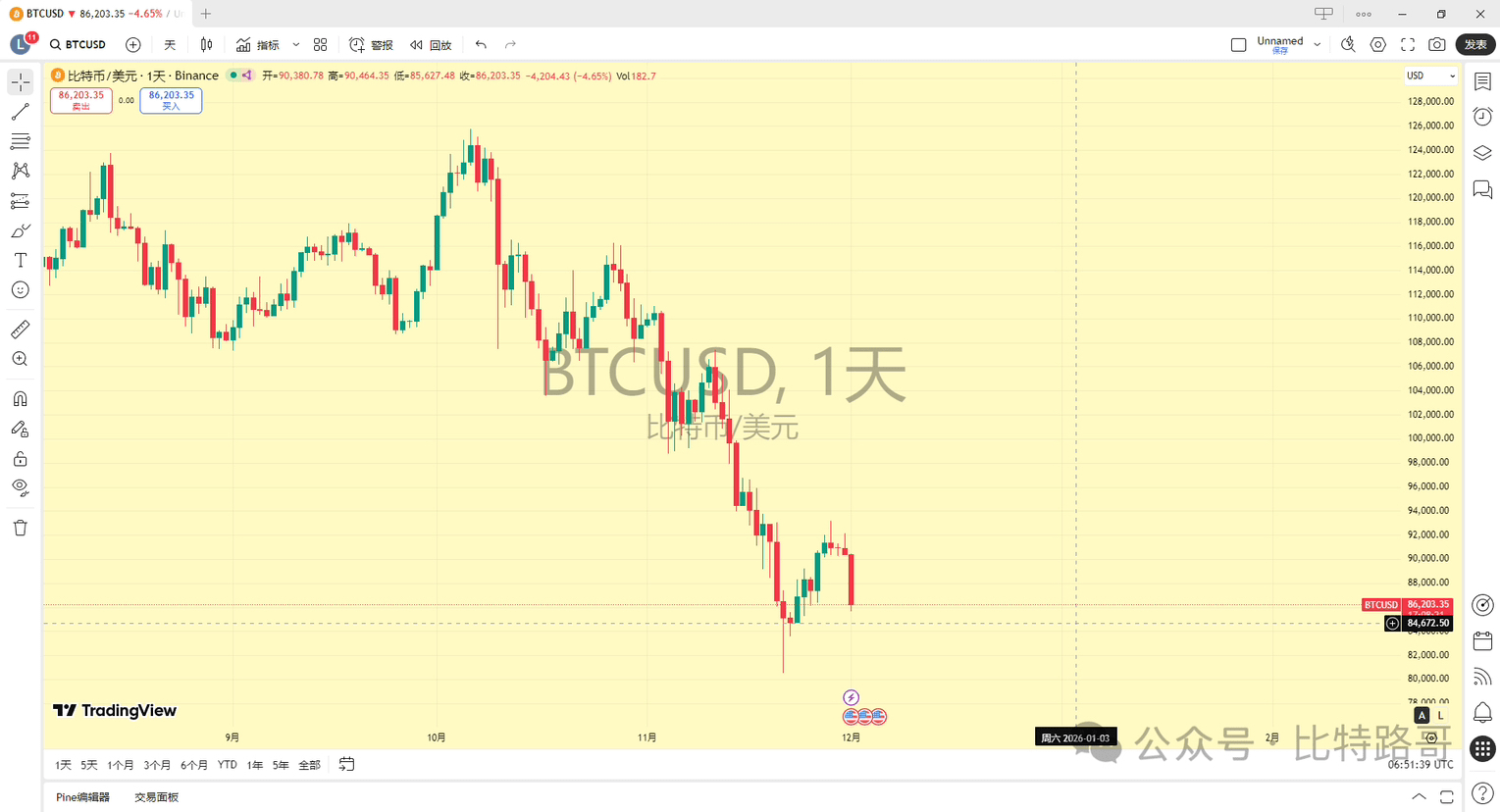
The article yesterday emphasized that for BTC, a V-shaped recovery after a sharp drop is not a good trend; such V-shaped recoveries do not last long. It is better to take the opportunity to adjust downwards, completing a consolidation, turnover, and bottoming process before gradually starting a new upward trend. If the bottoming process is completed, the new upward trend can be optimistically viewed as reaching new highs again. Of course, Lu Ge estimates this cycle will occur around mid-2026.
Since September, the seven tech giants including Amazon, Google, Meta, and Oracle have collectively issued bonds worth $90 billion, exceeding the total of the past 40 months.
Although the AI bubble in U.S. stocks is on the verge of collapse, it still attracts capital, leading risk capital to prefer buying 'yielding bonds' or 'physical gold' rather than 'interest-free and high-risk Bitcoin.' The massive investments in AI infrastructure are severely mismatched with the currently meager AI revenues, indicating a significant risk of capital waste and potential bubble bursts.
 Looking ahead
Once the AI bubble bursts, U.S. stock valuations may adjust by over 30%. Even after the Federal Reserve cuts interest rates, capital will still actively buy into leading U.S. companies and gold. This is highly likely to happen within three years. We are entering a new economic upcycle.
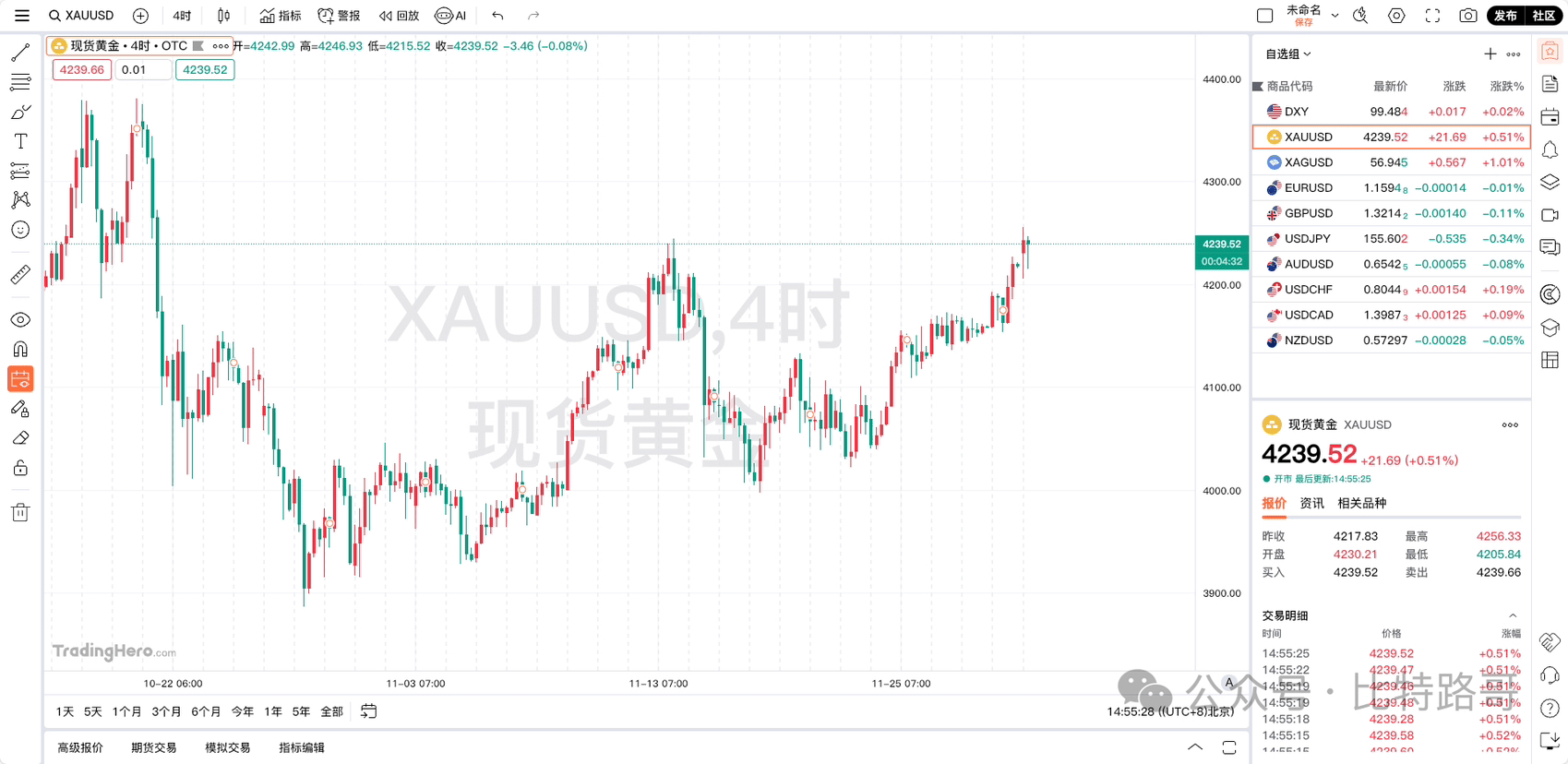
After a short-term correction of over 10% in gold, it can be viewed positively in the medium to long term as the Federal Reserve cuts interest rates; a gold ETF can also be appropriately allocated around 20%.
Although the cryptocurrency market's trends in 2025 are highly volatile and confusing, it does not affect the cryptocurrency market's potential for tremendous opportunities during this round of interest rate cuts and the upcoming new economic upcycle. The current position in the cryptocurrency circle has basically retraced to the early stages of last year's bull market. Such opportunities in this cycle, and even looking back in the future, will not be many. You must carefully consider whether this is the best entry point in the next few years.
When we talk about prices, we are actually discussing the future. Because prices are never 'now'; they reflect the market's discounting of the future. If we continue to focus only on prices, the future will slip away from us.
If there are friends who do not understand the future trends, feel free to chat with Lu Ge at any time.


