This is a testament: You must enter the Bitcoin market in 2026!
Because that year is the golden window period for the era dividend in the next decade. It is also the last chance for retail investors to get on board!
Even the most conservative equidistant measurement shows that the assets laid out in 2026 can multiply more than ten times in the next eight years!
Assuming it drops to the lowest point of 55000 in mid-2026.
Returning to 126000 in 2027, after consolidation, according to the principle of equidistant rise.
Reaching 180000-200000 by 2028, after months of consolidation, reaching the peak of the bull market at the end of the year.
Reaching 240000-300000 by 2029. Then entering a bear market.
Dropping to the previous high resistance area of 120000 in 2030.
Returning to the previous high of 240000-300000 in 2031.
360,000-450,000 in 2032
The peak value of bulls in 2033 will be 460,000 to 600,000.
By 2035, $1 million will be a guaranteed minimum.
The key question is whether you're still holding it 10 years from now, or whether it's in your car!
Monthly salary: 3,000 yuan, annual income: 36,000 yuan, lifetime income: 1.44 million yuan.
Monthly salary: 4,000 yuan, annual income: 48,000 yuan, lifetime income: 1.92 million yuan
Monthly salary: 5,000 yuan, annual salary: 60,000 yuan, lifetime salary: 2.4 million yuan.
Monthly salary: 6,000 yuan, annual salary: 72,000 yuan, lifetime salary: 2.88 million yuan.
Monthly salary: 7,000 yuan, annual salary: 84,000 yuan, lifetime salary: 3.36 million yuan.
Monthly salary: 8,000 yuan, annual income: 96,000 yuan, lifetime income: 3.84 million yuan
Monthly salary: 9,000 yuan, annual income: 108,000 yuan, lifetime income: 4.32 million yuan.
Monthly salary: 10,000 yuan, annual salary: 120,000 yuan, lifetime salary: 4.8 million yuan
Monthly salary: 20,000 yuan, annual salary: 240,000 yuan, lifetime salary: 9.6 million yuan.
Monthly salary: 30,000 yuan, annual salary: 360,000 yuan, lifetime salary: 14.4 million yuan.
Monthly salary: 40,000 yuan, annual salary: 480,000 yuan, lifetime salary: 19.2 million yuan.
Monthly salary: 50,000 yuan, annual income: 600,000 yuan, lifetime income: 24 million yuan
Very few people earn more than 10,000 yuan a month, and even fewer earn more than 20,000 yuan a month. Most people earn less than 10,000 yuan a month. It feels like the money that ordinary people earn in their entire lives is only enough to buy a house!
So, if you're in the crypto world, how much profit do you expect to make before you stop?
If you are 50 years old this year, then my answer is 10 Bitcoins. In the future, Bitcoins will definitely be worth millions. Conservatively speaking, one Bitcoin is worth 1 million, so 10 Bitcoins would be worth 10 million. Holding 10 Bitcoins is equivalent to the entire life of a working elite!
If you are 40 years old, then 5 is enough.
If you are 30 years old, then two are enough.
If you're 20 years old, then 0.5 is enough.
If you are 10 years old, then 0.36 is enough.
If you're in your 30s or 40s and currently hold 20 Bitcoins, you're living a life of absolute freedom. If you hold 100 Bitcoins, the whole world will be your village. Keep it up, fellow crypto enthusiasts!
I've been trading cryptocurrencies for over 10 years and have been accumulating Bitcoin. To date, I've accumulated over 400 Bitcoins and am still doing so!
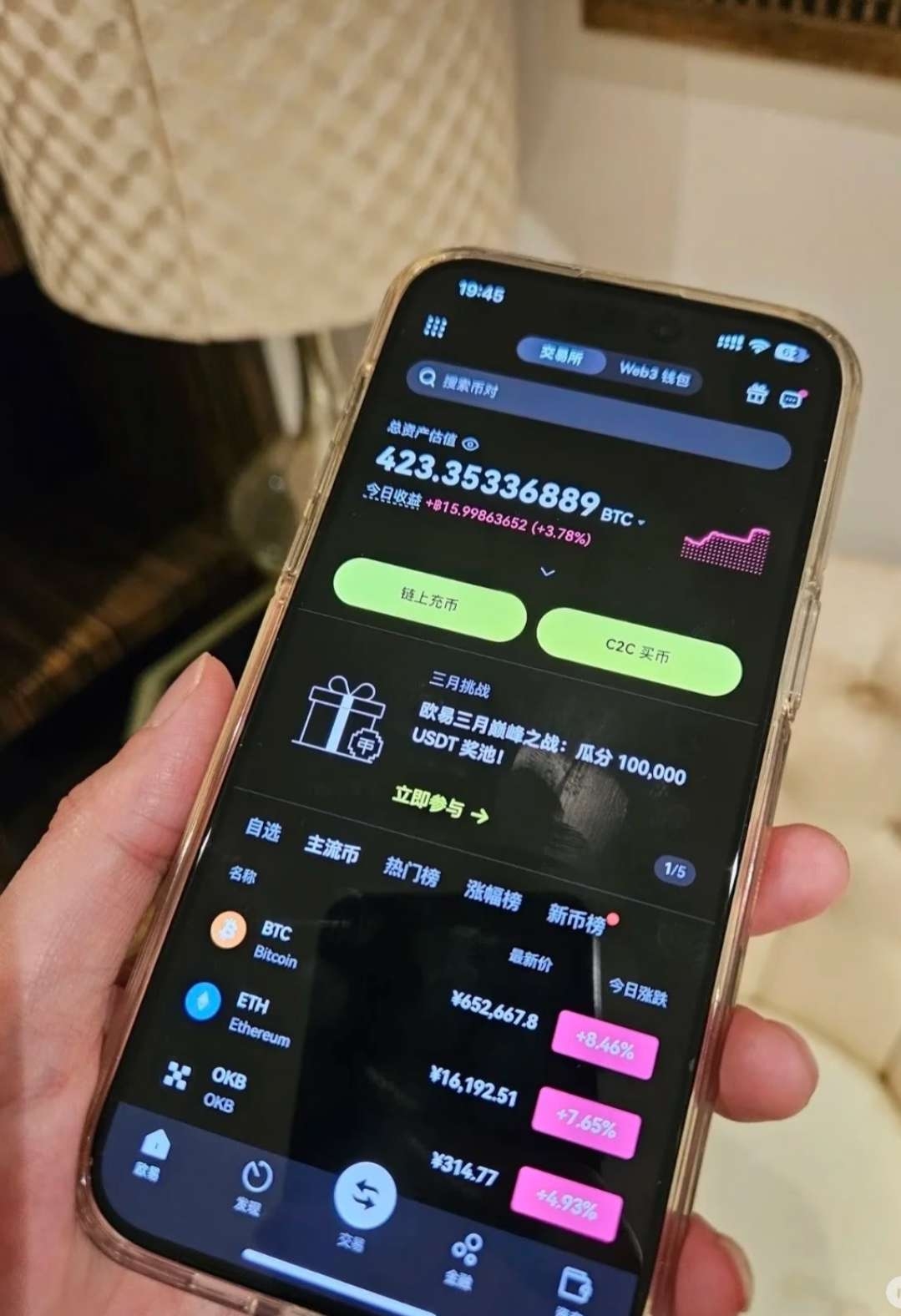
Next, I'll focus on how I made money in the cryptocurrency world and accumulated Bitcoin!
It is divided into several stages:
The first ten million took the longest and was the most painful, requiring constant reshaping and refinement of the trading system, which took a year and a half.
The second ten million took three months
The third ten million was achieved in just 40 days.
The fourth ten million was achieved in just 5 days.
75% of the funds were earned within six months.
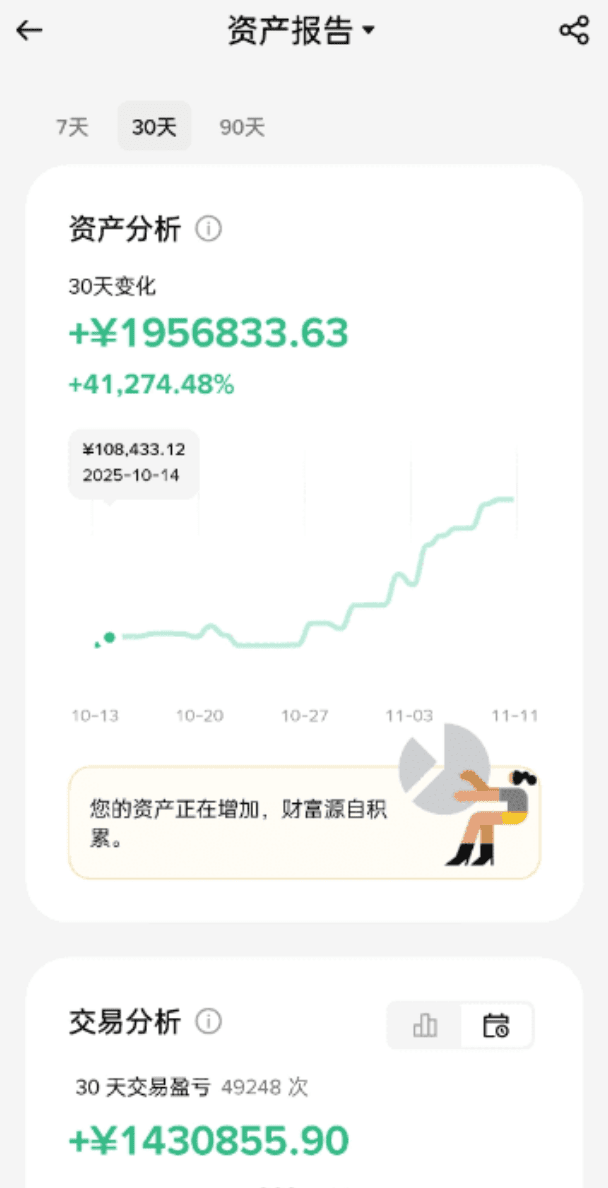
I used the simplest, most basic cryptocurrency trading method, and currently my win rate is close to 100%! This is the method that guarantees me a stable monthly income of 1 million in the crypto world! (A must-read for all crypto traders)
"How did you manage to survive in the crypto world?"
"A very clumsy method, but very effective."
This is my most honest answer after several years of struggling in the cryptocurrency world.
This method is called the "pot lid top reversal strategy".
A technology that sounds rudimentary and looks simple.
But it saved me from the brink of loss time and time again, allowing me to survive and make money.
Today, I want to explain it thoroughly and reveal the "Tao" behind it.
Truly useful technologies are often the simplest.
In the cryptocurrency world, there are too many complex methods: indicators, chart patterns, AI quantitative analysis, GPT strategies...
However, the methods that are simple and effective are often the ones that make money.
The "pot lid top" is such a simple but highly practical form.
It has three core features:
The trend is clear: it must form during an upward trend to be a top reversal signal;
Two peaks side by side: The highs of the two candlesticks are close together, seemingly strong but without a breakthrough;
A bearish engulfing pattern: Finally, a large bearish candlestick breaks through the structure, forming a "lid" shape.
Why is it effective?
Because it's not just a fancy combination of candlestick patterns, but rather represents a shift in market sentiment.
This tells us that the bulls no longer want to push the price up, and the bears have started to take the initiative.
In the language of the market, this "turnaround" is more real than any indicator.
The truth about trading: It's not about complexity, but about being "clean and efficient".
The person who uses the pot lid method is doing the same thing:
"Once you find the top, leave."
Don't fantasize about a rebound, don't wait to break even.
Without hesitation, without greed, and without repeated verification.
Taking action upon seeing the signal is a victory of discipline.
You'll find that people who truly make money in the crypto world in the long run never pursue a 100% win rate.
Instead, they seek to make certain moves and take a break when things are uncertain.
The moment the lid forms is a signal with very high certainty.
What you need to do is not "wait and see," but rather: cut your losses, get out, and wait for the next opportunity.
Many people fail because they "wait for a rebound" or because they are "unwilling to accept defeat."
The real problem is that they all die because they don't follow signals and instead believe in emotions.
The so-called "dumbest method" is often closest to the truth of the market.
You will discover a very ironic pattern:
The less experienced and less skilled someone is, the easier it is for them to make money by using a pot lid as a cover.
Why?
Because they don't understand many indicators, they run away as soon as they see a big bearish candlestick, which is simple and crude, but avoids most of the risks.
Some self-proclaimed "experts" rely on MACD, volume, Bollinger Band crossovers, and AI predictions...
The analysis was logical and well-reasoned, but he died because of hesitation.
The simplest method is actually the purest form of cognition.
"I don't know the market conditions, but I know when to leave."
That's why I call it the "dumbest" way.
Yet it can achieve a win rate close to 100%.
Beyond the signals, there is a reverence for the trend.
Trading is not divination, but a game of probability.
You can't control price fluctuations, but you can control your risk exposure and behavioral boundaries.
If the trend breaks out, follow the trend; if the trend breaks down, exit immediately.
The pot lid isn't magic; it's just a reminder of when you should stop fantasizing.
As a trading philosophy says:
"Taking profits depends on luck, but cutting losses depends on discipline."
Many people correctly predict the trend, but fail because of poor execution.
Using a pot lid as a top is a methodology to help you "make up your mind".
You don't make money through intelligence, you make money through survival.
The cryptocurrency world is a place where cognition goes against human nature:
You want to buy at the bottom, but it keeps falling;
You want to buy more shares, but the price keeps going down to zero.
You just ran away, and it bounced back to show you...
But this doesn't mean the crypto community "has a problem" with you.
This is just the market telling you in a bloody way:
This is not a place to make money based on emotions.
The pot lid, on the other hand, is precisely an operational strategy that goes against emotions and greed.
It tells you: "Don't predict the future, just recognize the signals."
It allows you to continuously reap certainty, rather than obsessing over perfect judgment.
In conclusion: Beyond the signals lies the mindset.
Have you ever experienced this:
Adding to their positions at the peak, only to be trapped all the way down;
Even though they know the top signal has appeared, they are still unwilling to leave the market;
Judgments are driven by emotions, until losses become a numbness...
If you have ever experienced these pains,
So, the pot lid is not just a technical skill.
It is a correction to the "irrationality" of trading, a mindset of respecting trends and respecting the market.
Smart people rely on prediction; experts rely on discipline.
The real winners only do things that have a high probability of success.
You don't need to be complicated; you just need to stick to the principles of trading.
Learn a form, understand a logic, and adhere to a discipline.
You'll be able to survive in the crypto world.
Survival is the prerequisite for all chances of winning.
Which stage are you stuck in cryptocurrency trading? Five stages of trader advancement – identify your stage to break through the bottleneck.
From a complete novice to a professional expert, each stage presents its own bottlenecks to overcome and essential tasks to complete. This involves more than just technical improvement.
This path is also a journey of cultivating mindset and discipline. This article will provide you with a mirror, reflecting your current position, and pointing out...
It guides you on how to achieve stable profits in a down-to-earth manner. It rejects blind exploration and replaces anxiety and confusion with a scientific approach.
In the market, every trader goes through a growth process: when they first enter the market, they are full of enthusiasm but also ignorant, gradually discovering that trading is much more difficult than they imagined, and finally, they slowly develop their own system and achieve stable profits. It sounds long, but in fact, this is an essential process of "dual cultivation" of mindset and skills that every mature trader must go through.
The "Five Stages of Trader Development" chart outlines this growth path. It's more like a mirror, showing you which stage you're currently at and reminding you that only by taking each step steadily and respecting each stage can you truly mature and trade freely.
Before you begin to understand these five stages, there are a few trading truths you must remember. These are not to be taken lightly; skipping them could leave you stuck in a cycle of struggle.
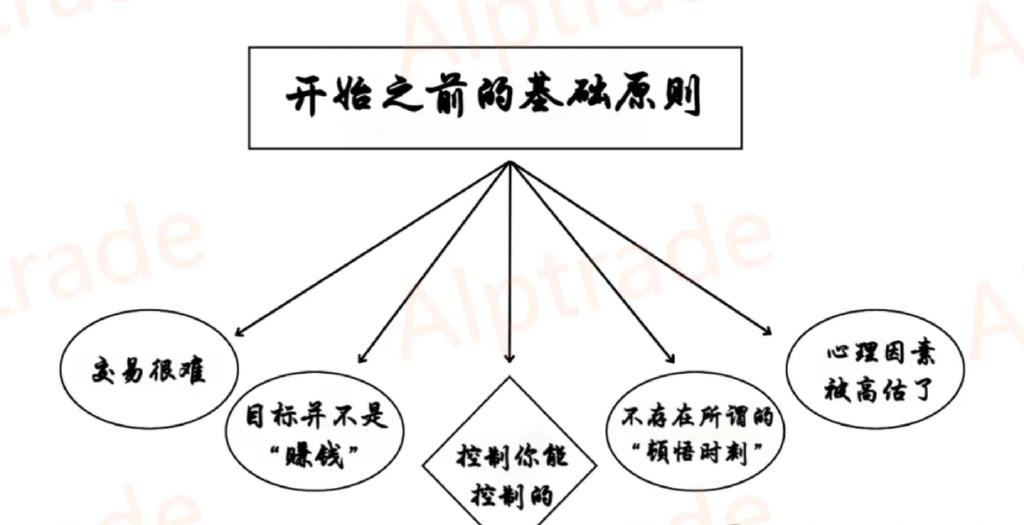
1. Trading is difficult.
You must accept that this journey will not be easy. It will test your patience, discipline, and mental resilience every day. If you expect an easy one, you will give up quickly.
2. The goal is not to make money.
If your goal is to earn a specific amount of money, you're setting the stage for emotional decision-making. The real goal should be to establish a repeatable process that produces positive results over time. Making money is merely a byproduct of mastering the process.
3. Control what you can control.
You can't control the market, nor can you control the outcome. What you can control is: what to trade, how much risk, and how well to execute. Focus your energy on these controllable aspects.
4. There are no "moments of epiphany".
There is no true "epiphany" in trading. Some people feel "enlightened" after a month of profits, but often fall into a drawdown afterward. There is no single moment when everything becomes clear. Progress is slow and uneven. The way you can maintain consistency is to be consistent every day, continuously adjust your process, and adapt to market changes.
5. The psychological impact was overestimated.
Most traders, when they first start out, attribute their problems to psychology or emotions, believing that hesitation, fear, or lack of confidence are the reasons that hold them back. But in reality, the problem is usually not in mindset, but in the lack of a clear strategy, reasonable risk management, and a structured process.
In the early stages, you shouldn't let emotions take over with large enough positions. If you're in stage 1 or 2, your focus should be on building your own trading manual, defining your trading patterns, and keeping positions small. Many things that seem like "psychological problems" are actually just poor trade management or confusion about your own system.
Psychological factors only become truly important later on—discipline, patience, and emotional control only really come into play when you have established a real structure, are trading meaningful positions, and are focused on maintaining consistency.
But in the early stages, mindset isn't the problem. The real problem is that you don't have a clear process.
The 5 stages of a trader
Everyone wants to skip the beginning and jump straight to the end, but trading isn't like that. You can't fake experience, and you can't fast-forward through the tough parts. Every trader has to go through these stages. Some get stuck in the early stages, while others linger between stages for years. Those who ultimately succeed? They respect each stage and do the work required for that stage.
This framework isn't just for beginners; it's a mirror: no matter how long you've been trading, ask yourself: What stage am I really at? Is my behavior commensurate with that?
Phase #1: Beginner Phase
The first stage is where most traders begin. This is the beginner stage, where the focus is not on making money, but on building a solid foundation.
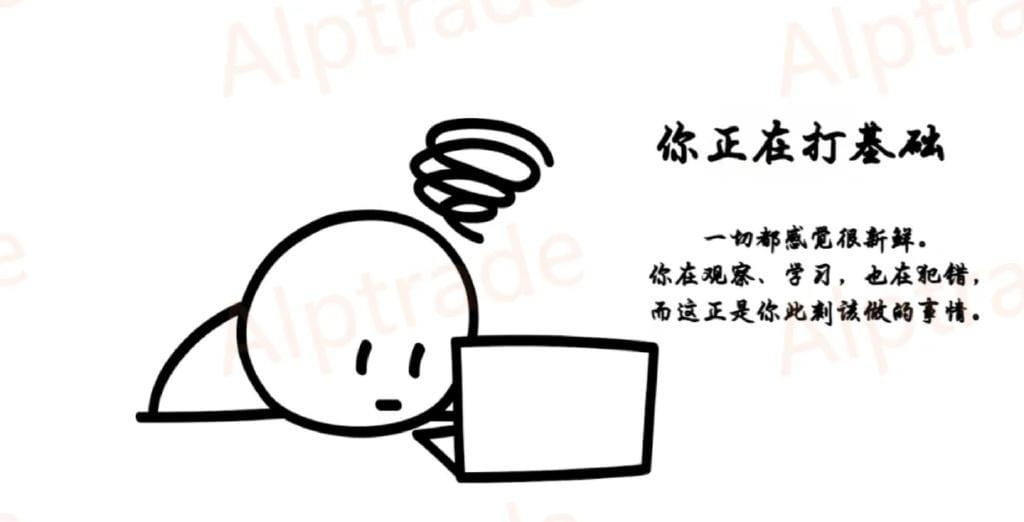
The objective of the first stage:
✍ The main objectives are to establish a structure and learn about the market.
✍ You don't need to be right all the time. Making mistakes, missing trades, and having poor analysis are perfectly normal here.
✍ The goal is to connect concepts and understand processes through repeated practice, rather than striving for perfection.
What you should be doing:
✍ Take the time to observe price behavior and understand how the market works.
✍ Start collecting basic trading notes to record what you learn.
✍ Start by establishing basic rules (e.g., arrive at the trading desk an hour early).
✍ Do not increase your position size; maintain extremely low risk. If your emotions are overwhelming, it means your position size may be too large.
The mindset in the first stage:
✍ Accept that you will make mistakes: misinterpreting patterns, exiting too early, or missing a trade entirely is okay.
✍ Don't strive for "correctness," strive to establish a "repeatable process."
✍ You shouldn't be emotional at this stage. If you are, it means you've done too much too early.
Time span:
✍ If you are fully committed every day, Phase 1 usually lasts 2–4 weeks.
✍ This isn't a very long phase, but it's crucial for everything that follows.
Common mistakes:
✘ Eager to make money and want to jump ahead.
✘ After making a profit for a day or two, they feel like they've "figured it out."
✘ Skipping over the structure without a clear system and instead blaming psychological problems.
Phase #2: Development Phase
The second stage is about putting everything you've built in the first stage into action. The focus is on using structure, not guesswork. You're no longer a blank slate, but you're still in the early stages of development.

The objective of the second phase:
✍ Start testing your ideas in a real-world environment and see what works.
✍ Continuously optimize your processes and trading patterns based on real-time feedback.
✍ Shift from general market observation to more intentional trading behavior, but still maintain small positions.
What you should be doing:
✍ Apply the ideas from the structure and trading manual you created in Phase 1.
✍ Start tracking specific trading patterns that you believe may have an advantage.
✍ Data collection: win rate, performance of various patterns, trading time periods, etc.
✍ Continue to record and review trades daily, optimizing both effective and ineffective content.
✍ Strictly adhere to risk control measures. You still shouldn't add to your position at this time.
The mindset in the second stage:
✍ Stay curious; you're still exploring your strengths.
✍ Don't pursue profits, pursue process consistency and pattern recognition.
✍ You may start to feel more confident, but it's not time to increase your position size yet.
Time span:
✍ It usually continues for a few weeks after the second phase.
✍ Phases 1 and 2 together, if you are consistent and disciplined enough, usually take about 4–6 weeks.
Common mistakes:
✘ Thinking that winning a few rounds means they "understand" it.
✘ Once a trade starts working, neglect reviewing and recording.
✘ Expanding positions too early due to small victories.
Phase #3: Intermediate Phase
As the third phase begins, things become more serious. You've consistently been present, established processes, and seen what works. Now it's time to refine, adjust, and strive for consistency, but this is also the phase where psychological pressure begins to emerge.

The objective of Phase 3:
✍ Develop clarity around your trading patterns, execution, and management; optimize processes based on real data and experience.
✍ Find out why a transaction succeeded or failed—look not only at the result, but also at the logic behind its execution.
✍ Start setting higher standards for yourself.
What you should be doing:
✍ Narrow your focus to 1–2 main patterns.
✍ Define the rules, background, and invalidation conditions for these patterns in the form of a trading manual.
✍ Eliminate all unplanned trades, even if they are profitable.
✍ Critically review each transaction: Was the plan followed? Was risk management adequate?
✍ Tighten your routine: pre-market preparation, execution plan, and post-market review and recording.
The mindset in the third stage:
✍ This is when psychological factors start to take effect. You will hesitate, break the rules, and repeatedly doubt.
✍ You are no longer just experimenting, but striving to perform.
✍ Consistency has become a primary goal, and emotional control is becoming increasingly important.
Time span:
✍ This is usually the longest and most difficult stage. Without a full commitment to refinement and discipline, many traders get stuck here for months or even years.
Common mistakes:
✘ Breaking the rules after a few losses or drawdowns.
✘ Making unplanned transactions out of fear of missing out on opportunities.
✘ Prematurely or excessively expanding positions.
✘ Overemphasis on profit and loss while neglecting the process.
Phase #4: Advanced Phase
The fourth stage is when things truly "become real." You've done enough homework, established processes, and started trading intentionally. Now it's time to gradually increase your positions within a controlled range. This stage is no longer about "exploration"—it's about taking what you've mastered and executing it with larger positions, greater pressure, and higher expectations.

What you should be doing:
✍ Only gradually increase your position in the most reliable trading patterns.
✍ Strictly adhere to your trading manual; there is no room for random trading.
✍ Use data and records to find areas for fine-tuning, rather than making major adjustments.
✍ Track consistency weekly and focus on execution rather than results.
Mindset at this stage:
✍ Because of the larger amount of money involved, you will feel greater pressure.
✍ Small mistakes can have bigger consequences, so emotional control is crucial.
✍ True discipline is put to the test at this moment. You may feel the urge to force a trade or place a retaliatory order after a loss.
Common traps:
✘ Increasing position too quickly leads to emotional decision-making.
✘ Because of good performance for one or two weeks, they deviated from the process.
✘ Don't let short-term results affect your confidence, or push yourself into a pullback.
The fourth phase can last a long time, sometimes up to a year or more—this is normal. The key is to remain consistent, grounded, and allow your strengths to work, while avoiding overreacting to short-term gains and losses. The habits developed in this phase will help you stay stable as your positions and performance targets grow.
Phase #5: Career Phase
The fifth stage is where everything converges. You have established a solid process, trade with real positions, and proven that you can maintain consistency. At this point, trading is no longer "groping"—it is about executing with confidence, maintaining discipline, and thinking with a long-term perspective.

What you should be doing:
✍ Trade your proven patterns with ample position size and strong conviction.
✍ Focus on long-term consistency, not just weekly or monthly results.
✍ Continue to record and fine-tune, but only make small adjustments and avoid frequent changes.
✍ Use data to track performance in different market environments and make adjustments as needed.
Mindset at this stage:
✍ You are calm, focused, and confident in your strengths.
✍ Emotions no longer drive your decisions; you trade based on process rather than feelings.
✍ You understand that drawdowns are part of trading and can handle them without panicking.
Common traps:
✘ Becoming too complacent and relaxing routines or reviews.
✘ Adding new formats too quickly in an attempt to force growth.
✘ Let performance define your self-worth or identity.
Not everyone will reach Stage 5—nor does everyone need to. Some traders choose to stay at Stage 4, trading comfortably at a sustainable level. But if your goal is mastery and longevity, Stage 5 is the moment when trading becomes a part of you. It's no longer about chasing highs, but about maintaining stability and letting consistency be the driving force.
Key lessons applicable to each stage
✔ Recording is not an option.
✔ Simple systems work best.
✔ Transaction quality = Transaction results.
✔ Execution is everything.
Summarize
Every trader walks this path. Some get stuck in stage 2, while others linger between stages 3 and 4 for years. But those who truly evolve do the hard work: reviewing past trades, simplifying, and focusing on the process. They cultivate not only technical knowledge but also psychological and structural discipline.
The market rewards structure, patience, and consistency, not impatience or excitement.
Most traders never get past stage 2 or 3. They don't keep records, they force trades, and they're fixated on results. But that's not how real progress comes about.
If you focus on the process rather than profits and fully respect each stage, trading can be life-changing. But the price is patience, humility, and discipline.
Treat this framework as a mirror, not just a map. Review it regularly and honestly ask yourself:
What stage am I really in?
Am I doing the work required for this stage?
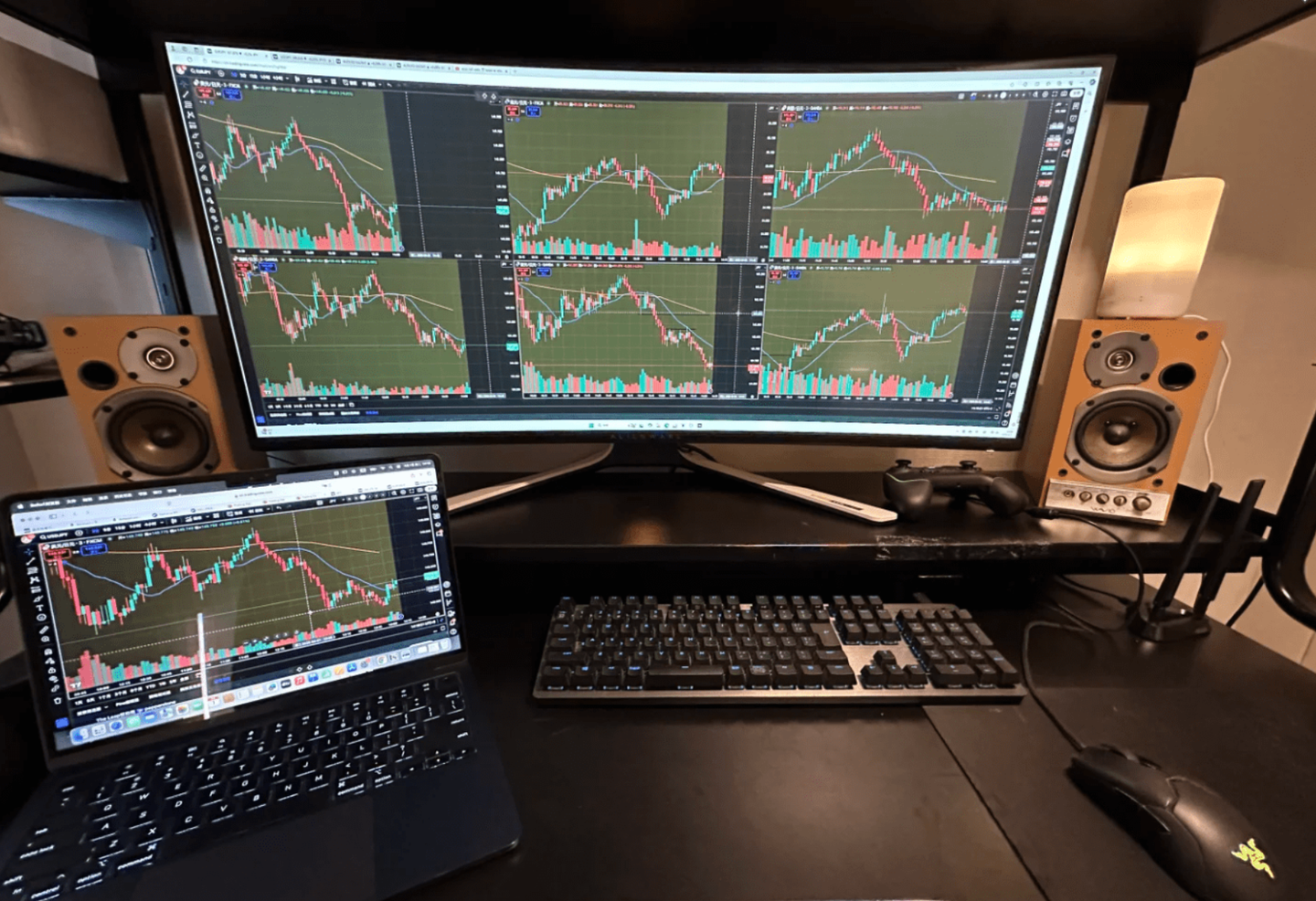
Earning your first million in the cryptocurrency world isn't about watching the market day and night, but about waiting like a hunter for those crucial moments to pull the trigger.
Too many people get caught up in chasing every small fluctuation, ultimately becoming nourishment for the market. True players know when to unleash their "heavy artillery" at crucial moments, using compound interest to achieve upward mobility.
1. Abandon illusions: The essence of making big money is "rolling in positions," not "crypto trading."
You must recognize this harsh reality: by making small amounts of money every day, you'll never reach the million-dollar mark. The true wealth secret in the cryptocurrency world lies in seizing those rare major upward waves and using precise rolling over of positions to allow your capital to grow exponentially.
The core concept of rolling over positions:
• Spend 90% of your time practicing with small positions to maintain your market feel.
When a 10% opportunity arises, be bold enough to invest heavily.
Only trade in bullish markets, never trade bearish rallies – the trend is your friend.
II. The Decisive Strike: Identifying These Three Real Opportunity Signals
When the following three signals appear simultaneously, it's your chance with a million-dollar reward:
1. Technical confirmation: After a sharp drop, the market consolidated sideways for a long period before suddenly breaking through a key resistance level with increased volume. This is not a rebound, but the beginning of a trend reversal.
2. Funding confirmation: The price has stabilized above key moving averages (such as MA50 and MA120) on the daily chart, with both volume and price rising, indicating that large funds have begun to enter the market.
3. Confirmation of sentiment: There is no activity on the trending topics, retail investors are still cursing, and the community is completely silent—the major players have completed their position building.
III. Practical Scenario: The Violent Aesthetics of 50,000 to 1,000,000
Assuming you have 50,000 in capital (it must be profit, not your life savings), here are the specific steps:
Position Management:
• Total position should not exceed 10% of principal.
• Leverage not exceeding 10 times
• Actual risk exposure: 1x leverage
• Single stop loss: 2%
Rollover rhythm:
1. Initial Position Opening: After the breakout is confirmed, open a position using 5% of your principal.
2. First addition to position: After the price rises by 10%, use 10% of the new profit to add to the position.
3. Subsequent additions: Repeat the above steps for every 10% increase.
4. Stop-loss discipline: Always maintain a 2% stop-loss; exit immediately if triggered.
Profitability Calculation:
A 50% upward surge, through compound interest, turns 50,000 into 200,000. Another surge, and 200,000 easily surpasses 1 million. This isn't theory, it's mathematics.
IV. Risk Control Bottom Line: Survival is More Important Than Making Money
In this market, longevity is key. Three ironclad rules must be ingrained in your bones:
1. The Three No-Roll Principles:
• No rolling fluctuations
• No rolling downtrend
• Speculating on cryptocurrencies without spreading rumors
2. Risk Isolation:
• Using isolated margin mode only results in the loss of your margin account if your account is liquidated.
• 90% of funds are locked up, without fail.
3. Profit realization:
• At least 30% of the profits will be extracted in each round of rollover.
Buy a house, buy a car, and secure your profits.
Don't let paper wealth blind you.
V. The Ultimate Mindset: Patience is the Greatest Leverage
The crypto market has no shortage of opportunities, but a lack of patience. There are no more than three truly worthwhile opportunities to invest heavily each year. Most of the time, all you need to do is wait.
Remember: It's better to miss an opportunity than to make a mistake. Missing an opportunity won't cost you money, but making a mistake could lead to irreversible consequences.
When you actually earn your first million through this method, you gain more than just money; you gain a complete trading system, a deep understanding of the market, and most importantly—absolute control over your emotions.
This path is lonely, but worthwhile. Because the crypto world never rewards those who work hard, it only rewards those who do the right thing.
If you are still struggling in this cycle of margin calls, please force yourself to do these three things first:
1. Reduce transaction frequency:
2: Strictly implement stop-loss orders.
3: Don't let any small loss get out of control
If you're still feeling lost in the market and unsure of your next move, I'm here to share more specific strategies and mindset management methods. Opportunities are right in front of you; if you take the initiative, we can have a story together.
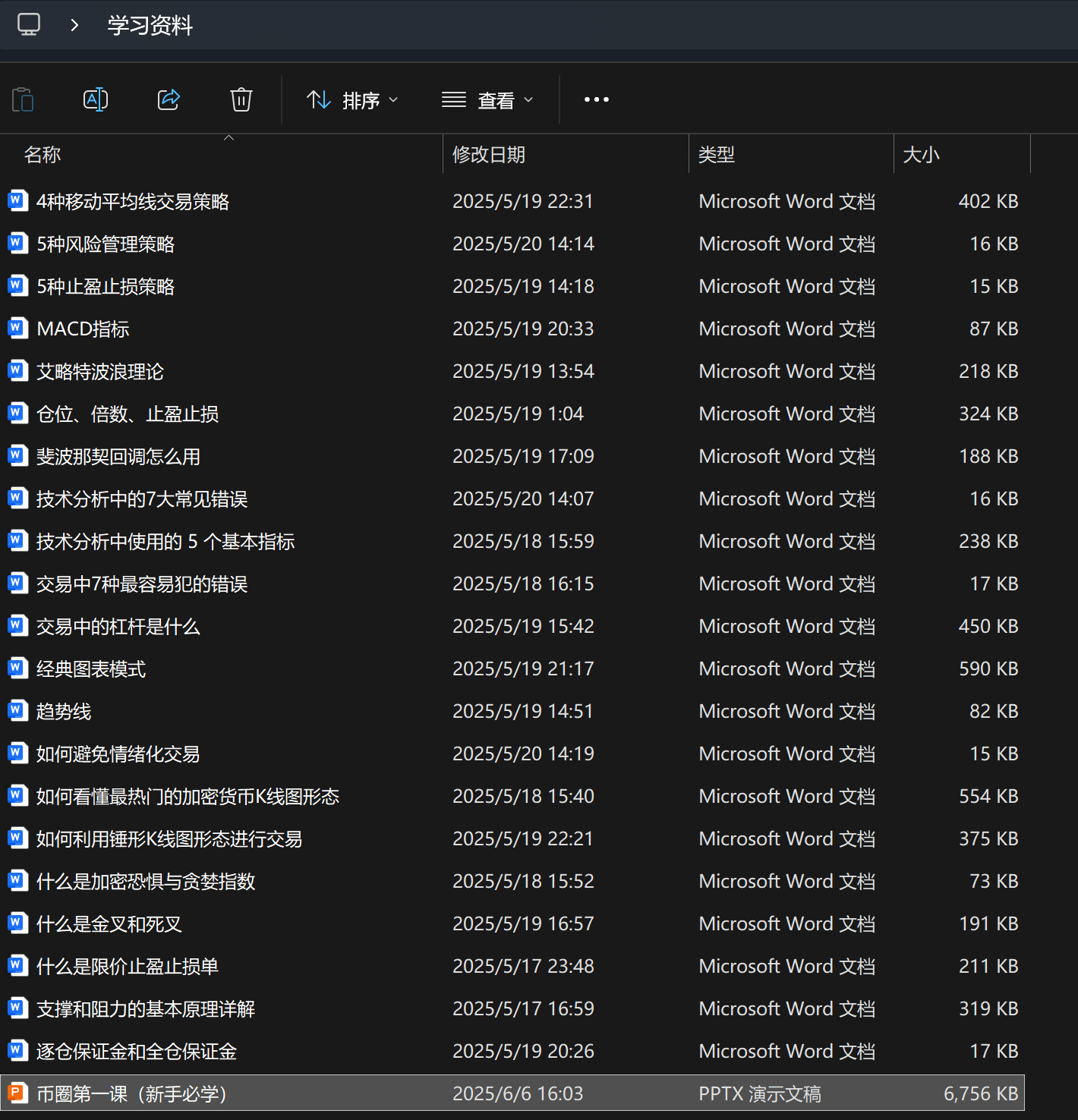
Investing is like a spiritual practice. Besides adhering to your investment philosophy in the face of drastic market fluctuations, you also need to develop a simple and easy-to-implement profit model. However, many novice investors don't know where to start. This resource, "Both Fish and Fishing," compiles solutions to frequently encountered problems in cryptocurrency spot and futures trading: (Essential Learning Materials for Cryptocurrency Traders). We hope our followers can find suitable methods for themselves and the learning methods they want to use, helping everyone build a clear and effective trading system.