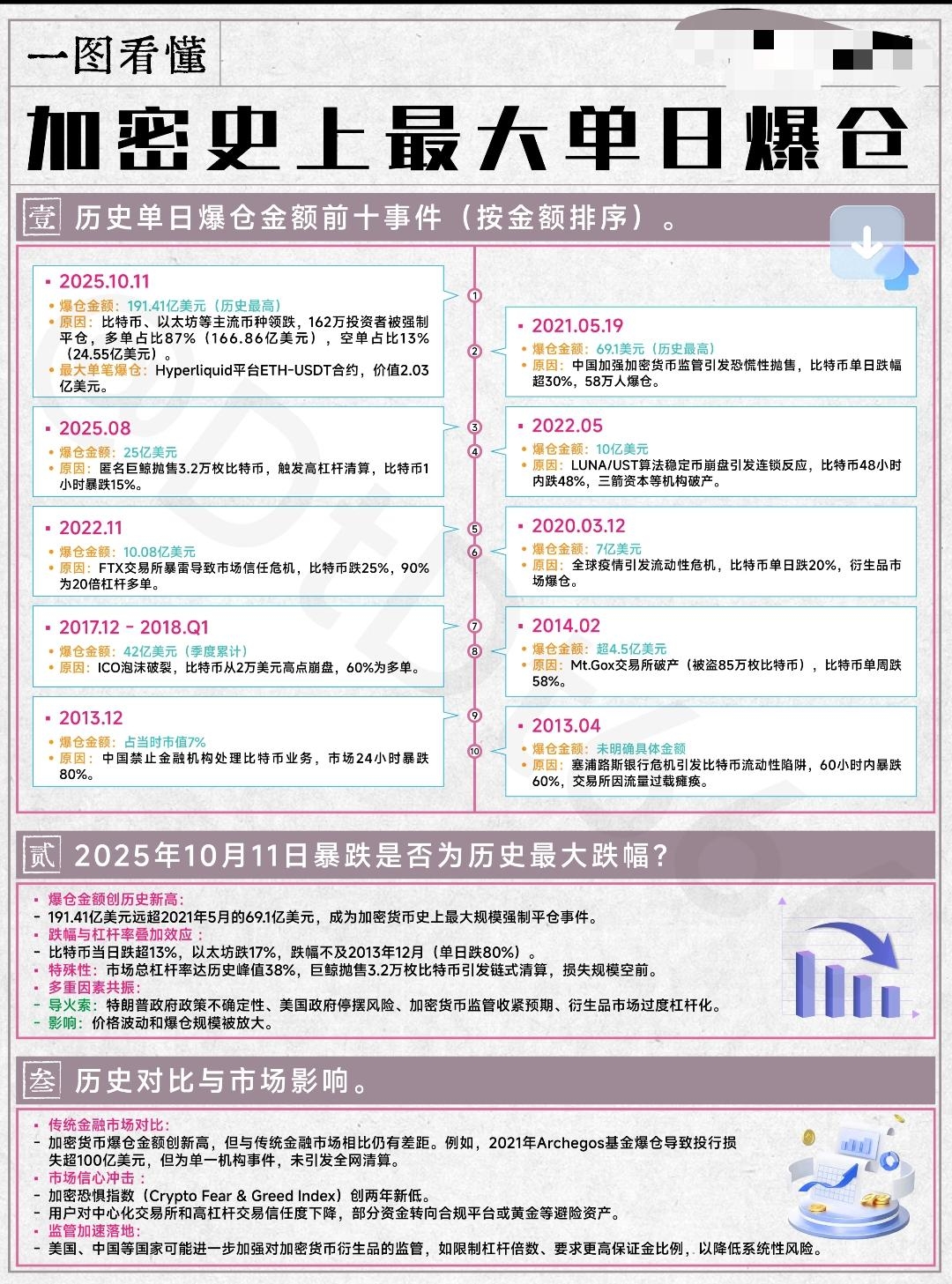
The latest price of 1 Bitcoin has dropped to about $91,800, nearly 30% down from the high of $126,251 set on October 6 this year, wiping out all of this year's cumulative gains.
Why has Bitcoin recently plummeted? One important reason is: the belief in Bitcoin as a privacy and security asset is collapsing.
The 'Prince Group' Bitcoin confiscation incident has shown us the fragile side of Bitcoin.
This breaks the previous public perception and reminds everyone: Bitcoin is not technically completely safe. Governments or institutions with advanced technology can know how much Bitcoin you have and can technically control it.
Another minor negative factor is the recent change in attitude towards interest rate cuts in December, leading the market to believe that the probability of a rate cut in December has significantly decreased.
Pessimists even believe that Bitcoin could drop to around $70,000, and many investors using leverage will face total loss of capital.
On-chain data shows that Bitcoin's turnover rate has declined, and investors remain relatively cautious about this round of rebounds, mainly driven by short-term funds.
URPD data:
104,500-112,000 dollar range has accumulated 2.536 million bitcoins;
91,000-96,000 dollar range has accumulated 1.197 million bitcoins.
In summary, Bitcoin has shown signs of a short-term rebound from oversold conditions, and short-term bullish sentiment may continue.
If the market progresses smoothly over the next two months, Bitcoin is expected to challenge the $103,000 area.
But if the price breaks below $80,600 again, panic sentiments may spread quickly and could become a key signal before the bear market arrives.
Even if entering a bear market cycle, with the increasing correlation between Bitcoin and the US dollar, the future trend is expected to differ from previous deep bears, and the market recovery speed may be faster.
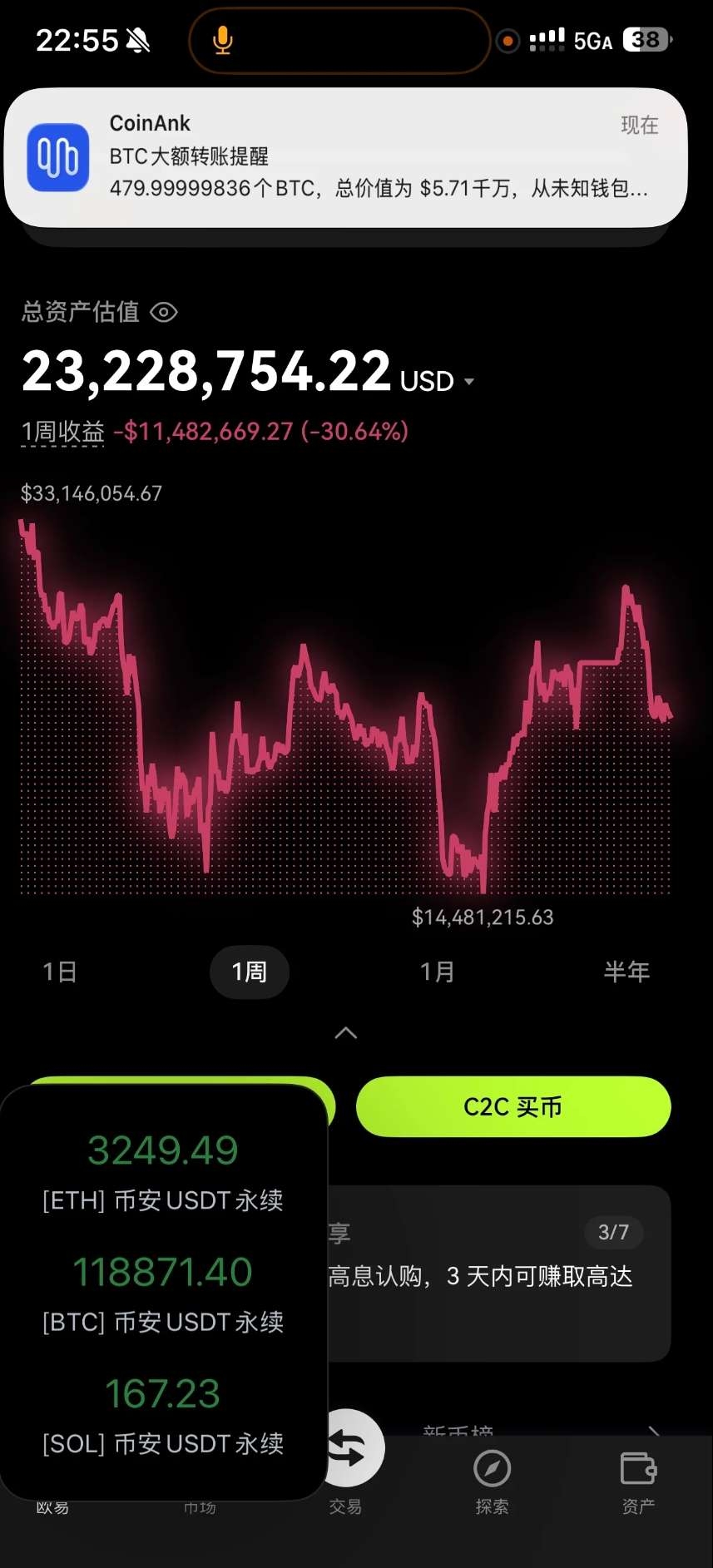
I have tried ICOs, sh*t coins, and mining, experiencing three rounds of bull and bear markets, trading cryptocurrencies for over ten years, having earned and lost, ultimately finding that the method for consistent gains is simple: buy in bear markets, sell in bull markets.
Here are ten years of verified 'bull-bear operational principles':
One, only layout in a bear market: patiently wait for the 'quiet period' and enter in batches.
The core is 'patience', not pursuing precise bottom fishing. Judging the bottom of a bear market: when no one is talking about Bitcoin and the crypto space feels lifeless, build a position in small batches over 1-2 months, the process may last over a year, and the longer you build, the better your cost basis.
Two, only buy mainstream coins: avoid altcoins, choose 'stable baskets'.
Essential BTC/ETH: The 'stabilizer' in the crypto space, buy in bear markets and sell in bull markets, with a guaranteed increase of over 50%, prioritize allocation for large funds;
Potential mainstream coins to consider: BNB (platform coin), SOL/AVAX (base chain), MATIC (infrastructure coin), supported by ecology, with more substantial gains in a bull market;
Avoid strong consensus coins: Dogecoin, SHIB have no real value, highly volatile; not recommended for heavy positions;
Reminder: Don't go heavy on altcoins! Without inside information, it's difficult to buy in before an eruption, and following typically results in taking over positions, ultimately resulting in small profits and large losses.
Three, sell in mid-bull markets: take profits when it's good, don't be greedy for 'the last stick'.
Find sell points based on the bull market phase:
Initial stage: BTC leads, ETH follows, altcoins stall, patience required;
Medium term: BTC/ETH fluctuating up, mainstream coins powering up, altcoins starting, sell in batches;
Later period: BTC fluctuating down, ETH surging, altcoins wildly rising (dozens of times), hurry to clear positions;
Finale: BTC has dropped sharply multiple times (thousands / tens of thousands in a single instance), decisively stop loss when trapped, protect capital for the next round.
Four, do not gamble in a bull market: only 10% of funds for 'entertainment'.
In the later stages of bull markets, altcoins can easily tempt you, but after the tide goes out, many are halved or go to zero. If you can’t resist, use a maximum of 10% of your funds to participate; never go heavy—one loss may wipe out profits and capital, and the probability of getting rich is like winning the lottery; treat it as entertainment.
Five, uphold two core principles: patience > impulse, capital > profit.
Patience: Buy in bear markets and wait for bull markets, avoiding frequent operations; after selling in bull markets, endure 1-2 years of bear markets, do not catch bottoms halfway; do not impulsively chase altcoins after making profits.
Protect capital: stop loss first when trapped (e.g., selling before a crash with only a 50% loss), holding on might leave you with nothing; retaining capital can create a comeback opportunity.
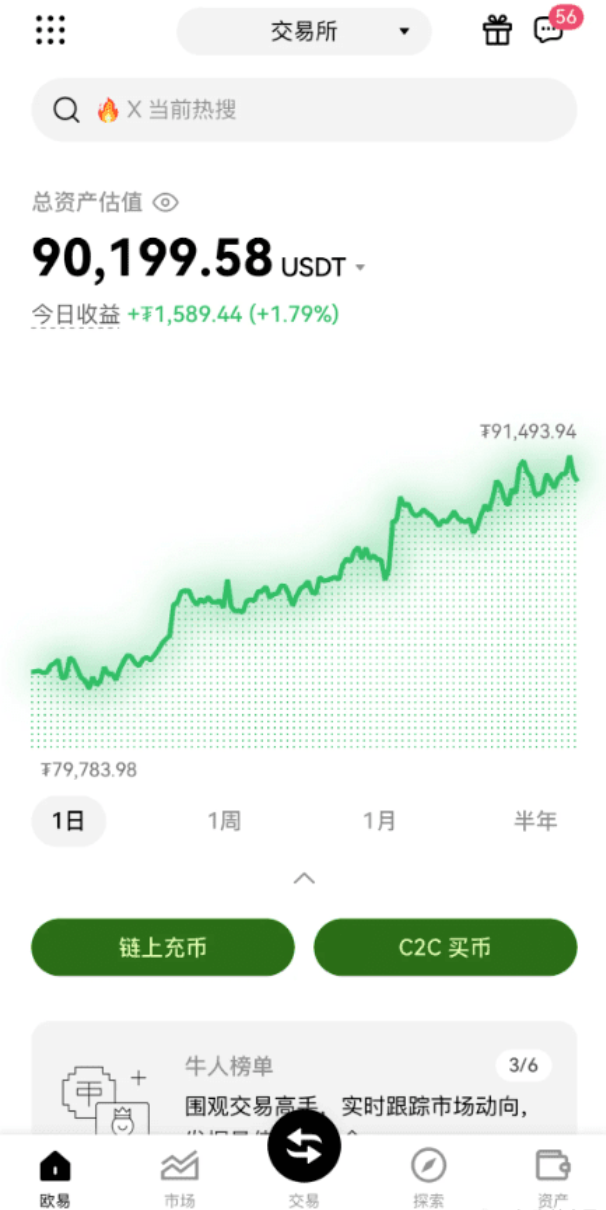
From 1000U to 90,000U, the 'diversify + three-stage attack' has reversed three times in the bear market; you can replicate this technical style!
—— The core of small capital's counterattack: MACD golden cross + volume-price combination, still profiting in a bear market!
One, diversify positions to control risks: three blocks of 'life-saving meat' to survive in a bear market.
The first step for small capital to turn around is to learn to 'diversify your eggs'! My original 'three-segment position method' has helped students reverse three times against the wind in the bear market of 2023:
30% trial position (300U): Specifically target 'MACD golden cross + increased trading volume' starting points! For example, last year, when SOL was at $8, I entered with a light position based on this signal, locked in a 10% profit immediately, not being greedy!
50% trend position (500U): Wait for Bitcoin to break through key levels (such as previous highs, moving averages) before heavily investing! Last year, when BTC broke through $28,000, I invested 500U fully and earned 25% in three days!
20% revival fund (200U): Even if the first two funds are completely lost, this 200U can make you 'fully revived'! During the worst times of last year's bear market, I captured ETH's retracement with this 200U and recovered my funds within a week!
Two, three-stage attack: grab the start, step on the retracement, follow the continuation.
In a bear market, eat meat based on rhythm; in a bull market, get rich with patience! My 'three-stage attack method':
First wave: grab the start (light position testing)
When the market just has a trend, use trial positions to enter, earn 10% and lock in profits immediately! Last year, when PEPE started, I earned 30% from a light position of 300U and directly pocketed it!
Second wave: step on the retracement (profit addition)
When a pullback does not break the previous low, add positions, using 30% of profits to amplify gains! Last year, when MATIC pulled back to $0.8, I used the 150U earned from trial positions to add, ultimately earning 80% profit!
Third wave: follow the continuation (heavy position strike).
After the trend is clear, use trend positions heavily, but never exceed 30% of capital! Last year, during BTC's main upward wave, I invested 500U fully and earned 40% in three days!
Remember: volatile markets are like meat grinders; it's better to stay out than to gamble randomly! Last year, when BTC was consolidating around $25,000, I directly stayed out and avoided three false breakouts!
Three, profit rolling: let money give birth to money.
The core of small capital turning around is to let profits roll! My 'three principles of rolling positions':
Floating profit 10%: Use 50% of profits to increase positions, and pocket the remaining 50%;
Floating profit 30%: withdraw 20% as a safety cushion;
Core rule: Profits generate profits; never bet your capital on a gamble!
Last year, using this method, I turned 1000U into 70,000U without touching leverage!
Four, take profits when it's good: Withdraw first when others are crazy.
Rolling positions is not a gamble for your life, but a way to increase capital through compound interest! Last year, at the peak of the bull market, while others were chasing spikes and facing liquidation, I cleared positions based on 'volume-price stagnation' signals; while others were crying over losses, I seized the retracement and profited!
The secret to small capital surviving in the crypto space is not to gamble on price movements, but to execute 'diversify + three-stage attack' to the fullest! The market never lacks opportunities; what is lacking is the person who embeds simple rules into their bones.
After trading cryptocurrencies for over ten years, I share a 15-minute intraday K-line system that can double the efficiency even for trading novices.
And my trading insights summarize each point as practical essence...
The 15-minute K-line is a secret weapon for many experienced traders to efficiently capture intraday trends; it filters out the noise of ultra-short lines while providing relatively timely entry signals, making it an excellent cycle for balancing 'reaction speed' and 'signal quality'. Today, I will break down a 15-minute K-line trading system that has been refined through practical experience to help you escape blind market watching, improving the efficiency and win rate of intraday trading.
1. Entry strategy
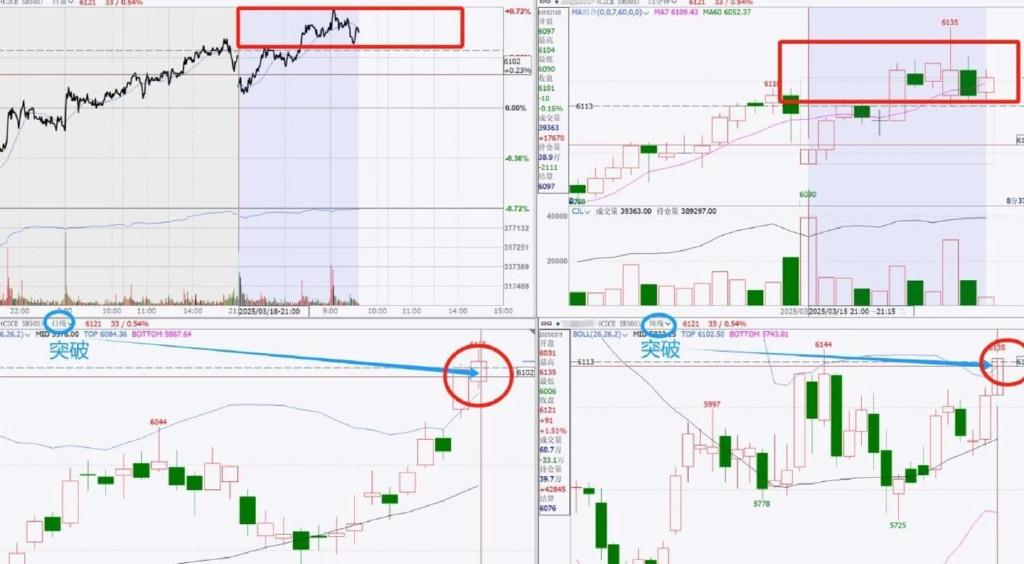
Breakthrough entry: When the price breaks important support or resistance levels, it indicates the acceleration of the original trend or the start of a new trend, which can be followed for entry. For example, in an upward trend, when the price breaks through the previous high, you can go long; in a downward trend, when the price breaks below the previous low, you can go short.
When the 15-minute K-line shows the following signals, consider buying:
RSI value below 30, and a bullish divergence appears;
The price touches the lower Bollinger band and shows a bullish K-line pattern;
5-day and 10-day short-term moving averages cross above the 20-day long-term moving average.
Enter after confirming the breakout is valid (e.g., the breakout candle closes and holds or the next candle continues), operating in the direction of the trend.
Trend-following entry: In the main trend, seize the moment when the price briefly retraces/rebounds and returns to the main trend. In an upward trend, enter long when the price retraces near the moving average and a bullish reversal signal appears; in a downward trend, enter short when the price rebounds near the moving average and a bearish reversal signal appears.
2. Exit strategy
When the short-term moving average crosses the long-term moving average, consider exiting. For example, in a long position, when the short-term moving average crosses below the long-term moving average, it serves as a warning signal that the trend may weaken, consider partially or fully closing the position; in a short position, when the short-term moving average crosses above the long-term moving average, it serves as a signal that the bearish trend may be reversing, consider closing the position.
When the 15-minute K-line chart shows the following signals, consider selling:
RSI value above 70, and a bearish divergence appears;
The price touches the upper Bollinger band and shows a bearish K-line pattern;
5-day and 10-day short-term moving averages cross below the 20-day long-term moving average.
Risk control
Setting stop-loss: Setting stop-loss is paramount; you must set a stop-loss order at the same time as opening a position. Generally, the specific percentage of stop-loss can be determined based on personal risk tolerance and market volatility. It is recommended that a single loss does not exceed 1%-2% of total funds. Stop-loss must be executed unconditionally; if the stop-loss is triggered, exit immediately without any fantasy.
2. Profit-taking strategy: The profit-taking position can be set based on technical analysis, support levels, resistance levels, and other factors. The profit-taking setup should be reasonable to avoid excessive greed. When the price reaches the profit-taking position, consider partially or fully closing your position to lock in profits.
3. Position control: You can calculate the maximum number of positions for this trade based on stop-loss space and maximum acceptable loss per trade. Avoid heavy positions, especially when the market is highly volatile or signals are unclear.
Precautions
The trading system is not a holy grail. Every system has losing periods, and it is essential to persist in execution and manage funds well.
Different varieties have different volatility characteristics; parameters like ATR can be fine-tuned, but the core logic remains unchanged. It is recommended to practice on varieties that currently have good liquidity and strong trends.
Regularly review trading records, analyze stop-loss and take-profit orders, and continuously optimize details (such as key level identification and MACD signal sensitivity).
The core of trading lies in 'plan your trades, trade your plans'. Therefore, before real trading, you can fully simulate trading and test in real situations, master this system proficiently, and continuously hone it in practice, you will gradually rid yourself of the anxiety of blindly watching the market and move towards a more composed and professional trading path.

My trading insights summarize each point as a practical essence...
01. The core of trading.
What is traded is not currency, but human nature: adhere to consistent trading discipline and trading strategies;
The essence of trading = strictly control the profit-loss ratio, closely follow market trends, and use constant small losses to test and capture major market movements;
Successful trading = an effective trading system + correct execution + effective capital management;
The key to stable profits = establish a trading system that suits yourself: one indicator + one philosophy = secret weapon;
Effective capital management: Trading is like boxing; your boxing ability is not about your striking power but your ability to absorb hits.
Correct execution is essential for successful trading.
Wise men win before battle; fighting to win is a poor strategy;
The key to making big money: long-term trading + adding positions in the direction of the trend = small losses with big wins;

02. Fund management in trading.
Control the total risk level; funds should generally be used at 30%, and during major trends, it should never exceed 60%, leaving enough margin;
2. Initially take light positions, learn to add positions in the direction of the trend, and reduce positions appropriately;
3. Compound positions: test funds 10%, trend-following funds 30%, swing trading funds 20%.
03. Entry and exit points in trading
1. Entry points in trading.
Mainly consider the signals of the trading system, and based on the signals, consider the following points:
a. Timing:
At the moment when the important cyclical resonances of space, time, and indicators mutually validate each other; follow-up operations can be carried out when the breakthrough of patterns or trends is established; when the secondary retracement reaches significant percentage levels of the main trend's pullback, enter trades when signs of stabilization or rebound are encountered; at important turning points of long and short, enter increased volume trades after the price breaks the balance.
b. Methods:
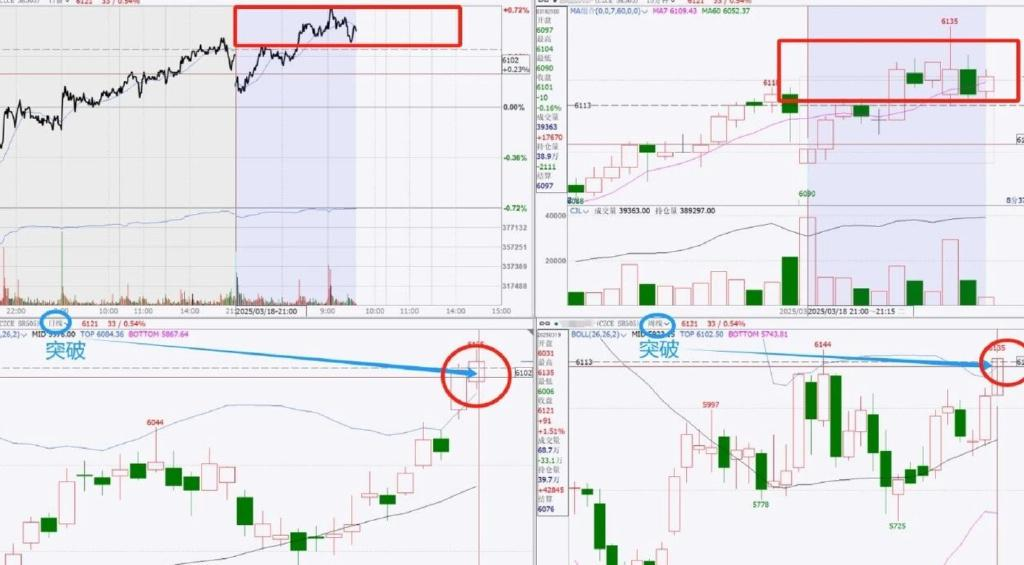
1. Enter when support or resistance levels are broken; reverse on false breakouts;
2. Rely on support to buy long or rely on resistance to sell short.
2. Exit points in trading.
Mainly consider the signals of the trading system, and based on the signals, consider the following points:
Strict entry, lenient exit;
Turning points: K-line combinations; changes in trend rhythm and speed; changes in volume; amplitude measurement; divergence of oscillators;
The acceleration and deceleration of trend market shifts: after two accelerations and decelerations, the market often reverses;
Methods: Exit when an entry signal opposite to the original position appears; exit when the entry basis for the original position disappears.
04. The core of trader profit relies on capital management during trading.
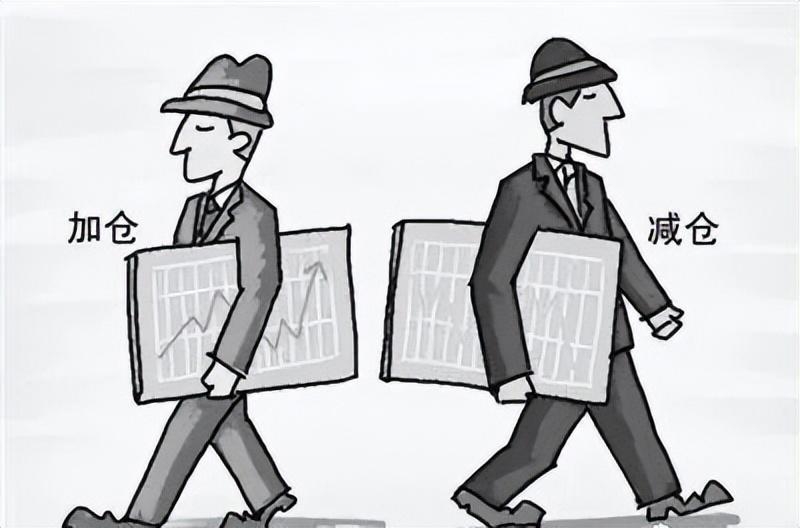
1. Position additions in trading.
a. Timing:
1. The market develops towards a direction with greater returns, i.e., acceleration of shifts;
2. The market develops towards directions with less risk, i.e., after a pullback, it runs along the original trend again.
b. Principle:
1. Only add positions when there are profits; do not add positions when there are losses;
2. 'Pyramid-style' position addition, avoid 'inverted pyramid-style' position addition;
3. Treat position additions and original positions separately, setting new stop-loss and target levels; the basis for entering both is different, and the handling methods are also different.
2. Position reduction in trading.
a. Timing: When risks increase, trend strength weakens, or stability is threatened, i.e., signs and risks of potential trend changes, reduce positions; when market profits decrease, and prices encounter resistance at important levels or stabilize at important support levels, reduce positions.
b. Principle: Flexible disposal principle; separate handling of base positions and short-term positions.
Hello, new friends in the crypto space! I believe everyone comes here with dreams of wealth, hoping to dig for 'digital gold'. But ideals are often full, while reality may be a bit 'bony'. Many newcomers find that profits seem to elude them, while losses come one after another.
Don't be discouraged! Every trading master was once a 'leek'. Losses are the tuition for growth; the key is to learn from losses and avoid repeating mistakes. Today, I'll share my own deep reflections on losses, discuss the most common loss reasons for novice users, and provide practical solutions.
Directly address the three major 'vital points' for novice losses:
Trading system discipline is lax: can't control hands, buying and selling randomly, too many 'temptations' outside the system.
Insufficient stop-loss execution: Knowing that stop-loss is necessary but still holding on to wishful thinking, leading to small losses turning into big losses.
Emotional trading troubles: Unwilling to accept losses, engaging in revenge trading, resulting in more and more losses.
These three points, I believe many beginner friends can relate to. Next, I will analyze these three points in depth based on my years of practical experience and provide specific 'pit avoidance' guidelines.
One, trading system discipline: Don't make trades without 'plans'.
Many newcomers just entering the crypto space are like headless flies, crashing around. Hearing news that a certain coin is about to skyrocket, they rush in; seeing others making big money from 'sh*t coins', they also feel envious and follow suit; or even trade based on feelings and luck. This 'free-spirited' trading style may yield short-term luck and small gains, but in the long run, it is destined to incur more losses than gains.
Core issue: No trading system, or have a system but do not follow it.
Just like going to war without a battle plan, sailing without navigation, and trading without a system is like a blind person groping an elephant, profit and loss depend entirely on luck. The reflection of that friend on 'Trump coin' profits is a typical survivor bias. Every day in the crypto space, countless 'meme coins' and 'sh*t coins' emerge, and 99% will eventually go to zero. Occasionally catching a spike is just a low-probability event; in the long run, you can't be this lucky every time.
More frightening is that **'FOMO emotion' (fear of missing out) and the temptation of 'others making money' will continuously lure you to destroy your trading system**. Seeing others profiting greatly from a certain coin, you might feel envious and jump in, knowing it's not within your trading system, but you can't help but rush in, often getting trapped at peaks.
Solution: Establish and strictly implement your trading system!
1. Clearly define your trading system and 'document' it:
Do not just think about it in your head; write down your trading system clearly. A complete trading system should at least include:
Scope of trading targets: Do you only trade mainstream coins? Or do you also pay attention to potential altcoins? Or only trade ETH ecosystem coins? Clearly define your trading range, narrow your choices, and focus on research.
Entry signals: What indicators do you use to judge entry timing? K-line patterns (for example: breakout patterns, reversal patterns)? Combinations of technical indicators (for example: MACD golden cross + bullish moving average arrangement)? Or driven by fundamental events? Choose the entry signals you are familiar with and trust.
Stop-loss and take-profit strategies: Where do you set your stop-loss? (For example: a certain percentage below the entry price, below key support levels). How do you set your take-profit targets? (For example: fixed profit ratios, key resistance levels, technical indicators being overbought).
Position management rules: How much position do you invest in each trade? Is it a fixed position or adjusted based on risks? What is the maximum loss limit for a single trade? Reasonable position management can effectively control risks.
Trading time frame: Do you do short-term, intraday trading, or medium to long-term swings? Different time frames have different trading strategies and focal points.
2. Create a 'trading system checklist' and check each item before each trade:
Turn your trading system into a 'checklist'; before preparing to trade, just like a pilot checks the plane before takeoff, check each item to see if it meets your system’s requirements. If not, firmly do not proceed!
3. Filter external noise and focus on opportunities within the system:
The crypto space is flooded with information, with various communities and KOLs' information flying everywhere. Newcomers are easily disturbed by various 'insider news' and 'wealth myths', shaking their trading systems. Learn to filter out this noise and reduce unnecessary distractions. Focus your energy on researching and finding opportunities that meet your trading system's requirements, patiently waiting for your 'prey'.
4. Systematize trading logs, review and optimize regularly:
A good memory is not as good as a bad pen. Record every trade in detail, including: trading coin, entry point, reason for entry (whether it meets the system), stop-loss and take-profit points, trading results, and thoughts and emotions during the trade. Regularly review the trading log, analyzing which trades were in line with the system and which were outside the system's 'arbitrary' trades, continuously summarizing experiences and optimizing your trading system.
Two, stop-loss execution power: 'Safety airbags' are indispensable.
In such a high-volatility market, the importance of stop-loss cannot be overstated. Stop-loss is like an airbag in a car; it may not be needed most of the time, but once a collision (severe market fluctuations) occurs, it can save your life and prevent significant losses.
That friend has already realized the necessity of stop-loss and proposed the decisive stop-loss principle of 'leave when the position is reached', which is fantastic! However, knowing is easy, but doing is hard. Many beginners still find it difficult to decisively stop losses in actual trading due to the following psychological barriers:
Unwilling to accept losses: Human nature inherently dislikes losses. A stop-loss means admitting a judgment error and accepting a loss, which is psychologically hard to accept.
Wishful thinking: Always thinking that the price will come back up, waiting a bit longer might just get back to break-even. This kind of wishful thinking can lead you to delay stop-loss repeatedly, ultimately causing small losses to turn into big losses, or even liquidation.
Solution: Overcome psychological barriers and mechanically execute stop-loss!
1. Pre-set stop-loss levels and clearly document them in the trading plan:
Stop-loss is not a temporary decision but is pre-set in the trading plan. Before opening a position, you should clearly set the stop-loss level based on your trading system and risk tolerance and document it in the trading plan.
2. Execute stop-loss mechanically like a robot, never let emotions interfere:
Once the price touches the stop-loss level, execute the stop-loss without hesitation, like a robot. Do not find any reasons, do not harbor any fantasies, do not intervene manually. Remember, the stop-loss is to protect capital and avoid greater losses, leaving space for future profit opportunities.
3. Use tools to assist in stop-loss:
You can use the stop-loss function of the trading platform to pre-set stop-loss orders. Or set a phone alarm to remind yourself when near key stop-loss levels.
4. Review stop-loss behavior, positively reinforce stop-loss actions:
After each stop-loss, do not be discouraged; conduct a review, analyze whether the stop-loss was reasonable? Was the execution of the stop-loss in place? Summarize experiences and lessons. After successfully executing a stop-loss, give yourself some positive psychological affirmations, such as 'I successfully protected my capital' or 'I adhered to trading discipline', reinforcing the correctness of stop-loss.
Three, emotional management: Tame the 'wild horse of emotion'.
In the crypto space, trading is ongoing 24 hours, and prices fluctuate dramatically, which can easily cause emotional ups and downs. Especially after consecutive losses, it's easier to fall into emotional traps and make irrational trading decisions, such as revenge trading.
That friend candidly admits they are affected by revenge trading emotions, which is commendable. Many people know revenge trading is wrong, but after a loss, when emotions run high, they still find it hard to control themselves, resulting in further losses.
Solution: Identify emotional triggers and establish an emotional pause mechanism!
1. Identify your emotional triggers and prevent them in advance:
Record the time, context, and emotional state of each emotional trading occurrence, identifying the 'triggers' that lead to your emotional loss of control. For example:
Is consecutive losses likely to make you lose emotional control?
Does seeing others make money trigger your FOMO?
Do severe market fluctuations make you panic?
Does keeping an eye on the market for a long time make you fatigued and irritable?
Understanding your emotional triggers is essential for better prevention and response.
2. Establish an 'emotional pause mechanism' to enforce calm:
When feeling emotional fluctuations, immediately recognize it and force yourself to pause trading. Step away from the computer screen and do something to relax, such as:
Deep breathing, meditation
Exercise, walking
Listening to music, reading
Chatting with friends and family
Give yourself time to calm down and let emotions settle. Do not make any trading decisions when emotionally agitated.
3. Pre-set response plans to prevent problems before they arise:
In the trading plan, pre-set solutions for dealing with losses and emotional fluctuations. For example:
If consecutive losses reach a certain number, stop trading for a day or a week.
If feeling emotionally agitated, force yourself to take a break and do no trading.
If feeling confused about the market, reduce trading frequency or even stay out of the market.
Pre-establishing response plans allows you to have a set of rules to follow when emotions arise, preventing you from panicking.
4. Use small positions to experiment, reducing emotional impact:
If you really can't help but want to trade, you can try using a very small position for simulated trading or small real trading. Reduce trading risks and minimize the impact of emotional fluctuations on your capital.
Summary and action guide
Professional trading is long and arduous. Losses are not scary; what is scary is repeatedly falling in the same place. I hope this article helps beginner friends recognize potential pitfalls in their trading and provides practical solutions.
Finally, I summarize a 'beginner's pit avoidance action plan':
First step: Improve your trading system and document it, creating a trading system checklist.
Second step: Strengthen stop-loss execution, pre-set stop-loss points before each trade and strictly enforce them.
Third step: Conduct emotional management training, identify emotional triggers, and establish an emotional pause mechanism.
Fourth step: Consistently record trading logs, regularly review, and continuously optimize the trading system and operations.
Remember, on the road to trading, there are no shortcuts; only continuous learning and ongoing improvement can ultimately achieve stable profits. I wish everyone in crypto trading can avoid detours and realize their wealth dreams soon! Let's go!
I hope this article helps you and beginner friends! If you find the content good, please like and share it, so more people can benefit. If you have any other trading-related questions, feel free to ask me anytime.
If you are still struggling in this liquidation loop, please force yourself to do these three things:
1: Reduce trading frequency:
2. Strictly enforce stop-loss.
3. Do not let any small losses get out of control.
If you still feel confused in the market and don’t know how to layout your next steps, I am always here willing to share more specific strategies and mindset management methods with you. Opportunities are right in front of you; as long as you take the initiative, we will have stories to tell.
Investing is like cultivation; in addition to sticking to your investment philosophy in the face of severe market fluctuations, you also need to build your simple and practical profit model, but many 'leeks' don't know where to start. There are both fish and fishing methods that include a collection of solutions to common problems encountered in trading cryptocurrencies (essential skills for crypto traders). I hope fans can find suitable methods they want to learn from this, helping everyone establish a clear and effective trading system.