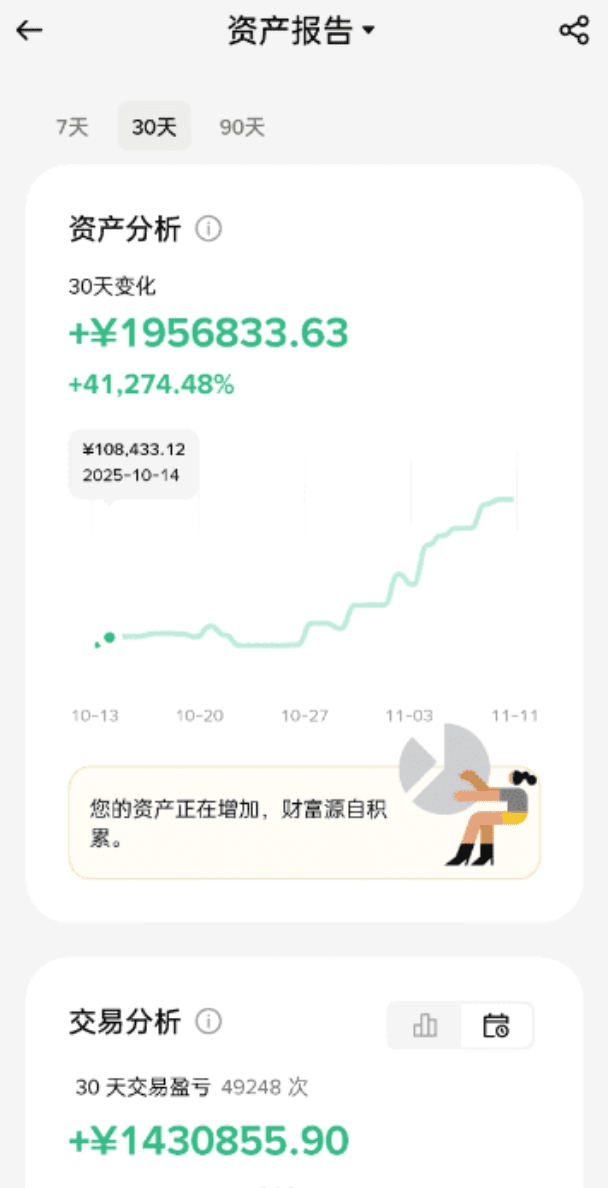
I've been trading cryptocurrencies for over ten years, from liquidation to achieving financial freedom, supporting my family with trading while holding 700,000, achieving a return of 41274.48%, and making over 14 million from a 30-day contract rollover!
As someone who has been through it, let me detail whether the crypto world is about luck or skill?
One: Entering the crypto world with 50,000 and making 10 million, completely by luck; when the bull comes, even a pig can fly.
Two: Losing 10 million and then being in debt over 8 million, proving that saying: what you earn by luck will eventually be lost by skill.
Three: From 14 million to today's stable compound wealth freedom: relying on solid skills.
I won't go into too much detail about the failures in the first and second stages. Instead, I'll focus on sharing how I turned things around:
From re-entering the market with 700,000 to earning 14 million and now achieving financial freedom
With 700,000, the return rate reached 41,274.48%, and over 14 million was earned through 30-day contract rolling! I've used 90% of the indicators on the market, but I particularly love this set of cryptocurrency trading indicators. It's unbeatable and worth studying and collecting in depth (suitable for everyone).
If you're still feeling lost and struggling with losses, and are considering cryptocurrency trading as a second career, then you absolutely must master this "simplest MACD trading strategy." Understanding and mastering it will truly save you a lot of trouble. These are all experiences I've personally tested and proven; I suggest saving them and reviewing them repeatedly!
MACD, or Moving Average Convergence Divergence in Chinese, is often called the "King of Indicators." It's equally effective in stock markets, Hong Kong stocks, US stocks, and the cryptocurrency market.
The default parameters for the MACD indicator are 12, 26, and 9. It consists of three parts: the fast line (DIF), the slow line (DEA), and the histogram (MACD bars). You don't need to calculate them yourself; your trading software will automatically draw them for you.
Its basic principle is: subtract the long-term moving average (26-day EMA) from the short-term moving average (12-day EMA) to obtain the DIF line, and then take a 9-day average of the DIF to obtain the DEA line. The difference between the two is the histogram.
How do you use it to find buy and sell points? Mainly look at two strategies: crossover and divergence.
Cross strategy:
Golden Cross (Golden Cross): When the fast line crosses the slow line from bottom to top, and the histogram changes from red to green, it indicates that the market is strengthening and is a buy signal.
Death cross (or death cross): The fast line crosses the slow line from top to bottom, and the histogram turns from green to red, indicating a weakening market and a sell signal.
Divergence strategy:
Bottom divergence: The price makes a new low, but the MACD fast line does not, suggesting that the downtrend may reverse and you may consider buying.
Top divergence: The price makes a new high, but the MACD fast line does not follow suit, suggesting that the uptrend may be over and selling should be considered.
It's important to note that MACD is not an overbought/oversold indicator (that's what RSI and KDJ do); it's a trend indicator. It's best used in conjunction with other indicators to improve accuracy.
Finally, here are a few practical tips for cryptocurrency trading, all based on hard-earned experience. Understanding them is key to success:
1. If the market continues to fall during the day, it is very likely to rebound after 9:30 pm – you can consider buying the dip.
2. If the price surges during the day, never chase the highs, as a pullback is likely at night—control yourself and avoid FOMO.
3. The deeper the dip, the stronger the signal – sharp drops and rises are both opportunities.
4. Prices usually rise before positive news is released, but may fall after it is implemented – buy the expectation, sell the fact.
5. For coins that are being heavily promoted in group chats, it's best to trade in the opposite direction—too much hype often indicates a trap.
6. The coins that others recommend but you didn't buy may actually surge in value—sometimes the one you don't believe in is the dark horse.
7. When choosing a platform, always pick a major exchange (Binance, OKEx, Bitget). If a smaller exchange runs away with your money, you'll have no recourse. Don't blindly trust Feixiaohao; it lacks authoritative backing, and many worthless cryptocurrencies are listed there.
8. Over-leveraging on a single coin makes you vulnerable to targeted liquidation; exchanges really do monitor accounts. The moment you stop your losses, the price drops—TRB is a prime example.
A complete explanation of the rolling position tactic, including how to roll positions correctly.
Rolling over positions is not gambling, but a mathematical game that amplifies probabilistic advantages through money management.
In the cryptocurrency world, what truly changes one's destiny is not frequent trading, but rather achieving compound growth through rolling over positions during trending markets. This method may seem simple, but it is actually the ultimate test of a trader's understanding, discipline, and mindset.
01 Core Logic: What is the essence of rolling over positions?
The essence of rolling over positions is to let profits run, adding to positions with floating profits to achieve exponential growth in a one-sided trend.
Difference from regular position averaging:
Regular position averaging: Using principal to build a position in batches.
Rollover: Using realized profits to add to a position
For example:
With a principal of 10,000, seize a 5x market opportunity:
No additional investment: final profit of 50,000.
Three rounds of margin trading: final profit of approximately 1.25 million.
02 Specific Operations: Four-Step Rolling Position Strategy
Step 1: Initial Position Establishment
Use 10%-20% of your total capital as an initial position.
Only enter the market at the beginning of a clear trend.
Set a hard stop-loss at 3%-5%.
Step Two: Roll Over Initial Profits (Most Crucial)
Close half of the position when profits reach 30% of the principal.
Use the profits to open a second position.
Move the overall stop loss to the cost price.
Step 3: Secondary Rollover
When the total profit reaches 100% of the principal
Continue to use part of the profits to open a third position.
Retain 50% of profits as a safety net
Step 4: Exit when the trend ends
When the price breaks below the trendline or key moving average
Take profits in stages, and don't try to sell at the absolute peak.
Reserve 20% of your position to seek additional profits.
03 Key Principle: Necessary Conditions for Successful Rollover
1. Only roll over positions during major trends.
2. Trends confirmed on daily and weekly charts.
3. Trading volume continues to increase.
4. Market sentiment is in the early or middle stage.
5. Position control is the lifeline.
6. A single position opening shall not exceed 20% of the total capital.
7. Total position should not exceed 50% of funds.
8. Never use high leverage for rolling over positions.
9. Stop-loss discipline must not be violated.
10. Strictly set initial stop-loss.
11. After achieving a floating profit, promptly move the stop-loss order to the cost price.
12. If the trend reverses, exit the market immediately without hesitation.
04 Practical Case Study: Application of Rollover in Bitcoin Trends
Taking a principal of 100,000 in Bitcoin as an example:
Initial position: 20,000, stop loss set at 5%.
First objective: Profit of 30,000, close out 10,000 of the current position, and use the 20,000 profit to open a second position.
Second goal: Achieve a total profit of 100,000, and use 50,000 of the profit to open a third position.
Ultimately: By capitalizing on a 3x market move, the profit was approximately 600,000 instead of 300,000.
05 Risk Control: The Deadly Trap of Rolling Over Positions
1. Avoid rolling over positions in a volatile market.
2. Stop immediately if two consecutive attempts to add to the position fail.
3. If the consolidation period exceeds 3 days, suspend rolling over positions.
4. Be wary of excessive rolling over of positions.
5. Maximum of 3 rollovers.
6. Total position size shall not exceed the initial principal.
7. Emotional Management
8. Do not loosen stop-loss orders as unrealized profits increase.
9. Do not take profits prematurely due to short-term fluctuations.
10. Strictly implement the established plan.
The ultimate secret to rolling over positions:
In this highly volatile market, real big profits come from a few correct rollovers, rather than the accumulation of countless small wins.
When you let profits run in a trend through strict discipline, you are not just trading, but practicing the art of money management.
Remember: a skilled strategist is not defined by repeated victories, but by maximizing the gains of each victory. In the crypto world, longevity is important, but so is maximizing profits during favorable market conditions.
Cryptocurrency Trading Essentials: The "Resonance" Rule Secretly Used by Institutions: Smart Money Uses Points of Interest (POI) + Fibonacci retracements to Locate the "Optimal Trading Zone," Making High-Probability Entry Points Undetectable.
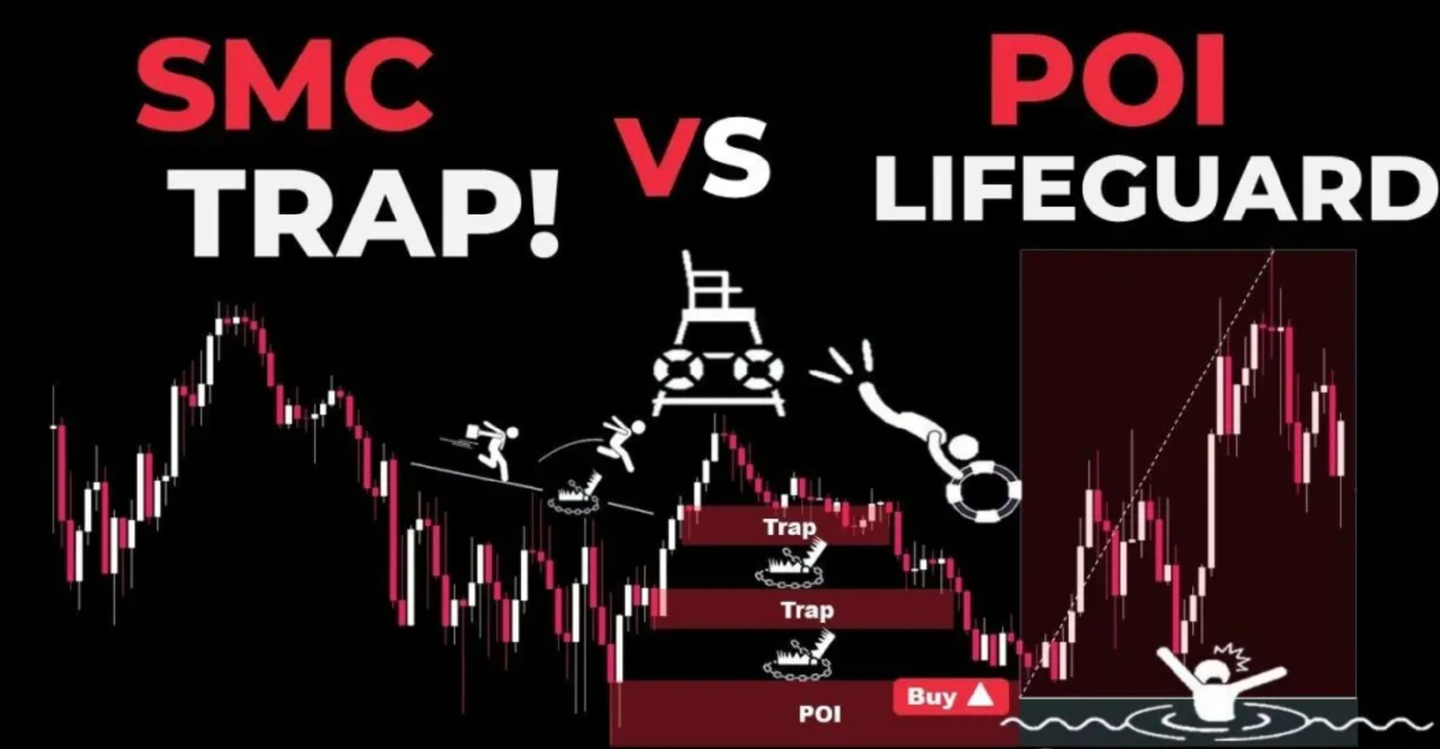
In "smart money" strategies, Points of Interest (POIs) are key locations in the market where significant price action occurs. These locations are areas where institutional and retail investors make decisions. POIs can provide important clues about market structure, liquidity, and potential reversals or trend continuations.
Common POI types
1. Fair Value Gap (FVG)
A fair value gap (FVG) is a price inefficiency area caused by aggressive price movements, resulting in gaps between price action. The market typically returns to these areas to seek equilibrium.
FVG (Fixed-Variance Gaps) forms when prices move rapidly, causing gaps between candlesticks. The market often fills these gaps to restore balance.
When strong price fluctuations leave space between the highs and lows of adjacent candlesticks, an FVG (Free V Gain) pattern is formed.
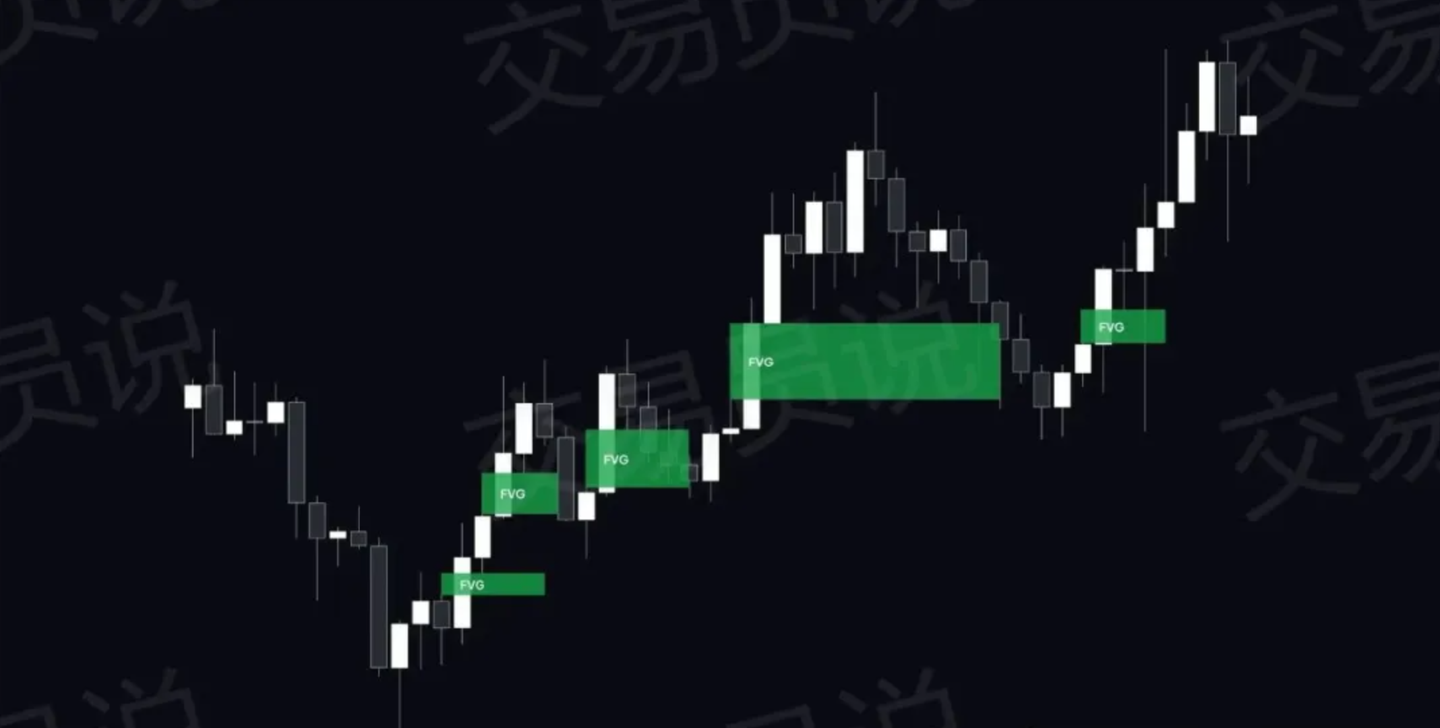
These gaps indicate an imbalance between buyers and sellers, making them areas where prices may retrace.
Traders use FVG (Frequency Values) to predict potential pullbacks before a trend continues.
2. Order Blocks (OB)
The order book represents the area where institutions have placed large orders. Since smart money tends to return to these areas to fulfill orders, the order book (OB) often acts as support or resistance.
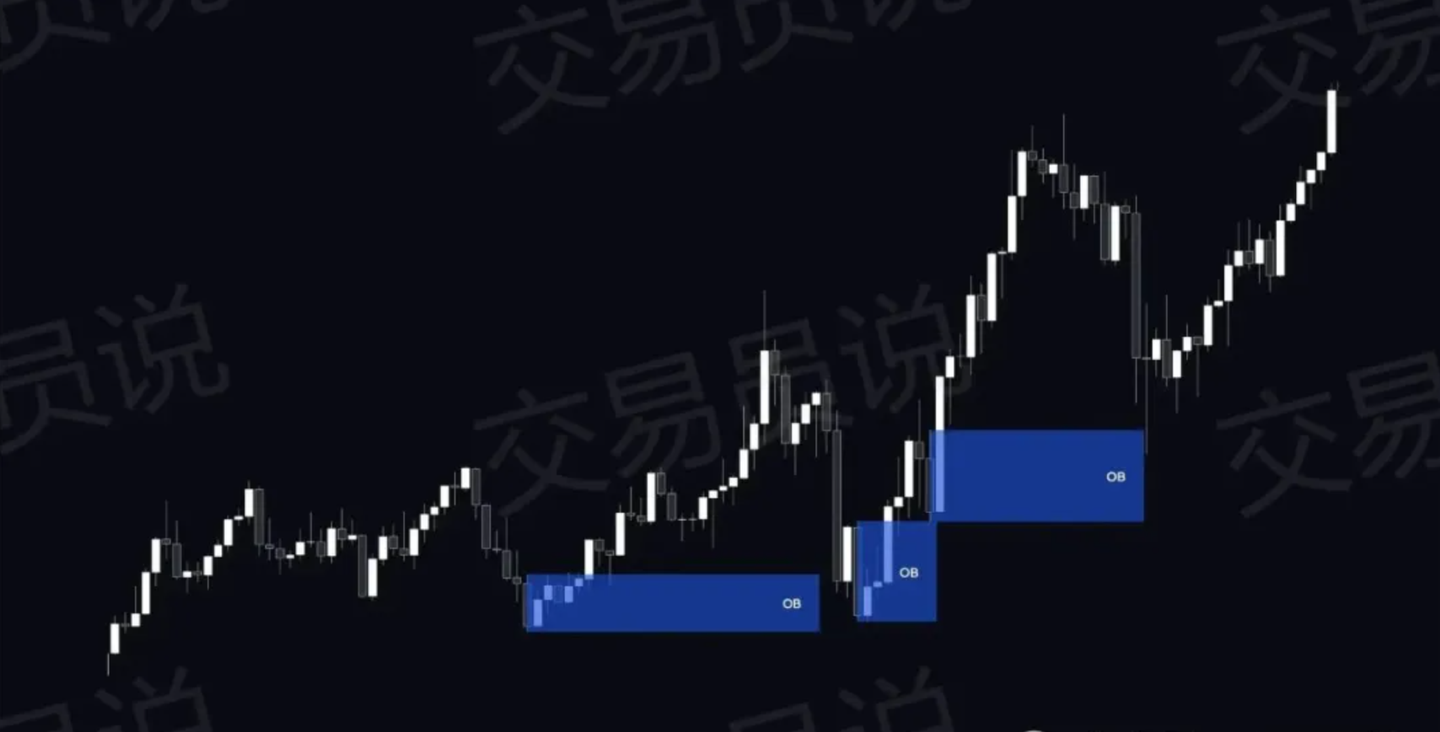
⊖ Bullish Order Block: The last bearish candlestick before a strong upward move. A buy opportunity typically arises when prices retrace to this area.
⊖ Bearish Order Block: The last bullish candlestick before a strong decline. Prices typically return to this area to provide a shorting opportunity.
Prices often retrace to order blocks before continuing in their original direction. Strong OB (On-Balance) patterns often overlap with liquidity zones and other converging factors, thus providing high-probability trading opportunities.
3. Destruction Block (BB)
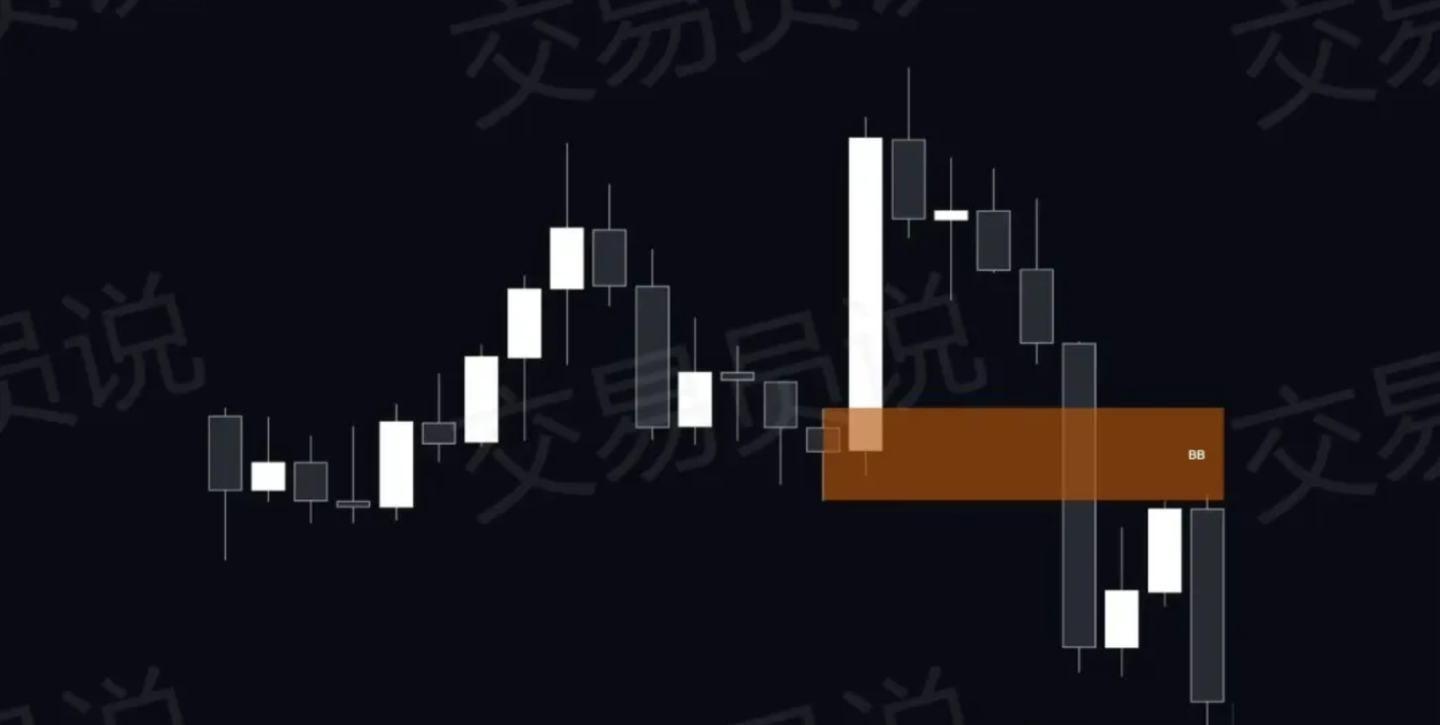
Breaker blocks (BBs) are previous support or resistance levels that reverse roles after a strong price move. Breaker blocks indicate that previous liquidity has been absorbed, making them key areas for savvy traders.
⊖ Bullish Breakout Block: A previous resistance level is broken and then turns into support.
⊖ Bearish Breakout: A previous support level is broken and then turns into resistance.
When disruptive blocks are combined with liquidity zones and market structure, they can become a powerful resonant tool.
4. Reject Block (RB)
Rejection blocks (RBs) appear when the market strongly rejects a certain price level, typically leaving long shadows as a sign of a failed false breakout. These areas often become key price bands for smart money traders to watch.
RB indicates strong resistance or strong support, which often leads to reversals or trend continuations.
They typically appear near liquidity pools, where institutional traders trigger stop-loss orders or place pending orders.
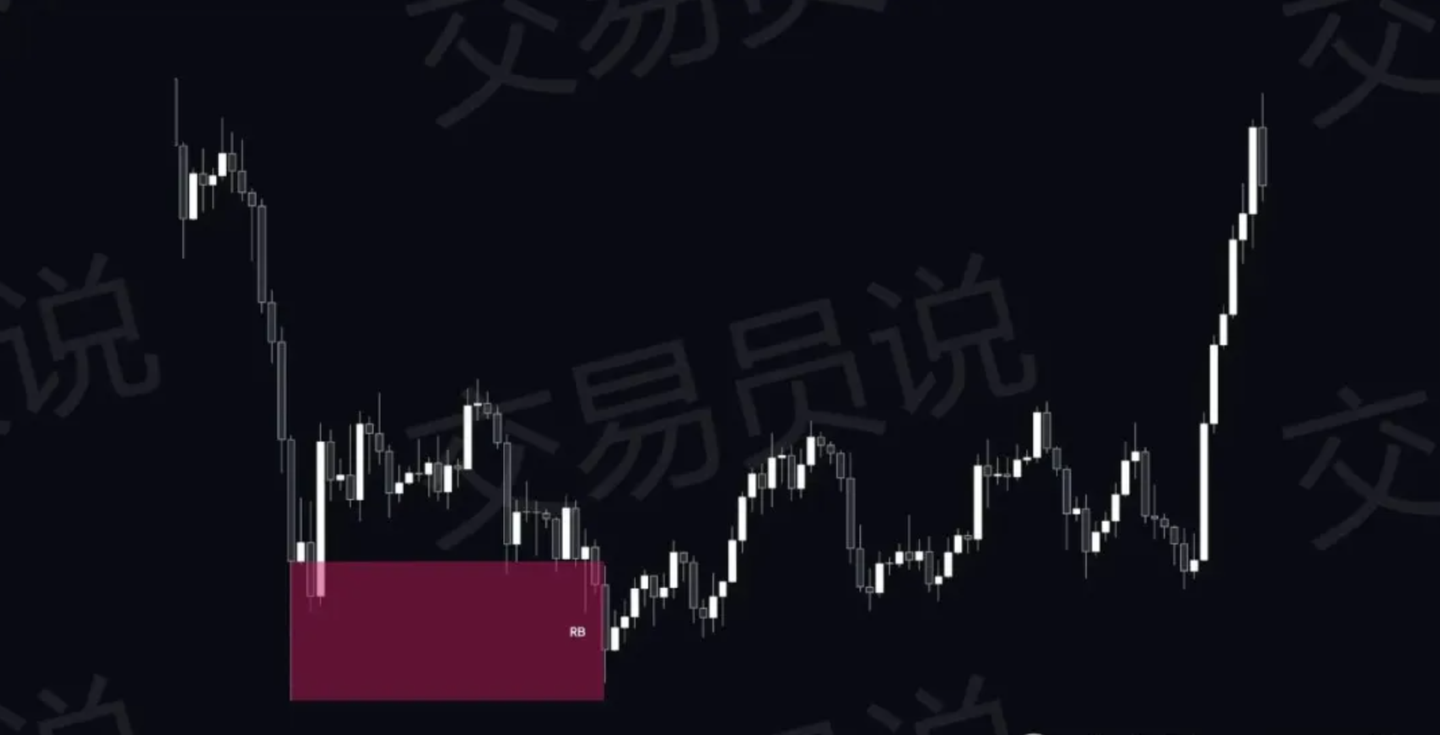
Smart money uses RB (Redundant Investor) to identify areas where prices may react, thereby optimizing entry points for high-probability trades.
When RB is used in conjunction with Fair Value Gap (FVG) or Order Block (OB), they can provide strong resonance support for trading patterns.
Why POIs are important
✍ Institutional trading activities: Institutions often execute orders at these key points, making them significant.
✍ Market Reversal and Continuation: POI helps traders predict potential turning points or trend continuations.
✍ Enhanced trading settings: When the POI coincides with a Fibonacci position, it can provide a high probability of trading opportunities.
Fibonacci trading and its role in Points of Interest (POI)
As is widely known, Fibonacci retracements are a commonly used technical indicator tool by traders, helping them identify potential reversal zones by measuring the depth of price pullbacks. When Fibonacci retracements coincide with Points of Interest (POIs), they provide a strong resonance for trading.
Application of Fibonacci retracements in trading
The Fibonacci retracement tool is used as follows:
⊚ Pull from the low point of the trend to the high point of the trend (used in an uptrend)
⊚ Pull from the high point of the trend to the low point of the trend (used in a downtrend)
Key Fibonacci retracement levels:
⊚ 0.236 (23.6%) — Slight pullback level
⊚ 0.382 (38.2%) — Shallow pullback
⊚ 0.5 (50%) — Midpoint of the trend (Although not a Fibonacci sequence, it is widely used)
⊚ 0.618 (61.8%) – Golden Ratio; Strong Pullback Level
⊚ 0.786 (78.6%) — Deep pullback, often tested before a reversal.
Premium Zone and Discount Zone
⊚ Premium zone (above 0.5) – more suitable for finding short-selling opportunities
⊚ Discount zone (below 0.5) – more suitable for finding long opportunities
⊚ Equilibrium point (0.5 level) – Represents the fair price range
Points of Interest (POI) and Optimal Trading Entry Zone (OTE)
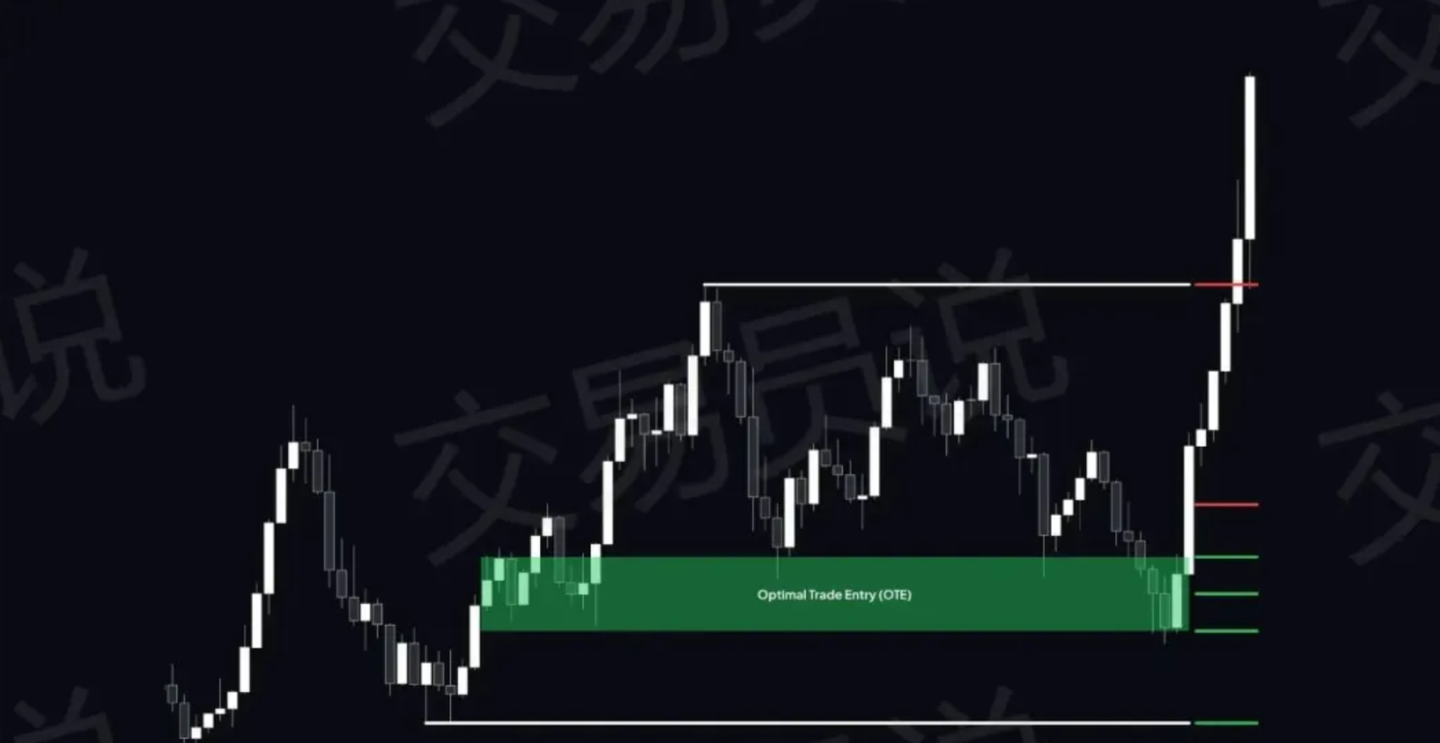
The optimal trade entry zone (OTE) lies within the 0.618 to 0.79 retracement range and is considered the most ideal high-probability entry area. When the POI and OTE zones overlap, the probability of a significant price reaction increases dramatically.
How do POI and OTE work together?
POIs mark key decision-making areas.
The trading pattern is stronger when the price retraces within the POI and enters the OTE area.
Institutional participants typically build or distribute positions within this range.
Steps to apply the Fibonacci sequence to POI
1. Identify market fluctuation points
Traders first identify key swing highs and lows on the chart. These locations form the basis for plotting Fibonacci retracements and assessing potential price movements.
2. Draw the Fibonacci levels.
Once key highs and lows are identified, traders use Fibonacci retracement tools to visualize pullback areas where prices may pause or reverse. These areas typically occur at key levels before a trend continues.
3. Find resonance with POIs
After drawing Fibonacci retracements, traders look for points of interest (POIs) that overlap with key retracement areas.
For example, if a bullish order block happens to be near the 61.8% retracement level, it may create a more probabilistic buying opportunity.
4. Confirm entry signal
When Fibonacci retracement levels overlap with Points of Interest (POIs), traders can optimize their trading strategies. They wait for confirmation from price action, such as bullish or bearish candlestick patterns appearing at significant Fibonacci levels overlapping with POIs, before deciding to enter a trade.
How to apply Point of Interest (POI) and Fibonacci in uptrends and downtrends
Uptrend (Buy Scenario)
#1. Confirm a Point of Interest (POI) (such as an order block, a broken block, a liquidity pool, or an FVG).
#2. Draw the Fibonacci retracement line from the low point of the band to the high point of the band.
#3. Find the best entry zone within the POI (OTE, 0.618-0.79 range).
#4. Enter the market after a confirmation signal appears (e.g., a bullish candlestick pattern or structure breaking out of BOS).
Downtrend (Selling Scenario)
#1. Confirm a POI.
#2. Draw the Fibonacci retracement line from the high point of the band to the low point of the band.
#3. Find the OTE interval that overlaps with the POI.
#4. Enter the market after a confirmation signal appears (e.g., bearish price action or resistance rejection).
Common mistakes in using POI and Fibonacci
1. Expecting Fibonacci levels to always be effective
Not every pullback will conform to Fibonacci retracements. Price action and Point of Interest (POI) must provide additional confirmation.
2. Ignoring market structure and POI
Fibonacci retracements work best when paired with strong Points of Interest (POIs). Traders should analyze market structure before making any trades.
3. Over-reliance on Fibonacci as the sole reason for entry.
Fibonacci retracement should only be used as a confluence factor, not as the basis for trading decisions. Other technical and fundamental factors should also support trading decisions.
in conclusion
Combining POI with Fibonacci retracements can enhance trading models because it can:
1. Identify optimal entry points through key liquidity zones.
2. Improve the risk/reward ratio by utilizing high-probability reversal zones.
It provides multiple resonances between price behavior, liquidity, and market structure.
If you can understand and apply POI and Fibonacci, you will be able to make more rational judgments and seize more high-probability smart money trading opportunities.

Finally, Shanyuan teaches you how to make a trading plan in a simple and easy-to-understand way. It's hard not to make money after learning this. Worth saving!
A complete trading plan includes: analyzing and predicting market trends, selecting entry and exit points, managing position size, choosing entry steps, setting profit targets, handling expected losses, controlling the mindset while holding positions, and a series of other complex processes.
If you perfect each step of the process, you'll be very close to a successful trade; the rest is up to the market to handle.
Regarding the formulation of a trading plan, here's a simple example: a contract trading strategy with 50,000 USD.
1. Before trading, we need to make arrangements for position management. With 50,000 USDT, one layer of position is 5,000 USDT, and three layers of position is 15,000 USDT. Based on my many years of trading experience, I suggest that the total position in a single trade should not exceed three layers of position, which is within the safety range. Therefore, with 50,000 USDT, the total position in a single trade should not exceed 15,000 USDT.
2. The choice of entry and exit points is closely related to the timing of entry and exit, so I will discuss it together. For trending markets, it is recommended to focus on trending operations. For range-bound markets, operate within the range, buying low and selling high, mainly looking for support or resistance levels as entry opportunities. In a very clear trending market, you can enter with three layers of capital at once near support or resistance levels, and then take profit when the target is reached. Similarly, in a clear range-bound market, you can enter with three layers of capital at the bottom or top of the range. If the trending market is not very clear or the range-bound market is not very certain, you can adopt a phased entry approach. Divide the initial 15,000 USDT capital into 3 or 5 equal parts and gradually add to the position. This reduces risk and spreads out the moving averages, preventing the entry price from being too low or too high, which could affect profitability.
3. Profit Target Expectations: Profit targets can be specific or indefinite, such as earning 100, 200, or 300 points. Specific targets involve decisively taking profits once achieved, regardless of whether continued profits are possible if the position is held. More opportunities will arise, and further arrangements can be made after closing the position. Indefinite targets involve setting profit targets near key support or resistance levels. If the trend is strong, the market will generally touch strong support or resistance levels, at which point it's time to take profits and exit. However, in rare cases, this rigid approach is not advisable; if the market moves against you and you need to exit early, do so directly.
4. Handling Expected Losses: Losses are something no one wants to face, as they mean a reduction in capital. However, when losses occur, we have to actively manage them. If we establish a position all at once and the market moves against us, resulting in a loss, and our expected loss is 100 points, then the position will be automatically closed when the expected loss is reached. If we establish a position in stages, don't panic before all the planned positions are entered. Gradually add to the position according to the plan. Once all positions are entered, if the market is still moving against us, then decisively stop-loss when the expected loss is reached. Another type of stop-loss expectation is when the market moves against us, breaking through key support or resistance levels, indicating an impending trend reversal, and hitting our stop-loss level; in this case, decisively exit the market.
5. The most crucial element throughout any trading plan is trading mindset. Hesitation, greed, and indecisiveness are all negative mindsets that can affect live trading. Indecisiveness at entry and exit points affects timing, greed impacts profits, and when holding positions with anxiety, even slight fluctuations or reversals can cause panic and internal drama. A lack of conviction can completely disrupt your plans. Only rich experience can provide a sound trading mindset. With experience, you'll be less confused when the market plays tricks on you, and instead have a sense of confidence born from experience. For beginners lacking experience, the most direct way to overcome this is to steadfastly execute your trading plan and overcome your initial feelings.
For anyone in the cryptocurrency world, as long as you diligently develop and execute a comprehensive trading plan based on the five key points mentioned above, your trading journey will undoubtedly become smoother, and the expected profits will follow. You will become the envy of others who make huge profits. In the cryptocurrency futures market, a monthly profit of less than 100% can only be considered small, a monthly profit of 100% to 100% can be considered large, and a monthly profit of more than 100% can be called a master trader.
If you've diligently followed my five key points, developed a comprehensive trading plan, and executed it conscientiously, but still haven't made money in this market, then you can directly contact the instructor. I will provide free, one-on-one support to help you resolve your issues and find the perfect solution. I will guide you to earn back the same amount you've lost, until you completely recover your losses. Confidence comes from competence.

A painful lesson learned from losing 6 million! Crypto newbies can use these two tips to go from "profits turning into losses" to "stable profits without panic."
In the cryptocurrency market, the most agonizing thing isn't losing your principal, but rather making a 20% profit and then, because of "waiting a little longer" or "being reluctant to let go," not only losing all your profits but also incurring a loss of real money. I myself suffered this fatal setback years ago—my heavily invested crypto assets rose by 20%, and in a moment of impulsiveness, I wanted to "make another push to double my money." However, the market took a sharp turn for the worse, not only wiping out my profits but also incurring a 30% loss. My initial capital of 6 million was drastically reduced, and that feeling was worse than swallowing gall!
Later, I finally realized: in the crypto market, "reluctance to let go" is the death knell for losses. Today, I'm sharing two core strategies that I've honed through real money with beginners. Following these strategies will save you at least three years of wasted time and help you weather the volatility!
Having been in the crypto world for over 10 years, I must first state my opinion: the crypto world is never short of money-making opportunities, but it lacks the willpower to "control oneself"! Newcomers should not get obsessed with complicated indicators; first, master "stop-loss and take-profit" to the core, and you will be able to outperform 80% of those who follow the crowd.
The first strategy: run when the line is broken, don't "fall in love" with the market. The 70-day moving average is my "lifeline" - no matter how bright the fundamentals of the crypto assets I hold are or how lively the community is, as long as the closing price falls below the 70-day moving average, I never hesitate to cut my losses and leave the market that day.
The worst mistake I ever made was clinging to the illusion of a rebound: when a certain coin broke its 70-day moving average, I kept thinking, "The fundamentals aren't bad, it's just a short-term pullback." As a result, I got trapped deeper and deeper, losing 30% in three weeks, wiping out all my previous profits and even incurring losses. Since then, I've ingrained the principle of "sell immediately when the price breaks a support level" into my DNA. Later, I used this strategy to avoid three major crashes, preserving enough capital to invest in two more promising projects.
Don't think this is just "mechanical operation" without soul! In the crypto market, emotion is the "mother" of losses—the more you try to "bet on a rebound based on feelings," the more the market will ruthlessly fleece you. A technical breakdown is essentially a collective exodus of funds. Following the rules is 100 times more reliable than guessing blindly.
The second strategy: Take profits in stages, don't be greedy and try to "eat from beginning to end." I've seen too many beginners fail because of greed: after earning 20%, they want to earn 50%, and after earning 50%, they want to double their profits, only to watch their profits vanish. My ironclad rule is: once you've earned 30%, take half the profit; for the remaining position, aim for the 50% target, and liquidate the entire position when that target is reached.
Last year, there was a popular cryptocurrency that I held, and it rose by 40% shortly after. Friends advised me to "wait and see if it doubles," but I sold half of it according to the rules. Sure enough, the price plummeted three days later, and I successfully sold the remaining half when it rose by 50%, ultimately making a net profit of 45%. Meanwhile, those who were greedy and waited for it to double ended up losing money and came to ask me, "How could you resist selling?"
Remember: In the crypto world, "only what you actually earn is real money." Don't believe in the myth of "making money from start to finish." The market never gives greedy people a chance. Knowing when to take profits isn't cowardice; it's respect for the market and, more importantly, the key to long-term profitability.
Many people think these two tricks are too simple, but the truth about crypto trading is: the difficulty lies not in "knowing," but in "doing." Market conditions will always exist, but only those who can survive periods of volatility and preserve their capital deserve to reap the rewards of a bull market.
If you are still struggling in this cycle of margin calls, please force yourself to do these three things first:
1. Reduce transaction frequency:
2: Strictly implement stop-loss orders.
3: Don't let any small loss get out of control
If you're still feeling lost in the market and unsure of your next move, I'm here to share more specific strategies and mindset management methods. Opportunities are right in front of you; if you take the initiative, we can have a story together.
Investing is like a spiritual practice. Besides adhering to your investment philosophy in the face of drastic market fluctuations, you also need to develop a simple and easy-to-implement profit model. However, many novice investors don't know where to start. This resource, "Both Fish and Fishing," compiles solutions to frequently encountered problems in cryptocurrency spot and futures trading: (Essential Learning Materials for Cryptocurrency Traders). We hope our followers can find suitable methods for themselves and the learning methods they want to use, helping everyone build a clear and effective trading system.