
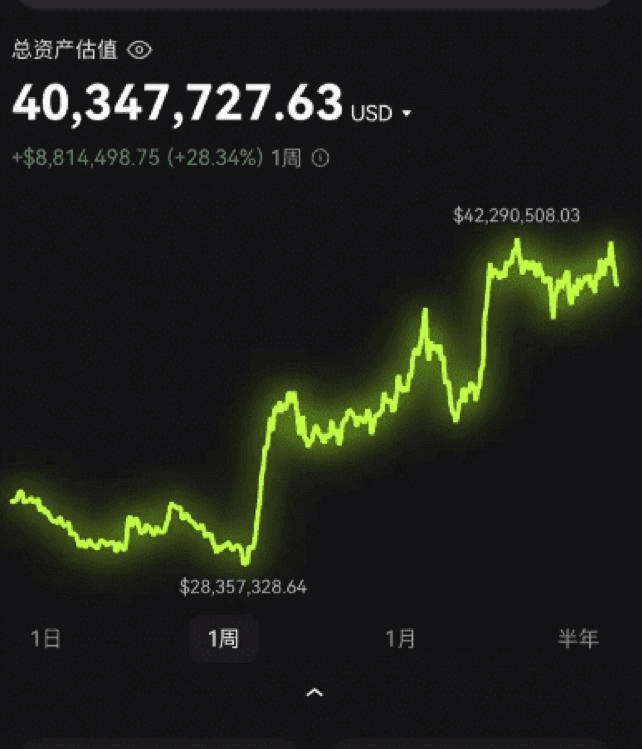
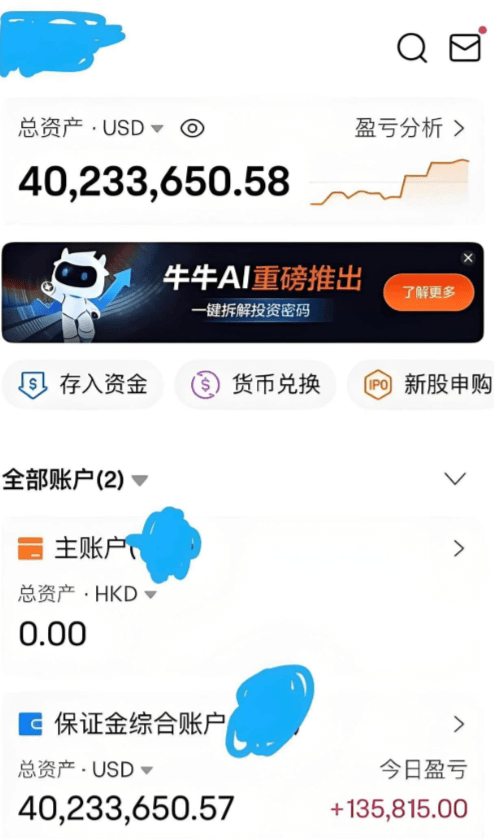
 My cryptocurrency trading method is very simple and practical. I reached an 8-digit figure in just one year by focusing on one type of pattern, only entering the market when the opportunity is right, and not trading without a pattern. I have maintained a win rate of over 90% for five years!
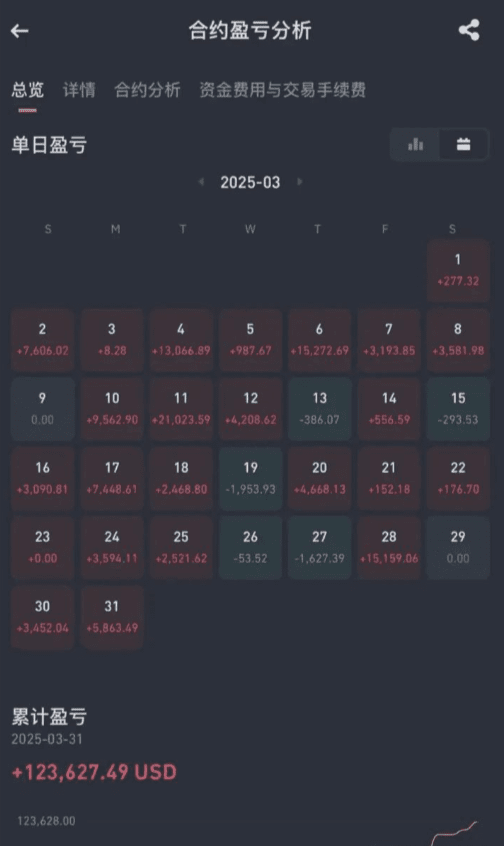
In March 2025, I spent a whole month quickly earning over 120,000 U from a small capital. This method of doing contracts is simple and applicable, suitable for everyone!
Hello, I am Dan Ta, focusing on cryptocurrency for 12 years. In this world full of uncertainties and possibilities, every choice may determine the future trajectory of wealth. I understand the difficulties and challenges, so I always uphold my bottom line, exploring this tempting yet promising field with caution and decisiveness. If you also have aspirations and pursuits in the cryptocurrency world, then let’s move forward together.
 Digital currency investment advice for friends in the market
1. Make good use of stop-loss
When you trade, you should establish a tolerable loss range and make good use of stop-loss trading to avoid uncontrollable losses! The stop-loss range is determined based on funds. If you do hit a stop-loss, do not feel discouraged, because you have eliminated the risk of the market continuing to deteriorate and losses expanding infinitely.
2. You cannot rely solely on luck and intuition
If you do not have a fixed trading method, then your profits are likely to be very random, relying on luck. Such profits cannot last long. Or, on any given day when luck is not on your side, you will incur the same losses. Intuition in trading is important, but relying solely on intuition to trade is a risky behavior. Understanding the reasons behind profit generation and developing your personal profit-making methods is the most important.
3. Trade within your means
Trade volume should be measured against the account balance; do not overtrade. Generally speaking, the risk of each trade should not exceed 20% of the account balance. Based on this rule, risks can be effectively controlled. Trading too many lots in one trade is unwise and can easily lead to uncontrollable losses.
4. Ensure your trading capital is sufficient
The smaller the account balance, the greater the trading risk. Therefore, avoid letting your trading account be just enough for a 100-point fluctuation level. Such an account balance does not allow for a mistake, but even experienced traders can make judgment errors.
5. Learn to thoroughly execute trading strategies and do not make excuses to overturn original decisions.
To avoid this fatal error, remember a simple rule: do not let the risk exceed the originally set acceptable range. Once losses reach the pre-set limit, do not hesitate, close the position immediately!
6. Errors are inevitable; learn from them and do not repeat the same mistakes.
Errors and losses are inevitable; do not blame yourself. The important thing is to learn from them and avoid making the same mistakes again. The sooner you learn to accept losses and draw lessons, the sooner the days of profit will come. Additionally, learn to control your emotions; do not be proud when you make money, nor should you be frustrated by losses. In trading, the less personal emotion there is, the clearer you can see the market situation and make correct decisions. Face gains and losses with a calm mindset. Understand that traders learn not from profits but grow from losses. When you understand the reasons for each loss, it means you have made progress toward profit because you have found the right direction.
7. You are your biggest enemy
The biggest enemy of traders is themselves — greed, impatience, loss of control, lack of vigilance, excessive self-criticism, etc. These easily lead you to overlook market trends and make wrong trading decisions. Do not trade simply because you have not entered a trade for a long time or out of boredom; there are no strict standards for how much to trade within a certain period.
8. Trade with the trend, do not go against it
That said, some people may understand every point mentioned in the text above, but in practice, the operation still faces numerous problems, because the mindset during the operation is completely different from when you are reading this article. At this point, it is necessary to find a trusted teacher to help you with risk control, allowing you to operate without worries and effectively control.
The most important thing in investing is not how much you can earn at one time, but whether you can control risks and achieve steady long-term profits. For any operation, before entering, you must first look at the trend, find the right entry point, and finally control the timing. Find the right direction, minimize risks, and maximize profits. Because of focus, there is professionalism. In investments, everyone has their own different experiences and stories.
As long as you are good at summarizing, overcoming the weaknesses in your character, whether it be greed or fear, and developing the right investment mindset and good operational habits, there will come a day when you will leave behind your own wonderful investment story.
The path to wealth management: follow the trend, strictly set stop-losses, and seek victory steadily; use trailing stops to maximize profits! Over time, I believe you will achieve small gains on your investment journey and smile when you become a master of market sniping.
These 6 ironclad rules of the cryptocurrency world: if you can understand one, you can save yourself from losing 100,000; if you can truly follow three, you have already surpassed 90% of retail traders:
The first rule: fast rises and slow falls mean the dealer is accumulating, not letting you escape.
A sharp rise followed by a slow decline is a washout, not a peak. What you should truly fear is a sudden drop after a rapid increase in volume — that is a typical bait-and-switch.
The second rule: fast declines and slow rises mean the dealer is escaping, not picking up bargains.
When the market drops sharply, followed by a slow grind down, it is not a buying opportunity but 'the last bait.' 'It has dropped so much' is not the bottom, but a trap.
The third rule: volume at the top does not necessarily mean crash; low volume at the top is truly dangerous.
If high prices can still generate volume, it indicates that there is still market sentiment, and it may be a case of a pullback; but if there is no one to take orders at the top and the transaction is sluggish, that is a signal that a change is coming.
The fourth rule: volume at the bottom does not necessarily mean buy; sustained volume is what is worth trusting.
Occasionally, a day of expanded trading volume may be bait; the real signal for building a position is a breakout after several days of low volume consolidation, that is reliable.
The fifth rule: trading cryptocurrency is really about trading emotions; volume is more real than price.
Candlestick patterns are the result; trading volume is the cause. Market consensus is all expressed in the volume; real big players have long conveyed their intentions through volume.
The sixth rule: having no talent is the highest realm in the cryptocurrency world.
Without obsession, you can stay out of the market; without greed, do not chase high prices; without fear, dare to take action. This is the psychological quality gained from experience, not 'Buddhist-like,' but efficient.
The market never lacks opportunities; it lacks whether you can keep a steady hand and see the situation clearly. What you are trading is not just the cryptocurrency, but yourself.
What you lack is not effort or opportunity, but someone who can help you earn steadily in this market.
Indicators you must know for trading cryptocurrency [Swing trading win rate over 90%]. Once you learn to master it, the cryptocurrency world will be your 'ATM.'
I have summarized the essence of [swing trading]; as long as you master it well, using this method to trade cryptocurrency will guarantee a 30-fold increase in your account. Today, I have specifically organized the key points to share with those destined to receive it. Please keep it well.
Swing trading is a method aimed at capturing the market's 'every move.' This process is completed by fully exiting trades before the market’s opposing trend arrives. For example, if you buy at a support level, you would want to exit before a resistance level forms; at this moment, selling pressure above may eat into your profits.
Here is an example:
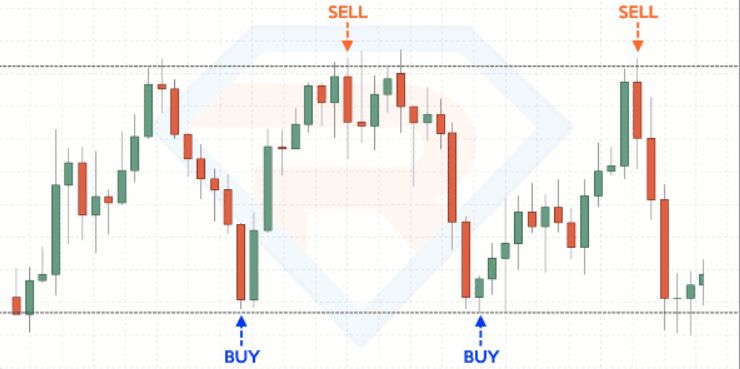 Swing trading can be applied across most time frames, but generally speaking, using it on an hourly or higher time frame is more appropriate. Let me share a few tips about swing trading, hoping to help your trading.
1: The best market conditions for swing traders
As a swing trader, you need to determine the market conditions that may be favorable to you. An ideal market meets two conditions:
Good trend
Weak trend
Good trend
When the market follows the 50-period moving average and operates above it, it can be said that the market is in a good trend. But why is a good trend suitable for swing trading?
First, you trade by following the trend, which increases your win rate. Next, you can easily identify the market's 'ups and downs' (price rises, then pulls back, then rises again...)
Therefore, as a swing trader, you want to buy when the market pulls back to the 50-period moving average and sell before reaching the previous swing high. Additionally, the distance from the 50-period moving average to the swing high is your potential profit, usually at a 1:1 risk-reward ratio or even higher.
Let's look at the following example:
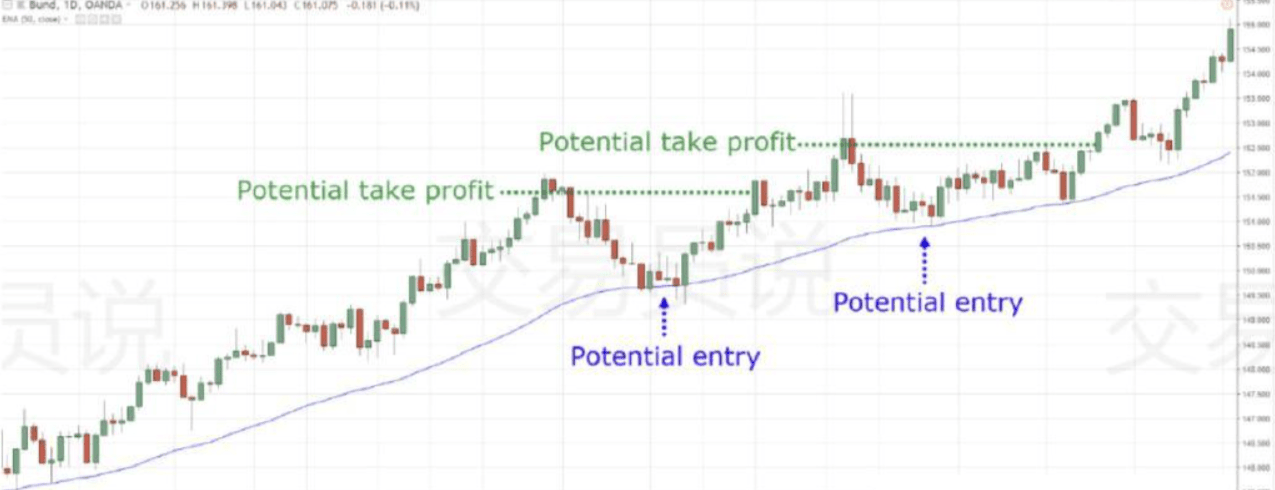 Weak trend
Now, another market condition that is very suitable for swing traders is the weak trend.
Under this market condition, the market may still be in a bullish trend, but the pullbacks tend to be much larger and often follow the 200-period moving average or support.
Here is another example:
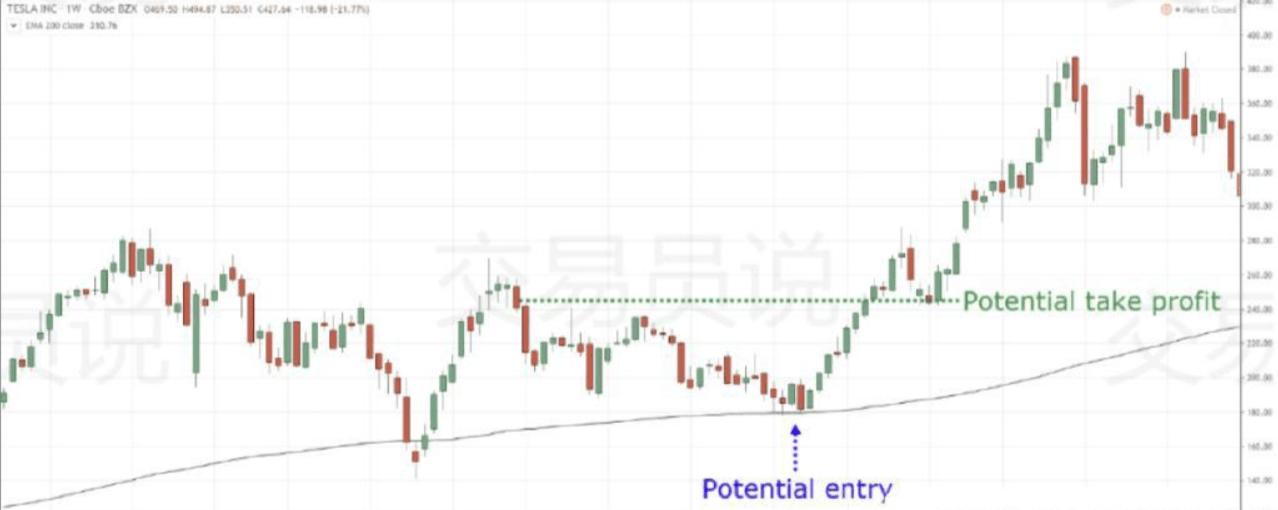 Now, trading in weak trends is the same as in good trends — you want to buy in the valuable area after a month and sell before the opposing pressure intervenes.
2: Do not stray from the value area; trade nearby.
As mentioned above, good trends and weak trends are the most favorable times for swing trading. However, you should not enter blindly just because the market is in an upward trend.
Why? Because you do not have a reasonable position for setting stop-loss.
Look at the example in the chart below:
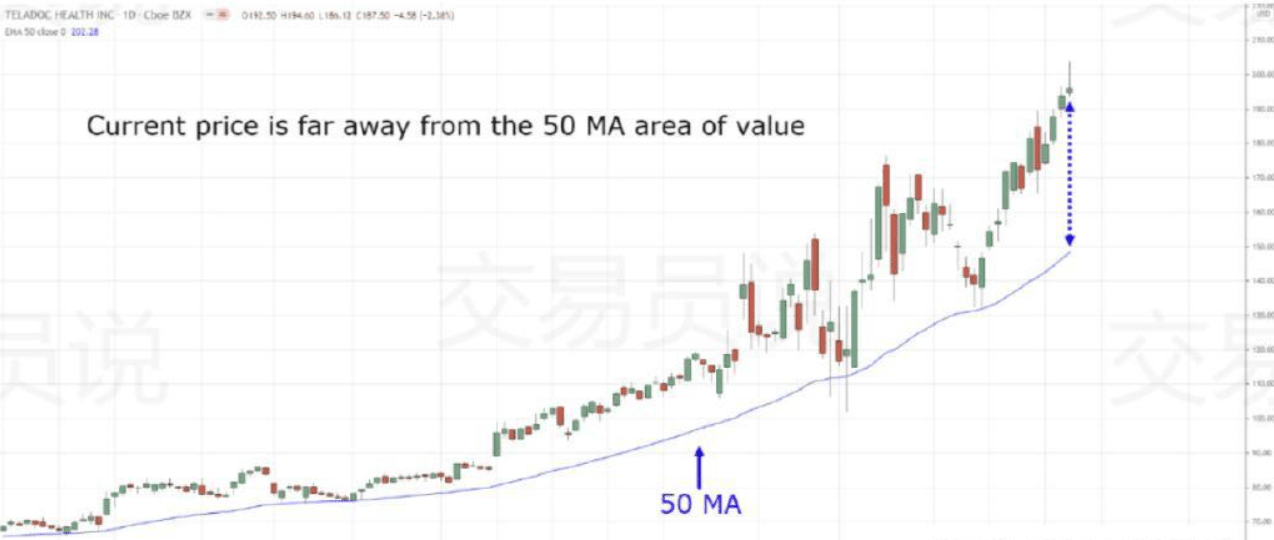 In the chart above, you can see that the market is in a good upward trend and approaching swing highs. If you enter now, where would you place your stop-loss? You will realize that there is no reasonable place to set a stop-loss until at least below the 50-period moving average. Of course, if you must do so, this trade will provide you with a poor risk-reward ratio.
This is what I mean...
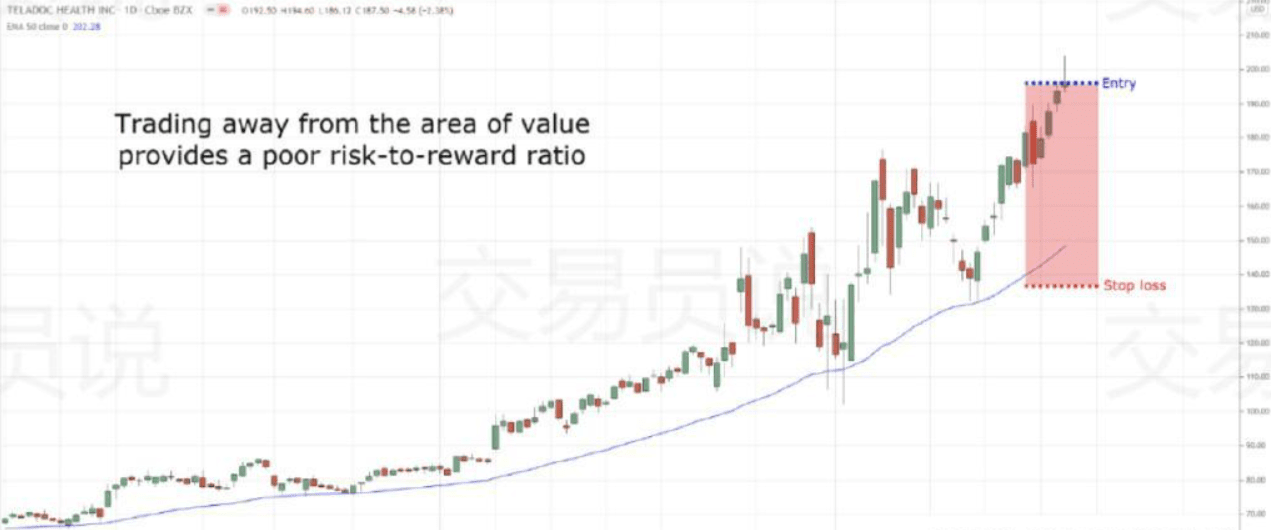 So, what are some good solutions?
In fact, it is very simple — trade near the value area, do not stray far from it. Therefore, if your value area is at the 50-period moving average, let the price get closer to it before establishing a long position.
Expert Tip: Your value area can be support/resistance levels, trend lines, channels, etc., and this concept still applies.
3: Price rejection is the entry time
Once the price enters a valuable area, what should you do next? You need to look for price rejection — it indicates that buyers are temporarily in control (and may push the price higher).
On the chart, price rejection can appear in the form of reversal candlestick patterns, such as hammer shapes, shooting stars, engulfing patterns, etc. But the key is that the price must 'quickly leave' the value area.
Here is another example:
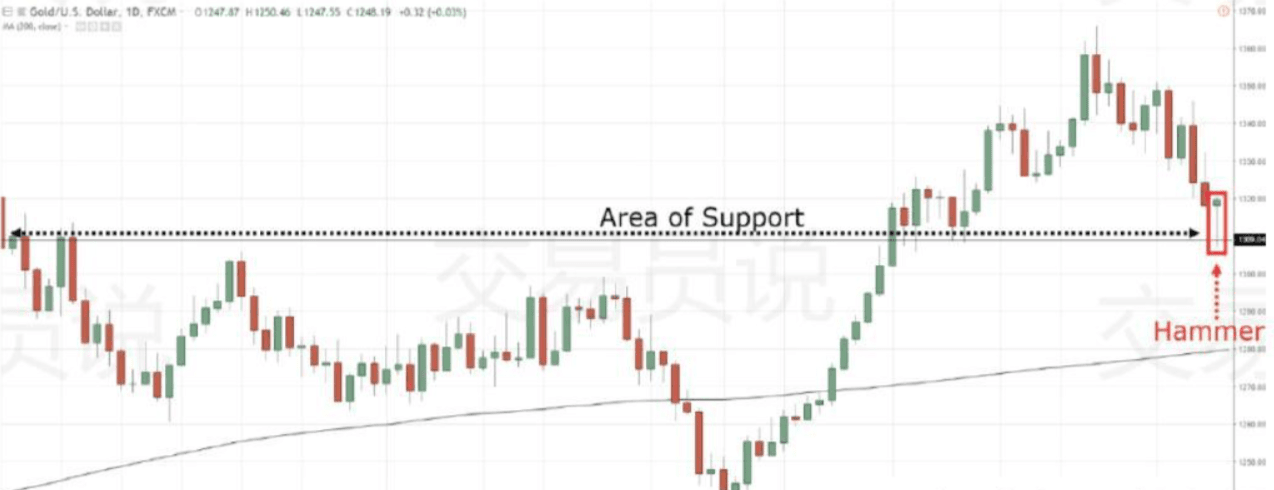 Have you noticed how quickly prices leave the value area? Candlestick patterns are not the only way to identify price rejection, as they can also appear in the following ways:
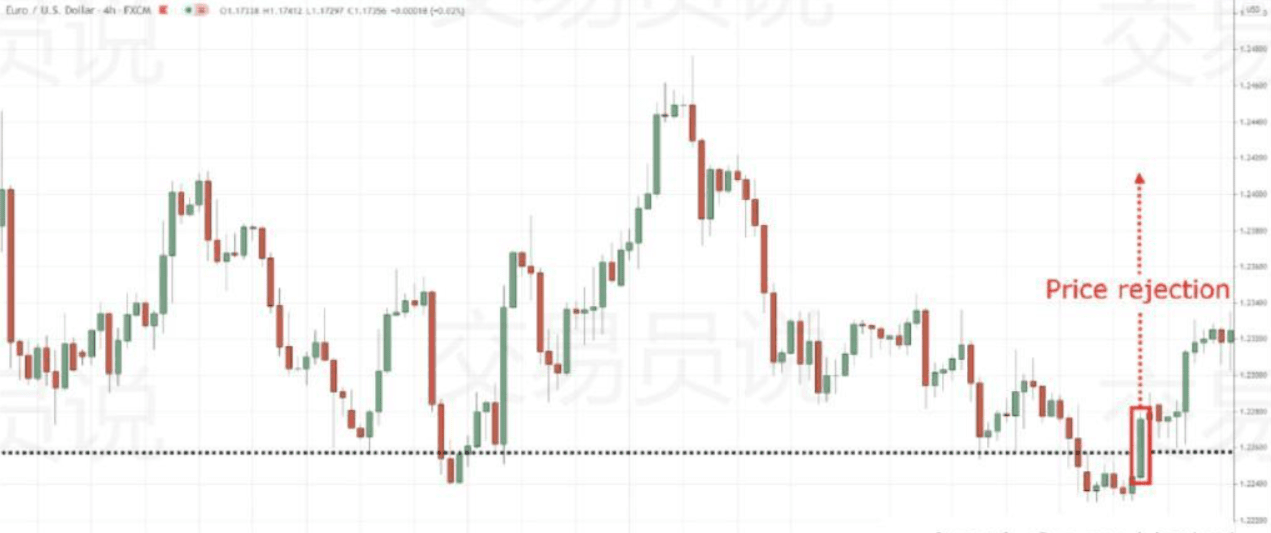 Remember, the key in the chart is for price to 'quickly leave' the value area, not the candlestick patterns. Reversal candlestick patterns can help you define price rejection, but they are not the only method.
Expert Tip: Not all swing trading strategies require 'confirmation' or rely on price rejection to determine your entry timing.
4: How to avoid early stop-loss exit
How you should handle it:
Wait for ideal market conditions
Trade within the value area
Wait for effective entry signals to trigger
However, if you set the stop-loss at a lower level, you may exit too early (even before the market has a chance to move in your favor). Therefore, do not set stop-loss based on a random level.
Conversely, utilizing the value area will greatly benefit you, and set your stop-loss above that area. This way, the market must 'make every effort' to hit your stop-loss, providing more breathing room for your trades and better exercise opportunities.
For long-term trading, how should this be done:
1. Determine the current average true range (ATR) value. 2. Determine the lowest price point of your valuable area. 3. Take the lowest price and subtract the current ATR value — this is your stop-loss level.
See the example below:
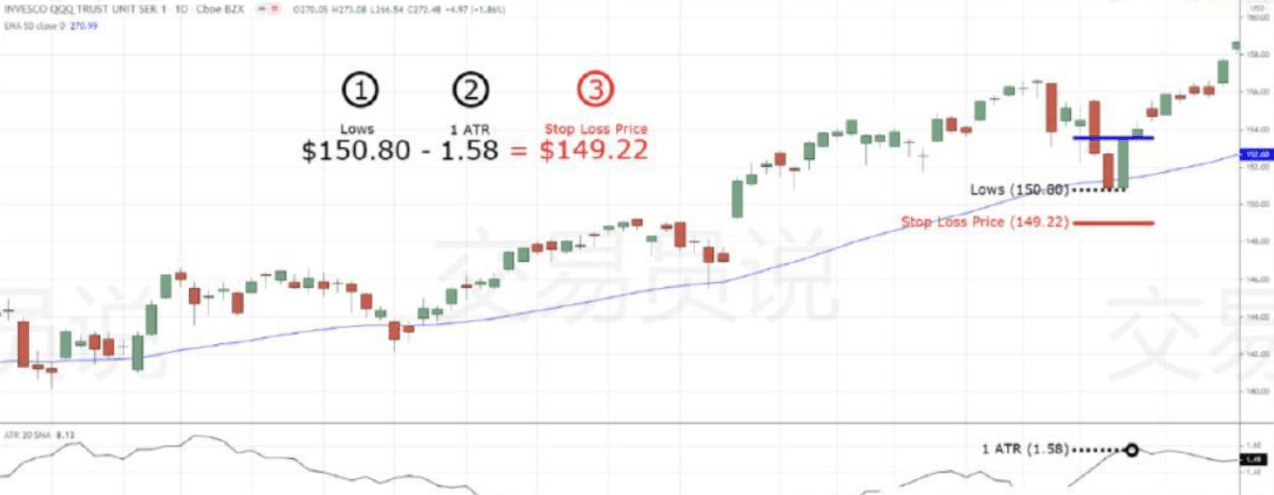 This concept can be applied to any valuable area, such as support/resistance, trend lines, and channels.
5: Set a suitable target and put profits in your pocket
Whenever I hear traders comment, I always laugh: 'If you want to be a profitable trader, you must at least have a 1:2 risk-reward ratio.' Now let me ask you: what is so special about a 1:2 risk-reward ratio? Why not 1:10? Or even 1:100?
So this is the truth... The market does not care about your risk-reward ratio — it will go where it wants to go. The only thing you can do is observe what the market has done before and use it as a clue that it may do the same in the future.
For example: If the market previously crashed at the price of $100, then the next time it approaches $100, there may be selling pressure at that level. As a swing trader, you do not want to set targets at $105, $100, or $110, as these levels may not be reached due to selling pressure.
Conversely, you want to exit the trade before $100 (around $99) before opposing pressure intervenes.
This means that if you are in a long trade, you need to exit at the following times:
Swing high
Resistance level
Downward trend line
(Short-term trading is just the opposite)
This is an example of exiting a trade before several resistance levels are reached:
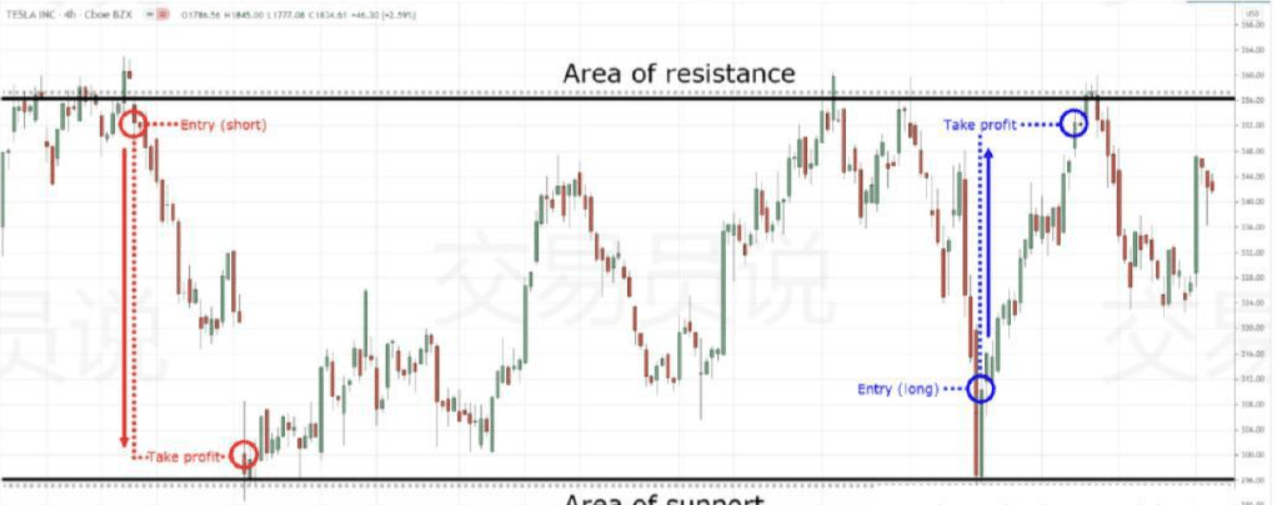 From the chart above, do you think it makes sense?
Additional advice 1: take half profit, ride half with the trend
As a swing trader, you often have to give up the opportunity to capture trends. However, what if I told you there is a method that allows you to capture fluctuations while also trading with the trend? Let me introduce a method: Scale half ride half (take half profit, ride half with the trend)
This is the logic behind it... You close half of your position before opposing pressure intervenes. For the remaining half, you can use trailing stops to follow the trend.
The chart below is an example:
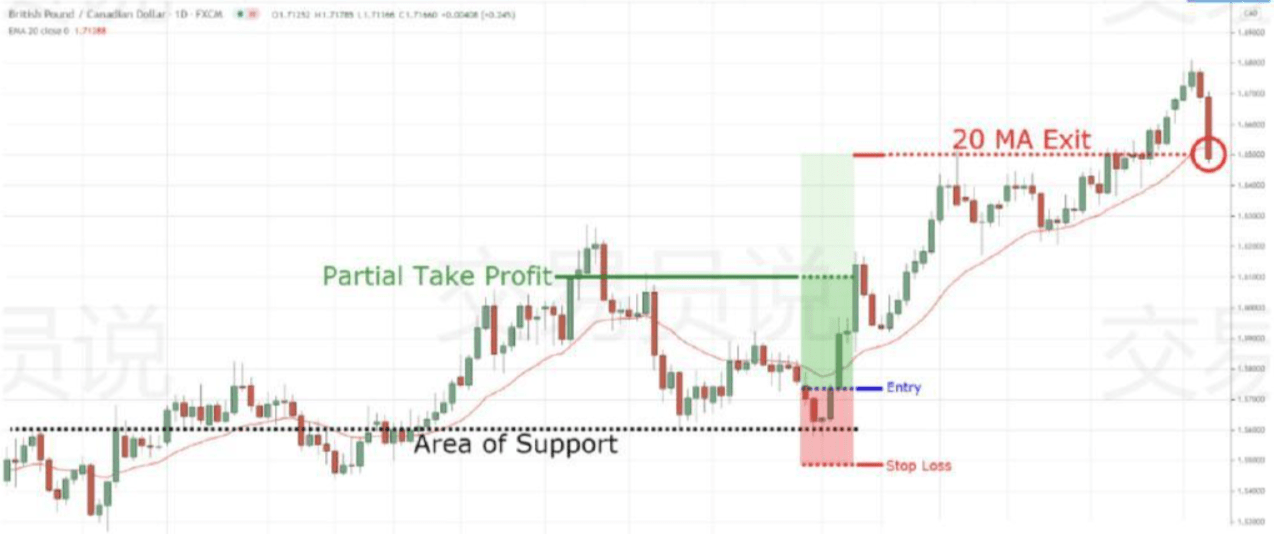 The benefit of doing this is that you can capture price fluctuations for corresponding profits while being able to follow the trend further to increase profits. However, if the trend has not yet developed, the price may return to your entry point, or worse, trigger your stop-loss.
Additional Tip 2: Understand the characteristics of the currency pairs you trade
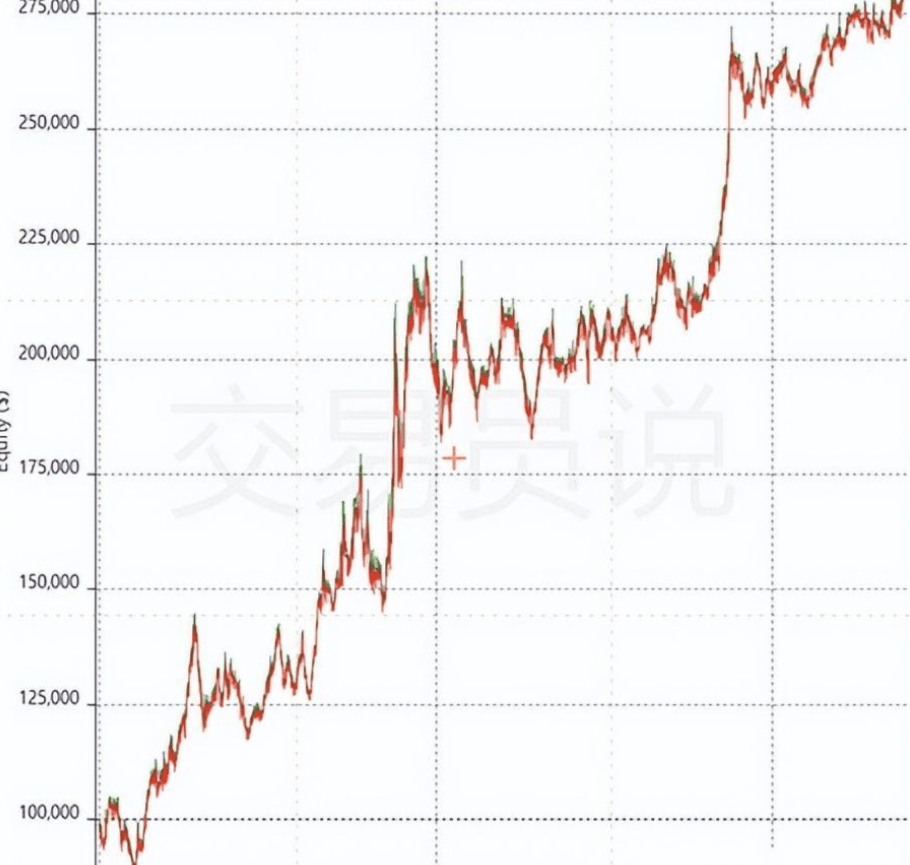
Not all currency pairs are the same. Some have trending behavior, while others have mean-reversion behavior. Now you may wonder: 'How can I know if a currency pair has trending or mean-reversion behavior?' You can run backtests to find out the results for any currency pair...
1. If the price breaks the previous day's high, go long. 2. If the price breaks the previous day's low, exit the long position and go short. 3. If the price breaks the previous day's high, exit the short position and go long.
It is clear that when you run this 'trend-following' backtest, currency pairs with trending behavior should make money in the long run. In addition, currency pairs with mean-reversion behavior should lose money in the long run.
Trending currency pairs
For currency pairs with trending behavior, as the market continues to move in the direction of the breakout, this backtest will yield positive results.
Here is an example of GBP/JPY:
 Mean-reversion currency pairs
For currency pairs with mean-reversion behavior, this backtest will yield negative results because there is a lack of trend-following behavior whenever the price breaks through the previous day's high/low points.
Here is an example of the AUD/CAD chart:
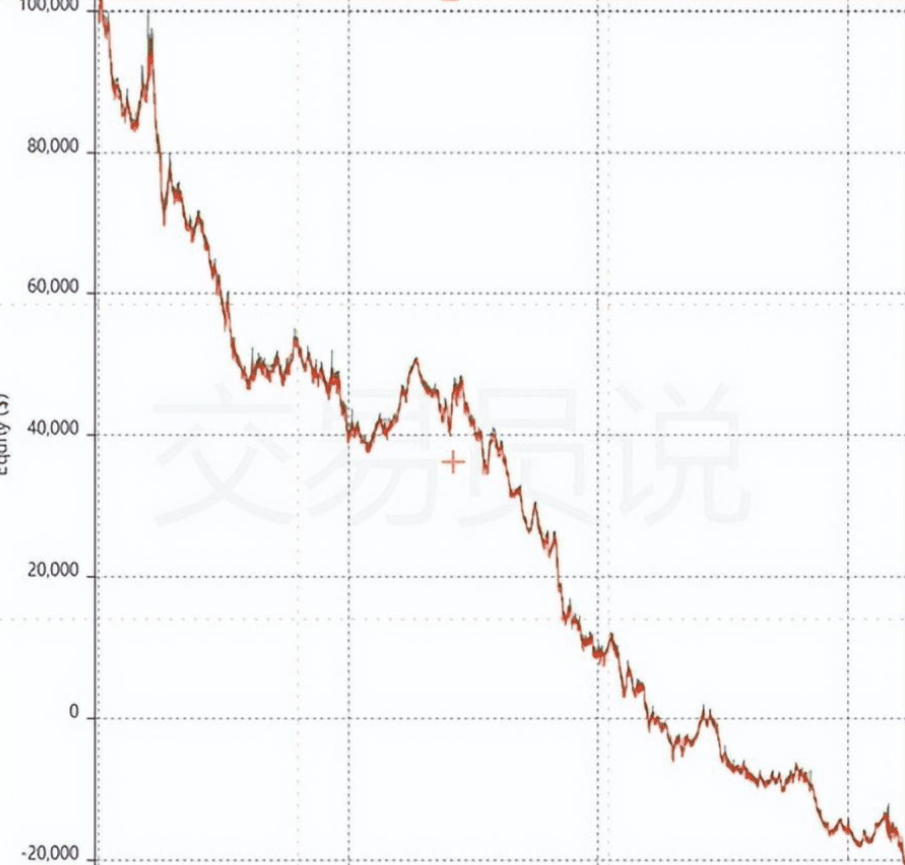 Here comes the question: 'How do you benefit from this knowledge?' It’s simple. If you know which currency pairs have mean-reversion behavior, you can use this 'natural behavior' to determine your entry and exit times.
For example: you know that AUD/CAD tends to reverse at the previous day's high/low points. Therefore, if you are in a long trade, you can exit the trade using the previous day's high (as this currency pair often reverses at the previous day's high).
Alternatively, if you want to short AUD/CAD, the previous day's high is a possible consideration level because it often reverses at the previous day's high.
Conclusion
So, here are the swing trading tips you learned: the best market conditions for swing trading are in healthy trends and weak trends, trading near the value area so you can buy low and sell high (do not stray far while trading).
You can use candlestick reversal patterns, such as hammers, engulfing patterns, etc., to determine your entry timing, setting stop-loss at a distance of 1 ATR from the value area so that your trade has more breathing space and avoids premature stop-loss exits.
You can set profit targets before the opposing pressure intervenes (if you are in a long trade, exit before resistance levels, swing highs, etc.). You can exit half of your position before the opposing pressure intervenes, using trailing stops on the remaining position to follow the trend. For mean-reversion currency pairs like AUD/CAD, you can consider taking profits at the previous day's high/low.
I am Little Egg Tart, a professional analyst and teacher, a mentor and friend on your investment journey! As an analyst, the most basic thing is to help everyone make money. I will help you resolve confusion and trades, speaking with strength. When you lose direction and do not know what to do, focus on Little Egg Tart. Little Egg Tart will guide you #加密市场观察 $BTC

