
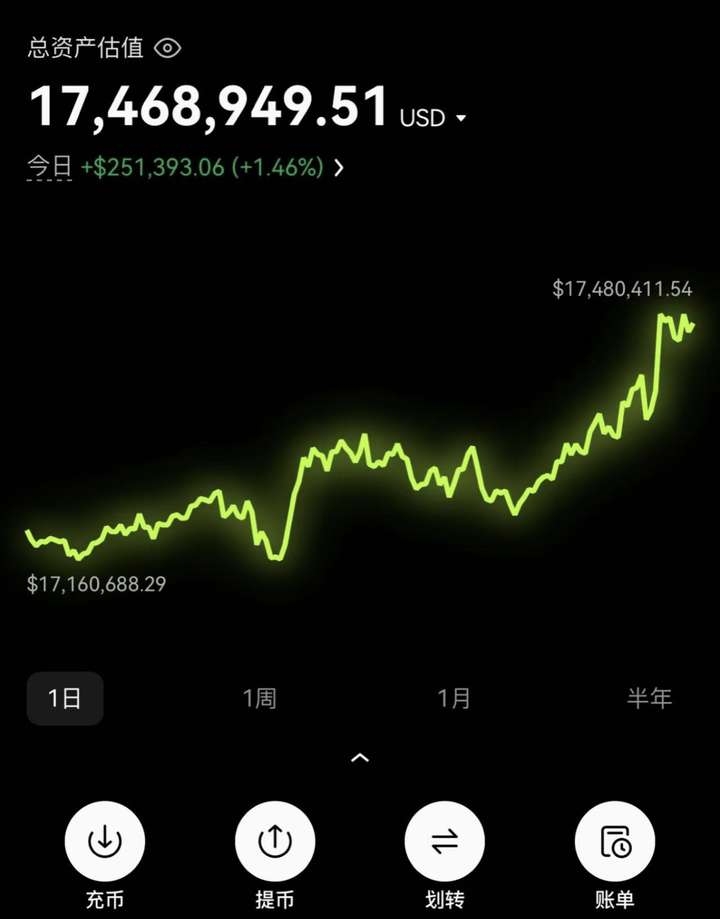
Ten years is enough to turn an impulsive gambler into a disciplined trader, turning millions in debt into millions in wealth.
Some say the cryptocurrency world is a casino, and I admit it; but true winners are never reliant on luck, but rather on the experiences gained through failures, the systems developed, and the mindset built through resilience.
Today, I share without reservation the blood, tears, successes, and failures of these ten years, breaking them down into stories and trading methods — may you take fewer detours than I did and grasp the essence of wealth more quickly.
In addition to solid candlestick techniques, I strictly follow these 10 ironclad rules of trade:
1. Skillfully use the morning market: In the early morning, the emotions of the cryptocurrency market are very pure. If the price drops sharply, don't panic; this may be a good opportunity to scoop up bargains. If the morning sees a significant surge, don't be greedy; take the opportunity to lock in profits.
2. Grasping the afternoon strategy: if there is a sudden surge in the afternoon, do not be blinded by excitement and rush in; it is mostly false heat, and buying at high positions can easily lead to losses; conversely, if there is a decline in the afternoon, you can remain calm, observe for a while, and find the right low point to enter the next day, often leading to gains.
3. Maintain a calm mindset during declines: when you wake up in the morning and see the cryptocurrency price dropping, do not rush to cut losses; the market changes rapidly, and early morning fluctuations are often a 'distraction'; if the market is stagnant and calm, do not rush; instead, take a break, conserve energy, and wait for opportunities.
4. Strictly adhere to trading rules: If the coins in hand have not reached the expected high, do not sell them easily; making a small profit is still a loss; if the price has not moved down to the psychological price level, control your hands and do not rush to enter, to avoid catching a falling knife halfway; as for the sideways phase, where the movement is chaotic and direction is unclear, trading at this time is undoubtedly like a blind man touching an elephant; it's better to observe from the sidelines.
5. Operate based on shadow candles: enter on bearish candles and exit on bullish candles, which is considered a classic strategy. A bearish candle indicates a price pullback, making oil cheaper, which is a good time to enter; a bullish candle indicates the formation of a short-term upward trend, so take the opportunity to take profits.
6. Reverse thinking to break the deadlock: to stand out in the crypto world, sometimes you need to go against the trend. When everyone is frantically buying, be a bit more calm; when everyone is panic selling, be a bit bolder, dare to operate in the opposite direction, to find niche opportunities for wealth outside the mainstream wave.
7. Endure the grind of consolidation: when prices consolidate at high or low levels for a long time, it can be very frustrating. At this time, do not let anxiety overwhelm you, do not act rashly; be patient and calm, and wait for the trend to clarify—whether it is an upward attack or a downward probe will be clear, and then strike with full force.
8. Capture the tail of the surge: after a long period of consolidation at a high position, once it surges again, do not hesitate; this is very likely the last craziness. Sell promptly to secure the profits, otherwise, they might slip away, and the cooked duck could just fly away.
In today's article, I will teach you the core methods of reading candlesticks in real trading—how to interpret candlestick candles accurately like a professional trader, how to use candlestick patterns to capture precise entry points, and finally, I will reveal a simple yet profitable candlestick trading strategy. Without further ado, let's get straight to the point!
One, Basic Understanding:
What exactly are candlestick candles? What is their core function?
First, we need to understand what candlestick candles are and what problems they help us solve. It's actually quite simple; candlestick candles condense the price movements over a period of time into a single 'candle', allowing us to quickly see the situation of the battle between bulls and bears and perform chart analysis.
Each candlestick contains four core parts:
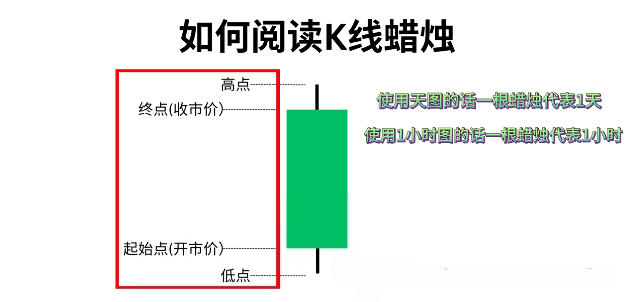
Starting point (opening price), high point, low point, endpoint (closing price). In different time frame charts, one candlestick represents different periods: in a daily chart, one candle represents one day's movement, in a 1-hour chart, it represents one hour's movement, and so on.
So when we look at candlesticks, the core is to focus on these four points: opening price, highest price reached, lowest price reached, and closing price. Understand these four prices, and you have grasped the essence of candlesticks.
1. The meaning of candlestick colors: red for falling and green for rising? Don't get it wrong!
Candlesticks come in two colors, green and red; many beginners easily get them mixed up. Here I want to clarify:
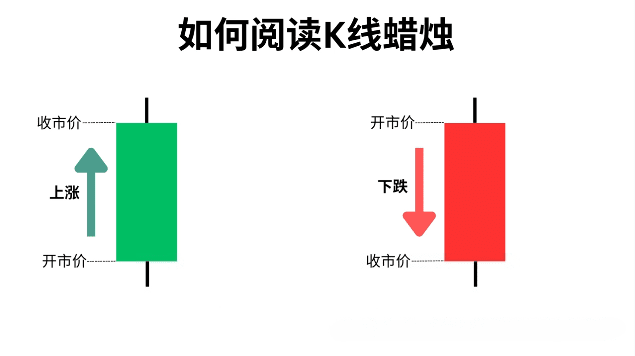
- Green candlestick: the closing price is higher than the opening price, indicating that the price has risen during this period, which is what we commonly refer to as a 'bull candle';
- Red candlestick: the closing price is lower than the opening price, indicating that the price has fallen during this period, which is a 'bear candle'.
2. Upper shadow, lower shadow: the 'traces' of the battle between bulls and bears
Whether it's a bullish or bearish candle, the thin line above the candle is called the 'upper shadow', and the thin line below is called the 'lower shadow'. The formation of shadows is very interesting; essentially, it is the 'traces' left after the battle between bulls and bears:
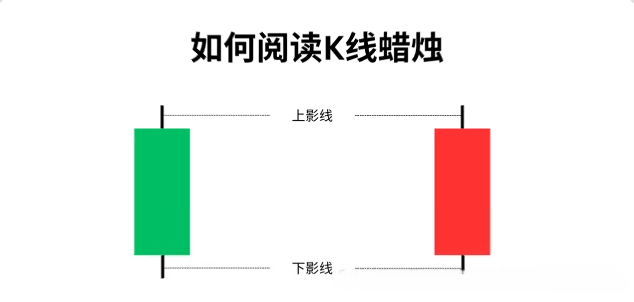
- Upper shadow: the price has previously risen to this high point but was later pushed down by the opposing force, leaving this thin line, indicating that this high point has resistance;
- Lower shadow: the price has previously fallen to this low point but was later pulled back up, leaving this thin line, indicating that this low point has support.
Two, Advanced Interpretation:
From the body and shadow, see through the strength and weakness of bulls and bears
The core of reading candlesticks is not to memorize patterns, but to judge who is stronger between the bulls and bears through the sizes and ratios of 'candlestick bodies' and 'shadows', and what the outcome of the battle is. Let's discuss this with specific examples:
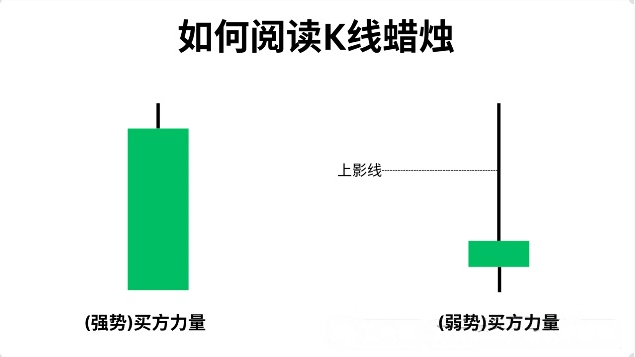
The green candle on the left: the closing price is higher than the opening price, indicating an overall upward movement. The key is the ratio— the body is far larger than the upper shadow, indicating very strong upward momentum. A short upper shadow represents that although there is a pullback after the price spikes, the force is weak, and the bulls firmly control the situation.
The green candle on the right: although it is also an upward movement (green), the body is particularly small, but the upper shadow is very long. This is different—the small body indicates weak upward force, while the long upper shadow indicates strong bearish force: the price was originally pushed up but was forcibly suppressed down by the bears. So this candle, while appearing to be an uptrend, actually has bearish momentum that has surpassed the bullish.
To summarize: the larger the body, the stronger the current trend (up or down); the longer the shadow, the stronger the opposing force. Through this logic, we can judge the strength of bulls and bears.
Small Exercise: 4 examples to test your interpretive ability
Here are four examples of candlesticks; we use the three answers 'strong, equal, weak' to judge, helping you solidify your knowledge points:
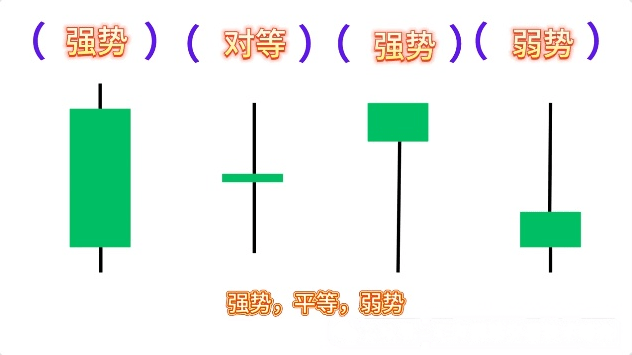
1. Green candle, large body, very short shadow: the answer is 'strong' (bullish strength);
2. The opening price and closing price are almost the same, and the lengths of the upper and lower shadows are close: the answer is 'equal' (the battle between bulls and bears is balanced, and it is temporarily difficult to determine the winner);
3. Green candle, long lower shadow, moderate body: the answer is 'strong' (the price fell to a low point but was strongly pulled back by the bulls, indicating upward momentum);
4. Red candle with a long upper shadow and a small body: the answer is 'weakness' (the bulls are suppressed by the bears after a push up, with downward momentum dominating).
Three, Key Techniques:
Combining multiple time frames provides more accurate interpretations
Looking at a single candlestick is not enough; sometimes you need to combine multiple time frames to see the whole picture. For example:
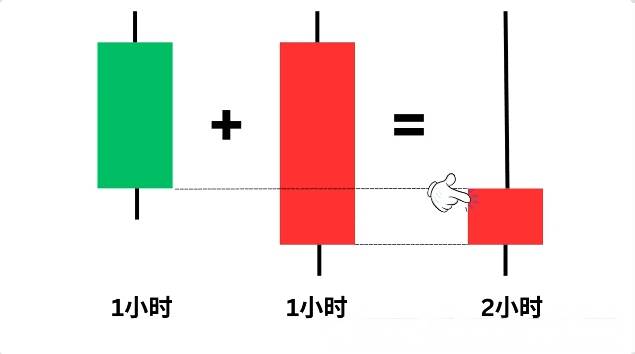
In the 1-hour chart, there are two candlesticks; when we switch to a 2-hour chart, these two candlesticks will merge into one long upper shadow candle.
This merged long upper shadow candle has unchanged interpretation logic: the bulls once pushed the price up, but the bearish force was stronger, pushing the price down. In the short term, it looks bearish. Upon closer inspection, these two 1-hour candlesticks merged actually form a 'bearish engulfing pattern'—the subsequent bearish candle completely covers the previous bullish candle, indicating strong bearish momentum.
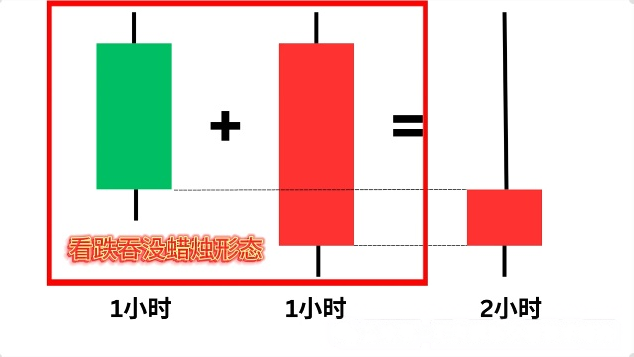
Here I want to emphasize: there's no need to memorize 'what each candlestick represents'; the core is to understand the logic of 'body + shadow'—the body represents trend momentum, and the shadow represents opposing resistance. Understanding this, no matter how the market trends change, you can interpret any candlestick.
Four, Pitfall Reminders:
Trading solely with candlesticks is bound to result in losses!
A common problem among many traders is that they see the candlestick patterns they have learned and immediately enter the market. However, the fact is that trading solely with candlesticks results in a very low win rate and poor trade quality, making it easy to fall into pitfalls.
Candlesticks can only serve as 'entry signals', and must be combined with other technical analysis tools to improve the winning rate. Here’s a brief summary:
1. Look at the candlesticks, first determine who is dominant between the bulls and bears;
2. Pay close attention to the ratio of size between the body and shadows, analyze strength and weakness relationships;
3. Absolutely do not enter solely based on candlesticks; it must be combined with other tools.
Five, Profit Strategies:
Candlestick + Trend + Key Levels, 3 Steps to Lock in High-Quality Trades
Next, I will reveal the 'candlestick trading strategy' that I use in real trading. The core is 'determine the trend direction + find opportunities at key levels + use candlesticks as signals', and you can lock in precise entry points in three steps.
Step 1: Determine the trend direction to increase the foundation of winning rate
The trend is the 'tailwind' for trading; trading in the direction of the trend greatly increases the probability of success. The core logic is:
- Upward trend: look for long opportunities;
- Downward trend: look for short opportunities.
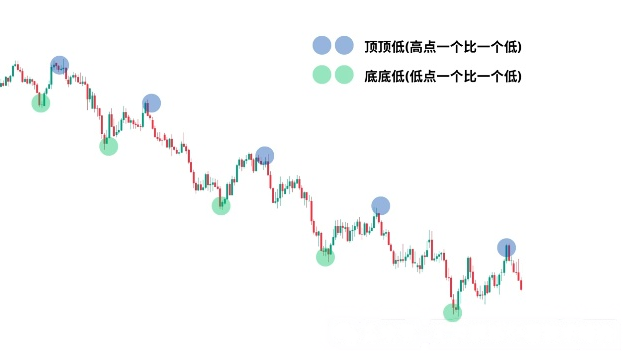
Why? For example, in a downtrend, the magnitude and probability of price declines far exceed the probability of pullback rises. Going short in the direction of the downtrend is equivalent to 'going with the trend.' Judging the trend is very simple; you can use trend structure or moving averages.
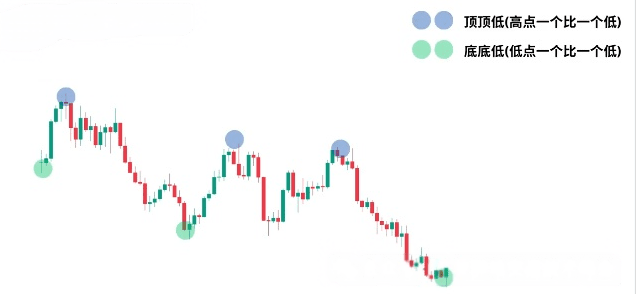
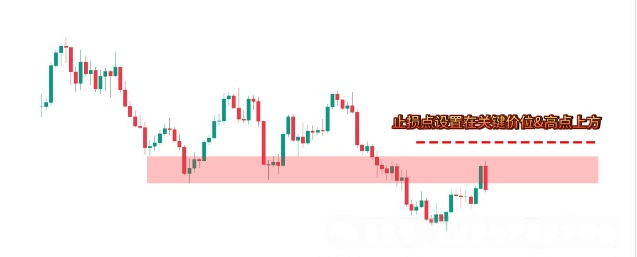
Example: the price forms a downward trend structure of 'lower highs, lower lows', it is clear that it is a downward trend, so we focus on finding short opportunities.
Step 2: Identify key price levels, avoid arbitrary entries
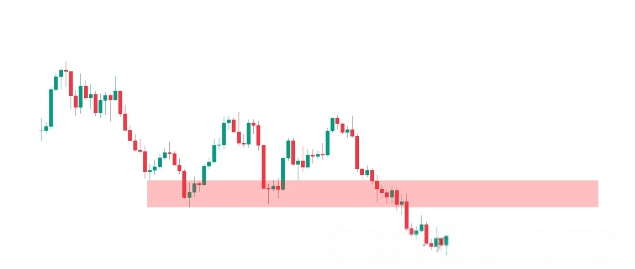
Key price levels are 'price levels with momentum' that can drive price movements up or down. We cannot enter at arbitrary price levels; we must wait for opportunities near key price levels. There are many options for selecting key price levels, such as support/resistance levels, supply-demand zones, Fibonacci retracement levels, etc.; just choose what you are familiar with.
Example: in the previous downtrend, there is a resistance level above—this price level was originally a support level, and when it is broken, it turns into a resistance level; there is bearish momentum here, which is a good candidate for shorting. We will wait for the price to pull back to this resistance level.
Step 3: Use candlesticks as entry signals for precise cuts.
When both the trend and key levels meet the conditions, use candlestick patterns as the final entry signal. For example: when the price pulls back to the resistance level, forming a 'bearish engulfing pattern'—the bearish candle completely covers the previous candle, indicating strong bearish momentum and confirming the effectiveness of the resistance level.
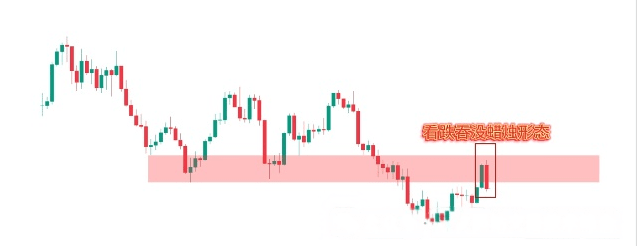
Entry timing: decisively enter short after a bearish engulfing candle has fully formed.
Stop-loss setting: set above the resistance level. Since we are entering based on bearish momentum at the resistance level, if the price breaks above the resistance level, it indicates that our analysis is wrong, and we should decisively exit to protect our capital.
Six, Revalidation:
In an upward trend, go long, replicating the logic of profit.
Use the same strategy to analyze upward trends; the logic is completely interconnected:
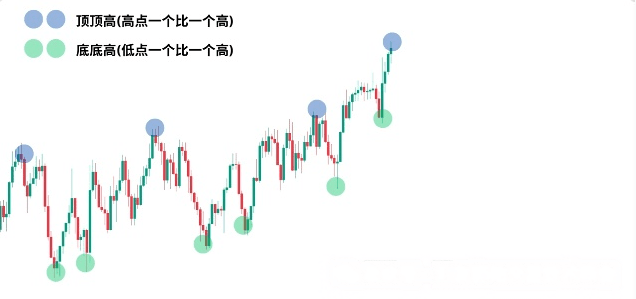
Step 1: Define the trend: the price forms an upward trend structure of 'higher highs, higher lows', clearly indicating an upward trend, looking for long opportunities;
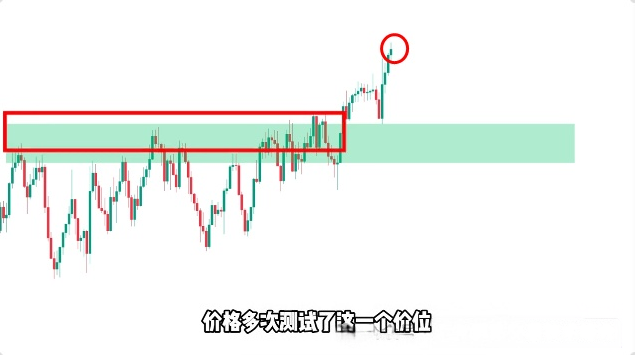
Step 2: Find key levels: there is a strong support level below, and the price has tested it multiple times without breaking, indicating that there is significant buying momentum here, which is a good price level for going long;
Step 3: Wait for candlestick signals: after the price pulls back to the support level, forming the 'morning star pattern'—first a bearish candle drops, then a doji (balance between bulls and bears), and finally a large bullish candle rises, fully presenting the process of 'downward → balance → upward' momentum conversion. This pattern is a strong bullish signal, and we can enter long after the large bullish candle has fully formed.
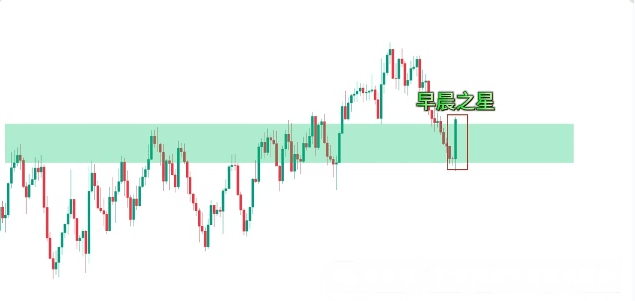
Stop-loss setting: set below the support level. If the price breaks below the support level, it indicates that the support has failed, analysis is incorrect, and you should exit to limit losses.
This concludes the trading experience shared by Yan An today. Many times, you lose many money-making opportunities due to your doubts. If you do not dare to try boldly, to engage, to understand, how will you know the pros and cons? You will only know the next step after taking the first step. A cup of warm tea, a piece of advice; I am both a teacher and your good friend.
Acquaintance is fate, knowing each other is parting. I firmly believe that fate will bring us together from thousands of miles away, and parting is destiny. The road of investment is long; temporary gains and losses are just the tip of the iceberg. Remember that even the wisest person will have some losses, and even the most pessimistic will have some gains. Regardless of emotions, time will not stop for you. Pick up the worries in your heart, stand up again, and prepare to move forward.
The martial arts secrets have been given to you all; whether you can become famous in the world depends on yourself.
These methods everyone must save, look at them again; if you find them useful, you can share them with more people trading cryptocurrencies around you, follow me, and learn more practical knowledge about the crypto world. Having been through the rain, I am willing to hold an umbrella for the retail investors! Follow me, and let's walk together on the road of cryptocurrencies!
