
At the intersection of technology and finance, a significant announcement that could reshape the digital lifestyles of billions has shaken the cryptocurrency and consumer electronics sectors. The high-performance public chain Sei Network has announced a milestone strategic partnership with global smartphone giant Xiaomi. The core content of this cooperation is that starting in 2026, new smartphones sold by Xiaomi in the global market (excluding mainland China and the United States) will come pre-installed with a Web3 application powered by Sei.
This is not just about adding an app on a phone; it represents the most ambitious step yet for the crypto world toward mainstream users. Can this cross-industry partnership really pave a 'one-click access' highway to cryptocurrency for global users and ignite the next wave of large-scale applications?
Ecological integration
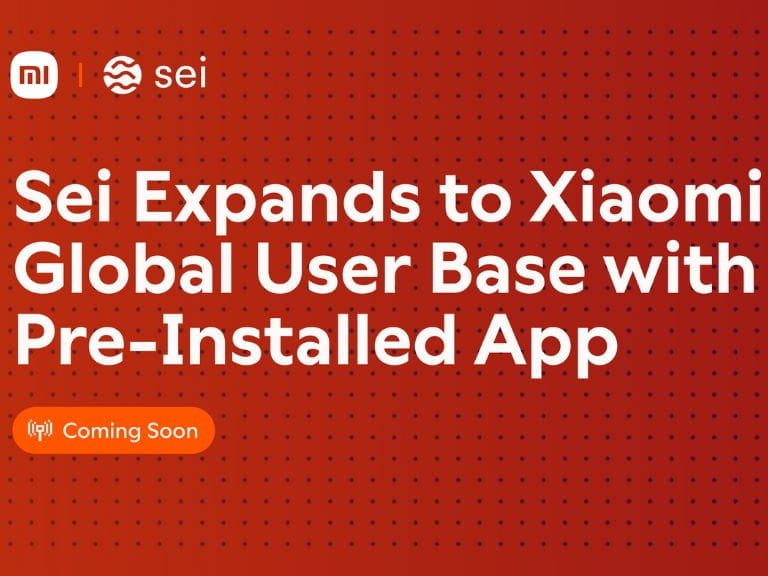
According to the announcement released by both parties on December 10, 2025, the scope of this cooperation covers the main smartphone brands under Xiaomi, including Mi, Redmi, and POCO. This means that in the future, in regions where Xiaomi has a significant market share such as Europe, Latin America, Southeast Asia, and Africa, consumers will be able to see this built-in encryption application on their desktops when they power on their new phones.
Xiaomi's influence in the global market is the most striking cornerstone of this cooperation. According to official data, Xiaomi's global smartphone shipments reached 168 million units in 2024, with a market share of approximately 13%, firmly ranking among the top three globally. In regions such as Europe, the Middle East, and Latin America, its market share ranks in the top two, and in countries like Greece (36.9%) and India (24.2%), it holds a dominant position. Setting Sei's application as the default configuration undoubtedly pushes the entry point for cryptocurrency directly in front of hundreds of millions of potential users, far exceeding the total number of users of any single cryptocurrency exchange or wallet currently.
The deeper significance lies in this being a "hardware-level distribution strategy." It completely bypasses the download barriers of traditional App Stores, eliminating the cumbersome processes of users searching, evaluating, downloading, and installing. Cryptocurrency transitions from an "optional project" that requires users to seek out actively, to a "preset function" that is ready to use upon startup. This shift in model has proven to be a key catalyst for driving exponential user growth in the history of mobile service development.
To truly lower the entry barrier for ordinary consumers, this pre-installed application is designed with a "user-friendly" philosophy in mind.
Firstly, it adopts advanced MPC (Multi-Party Computation) wallet technology. The biggest advantage of this technology is its "no mnemonic phrase" feature, meaning users no longer need to write down and safeguard a complicated set of 12 or 24 words as traditional crypto wallets require. Instead, users can log in directly using their familiar Google or Xiaomi accounts with one click to create and own a fully functional on-chain wallet. This "frictionless" onboarding experience significantly alleviates new users' fears about security and complexity.
Secondly, this application is not just a wallet; it is a portal for exploring Web3. It will have a built-in discovery center for decentralized applications (dApps), curating and recommending various popular applications covering fields such as DeFi (decentralized finance), GameFi (blockchain gaming), social, and NFTs. Users can directly interact with a rich Web3 ecosystem on their phones without going through browsers or third-party platforms.
In addition, the application will support real-time peer-to-peer (P2P) transfers and future consumer-to-business (C2B) payment functionalities that have immense imaginative potential. All these transactions will be natively completed on the Sei blockchain, enjoying its touted transaction final confirmation time of less than 400 milliseconds and extremely low gas fees, ensuring a smooth and cost-effective user experience.
Grand vision
If the pre-installed wallet is the first step, then achieving real-world commercial payments is the ultimate vision of this cooperation. Sei and Xiaomi have already initiated the development plan for a stablecoin payment system, aiming to launch in markets with clear regulatory frameworks for stablecoins, such as Hong Kong and the EU, in the second quarter of 2026.
This means that in the future, users may use native USDC and other stablecoins on the Sei chain to directly purchase all products from over 20,000 retail stores or official websites of Xiaomi globally, ranging from smartphones, wearable devices, smart home appliances to the Xiaomi SU7 electric vehicle. This will bring unprecedented real-world utility to cryptocurrency, expanding it from the realm of speculative trading to that of daily consumption. This deep integration with the real economy will generate sustained and tangible on-chain transaction volume, injecting strong momentum into the economic model of the Sei network.
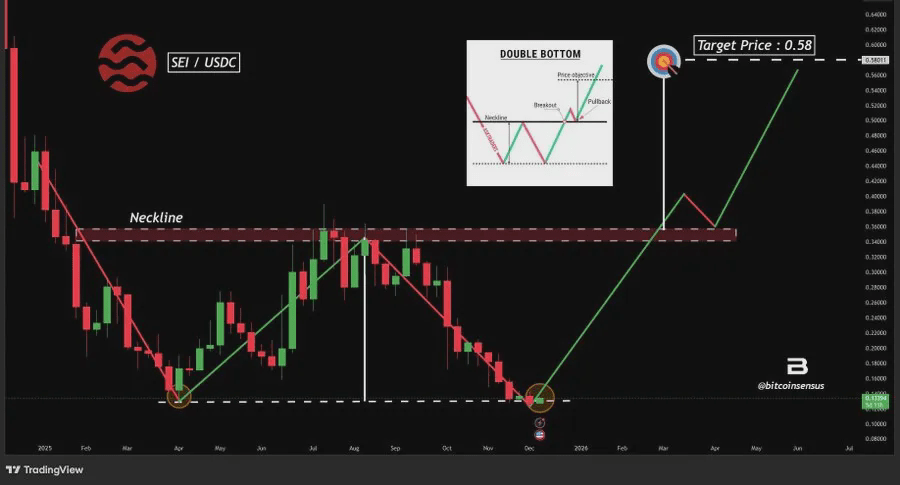
As soon as this news broke, the market immediately responded positively. The price of SEI tokens surged, gaining strength against a market environment where most mainstream cryptocurrencies were flat or even declining, briefly retesting the key resistance level near $0.14.
Moreover, market analysts generally view this cooperation as a "structural bullish signal" for SEI. Its positive logic is not based on short-term market speculation but originates from a long-term value capture mechanism. With millions of new users flooding in and potential business payment scenarios materializing, transaction activities on the Sei chain will significantly increase. Every transaction will require SEI as a gas fee, directly creating rigid demand for the SEI token. At the same time, the increased network activity will also encourage more users to participate in staking, further reducing the circulating supply in the market, thus providing long-term support for the token's value.
Transaction data also confirms the market's excitement. Within 24 hours of the cooperation announcement, SEI's spot trading volume surged over 260%, with significant increases in trading volume and open interest in the derivatives market as well. This indicates that traders are actively establishing new positions and have strong expectations for its future trends.
To ensure this cooperation can bear fruit, Sei Labs has simultaneously launched a $5 million "Global Mobile Innovation Program" specifically aimed at funding and incentivizing developers to create native blockchain applications for the vast mobile ecosystem of Xiaomi.
Jeff Feng, co-founder of Sei, described this cooperation as a "watershed moment," stating, "We are not just solving the entry problem for users; we are reimagining how billions of users interact with digital assets in their daily lives."
Conclusion
The cooperation between Xiaomi and Sei is undoubtedly a bold and highly promising attempt in the process of mainstreaming Web3. It cleverly combines the vast user base of a top global consumer electronics brand with the underlying technology of high-performance blockchains, attempting to dismantle the long-standing walls that have hindered the adoption of cryptocurrency.
Although the true results won't be verified until the new phone is launched and payment functionalities come into play in 2026, its success will also depend on the final user activity and the richness of the ecosystem applications. However, this cooperation has already painted a clear blueprint for the industry: the future of cryptocurrency may no longer be the patent of a few geeks, but rather seamlessly integrated into everyone's digital life infrastructure like mobile payments. This revolution starting with smartphones is quietly unfolding.


