
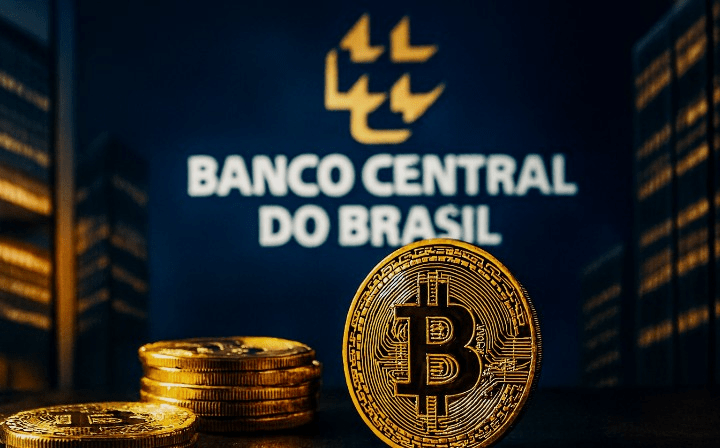
New regulations and the end of privacy in the crypto market
The Central Bank has just published rules that mark a new phase for crypto assets in Brazil: more security and integration with the financial system, but at the cost of privacy. Starting in 2026, each transfer from an exchange to a personal wallet will be recorded in a broad monitoring system.
Since its creation, Bitcoin and other cryptocurrencies were born with the proposal to offer an alternative model of finance — decentralized and, above all, private. The phrase 'if the keys are not yours, the coins are not yours' became the motto of those who prefer to maintain direct control over their assets, using self-custody wallets (like Ledger, Trezor, or MetaMask) to escape risks linked to exchanges and state surveillance.
This logic, however, is about to change. Resolution BCB No. 521, published on November 10, requires that all withdrawal and deposit operations involving self-custody wallets must identify the holder. Until then, the process was similar to withdrawing cash: the broker registered the exit, but the destination of the assets remained formally unlinked to the investor's CPF.
From May 4, 2026, the so-called Virtual Asset Service Providers (VASPs) — the new name for regulated brokers — will have to report their transactions to the Central Bank monthly. This means that when transferring Bitcoin to a Ledger, the user will need to declare that the address is theirs. The broker will register this association and send the data to the regulator, creating a national registry of wallets linked to their owners.
The official objective is to combat money laundering, terrorism financing, and fraud, in line with international FATF recommendations. For the Central Bank, monitoring inflows and outflows makes oversight more efficient. But, for investors, the impact is direct: the loss of financial privacy. What was once a space of pseudonymity is now tracked and documented.
Moreover, experts warn of side effects:
- Oversight and taxation: with detailed data, the government will find it easier to cross-reference information and collect taxes.
- Bureaucracy: withdrawals that were once quick may require extra verification steps.
- Risk for privacy tools: the use of mixers and protocols that obscure transactions may lead to blocks due to suspected irregularity.
Brazil in the international scenario
This measure is not isolated. Regulators around the world have been tightening the grip.
- The FATF recommends the 'Travel Rule', which requires that sender and recipient data accompany each transaction.
- The European Union, with the MiCA regulation, is also advancing in the monitoring of non-custodial wallets.
- In the United States, agencies like the Treasury and FinCEN discuss similar rules, albeit in a fragmented manner.
Brazil, by adopting a centralized and clear approach, places itself at the forefront of regulation, but opens a crucial debate: is it possible to reconcile the decentralized and pseudonymous essence of cryptocurrencies with the transparency required by the traditional financial system?
The Dilemma
For critics, requiring identification characterizes Bitcoin, turning it into just another conventional financial asset. Defenders argue that without rules, the market would never gain credibility and mass adoption, remaining vulnerable to scams and manipulations.
At its core, the question is philosophical: will cryptocurrencies be instruments of individual sovereignty, with risks and responsibilities, or will they become regulated, safe assets, but less free?
The Central Bank has already given its answer: security and integration come first. Privacy, in this new scenario, becomes a thing of the past.
