

platform and start viewing it as an attempt to normalize professionalism on-chain. It does not argue that blockchain magically improves every financial outcome. Instead, it quietly proposes something more grounded: if traditional strategies were designed to manage uncertainty over time, then bringing them on-chain should preserve that discipline rather than dilute it.
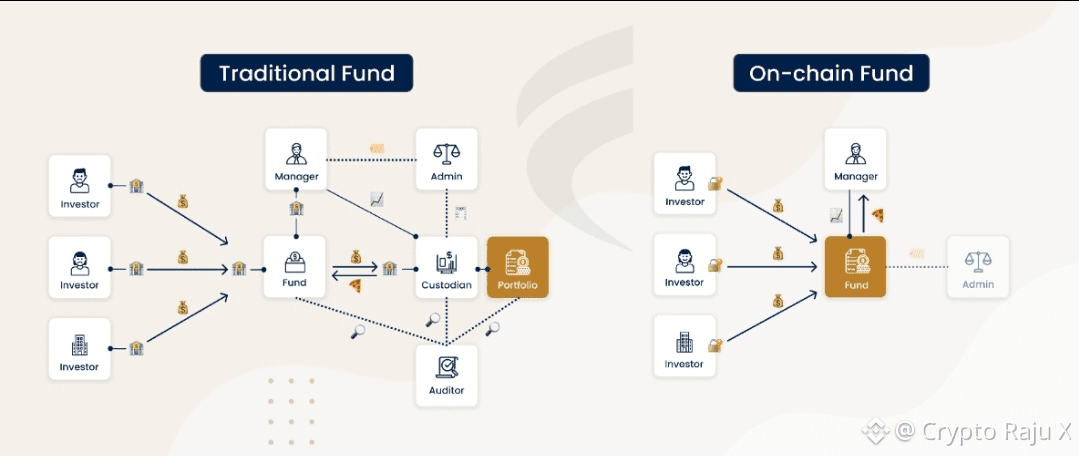
From a strategic standpoint, Lorenzo respects the idea that markets behave in cycles, not moments. Quantitative trading, managed futures, volatility strategies, and structured yield products all exist because no single approach works forever. These strategies are not emotional, and they are not reactive by design. Lorenzo’s decision to support them through On-Chain Traded Funds reflects an understanding that exposure matters more than prediction. OTFs do not promise performance. They represent alignment with a defined way of responding to market behavior, expressed transparently through tokenized products.
From the user’s perspective, this changes the tone of participation. Instead of being pulled into constant decision-making, users are invited to think in terms of structure. Simple vaults express a single idea clearly, without interference. Composed vaults acknowledge that real-world exposure is layered, not isolated. Capital is routed intentionally, not pooled blindly. This allows complexity to exist without forcing users to manage it directly. Risk remains present, but confusion does not.
There is also an institutional perspective embedded in Lorenzo’s design, even though the system is permissionless. Traditional asset management separates execution, allocation, and oversight for a reason. Lorenzo mirrors this separation through vault architecture and governance rather than hierarchy. The protocol itself becomes the organizer, not a centralized entity. Transparency replaces reputation, and code replaces discretion.
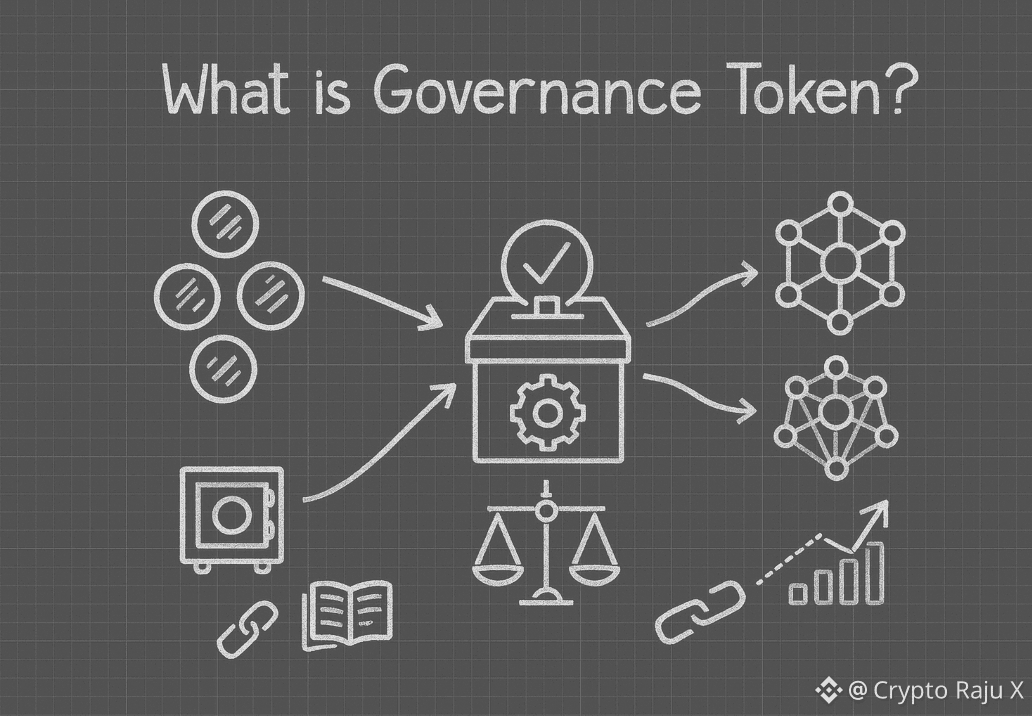
This is where BANK becomes the focal point of the entire system. BANK is not positioned as a shortcut or a speculative promise. It is the protocol’s alignment layer. Through governance, BANK holders influence how Lorenzo evolves, which strategies are emphasized, how incentives are distributed, and how risk frameworks are adjusted. This influence is intentionally gradual. The vote-escrow system, veBANK, introduces time as a condition for voice. Locking BANK is not about speed or advantage. It is about commitment.
From a human perspective, this design choice is deeply intentional. veBANK shifts behavior away from impulse and toward presence. Influence is no longer something that can be acquired and discarded quickly. It accumulates through consistency. BANK becomes less about movement and more about staying power. In an environment where attention is fleeting, this alone sets Lorenzo apart.
Incentive programs tied to BANK reinforce the same philosophy. They are not framed as guarantees or outcomes. They exist to encourage participation that strengthens the system over time. BANK aligns users, strategists, and contributors around shared responsibility rather than short-term extraction. It acts as a stabilizer, anchoring growth to governance rather than hype.
From an ecosystem perspective, BANK also functions as a signal. It signals that Lorenzo values structure over spectacle and alignment over acceleration. It suggests that decentralized finance does not need to abandon sophistication to remain open. BANK represents a belief that governance tokens can be tools of stewardship rather than noise.
Lorenzo’s broader contribution lies in what it normalizes. It normalizes patience. It normalizes strategy-driven exposure. It normalizes the idea that access does not require simplification, and transparency does not require chaos. Capital enters through OTFs, moves through vaults with intention, and influences the future through BANK. Each layer has a role, and none of them rely on exaggerated promises to function.
Ultimately, Lorenzo Protocol tells a calm story in a space that often rewards volume over substance. It suggests that on-chain asset management does not need to reinvent finance, only to express it more honestly. BANK is the written focus because it embodies that honesty. It is not a claim on certainty, but a claim on participation. It is how users move from observers to contributors, from activity to alignment.
Lorenzo does not ask participants to believe in perfection. It asks them to believe in process. BANK is how that belief takes form, quietly and deliberately, in a system designed to endure.

