
Amid the global fintech wave, the application of blockchain technology is quietly shifting from the controversial cryptocurrency to areas with more practical application value. Recently, a series of actions by Chinese tech giant Alibaba and its affiliate Ant Group are drawing the market's attention to an emerging and key concept—'Deposit Token' or 'Tokenized Deposit'. This not only heralds a disruptive change in the cross-border payment field but also reflects how large tech companies are cleverly seeking compliant innovation paths under strict regulatory environments.
Reports from Alibaba indicate that it is collaborating with JPMorgan to use tokenized US dollars and euros for payments, along with its affiliate Ant International launching a tokenized deposit pilot project in Singapore in partnership with Swiss banking giant UBS. This series of layouts clearly shows that a competition around enterprise-level 'stablecoins' has begun. However, this is not a stablecoin in the traditional sense, but a financial tool that is more aligned with the existing banking system and more compliant.
Alibaba's strategic shift
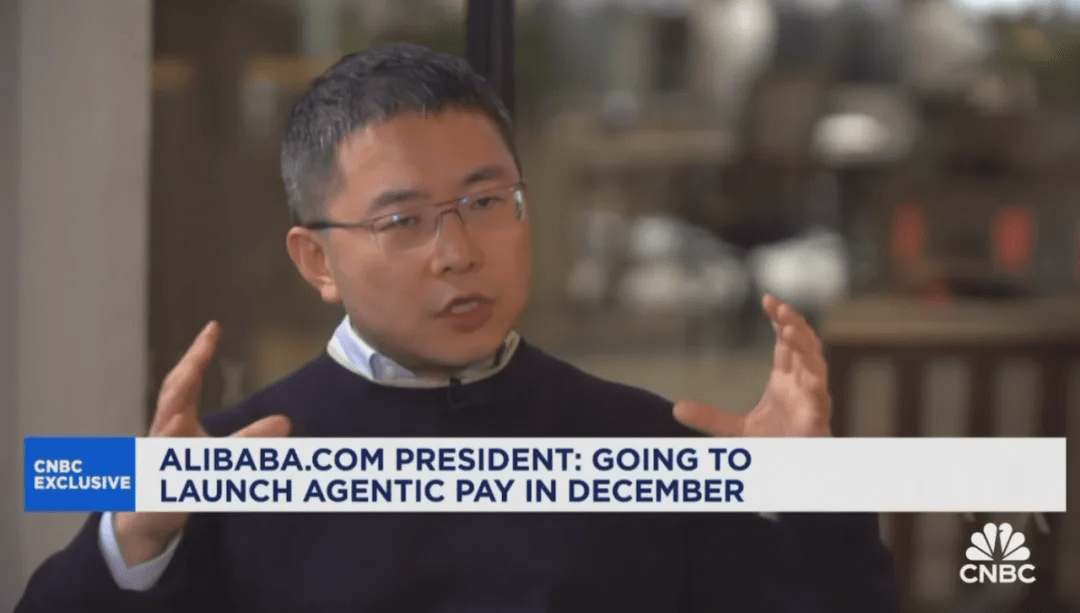
Alibaba Group President Kuo Zhang confirmed that its global B2B platform (Alibaba.com) is planning to adopt a blockchain-based payment solution to fundamentally revolutionize its complex cross-border transaction processes. The core of this cooperation is to utilize JPMD, a blockchain infrastructure designed by JPMorgan specifically for institutional clients, to issue and circulate 'deposit tokens' supported by mainstream fiat currencies such as the US dollar and the euro.
This initiative aims to address the long-standing pain points in global trade. In the traditional model, a payment from a buyer in the United States to a supplier in China often requires layers of transfers through multiple intermediary banks and multiple currency exchanges, with the entire process taking several days and incurring high transaction costs. However, through tokenization technology, this payment can be transformed into a 'digital dollar' that is directly transferred on the blockchain, bypassing cumbersome intermediaries and achieving near-real-time settlement, thereby significantly improving efficiency and reducing costs.
It is worth noting that Zhang Kuo clearly distinguishes this 'deposit token' from the common 'stablecoins' (such as USDT or USDC) on the market. He emphasized that Alibaba will initially focus on digital tokens issued by regulated banks to ensure clarity and compliance in operations and regulations. This has been interpreted by outsiders as a pragmatic and wise strategic choice. Although he has not completely ruled out the possibility of exploring stablecoins in the future, at the current stage, collaborating with top banks to innovate within the existing regulatory framework is undoubtedly the path with the least risk and the easiest to implement.
To understand why Alibaba has made such a choice, one must examine the regulatory environment behind it. In recent years, mainland China has taken a very strict stance on stablecoins and related cryptocurrency activities. Regulatory agencies have clearly expressed concerns about the financial risks that stablecoins may pose and have taken a series of measures aimed at preventing the formation of an independent stablecoin industry domestically.
Earlier reports indicated that technology giants including Ant Group and JD.com intended to participate in stablecoin pilot projects in the relatively open Hong Kong market, but these plans were reportedly suspended after being 'guided' by Beijing. There are also rumors that mainland regulatory authorities may require Chinese companies operating in Hong Kong to exit all businesses related to cryptocurrencies and restrict their investments in the crypto industry. Additionally, there have been reports of a halt in the publication of research reports related to stablecoins and the holding of seminars.
In this larger context, any attempt to bypass regulation and issue stablecoins backed by non-bank private entities poses a risk for companies like Alibaba, akin to walking on the red line of policy.
Therefore, the emergence of 'deposit tokens' provides a perfect compliant alternative. Its core characteristics are:
The issuing entity is a bank: it is issued by strictly regulated commercial banks and essentially represents a digital expression of the bank's liabilities.
Clear asset backing: it directly represents the real deposits of depositors in the bank, one-to-one pegged, with no risk of asset opacity or misappropriation that traditional stablecoins may face.
Operating within the regulatory framework: the entire process of issuance, circulation, and redemption is carried out under the existing banking regulatory framework, providing regulators with sufficient transparency and control.
It can be said that deposit tokens are products of the integration of traditional finance and blockchain technology, drawing on the efficiency advantages of stablecoins while firmly locking risks within a mature banking system. This is precisely the direction that global banks such as JPMorgan and UBS are actively exploring and aligns well with Alibaba's dual needs for efficiency and compliance in its global business expansion.
Ant International's parallel layout

While Alibaba explores innovations in B2B payments, its fintech arm—Ant International—turns its attention to another key scenario: internal fund management for multinational enterprises.
Ant International recently announced a memorandum of cooperation with UBS Group, where the two parties will jointly promote a large-scale 'tokenized bank deposit' pilot project in Singapore, the testing ground for global institutional-level blockchain.
The goal of this cooperation is very clear, aimed at addressing three major challenges in the financial scheduling of large multinational groups.
Achieving instant cross-border payments: breaking the constraints of different countries and bank operating hours in different time zones.
Synchronizing the management of multi-currency liquidity: enabling the group's fund pools around the world to collaborate efficiently.
Digitizing traditional processes: replacing cumbersome manual reconciliation and approval with programmable smart contracts.
Specifically, the fund allocation between subsidiaries of a multinational group in different countries may seem like an internal transfer, but due to different financial systems, currency settlement rules, and working hours, it often takes several days to complete. This greatly affects the efficiency of fund utilization within the group.
Through cooperation with UBS, Ant International hopes to combine its financial operation experience accumulated in Alipay+ global business with UBS's digital currency platform 'UBS Digital Cash'. In the future, funds within the group can be 'tokenized' to achieve real-time, synchronous allocation on an authorized blockchain ledger within minutes. This will upgrade Ant International's financial processes from traditional 'manual reconciliation' to conditionally programmable 'programmable settlement', greatly reducing idle funds and operational delays.
This cooperation is seen as one of the largest and most concrete cases of enterprise-level 'tokenized deposits' globally to date, marking the transition of this technology from concept validation to large-scale commercial application.
Enterprise-level digital finance

Alibaba and Ant International have taken two separate paths, cooperating with JPMorgan and UBS respectively, to jointly outline a clear future scenario: in the face of stringent domestic regulations on stablecoins, China's tech giants have not given up on exploring blockchain payment technology but have chosen a more prudent and compliant path.
They deeply bind with the world's top banks, using blockchain technology as a foundational tool to enhance the efficiency of their global business (whether B2B e-commerce trade or internal financial management), rather than creating a completely new currency that is detached from regulation. This 'borrowing a ship to go to sea' strategy not only enjoys the benefits of technology but also effectively avoids policy risks.
This series of movements indicates that the digital asset sector is undergoing a profound structural transformation. The market's focus is shifting from speculative cryptocurrencies to enterprise-level solutions that can create real value for the real economy. The practices of Alibaba and Ant Group not only provide a reference model for other large enterprises but may also lead the global financial industry into a new era driven by bank endorsement, technology, and compliance. This may not be the decentralized future envisioned by crypto fundamentalists, but it is a future that is closer to reality and more likely to be widely accepted by mainstream society.
