
A cryptocurrency tsunami that震动全球金融市场, causing approximately $40 billion in market value to vanish in just a few days, has finally reached a critical moment in the judiciary. The U.S. District Court for the Southern District of New York issued a historic ruling on December 11, sentencing Do Kwon, co-founder of Terraform Labs, to 15 years in prison for the fraud committed during the collapse of the Terra/LUNA ecosystem. This verdict not only brings a glimmer of solace to countless investors who have lost their fortunes but also serves as the heaviest warning bell for the wildly growing cryptocurrency industry.
The judge's heavy hammer
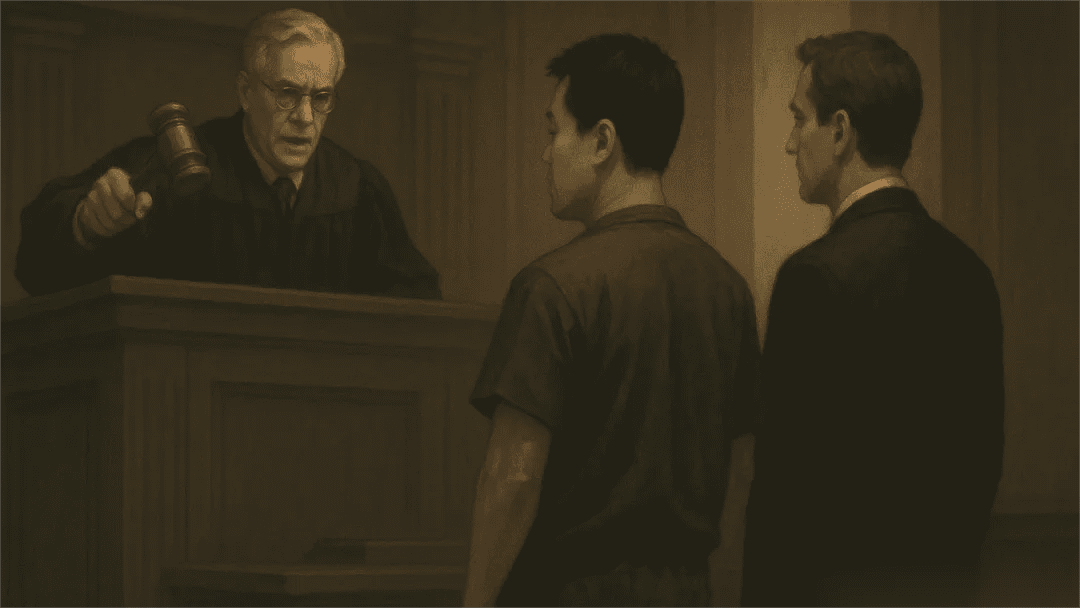
In a Manhattan courtroom, presiding Judge Paul Engelmayer's words were exceptionally harsh, characterizing the case as 'an epic, intergenerational fraud.' The judge noted that the amount of loss caused by Kwon Do-hyung was 'staggering,' even in the Southern District of New York, which has dealt with countless high-profile financial cases.
Notably, the prosecution's initial recommendation for the sentence was 12 years, but Judge Engelmayer ultimately decided to increase it to 15 years. He explained that such a severe sentence was necessary because Kwon Do-hyung's actions caused 'extraordinary financial and humanitarian harm' and that he must be effectively 'incapacitated' to prevent similar disasters from occurring in the future.
The judge ruthlessly revealed the deceptive nature of Kwon Do-hyung in court: 'You chose to lie.' He specifically mentioned Kwon Do-hyung's statements on social media that now seem highly ironic, such as reassuring investors during the crisis with 'deploying more funds—brothers, hold steady,' and his arrogant remark to skeptics, 'I don’t debate the poor.'
Judge Engelmayer even compared Kwon Do-hyung to a 'cult leader,' pointing out that he exploited investors' unreserved trust to build a false financial empire. He told Kwon Do-hyung: 'You have been consumed by the frenzy of cryptocurrency, and I believe this has not changed to this day.'
In court, the victims' testimonies were heartbreaking. A man from Ukraine recounted how he invested nearly $200,000 in savings accumulated over 17 years into UST because he believed Kwon Do-hyung's public assurances that 'the funds are safe.' This collapse not only destroyed the life savings of countless families but also triggered tragedies on a global scale, with some investors choosing to end their lives due to the immense losses.
The collapse of Terra is not only the end of a single event but also the beginning of the 2022 'crypto winter.' It triggered a series of chain reactions, leading to the bankruptcy of several large crypto institutions, including Three Arrows Capital and Celsius Network, and ultimately became one of the catalysts for the collapse of another giant, FTX.
Death Spiral
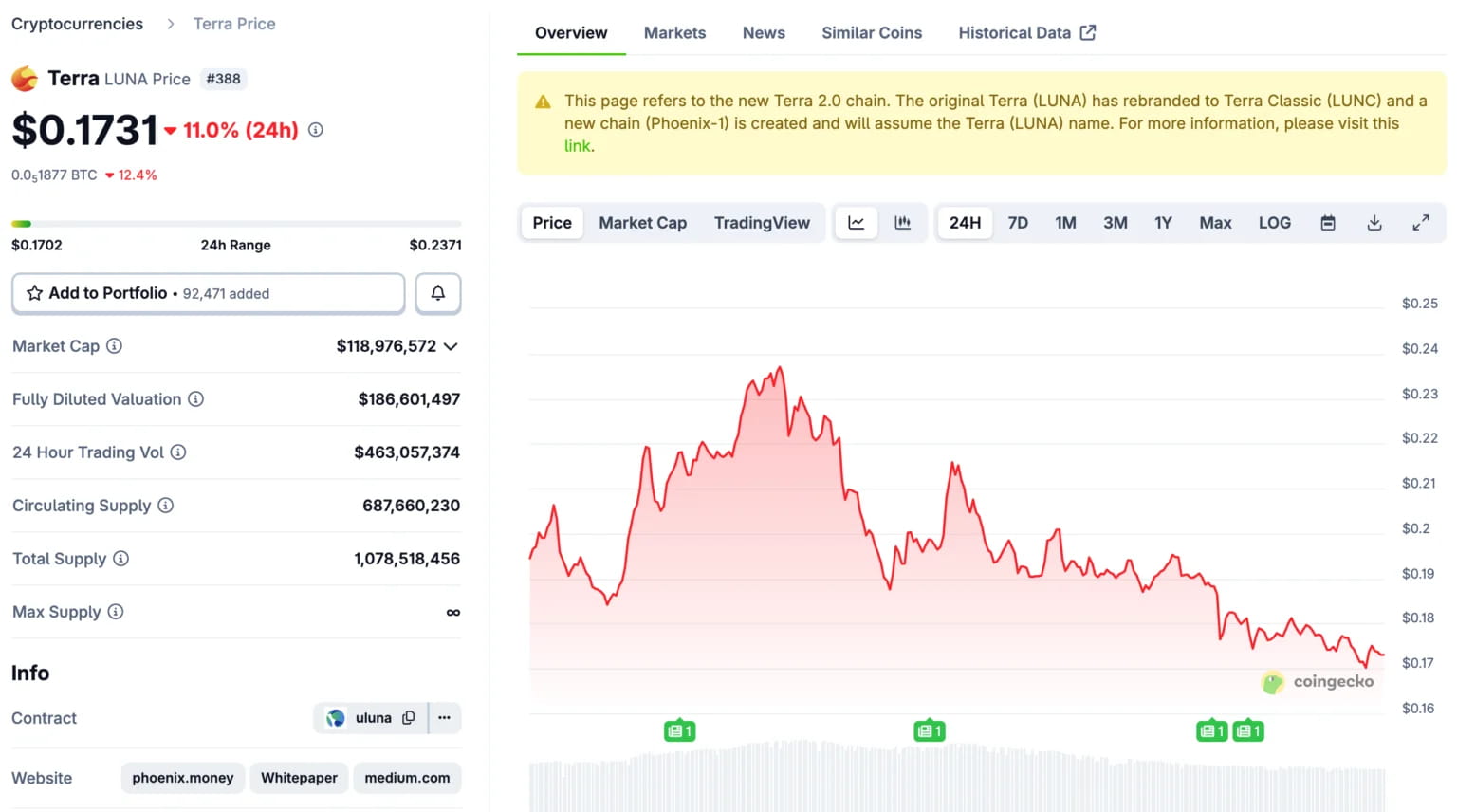
The core of this storm originated from the collapse of Terra's algorithmic stablecoin UST and its sister token LUNA in May 2022. Unlike traditional stablecoins, UST is not backed by an equivalent amount of dollars or liquid assets but relies on a complex algorithm and an arbitrage mechanism with LUNA to maintain its peg to the dollar at a 1:1 ratio.
However, this seemingly precise system is extremely fragile. The prosecution pointed out that Kwon Do-hyung has long exaggerated UST's self-repairing stability and conveyed false information to the market. One of the most critical lies was his claim that the mainstream South Korean payment app Chai had adopted the Terra blockchain for settlement on a large scale, when in fact, there had never been any substantial technical integration between the two.
More enticingly, Kwon Do-hyung offered UST deposits through his Anchor Protocol with an annualized yield of nearly 20%. This interest rate far exceeded normal market levels, attracting countless investors worldwide to invest their fortunes. However, the court ultimately determined that this high yield relied entirely on Terraform Labs' continuous financial subsidies, essentially constituting an unsustainable 'Ponzi scheme.'
When the market experienced panic selling, UST began to depeg, triggering a catastrophic 'death spiral': investors frantically sold UST, and the system issued a large amount of LUNA to maintain the peg, causing LUNA's price to plummet; the collapse of LUNA further weakened market confidence in UST, creating a vicious cycle. Ultimately, the value of both tokens approached zero within days, and a $40 billion wealth empire collapsed instantly.
After the collapse, Kwon Do-hyung began a months-long international escape, becoming one of the world's most wanted fugitives. It wasn't until March 2023 that he was arrested in Montenegro on the Balkan Peninsula for using a fake passport. Subsequently, the United States and his home country of South Korea engaged in a lengthy legal battle over his extradition rights, with the United States ultimately prevailing.
This August, facing multiple felony charges, including wire fraud and conspiracy to commit fraud, Kwon Do-hyung chose to plead guilty and agreed to forfeit about $19 million in illegal gains and multiple properties. In court, dressed in a yellow prison uniform, he expressed remorse, stating, 'All blame should fall on me,' and said, 'I failed to operate this system correctly.'
Is a 15-year sentence light or heavy?
Although the 15-year sentence exceeded the prosecution's expectations, the debate within the cryptocurrency community about whether the punishment is sufficient is exceptionally intense. Some crypto opinion leaders have compared Kwon Do-hyung's sentence to those of other financial giants in history.
Bernie Madoff: Involved amount $65 billion, sentenced to 150 years.
Allen Stanford: Involved amount $7 billion, sentenced to 110 years.
Tom Petters: Involved amount $3.7 billion, sentenced to 50 years.
In contrast, many feel it is unfair that Kwon Do-hyung received a 15-year prison sentence for a $40 billion disaster. Some even sarcastically remarked, 'He will only be in his fifties when he gets out; is he planning to come back and launch Terra 2.0?'
However, the judicial process has not yet fully concluded. Under the agreement, Kwon Do-hyung may be transferred back to South Korea to continue serving his sentence after serving at least half of his U.S. sentence (7.5 years). He also faces severe charges in South Korea, potentially facing up to 40 years in prison. This means that his prison term may well exceed 15 years.
The conclusion of this century's trial has written a heavy chapter in the history of cryptocurrency. It heralded the complete bankruptcy of the myth of 'high yield, zero risk' and set the tone for global regulatory frameworks on algorithmic stablecoins and the entire crypto industry. Although the 15-year sentence cannot fully compensate investors for their painful losses, it marks the end of an era and sends a clear signal to all practitioners: in the world of financial innovation, lies and fraud will ultimately pay the price.

