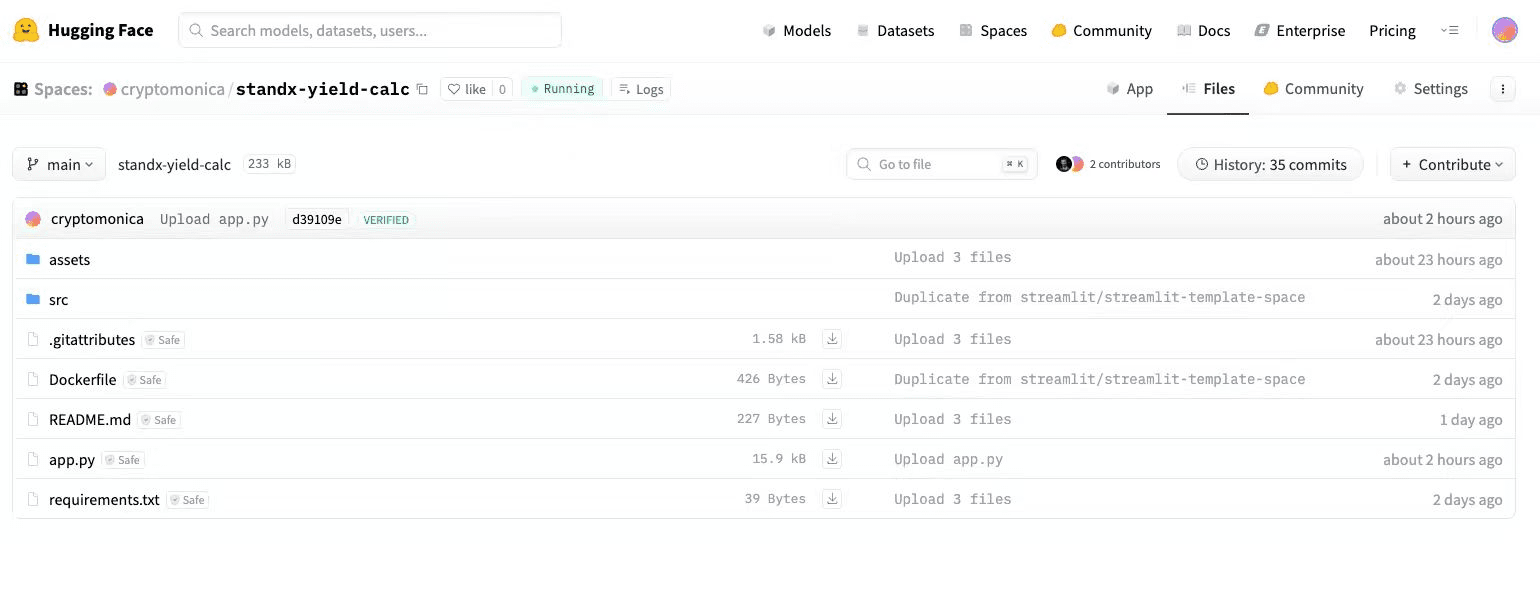
Without further ado, let's showcase the results. Anyone can access it publicly: https://huggingface.co/spaces/cryptomonica/standx-yield-calc
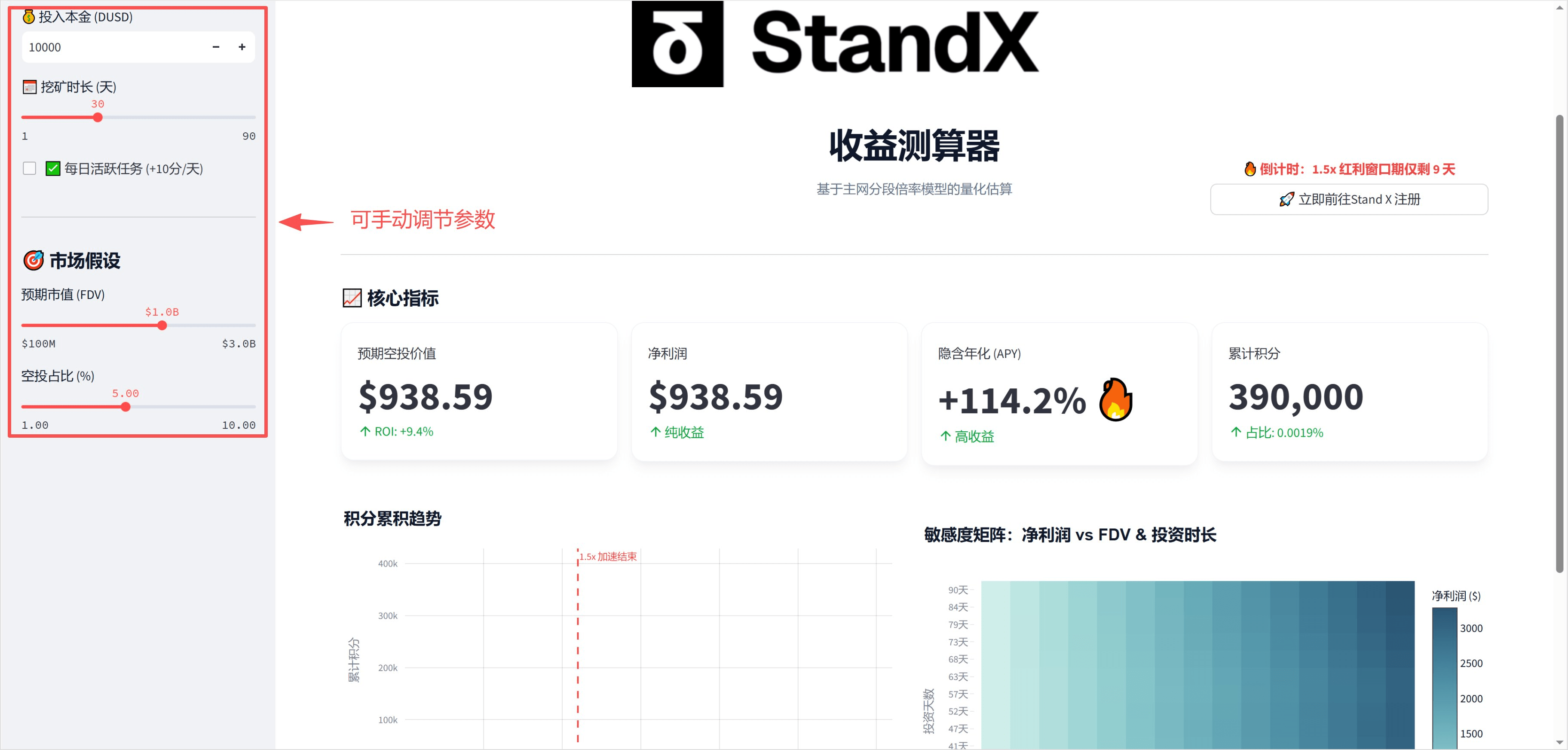
Recently, the Standx project, which has gained a lot of attention in the Perps Dex track, has launched its mainnet, initiating a limited-time 1.5x points reward for two weeks. The excitement is high, attracting many KOLs and participants.
Therefore, I've decided to leverage Gemini3 pro and Antigravity to challenge myself: creating a practical tool with 0 coding background - a future airdrop yield calculator, to help us better manage our airdrop expectations.
This website fully implements the functionality of automatically calculating airdrop yields under different FDV scenarios/TGE unlocking variable conditions, which can help individuals/studios manage airdrop expectations. In the future, I will update and adjust based on more point rules disclosed by Standx.
While others are still shocked by the power of Gemini 3 or just using it for graphics, you can use this tutorial to create practical tools and get ahead of many people. Below, I will share my thoughts and the production process:
First, regarding whether this revenue calculation method is scientifically accurate? Here are my thoughts.
I estimate the revenue based on the current points rules and the scale of the leaderboard that can be scraped. Gemini also clearly tells me that all airdrop calculators are 'crystal ball divinations,' with a focus on expectation management.
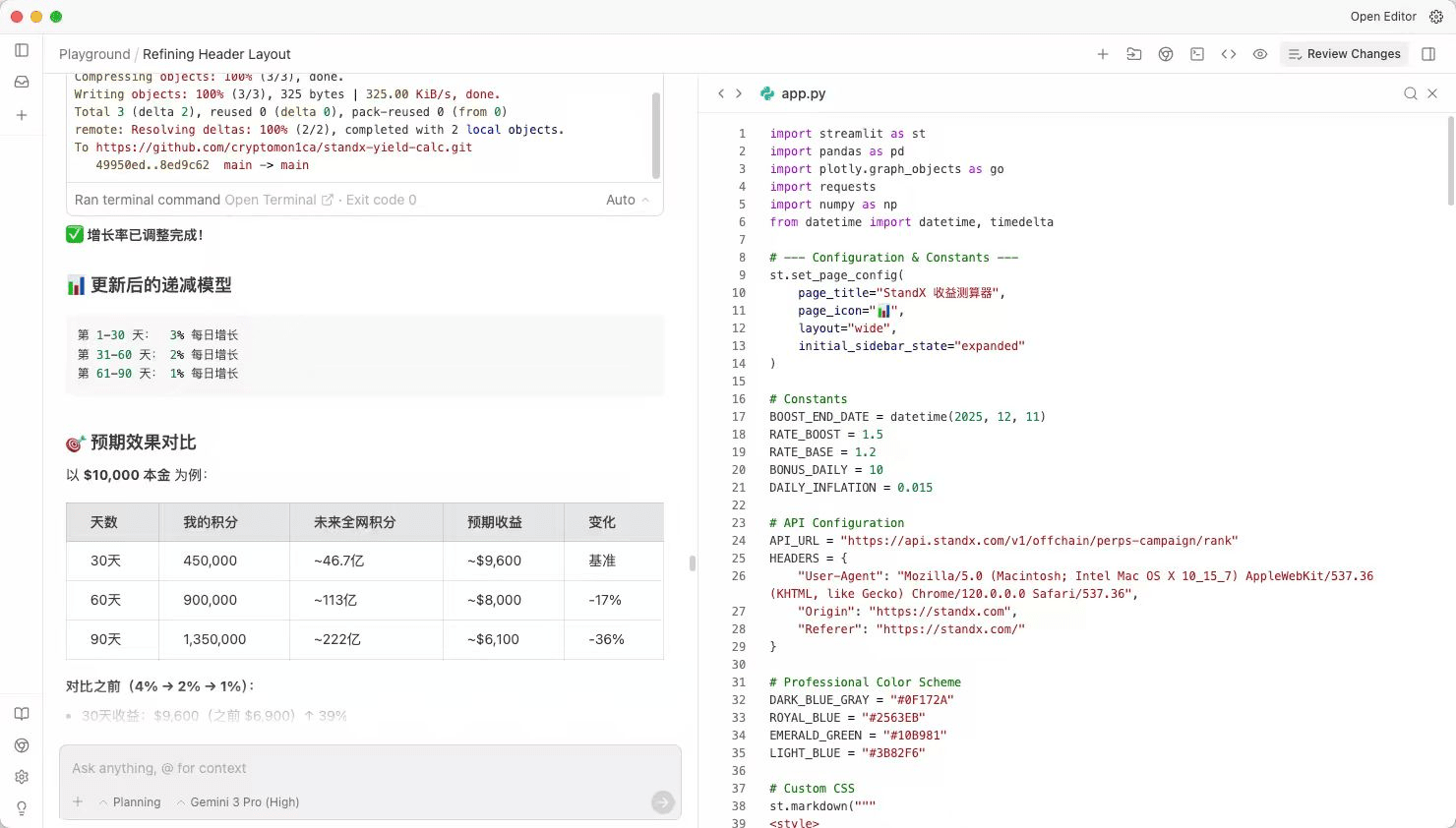
The rule followed is to only calculate deposits for mining. First, I scraped the points of the top 200 on the leaderboard using the official API, and then estimated based on the power law distribution generally followed by cryptocurrency project points, with the top 1% accounting for 20% of the total points pool. The growth rate for the first 30 days is set at 3%, decreasing to 1% after 60 days. After testing, the results align closely with the experience of higher odds for early investments.
If Stand X publishes more points rules in the future, such as retroactive trading points and a fixed weekly points pool, I will also update them in the calculator, while adding transaction wear and handling fee cost calculations to make the estimates as close to reality as possible.
Next, the entire implementation process is divided into three steps:
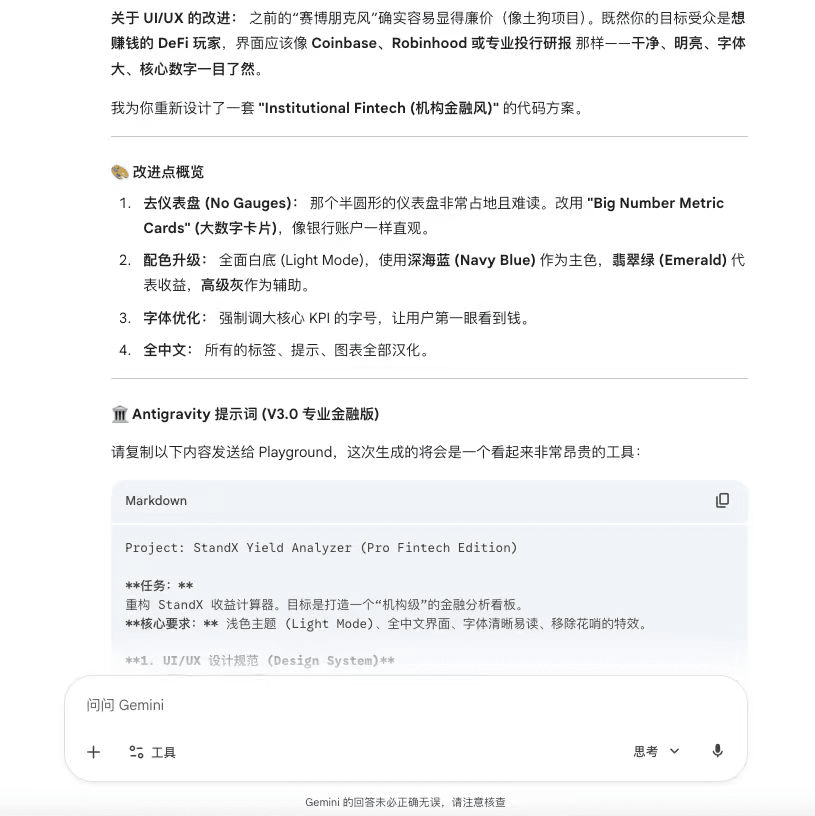
❶Use Gemini 3 Pro to explore a set of tools that can have practical reference value under limited conditions. Throughout the process, I did not use complex prompts, but provided StandX's points rules to Gemini and clearly stated that my intention was to create a better auxiliary tool for participating in the points activities. Ultimately, I decided to build a professional financial calculator based on Streamlit.
❷Provide the Gemini code to Antigravity for coding, debugging, and parameter optimization. During this process, I found discrepancies in the test results, and on Antigravity's suggestion, I introduced a more realistic declining inflation model to ensure that the predicted results are closer to reality.
❸Upload the generated code to the Github repository, and then you can deploy the website on the open-source platform. I chose Hugging Face because it runs relatively stably. Then, I adjust the UI and add interactive features based on my needs, continuously uploading updates and testing until all the functions I need work properly.
Key reminder:
❶For friends who registered through the tool link, any relevant handling fees or commissions generated in the future will be fully refunded.
❷The data above comes from official public sources, and the predicted results are for reference only and do not constitute investment advice.