
In recent days, it is a holiday in the U.S., and investors are in vacation mode, so market fluctuations are not significant.
In the short term, everyone is concerned about the Federal Reserve's meeting in December, especially Powell's speech and the latest interest rate dot plot, which are key to judging the future pace and intensity of Fed interest rate cuts.
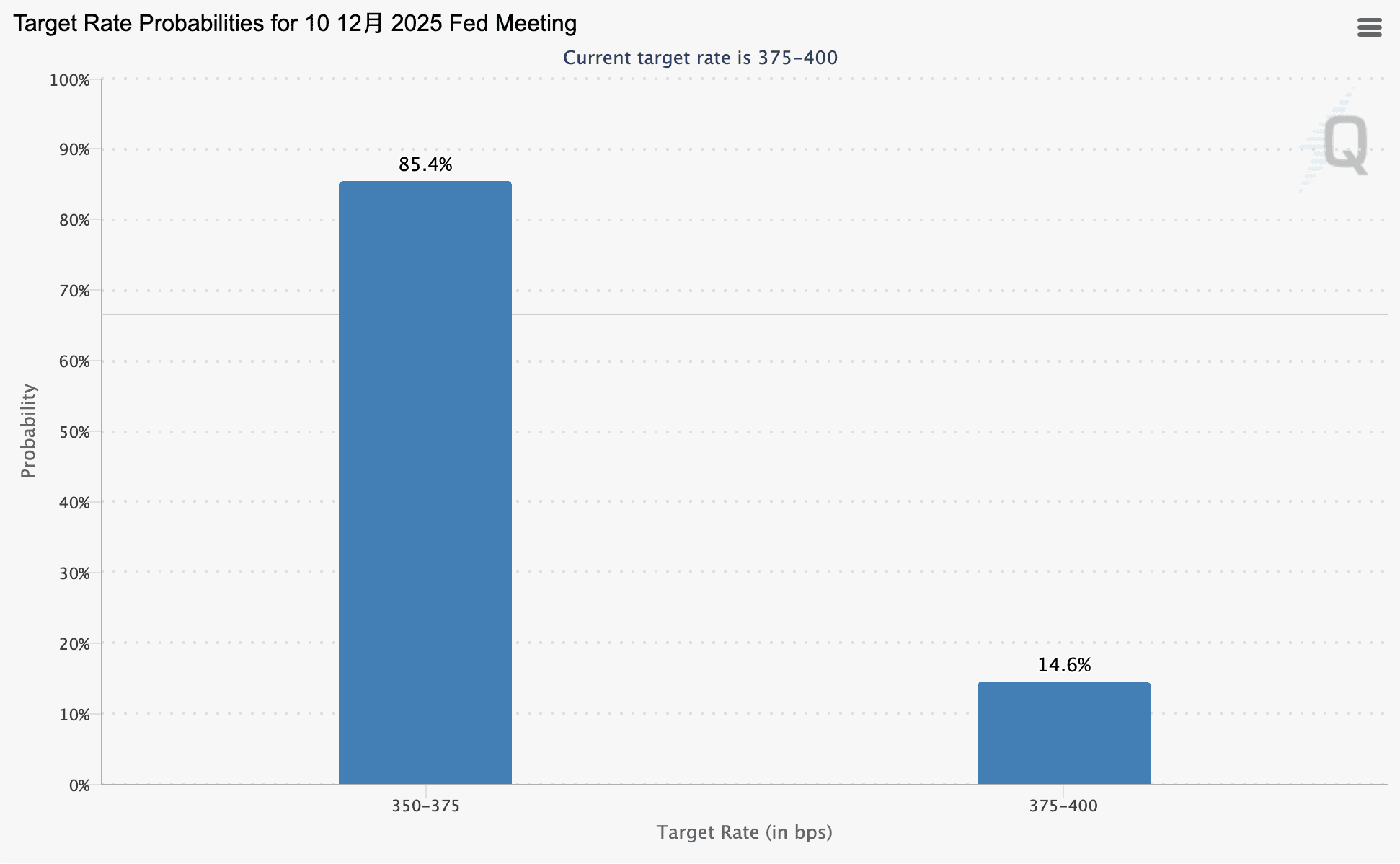
The CME FedWatch Tool indicates that the probability of a 25 basis point rate cut by the Fed in December has risen to 85.4%, which is basically stable.
In addition to interest rate cuts, we also need to pay attention to Trump's midterm elections in the medium and long term.
Currently, the biggest hidden danger in the U.S. is that high interest rates may trigger an economic recession.
We just need to focus on the unemployment rate. If the unemployment rate exceeds 5.3%, the probability of an economic recession will be relatively high.
Trump will definitely find ways to delay the arrival of an economic recession because the midterm elections are very important for him and the Republican Party, especially the Senate, which is a top priority.
Why? Because the appointments of U.S. Cabinet members, Federal Reserve governors, SEC, CFTC, Attorney General, and even Supreme Court justices must be approved by the Senate. Moreover, the Senate can also decide whether to impeach the president.
Of course, the House of Representatives is also very important. Last time Trump was president, he lost the House in the midterm elections, leading to his legislative plans hitting roadblocks everywhere.
Therefore, to retain the Senate and the House, Trump will seize on the pain points of national voters, such as the economy, immigration, foreign affairs, trade, and culture.
Once the U.S. economy falls into recession, the ruling party almost always loses in the midterms.
So Trump will definitely not let a recession appear before 2026; at least it has to be postponed until after the elections.
This is also why his recent speeches have been revolving around the economy, immigration, foreign affairs, and trade.
For example, yesterday he said he wants to permanently suspend immigration from all third-world countries, which is actually aimed at Afghan refugees.
Although he publicly claims to bring manufacturing back to the U.S., it is essentially all about paving the way for the midterm elections and the 2028 presidential election.
How is the on-chain data?
From the data, yesterday the BTC turnover rate dropped significantly, indicating that investor sentiment is relatively stable right now.
There are no important data releases next week; everyone is just waiting for the Federal Reserve's interest rate meeting.
From the chip distribution perspective, there are no signs of panic selling from losing investors. As long as there is no new negative news in the market, it will continue to experience oscillating washout.
According to CryptoQuant data, the total supply of ERC20 stablecoins has exceeded 160 billion USD, setting a new historical high.
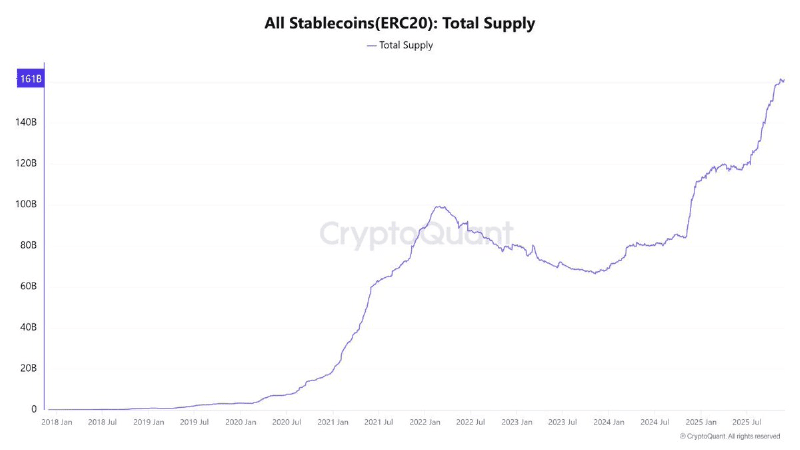
The barometer for U.S. stocks is Nvidia, while the barometer for the cryptocurrency market is the supply of stablecoins.
With more money in the market, opportunities will increase, which will benefit the price rebound of Bitcoin.
As BTC rises, DAT companies will gradually return to a positive premium, and financing to buy coins will accelerate, with hedge funds and institutions increasing their investments.
Coinbase's premium indicator has also turned positive from negative, indicating that institutions have started buying again, and market liquidity is slowly recovering.
The U.S. Treasury Department's TGA account is also replenishing market liquidity, and it is expected to release 300 billion USD of liquidity in the next 3-6 weeks.
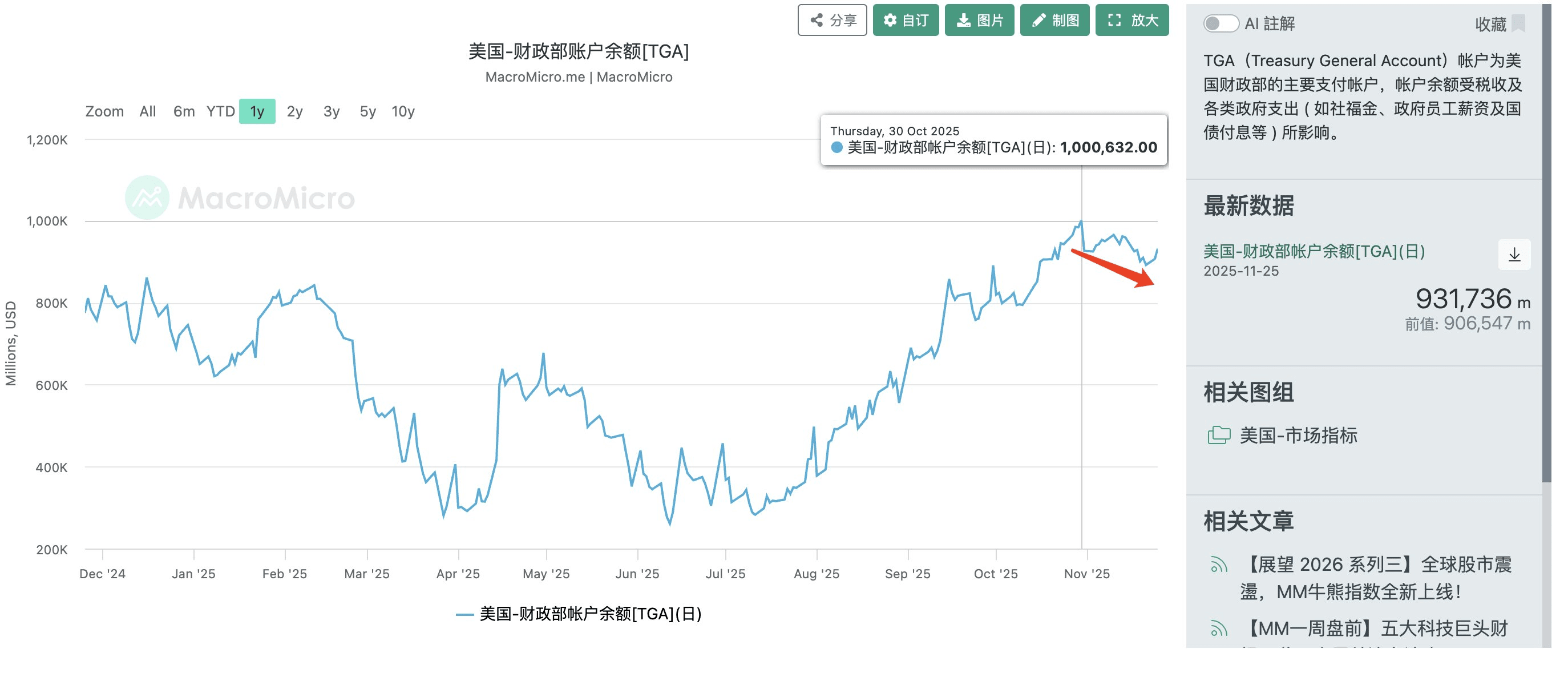
On December 1, the Federal Reserve will also begin to stop the balance sheet reduction and will start a new round of Treasury bond purchase plans from January to alleviate market pressure.
Overall, the current trends in the U.S. stock market and the crypto market are mainly driven by the Federal Reserve's expectations of interest rate cuts in the short term.
In the short term, attention can be focused on Powell's speech at the meeting and the latest interest rate dot plot, which are key to judging the future pace of interest rate cuts.
Before the Federal Reserve starts to cut interest rates quickly, all increases are just rebounds and are unlikely to completely reverse.
