
Yesterday, the United States released the ADP non-farm employment data for November, and the results were much worse than market expectations.
Not only was there no new employment, but 32,000 people lost their jobs, indicating that the employment market in the U.S. is quite poor.
After the data was released, the probability of the Federal Reserve lowering interest rates by 25 basis points in December rose to 89%, which is basically a done deal.
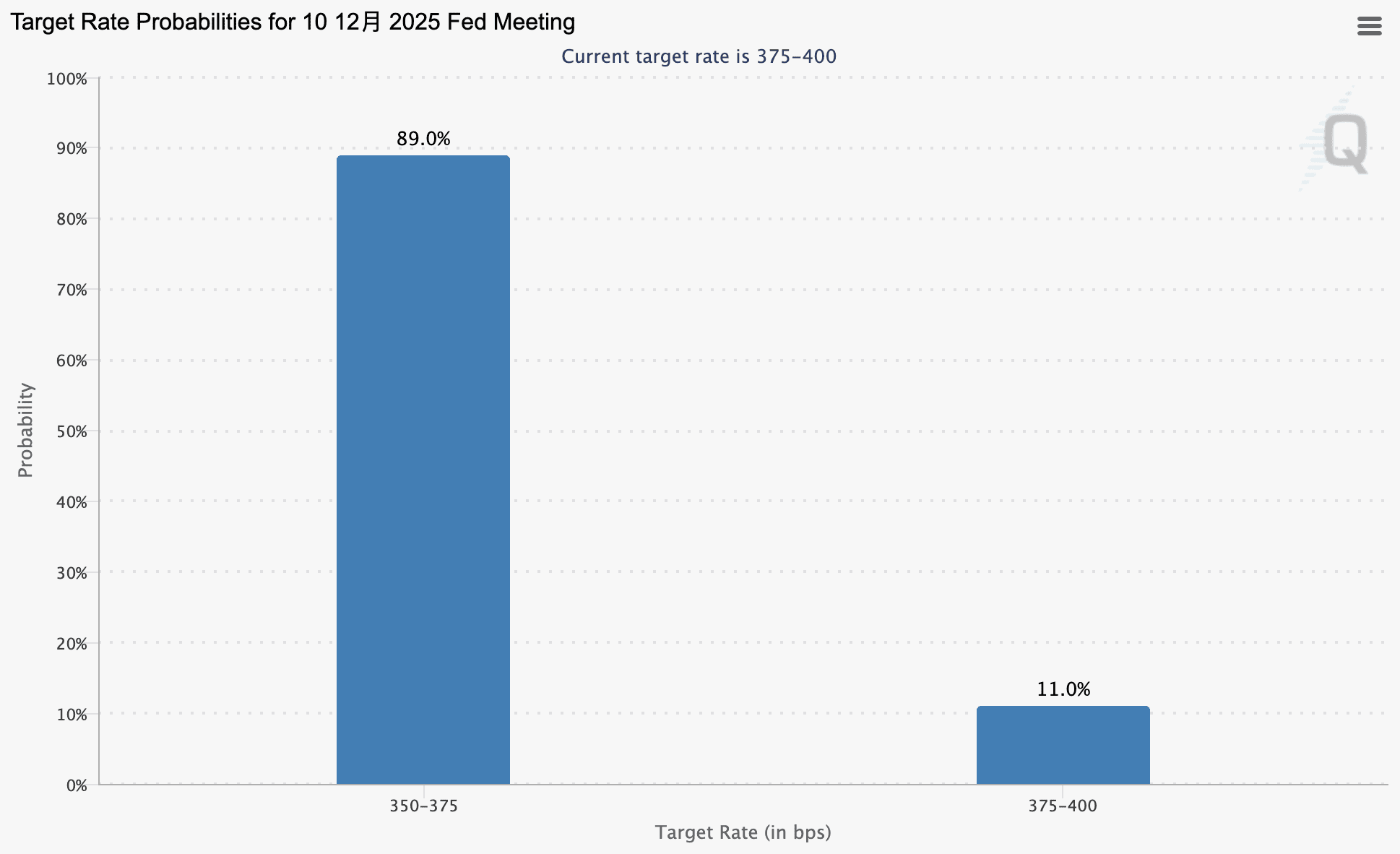
However, on December 5th, the PCE inflation data for September will be released. If it shows signs of rising inflation in the U.S., even if it's old data from September, it will be used by the Federal Reserve's hawks.
From on-chain data, most investors are on the sidelines, with very little selling pressure, and the chip structure is quite stable. Everyone is waiting for next week's Federal Reserve meeting.
On the ETH side, BMNR has increased its holdings of ETH by $150 million.
From the perspective of funds, both Asian and American capital are continuously flowing in. The total amount of funds in the market is currently $311.4 billion.
USDT has increased by $131 million, and USDC has increased by $478 million. After this downturn, market confidence is slowly recovering, and the return of funds is a key signal of optimism for the future.
The current trends in the US stock market and the crypto market are mainly driven by expectations of interest rate cuts from the Federal Reserve in the short term.
Next, we can focus on Powell's speech at the meeting and the latest interest rate dot plot, which is key to judging the future pace of rate cuts.
Before the Federal Reserve starts rapid rate cuts, all increases are merely rebounds, and it is difficult to achieve a complete reversal.
Entering December, there will be relatively more macro events. During times of uncertainty, market volatility will increase.
We need to learn to adapt to market fluctuations rather than predict short-term ups and downs.
Because short-term prices are primarily driven by market emotions, which are also influenced by macro policies.
Today, due to a policy, things have become optimistic, but tomorrow it might be panic again, so no one can predict short-term price fluctuations.
The operation of the market is like a pendulum, although it swings back and forth under the influence of emotions, it will ultimately return to the center position, which is the true value of the assets.
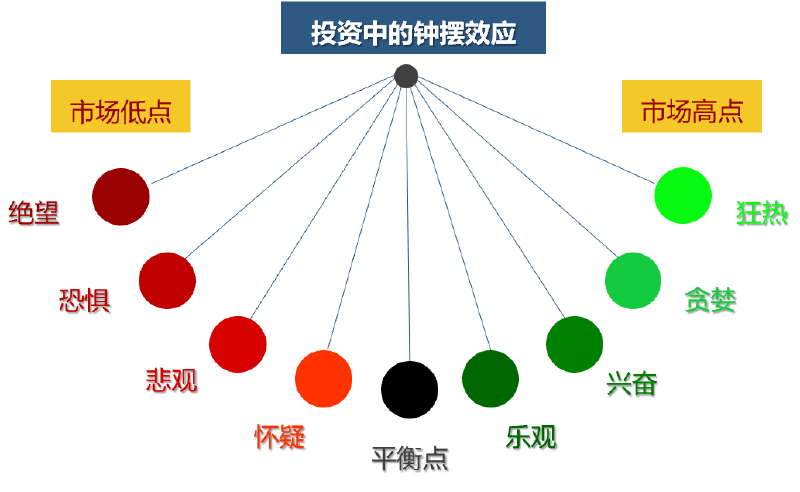
Therefore, we never have to be in a hurry. We just need to patiently wait for the market to make mistakes; once unreasonable prices appear, we can buy in batches.
Graham once said that we must be prepared for the market's ups and downs, including knowledge, psychological, and financial preparations, so that we can make the right decisions when the market declines.

